
There is something wonderfully comforting about a good horror comedy. When done right, it can make you laugh one minute, cringe the next, and somehow leave you rooting for characters even as portals to other dimensions begin opening in their living room. Weekend at the End of the World is one of those rare independent genre films that understands exactly what it wants to be. It is funny, weird, energetic and, above all else, enormously entertaining.
Directed by Gille Klabin and written by Clay Elliott, Gille Klabin and Spencer McCurnin, the film follows best friends Miles (Cameron Fife) and Karl (Clay Elliott) as they embark on what is supposed to be a relaxing weekend away at a cabin inherited from Miles’ grandmother. The plan is simple enough. Miles hopes to renovate the property and eventually sell it for a tidy profit, while Karl is trying to recover from the humiliation of a failed marriage proposal that has become internet entertainment thanks to an influencer known as Moo Man.
Naturally, things do not go according to plan.
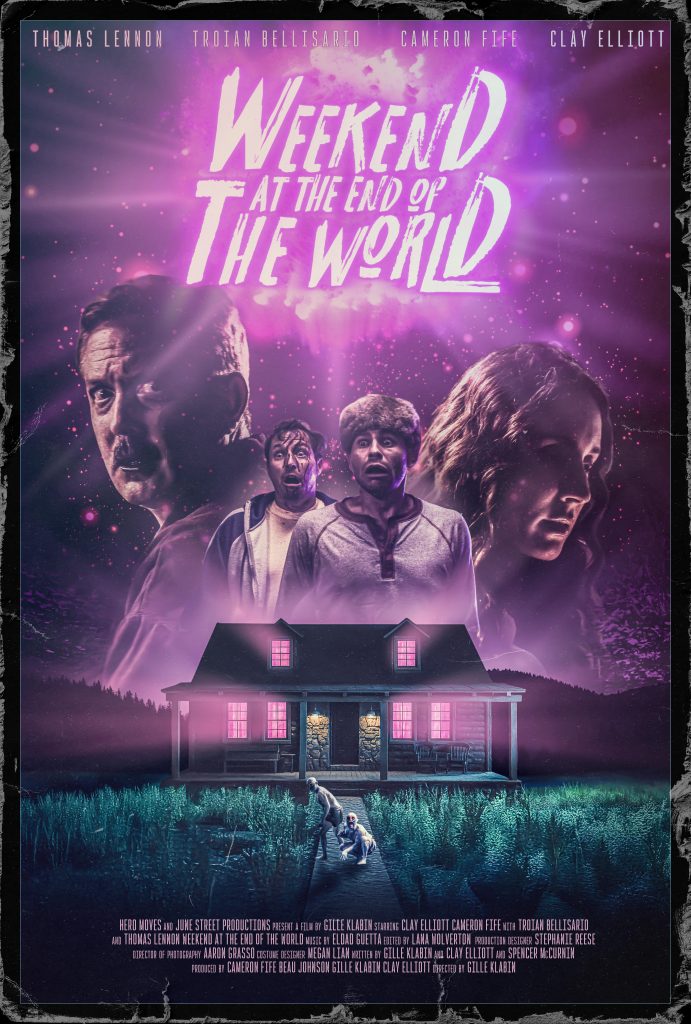
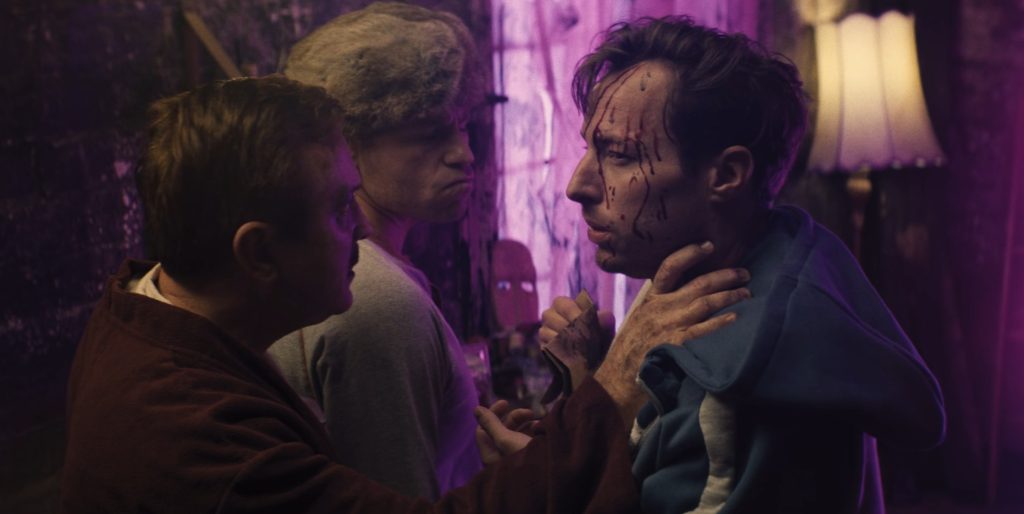
Upon arriving at the cabin, the pair are greeted by overly enthusiastic neighbour Hank, played by Thomas Lennon. Hank seems harmless enough at first, though Miles is clearly less thrilled to see him than Hank is to see them. Once inside the cabin, the friends discover that the property is in far worse condition than expected, having suffered significant fire damage. Still, armed with alcohol and questionable decision-making skills, they settle in for the night.
Then comes the moment that changes everything.
After consuming mysterious liquid from an animal skull and engaging in a series of increasingly idiotic activities, a bizarre purple energy engulfs the cabin. Soon Hank becomes possessed, a portal to another realm opens, and Miles’ deceased grandmother unexpectedly returns from the dead. From that point onwards, Weekend at the End of the World fully embraces its insanity and never really looks back.
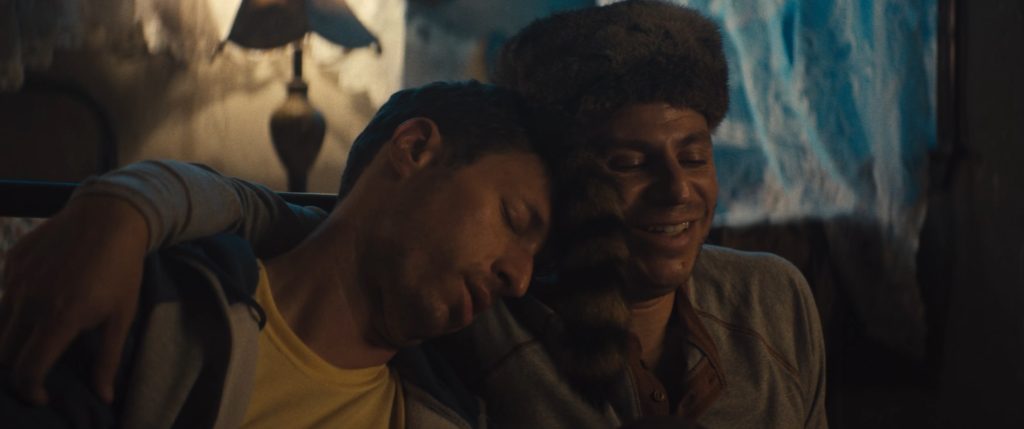
What makes the film work so well is the chemistry between its two leads. Cameron Fife and Clay Elliott are on screen together for most of the running time and carry the film with ease. Their friendship feels completely believable, and their comedic timing is excellent throughout. In many ways they evoke classic comedy duos, constantly bouncing jokes, insults and observations off one another without it ever feeling forced.
Their performances reminded us somewhat of Trey Parker and Matt Stone during the early years of South Park. There is a natural looseness to the dialogue and delivery that makes even the most ridiculous situations feel grounded. Whether they are arguing over life decisions, stumbling through supernatural encounters or simply trying to understand what is happening around them, both actors remain consistently engaging.
Thomas Lennon is also terrific as Hank. Known for scene stealing supporting performances throughout his career, Lennon once again proves why he is such a valuable addition to any comedy. Hank walks a fine line between friendly neighbour, comic relief and something far more sinister, and Lennon handles each aspect perfectly.
Visually, the film is far more polished than many independent productions operating within a similar budget range. Aaron Grasso’s cinematography is excellent throughout, making full use of the woodland locations and the isolated cabin setting. The film looks genuinely cinematic, with carefully crafted compositions, strong lighting choices and a vibrant colour palette that becomes increasingly surreal as the story unfolds.
The visual effects deserve particular praise. The portal sequences, supernatural imagery and various gore effects are all handled impressively well. Rather than overwhelming the film, the effects support the story and enhance the comedy. There is a real confidence in how the fantasy elements are presented, allowing audiences to simply accept the madness and enjoy the ride.
The sound design is equally impressive. Horror comedies often live or die on timing, and the audio work here consistently elevates both the scares and the laughs. Combined with Eldad Guetta’s score, the soundscape helps create a world that feels playful, unsettling and absurd all at once.
The screenplay is packed with jokes, many of which arrive when you least expect them. Some are obvious laugh lines, while others slip into conversations almost unnoticed. The humour never feels desperate or forced. Instead, it emerges naturally from the characters and situations, which makes the biggest laughs land even harder.
What is perhaps most impressive is how effortlessly the film balances its various influences. There are traces of Tucker & Dale vs. Evil, Evil Dead, Cabin in the Woods, early Parker and Stone comedies like Baseketball and Orgazmo, and even a touch of cosmic science fiction, yet it never feels like a copy of any of them. Klabin and his team manage to create something that feels familiar while still carving out its own identity.
Independent horror comedies are notoriously difficult to pull off. Too much comedy and the horror disappears. Too much horror and the humour feels out of place. Weekend at the End of the World finds that balance remarkably well.
It is funny, imaginative, technically impressive and driven by a cast that clearly understands the material. More importantly, it feels like a film made by people who genuinely love genre cinema and wanted audiences to have a great time.
And that is exactly what happens.
| Acting | |
| Direction | |
| Cinematography | |
| Writing | |
| Sound | |
| Screen Critix Rating |