
The idea of people being hunted for sport has been a staple of thrillers for decades. From The Most Dangerous Game to Hard Target, Surviving the Game and more recently Ready or Not, filmmakers have repeatedly returned to the concept because, when handled well, it creates instant tension. Danny Patrick’s Hunting Party takes that familiar premise and gives it a distinctly British twist, placing corrupt members of the legal system at the centre of the action.
The film opens strongly. A terrified man races through the countryside at night while armed pursuers stalk him through the darkness with bows and arrows. It is an effective opening sequence that immediately establishes the danger and mystery surrounding the story. Accompanied by a pulsing electronic score, the introduction promises a tense thriller and does a fine job of drawing viewers in.
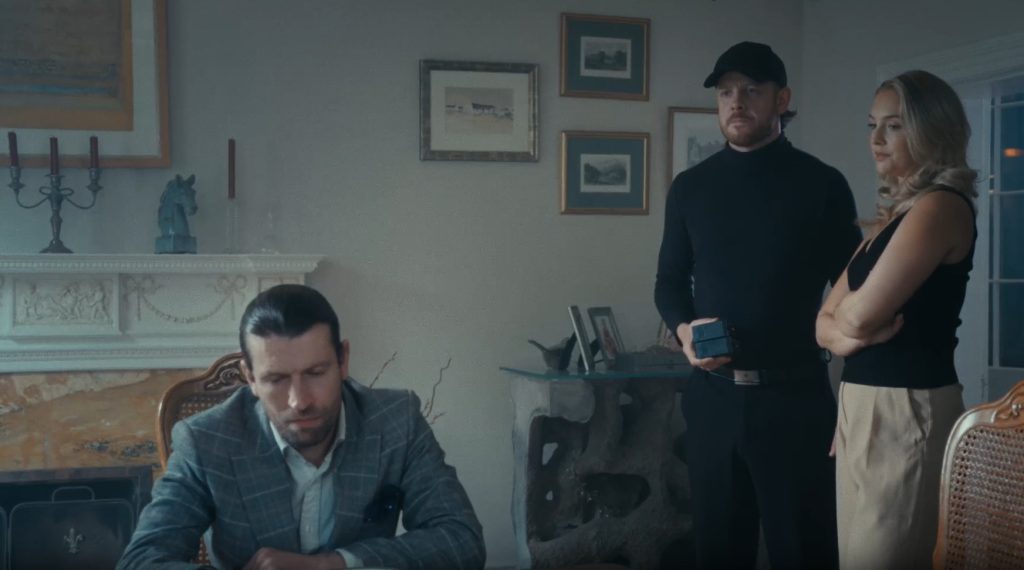
The plot revolves around a secret group of Circuit Court judges who have grown frustrated with what they see as a broken legal system. Rather than simply passing sentence, they release convicted criminals back into society, only to abduct them and transport them to the sprawling estate owned by Judge Hardin (Enn Reitel). There, the unfortunate victims become participants in a deadly game of survival.
Meanwhile, MI5 agent Eve Campbell (Zoë Scott) begins investigating a string of suspicious events that slowly lead her towards the conspiracy. At the same time, pub owners Jay Doherty (Ollie Newman) and his father Danny (Paul O’Doherty) find themselves dragged into the nightmare after being framed for a murder connected to the Hardin family. As the various storylines begin to intertwine, Eve races to uncover the truth before more people become targets in the judges’ twisted sport.
One thing Hunting Party certainly does not lack is ambition. Danny Patrick’s screenplay attempts to juggle several different elements at once. Alongside the central “man hunt” concept, there are family feuds, political conspiracies, affairs, organised criminals, investigations and personal rivalries. At times this gives the film plenty to work with, but it can also make the narrative feel somewhat overcrowded. There are moments when the story appears to be heading in one direction before switching focus to another subplot entirely.
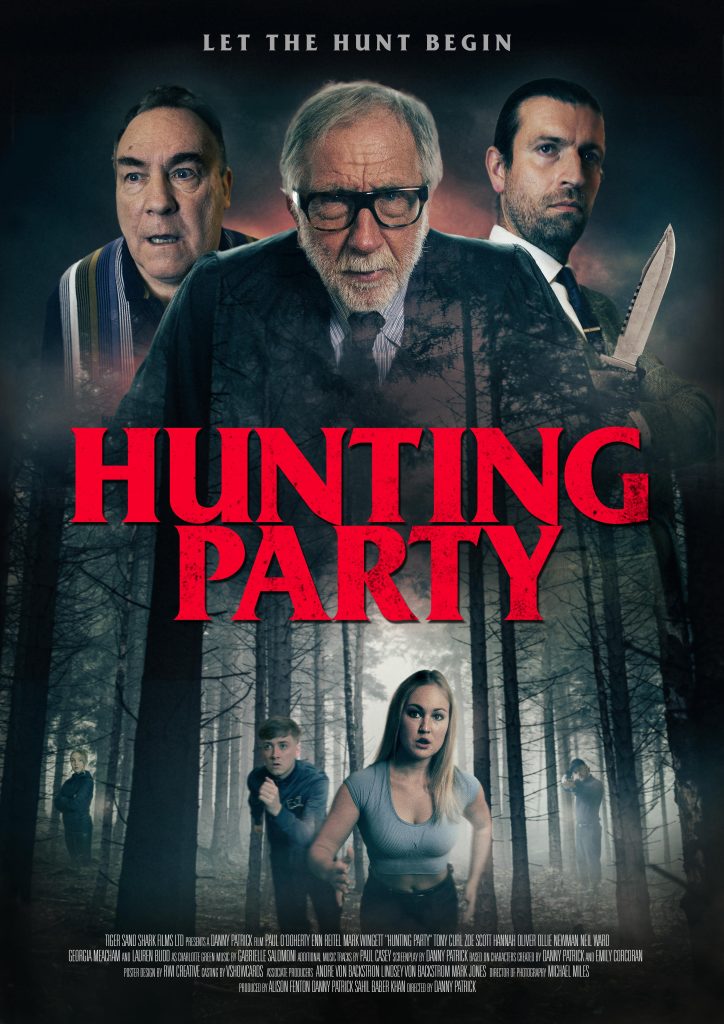
The strongest material often involves the Hardin family. Enn Reitel brings an authoritative presence to Judge Hardin, while Hannah Oliver’s Katie Hardin emerges as one of the film’s more interesting characters. Beneath the respectable exterior of the family lies something far darker, and the dynamic between its members creates much of the film’s tension. Curl Tony’s Stephen Hardin, meanwhile, is portrayed as an unpredictable and dangerous individual whose actions set much of the plot in motion.
Zoë Scott carries a significant portion of the film as Eve Campbell. Although Eve is dealing with personal baggage and a damaged professional reputation, she remains determined and resourceful throughout. She serves as the audience’s guide through the increasingly tangled conspiracy and handles the action-oriented scenes convincingly.
Visually, Hunting Party is a mixed bag. Michael Miles delivers some attractive imagery throughout, particularly during the exterior night sequences. The use of fog, darkness and rural locations helps create an atmosphere of unease, and the frequent aerial shots add production value. There are also a handful of well-executed long takes that demonstrate genuine technical confidence.
However, some interior scenes lack the same visual flair. A number of office and courtroom sequences feel comparatively plain, with simple lighting setups and sparse locations that occasionally make the production feel smaller than its premise. It is not a major issue, but the contrast between the strongest and weakest looking scenes is noticeable.
One area where the film consistently succeeds is its music. Gabriele Salomoni’s electronic score adds energy and tension throughout, often elevating scenes and helping maintain momentum during slower stretches. The soundtrack arguably becomes one of the film’s most effective storytelling tools.
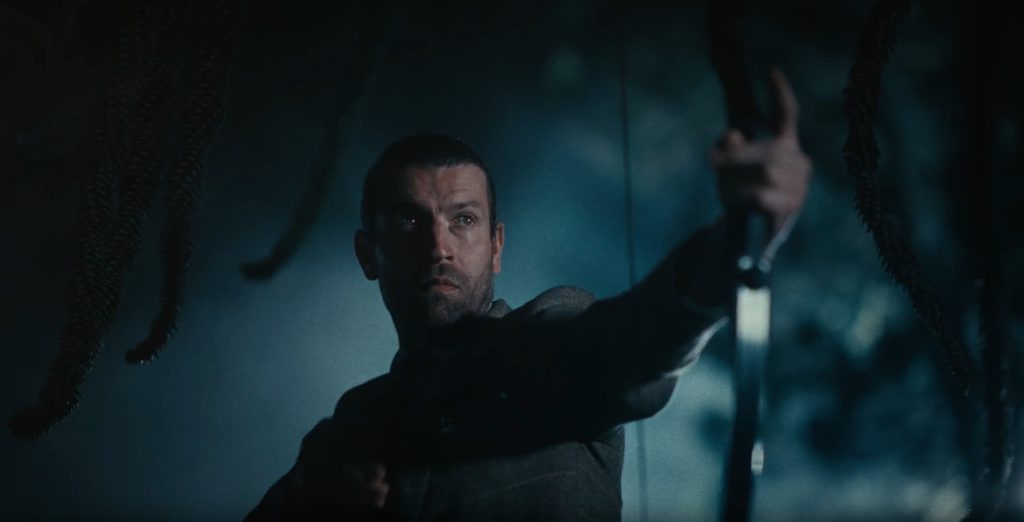
Performance wise, results vary. Some cast members deliver strong, committed work, while others occasionally struggle with dialogue that can feel a little stiff or overly expository. There are moments where line delivery becomes somewhat theatrical, particularly during confrontational scenes. Still, the cast remains enthusiastic throughout and nobody appears to be sleepwalking through the material.
The biggest challenge facing Hunting Party is pacing. At 92 minutes, the film is not overly long, yet it occasionally feels as though it is trying to tell several different films at once. The strongest scenes are the hunts themselves, along with the moments of suspense surrounding Eve’s investigation. When the story focuses on these elements, it becomes considerably more engaging.
To its credit, there is no shortage of effort on display. Danny Patrick continues to be an incredibly prolific filmmaker, and it is clear that a great deal of passion has gone into the production. Independent thrillers often live or die on ambition, and Hunting Party certainly has that in abundance.
While it never fully reaches the heights of some of the classic “human prey” thrillers that inspired it, there is enough intrigue, action and atmosphere here to keep genre fans interested. It may not always stick the landing, but it remains an earnest and occasionally entertaining thriller that explores what happens when those trusted to uphold justice decide to become executioners themselves.
| Acting | |
| Direction | |
| Cinematography | |
| Writing | |
| Sound | |
| Screen Critix Rating |