
There has always been something fascinating about grindhouse cinema. The rough visuals, over-the-top violence, eccentric characters and complete disregard for convention gave audiences experiences unlike anything else. While many modern filmmakers have attempted to recreate that feeling, few fully commit to the style. Writer-director Mike Cuenca certainly does with Watch Them Come Blood, an independent horror that proudly embraces exploitation cinema with both hands. Chaotic, bizarre and frequently unpredictable, it isn’t always polished, but it is never lacking in personality.
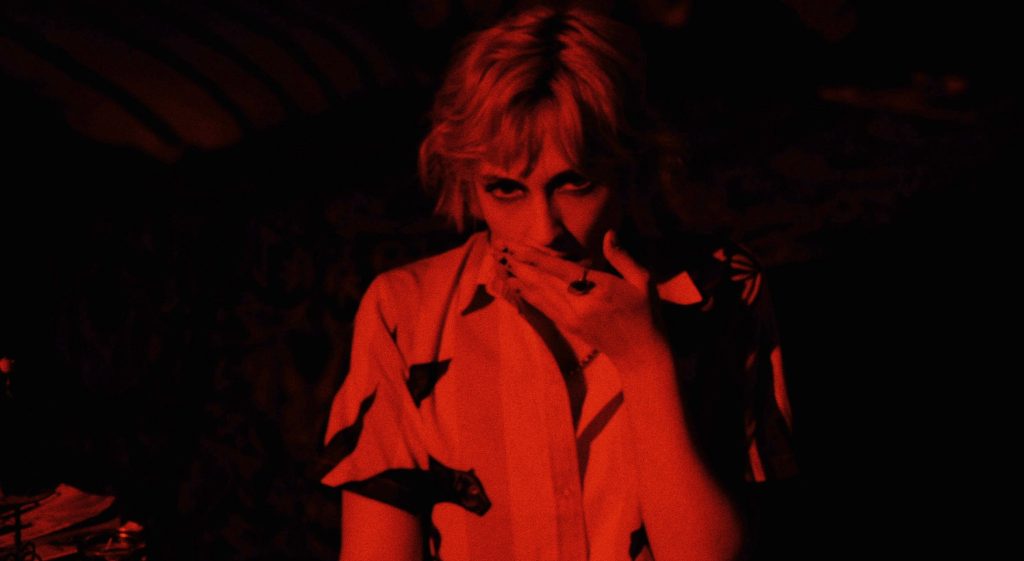
The film opens with an energetic blast of punk music over grainy imagery that immediately transports viewers back to the exploitation films of the 1970s and early 1980s. The heavy film grain, faded colours and distressed image quality feel entirely intentional, giving the production the appearance of an old cult classic rescued from the shelves of a forgotten video store. It immediately recalls the raw aesthetic of films such as Wes Craven’s The Last House on the Left, while the increasingly strange collection of characters later brings to mind Rob Zombie’s House of 1000 Corpses.
The opening itself is deceptively simple. A group of young friends steal a birthday cake before setting off on a road trip to celebrate Auggie’s birthday. It’s a wonderfully absurd way to begin a horror film and initially gives the impression that audiences are settling into a quirky comedy rather than the blood-soaked nightmare that eventually unfolds. Eric Aguilar and Allyn Moriyon establish an easy chemistry as lifelong friends Auggie and Emilio, while Rebecca Lynne Morley’s Flor provides much of the grounded perspective as the increasingly bizarre day progresses.
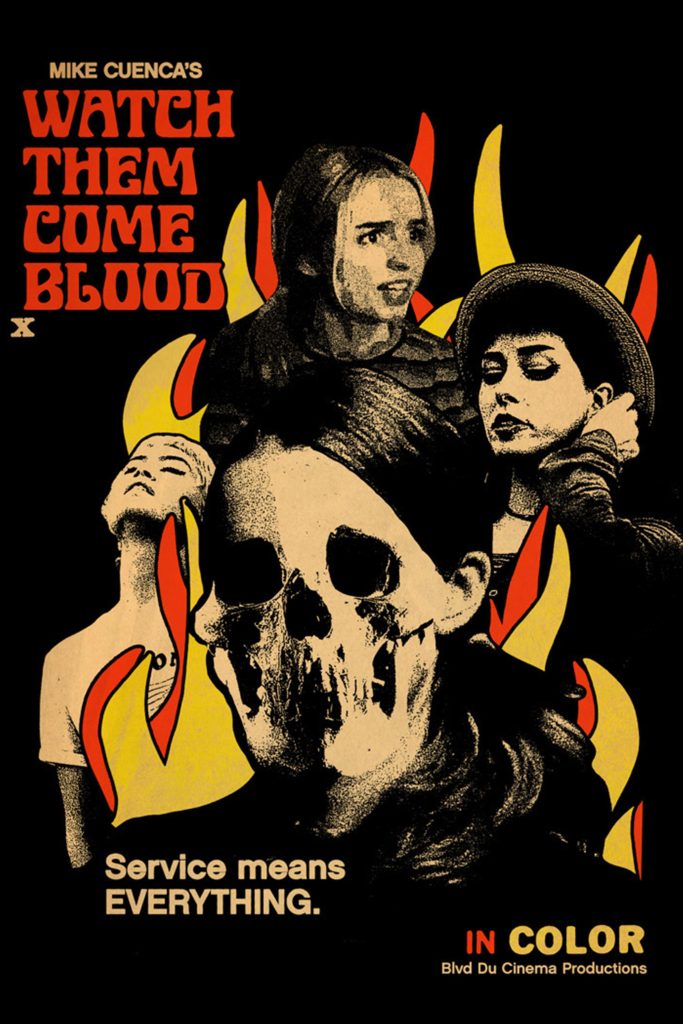
As the friends travel together, Cuenca allows the audience to spend time with them rather than rushing straight towards the horror. Conversations about old music, friendships and relationships help establish believable dynamics between the group before everything begins spiralling into madness. It is a slower opening than some viewers may expect, but it gives the characters enough personality that you become invested in where their increasingly reckless decisions will lead them.
Things take a sharp turn once the group arrive at a seedy bar. Here they witness one of the film’s strangest moments, watching a man dressed entirely in black openly masturbating in front of everyone. Instead of immediately fleeing, curiosity gets the better of them and they decide to follow the man when he leaves. That decision proves to be the catalyst for everything that follows, leading them towards an isolated Victorian mansion occupied by some wonderfully eccentric individuals.
From here, Watch Them Come Blood truly embraces its grindhouse identity.
The mansion is unlike anything else in the film. Bathed in vivid reds, hot pinks and colourful lighting gels, it feels heavily inspired by the colourful visual style of classic Italian giallo cinema. Faces are illuminated from impossible angles while every room seems occupied by increasingly bizarre characters whose intentions remain deliberately unclear. Jessica Gallant’s cinematography deserves enormous praise here, as the visual presentation becomes one of the strongest aspects of the entire production. Every frame feels carefully crafted despite the deliberately rough grindhouse presentation.
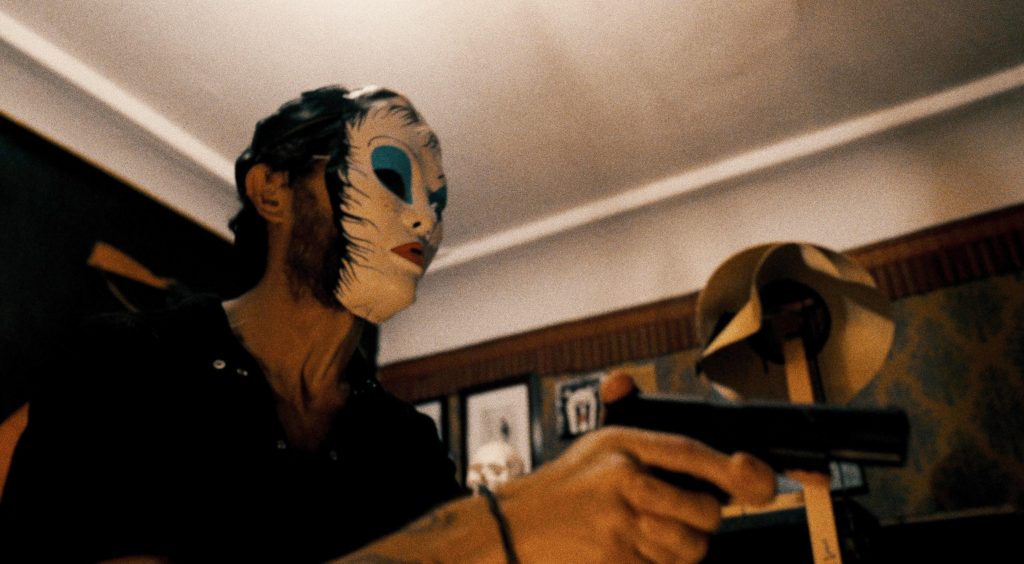
One cannot help but admire the sheer ambition on display. Cuenca refuses to settle for making a straightforward slasher or haunted house film. Instead, Watch Them Come Blood constantly shifts between horror, black comedy, crime thriller, road movie and even romance. New characters appear throughout, additional storylines branch off in unexpected directions and the narrative frequently catches audiences off guard. It won’t work for everyone, but it certainly prevents the film from ever becoming predictable.
The practical effects also deserve recognition. When the violence finally arrives, it is suitably brutal without relying on excessive computer-generated imagery. Heads explode, bodies are torn apart and blood flows exactly as fans of exploitation cinema would hope. More importantly, the effects feel tangible. They possess the messy, physical quality that so many older horror films captured before digital effects became commonplace.
Like many low-budget independent productions, however, Watch Them Come Blood is not without its flaws.
Some of the performances feel rather uneven, with line delivery occasionally lacking the conviction needed to fully sell the more dramatic moments. Likewise, parts of the screenplay and dialogue can feel awkward, particularly when characters are required to deliver exposition. Yet strangely, these imperfections almost become part of the film’s identity. Grindhouse cinema has never been about flawless acting or polished scripts. Instead, it has always been about energy, creativity and filmmakers throwing every idea they have onto the screen regardless of convention.
That philosophy runs throughout Mike Cuenca’s film. Whether every idea works is open to debate, but there is never any question that enormous passion sits behind every frame. The production feels like it has been made by people who genuinely love exploitation cinema rather than simply copying its visual style.
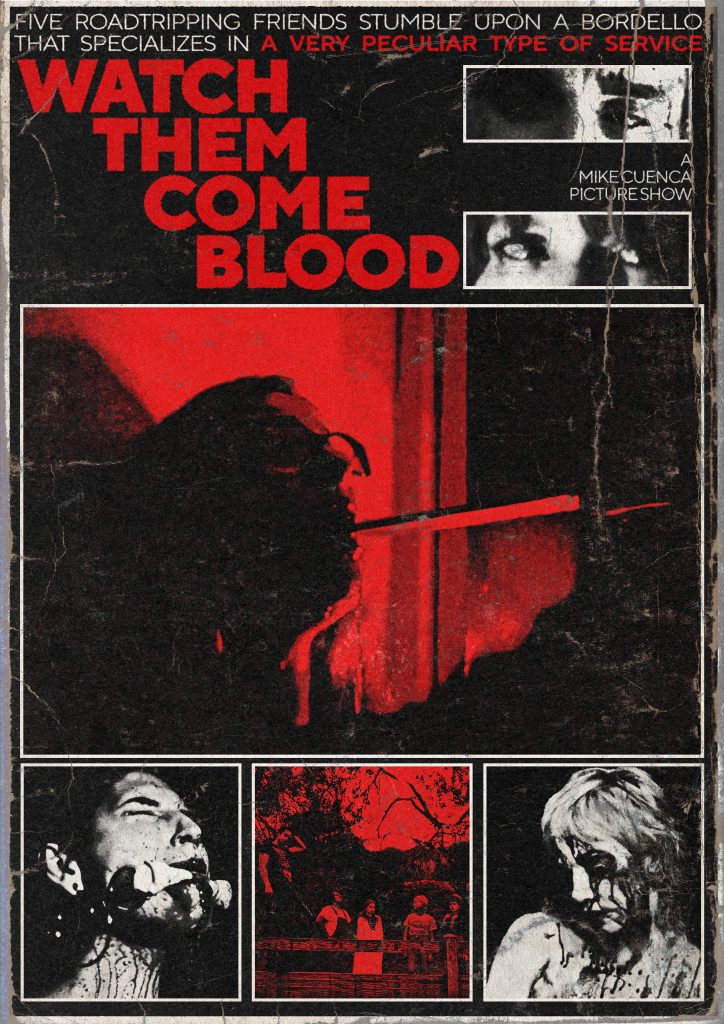
There are also numerous influences scattered throughout without the film becoming entirely derivative. Beyond the obvious comparisons to The Last House on the Left and House of 1000 Corpses, horror fans may also recognise shades of Psycho, while the mixture of crime, violence and shifting narratives occasionally recalls films such as From Dusk Till Dawn. Yet Cuenca never simply recreates those films. Instead, he throws everything together into something that feels uniquely his own.
The soundtrack plays an important role in maintaining that identity. The opening punk track immediately establishes the rebellious tone, while the rest of the score shifts comfortably between understated rock influences and music that feels perfectly suited to vintage exploitation cinema. Combined with the distressed visuals and colourful lighting, the audio helps complete the illusion that viewers have stumbled across a forgotten cult classic.
Ultimately, Watch Them Come Blood succeeds because it achieves exactly what it sets out to do. Mike Cuenca wasn’t trying to make a slick studio horror film or a prestige psychological thriller. He wanted to make a modern grindhouse picture packed with eccentric characters, outrageous violence, strange humour and memorable imagery. On that level, the film succeeds admirably.
Yes, the acting can be ropey at times, and the dialogue occasionally struggles. However, those shortcomings are outweighed by the sheer originality on display. In an era where so many horror films blend together, Watch Them Come Blood confidently stands apart. It embraces old ideas while introducing enough fresh ones to avoid feeling like simple imitation.
Independent horror thrives on filmmakers willing to take risks, and Mike Cuenca certainly isn’t afraid to do exactly that. Watch Them Come Blood may not appeal to every horror fan, but those with a love of cult cinema, exploitation films and uncompromising genre filmmaking will likely find plenty to admire. It is weird, bloody, occasionally messy and consistently memorable, proving that passion and creativity can often matter more than budget.
| Acting | |
| Direction | |
| Cinematography | |
| Writing | |
| Sound | |
| Screen Critix Rating |