
Grief is a deeply personal experience, and Glinting explores it with quiet restraint. Directed by Eddie Jackson and written by and starring Eoin O’Sullivan, this Irish short film tells an intimate story about loss, memory and the invisible traces loved ones leave behind. Rather than relying on melodrama, it focuses on the small, everyday moments that become overwhelming after bereavement, resulting in a heartfelt and thoughtful 15-minute drama.
Jack (Eoin O’Sullivan) is struggling to come to terms with the death of his wife, Kate (Maureen O’Connell). Living alone in the house they once shared, he attempts to carry on with everyday life, but everything around him serves as a reminder of what he has lost. An early telephone conversation with his concerned mother establishes his fragile emotional state before another painful reminder arrives in the form of a voicemail informing him that Kate’s ashes are ready to be collected.
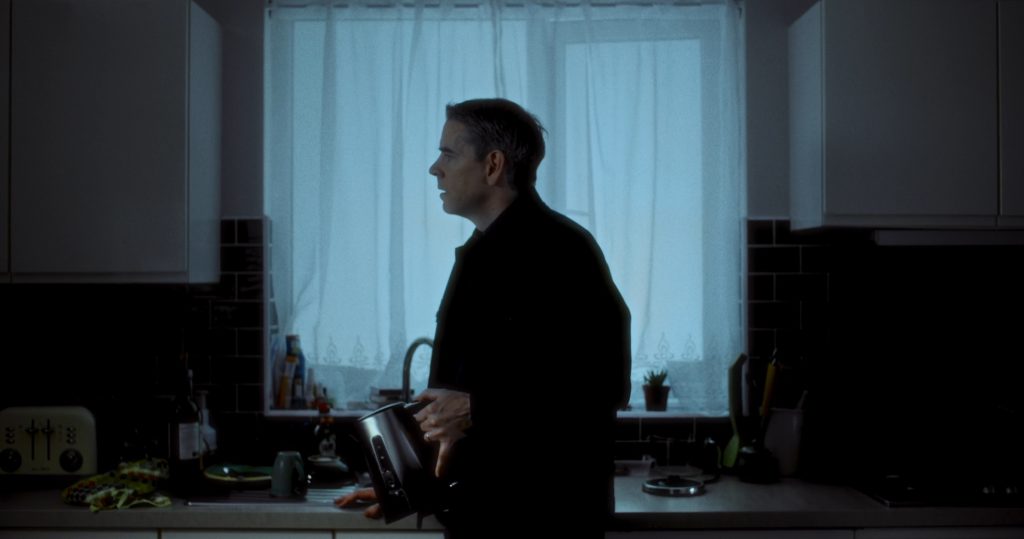
The house itself becomes a visual representation of grief. The breakfast table remains untouched with two place settings still laid out, frozen in time as though Jack cannot bring himself to accept that life has changed. He sleeps downstairs on the sofa instead of in the marital bed, avoiding the room that once represented comfort and companionship. These subtle details communicate far more than dialogue ever could.
What follows is a simple but effective premise. Jack begins noticing tiny dust particles floating through shafts of sunlight around the house. As they drift through the air, they seem to trigger vivid memories of Kate, her touch, her embrace and the happiness they once shared together. Eventually these moments become so convincing that Jack begins questioning whether he is simply remembering his wife or genuinely sensing her presence.
One of the film’s greatest strengths is that it never fully answers that question. Eddie Jackson wisely keeps the story grounded in Jack’s emotional experience rather than turning it into a conventional supernatural tale. The ambiguity allows audiences to interpret events for themselves. Is grief causing Jack to see what he desperately wants to see, or is there something more mysterious taking place? The film leaves that decision entirely with the viewer.
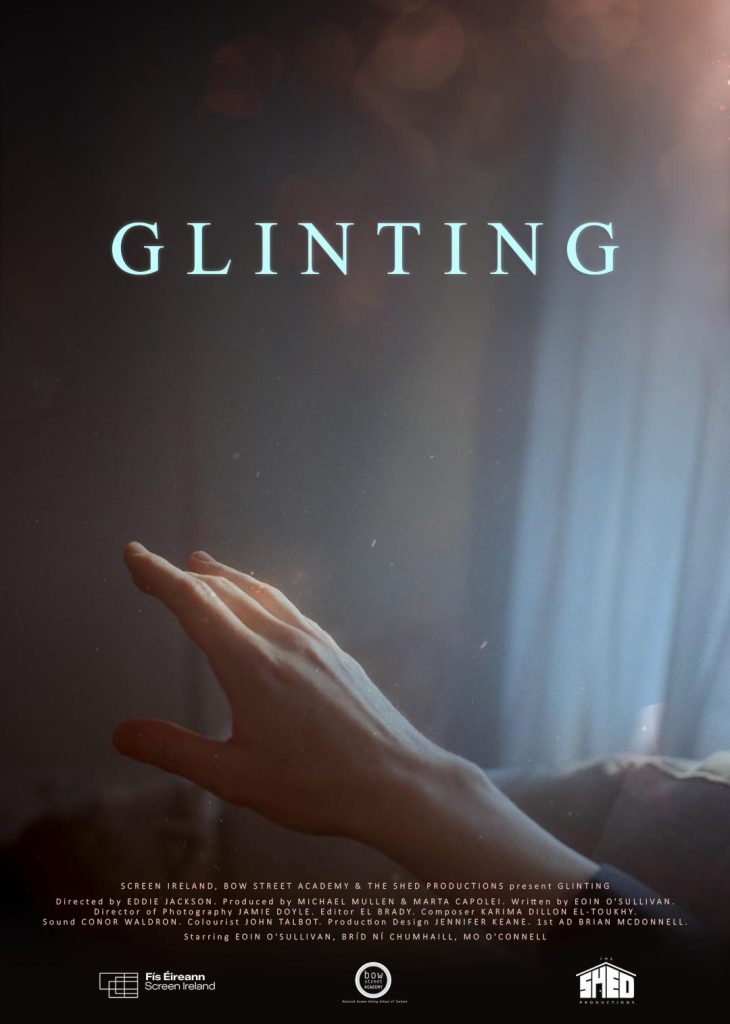
Visually, Glinting is a beautifully crafted short. Jamie Doyle’s cinematography makes excellent use of natural light, allowing the floating dust particles to become almost magical without requiring elaborate visual effects. It is an elegant visual metaphor for memory itself; often invisible until the light catches it. The imagery is simple, but remarkably effective.
The house also becomes a character in its own right. Every room carries reminders of Kate’s absence, and the production design quietly reinforces the feeling that time has stopped inside these walls. Empty spaces, untouched belongings and stillness all contribute to the overwhelming sense of loneliness surrounding Jack.
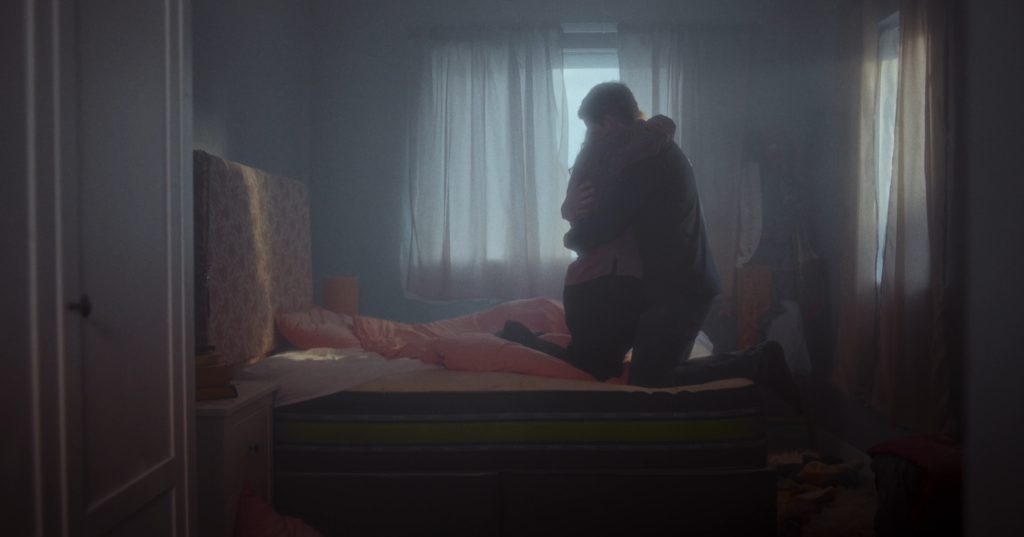
The strongest sequence arrives when Jack finally returns to the bedroom. Clutching Kate’s pillow, he notices the dust once again before shaking the duvet into the air, filling the room with floating particles. For a brief moment Kate appears before him, and the pair embrace before she disappears just as suddenly, leaving Jack alone once again. It is a touching scene that perfectly captures how grief can momentarily make someone feel close again before reality painfully returns.
The following morning shifts the story into a different emotional register. Jack’s mother, Trish (Brid Ní Chumhaill), arrives to help by cleaning the house, vacuuming away the dust that has become so important to him. Jack reacts with panic, ripping open the vacuum cleaner bag in an attempt to release the dust back into the air, convinced that he can somehow save Kate or bring her back. It is an uncomfortable but believable portrayal of someone desperately clinging to anything that connects them with a loved one.
The subsequent conversation between mother and son is handled with sensitivity. Rather than offering simple answers or dramatic speeches, it reflects the difficult reality that there is no easy solution to grief. Sometimes the best support someone can offer is simply being present.
Eoin O’Sullivan carries the film almost entirely on his own shoulders, and he delivers a sincere central performance. Jack never becomes theatrical or overly emotional, instead portraying grief through exhaustion, quiet desperation and emotional withdrawal. His performance feels honest, making it easy to sympathise with his situation.
Brid Ní Chumhaill also makes a strong impression despite relatively limited screen time. Her performance as Jack’s mother feels authentic, portraying the difficult balance between wanting to help while recognising that grief cannot simply be fixed.
Technically, the production is impressive considering its estimated €7,000 budget. The sound design remains clean throughout, while Karima Dillon El Toukhy’s score is understated and often ethereal, gently supporting the emotional beats without becoming intrusive. El Brady’s editing also keeps the pacing measured, allowing scenes to breathe without overstaying their welcome.
The film succeeds because it understands that grief rarely announces itself through grand emotional outbursts. Instead, it often arrives in ordinary moments: seeing an empty chair, hearing an old voicemail, noticing something as insignificant as dust drifting through sunlight. Glinting captures those feelings remarkably well, allowing audiences who have experienced loss to recognise many of Jack’s behaviours and emotions.
There are occasions where the pacing feels deliberately restrained, and some viewers may wish the film explored its central idea a little further. Likewise, those expecting a supernatural ghost story may find themselves surprised by how firmly the narrative stays rooted in emotional realism. However, that restraint is also one of the film’s greatest qualities, refusing to sensationalise bereavement in favour of something more honest.
Director Eddie Jackson’s statement explains that the film was never intended as a ghost story but rather an exploration of memory, psychology and the lingering presence of those we have lost. That intention comes across clearly on screen. Glinting is ultimately about learning to live with absence rather than escaping it.
In just fifteen minutes, Glinting tells a moving story about love, memory and mourning with intelligence and sensitivity. It is a well-crafted Irish short featuring strong performances, attractive cinematography and an emotional core that will resonate with many viewers who have experienced the loss of someone close. Quiet, thoughtful and sincere, it is a touching meditation on grief that proves sometimes the smallest stories leave the strongest impression.
| Acting | |
| Direction | |
| Cinematography | |
| Writing | |
| Sound | |
| Screen Critix Rating |