
Anyone who has ever used a rideshare app knows that climbing into a stranger’s car is a leap of faith. For the passenger, there’s always the uncertainty of who will be behind the wheel. For the driver, every new booking could bring someone pleasant, bizarre or downright unbearable. It’s an everyday premise ripe for comedy, and Under Glass uses it as the foundation for an ambitious independent feature that blends workplace humour with psychological drama.
Written by Jay McLendon and Colin Wilson, with McLendon also directing, Under Glass immediately establishes its quirky personality. The opening scene sees a passenger laughing so uncontrollably in the back seat that the entire car rocks on its suspension, while the driver stares ahead in complete frustration. It’s an amusing introduction that sets the tone for much of what follows.
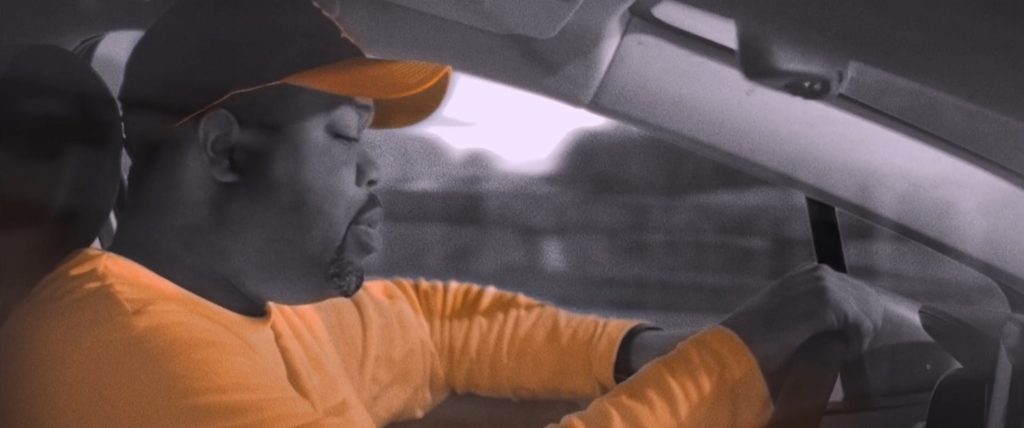
Our unnamed protagonist, credited simply as A (Mitchell Brinkley III), works for a rideshare app and is struggling to make ends meet. His customer ratings are steadily falling, not because he’s a bad driver, but because of the absurd reasons passengers leave behind. One customer blames him for having to go to work. Another complains about the hat he’s wearing. It’s a clever jab at modern review culture, where people’s livelihoods can be affected by the most irrational complaints.
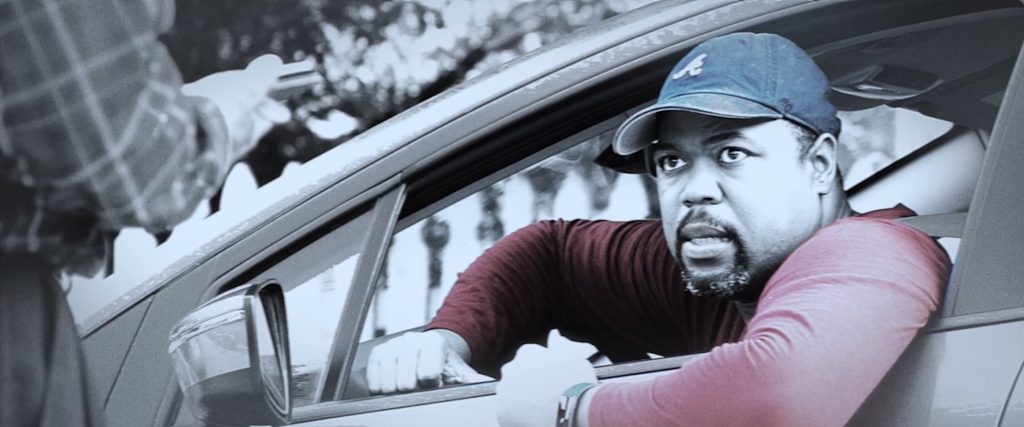
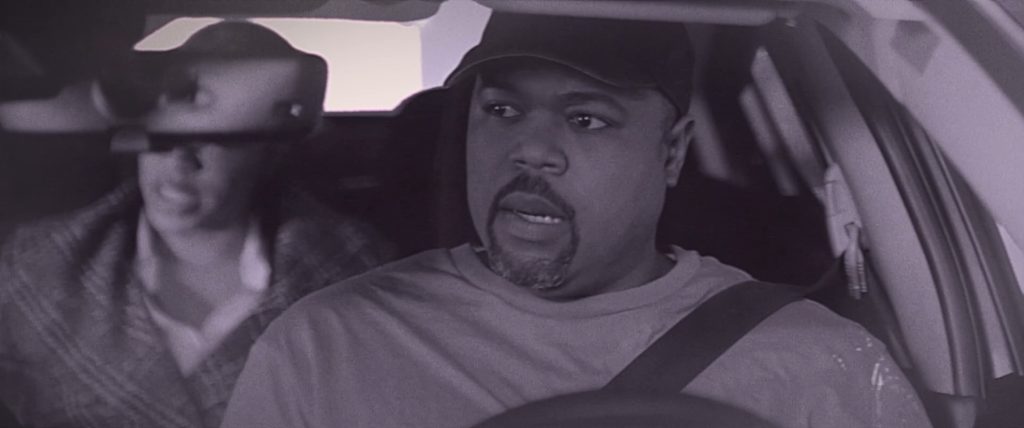
Visually, the film makes an immediate impression. Shot almost entirely in black and white, the only consistent splash of colour comes from whatever shirt A happens to be wearing. It’s an artistic decision that recalls the famous image of the little girl in the red coat from Schindler’s List, giving the otherwise monochrome presentation a distinctive visual identity.
For much of its running time, Under Glass plays like a series of comedic sketches centred around A’s increasingly eccentric passengers. One particularly funny sequence sees him pick up an elderly woman standing at the roadside. The car drives out of frame before returning moments later from the opposite direction, revealing that she had apparently paid for nothing more than a lift across a quiet suburban street.
As the film progresses, the passengers become increasingly ridiculous. Some struggle to understand how the app works, others climb into the vehicle dressed as gorillas, while one particularly obnoxious businessman insists on snorting cocaine in the back seat despite A’s obvious discomfort. Every fare chips away a little more at the driver’s patience, creating an entertaining portrait of someone slowly losing faith in humanity.
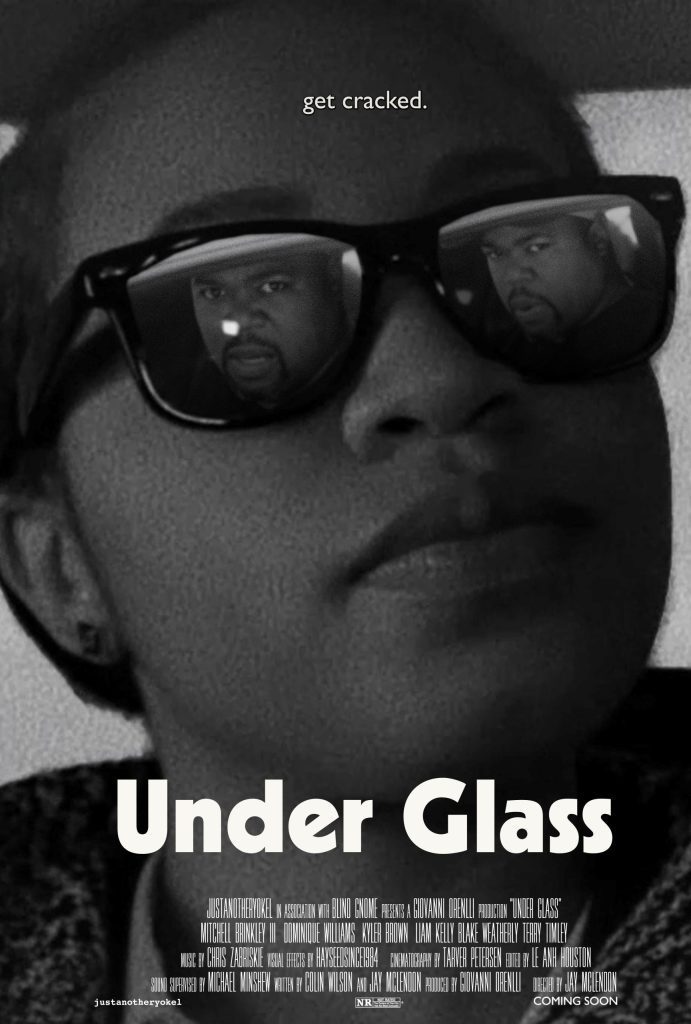
Mitchell Brinkley III carries the film well. Much of the humour comes not from exaggerated reactions but from his growing exhaustion as he endures one bizarre interaction after another. His understated performance gives the comedy an authenticity that helps ground some of the film’s more eccentric characters.
The cinematography by Tarver Petersen also deserves praise. Despite its limited budget, the film includes several effective travelling shots, whether mounted to the bonnet of the car or tracking alongside A as he drives through town. These moments help give the production a larger sense of scale than audiences might expect from such a modest independent feature.
However, while the concept remains entertaining, the film eventually begins to repeat itself. Passenger after passenger enters the car, irritates A, exits the vehicle, and the cycle begins again. Although each encounter introduces a new comic situation, the overall structure starts to feel overly familiar.
The film gradually introduces a more substantial narrative when A picks up Niti (Latrice Davis), a mysterious passenger who claims to know him. She insists they shared a traumatic event from his past, something A has desperately tried to bury, and her arrival shifts the story away from workplace comedy into more psychological territory. It is an intriguing development and one that adds welcome stakes to the narrative after much of the earlier repetition.
That said, the dramatic storyline arguably arrives later than it should. For long stretches, the film feels content simply observing another strange day in the life of a rideshare driver, leaving viewers waiting for a larger narrative thread to emerge. Introducing that central mystery earlier may have helped maintain stronger momentum throughout the 104-minute runtime.
The production isn’t without technical issues either. Dialogue is occasionally muffled, making certain conversations difficult to follow, and the sound mix sometimes lacks the clarity needed for dialogue-driven comedy. These problems never completely derail the experience, but they are noticeable enough to affect individual scenes.
Knowing how Under Glass was produced makes its achievements all the more impressive. Much of the film was reportedly shot inside a one-car shed using green screen techniques before the Covid lockdowns, all on a budget of around $6,000. That’s an extraordinary accomplishment. While there are occasional moments where the compositing reveals the limitations of the production, the sheer ingenuity required to create a feature of this scale on such limited resources deserves genuine admiration.
Under Glass has a 90’s Indie feel to it
There’s an unmistakable 1990s independent spirit running throughout Under Glass. Its low-budget aesthetic, dialogue-driven humour and focus on eccentric everyday characters frequently recall Kevin Smith’s Clerks, albeit with a more psychological edge. It never quite reaches the same iconic status, largely due to its pacing issues and repetitive structure, but the influence is easy to appreciate.
Ultimately, Under Glass is a film whose ambition outweighs some of its limitations. The comedy is consistently amusing, the central performance is engaging, and the later psychological twists add welcome depth to what initially appears to be a straightforward workplace comedy. While tighter pacing, cleaner sound and a more focused narrative would have elevated the finished product considerably, it’s impossible not to respect the dedication that clearly went into bringing this feature to life.
Independent filmmaking has always been about creativity over resources, and Under Glass embodies that philosophy. It may not become the next breakout indie classic, but it’s a confident, inventive debut that showcases plenty of promise from Jay McLendon and his collaborators. With stronger pacing and a more streamlined narrative, their next project could prove to be something very special indeed.
| Acting | |
| Direction | |
| Cinematography | |
| Writing | |
| Sound | |
| Screen Critix Rating |