
Independent cinema is often where filmmakers take the biggest creative risks, free from commercial expectations or studio interference. Some experiments succeed brilliantly, while others leave audiences scratching their heads. Saint’s Servitude, the latest short from American filmmaker James Ristas, firmly falls into that latter category. It’s a surreal, highly stylised fantasy that refuses to explain itself, embracing symbolism and dream logic over conventional storytelling. It certainly won’t appeal to everyone, but there’s no denying its commitment to its own distinctive artistic vision.
The twenty-minute short opens with the sound of crackling as the title card appears, followed by images of flames introducing the first chapter, “The Servant Years.” From the outset, it’s immediately apparent that this isn’t going to be a traditional narrative.
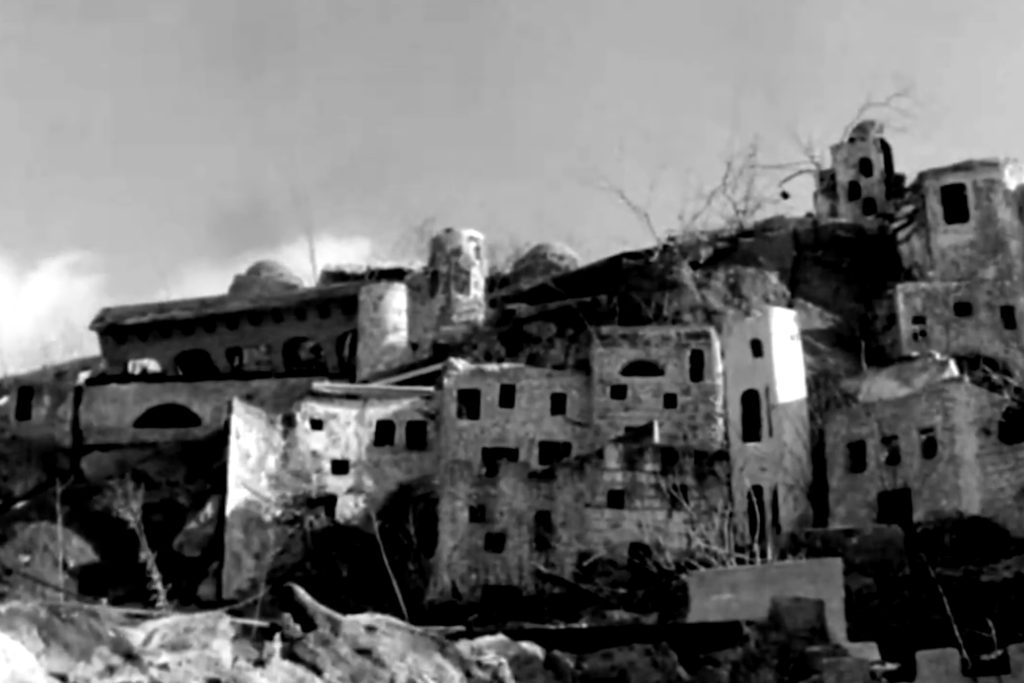
Shot almost entirely in black and white, complete with heavy film grain, the opening sections deliberately imitate the silent cinema of the 1920s. Characters move their mouths as though speaking, yet no dialogue is heard. Instead, title cards appear between scenes, allowing viewers to read what has supposedly been said in classic silent film fashion.
The central figure, known simply as The Servant, is introduced kneeling in prayer before carrying out everyday tasks around what appears to be a rural homestead. She collects eggs from wandering chickens before venturing into nearby woodland, where strange visions of fire begin interrupting reality. Disturbed by these apparitions, she rushes towards a lake, desperately splashing herself with water as though attempting to cleanse herself.
It’s an unusual sequence, but one that immediately establishes the film’s religious imagery and dreamlike atmosphere.
Ristas frequently cuts away from the narrative to close-ups of classical paintings depicting the human body, religious iconography and symbolic imagery. Rather than providing straightforward answers, these inserts encourage audiences to interpret the film’s meaning for themselves.
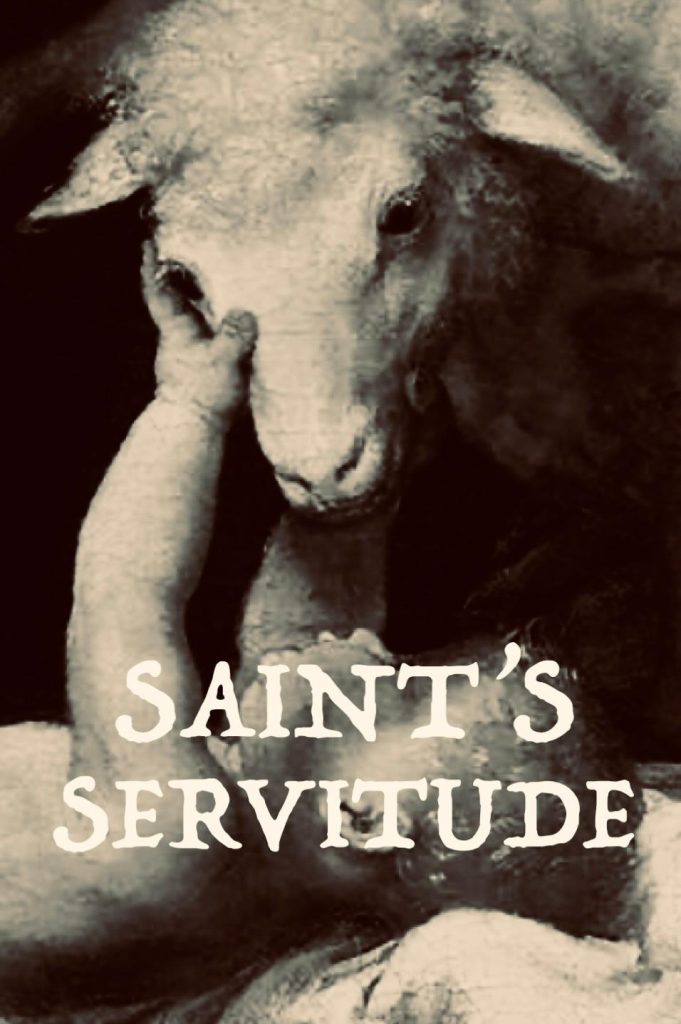
A second chapter, “The Servant is Scorned,” introduces another enigmatic sequence. A young woman prepares herself in her bedroom before secretly welcoming a man through her window. Just as intimacy seems inevitable, her attention is diverted by the appearance of a mysterious religious figure. Her hair suddenly begins blowing violently, blood stains appear across her clothing, and the atmosphere shifts from romance to something deeply unsettling. Moments later, loud knocking at the bedroom door forces the encounter to an abrupt end.
Whether these scenes are literal events, religious visions or symbolic representations is left entirely open to interpretation.
For roughly the first half of its runtime, Saint’s Servitude contains virtually no conventional sound design whatsoever. There is no spoken dialogue, no ambient room tone and almost no natural sound effects. Instead, the soundtrack consists primarily of music punctuated by persistent cracking noises that accompany many of the film’s stranger moments.
Those unsettling crackles immediately brought to mind the disturbing home movie sequences from Scott Derrickson’s Sinister, creating an uncomfortable texture that sits beneath the imagery throughout much of the film. It’s an effective audio choice that contributes significantly to the short’s unnerving atmosphere.
As bizarre as the opening sections are, the film becomes even more unexpected around the twelve-minute mark.
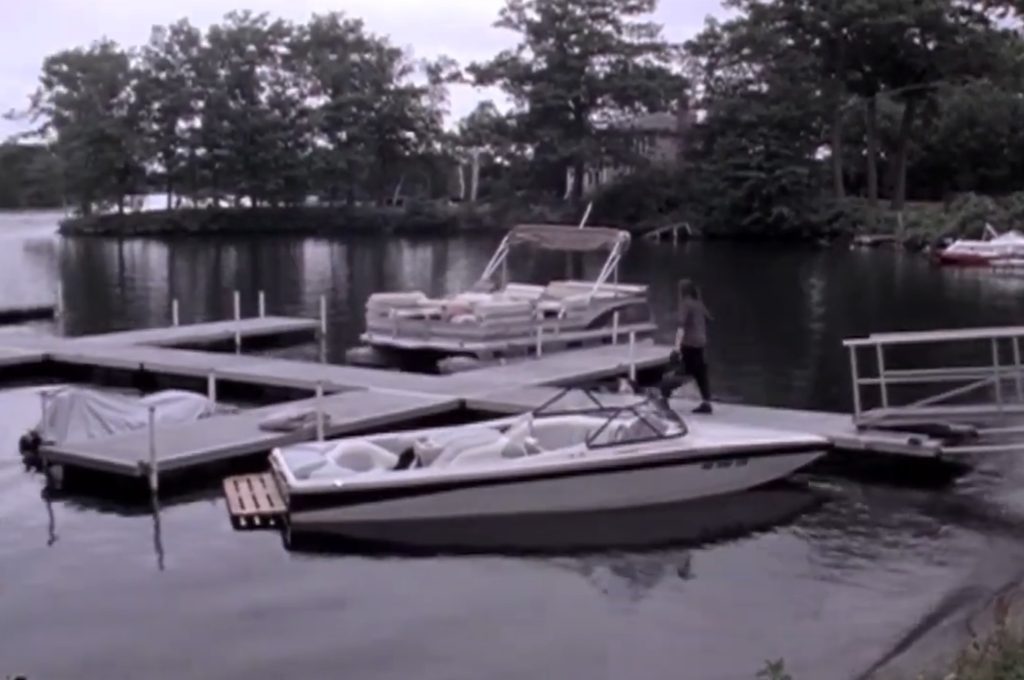
Without warning, the monochrome silent-film aesthetic disappears entirely, replaced by full colour, synchronised sound and an altogether different visual style. Suddenly the film resembles a low-budget independent production from the 1980s or early 1990s, complete with camcorder-like cinematography reminiscent of films such as Deadbeat at Dawn.
Michelle, played by Samantha Noble Webb, walks through the streets before being stopped by a police officer who calmly informs her that she has been missing for three days. Michelle has no recollection of this, leaving audiences once again unsure whether what they’re witnessing is reality, memory or something else entirely.
The transition is deliberately jarring, yet undeniably fascinating.
Having looked into James Ristas’ previous work, it’s clear this surreal approach isn’t an isolated experiment but rather a defining feature of his filmmaking style. He appears drawn towards highly symbolic, black and white imagery that places mood and interpretation above straightforward plotting. In an era where many independent shorts follow familiar structures, there’s something admirable about a filmmaker so committed to creating work that feels entirely their own.
That doesn’t necessarily make Saint’s Servitude an easy watch.
Many viewers will undoubtedly struggle with its abstract storytelling, minimal explanation and deliberately ambiguous narrative. Those looking for a clear beginning, middle and end may leave frustrated, while audiences with an appreciation for experimental cinema will likely find considerably more to admire.
The performances deserve recognition, particularly because the actors are required to communicate almost entirely through physical performance during much of the running time. Demitra Papadinis commits fully to the role of The Servant, conveying fear, confusion and devotion without relying on spoken dialogue. Likewise, the supporting cast embrace the film’s unusual style wholeheartedly, trusting Ristas’ unconventional vision despite its inherent challenges.
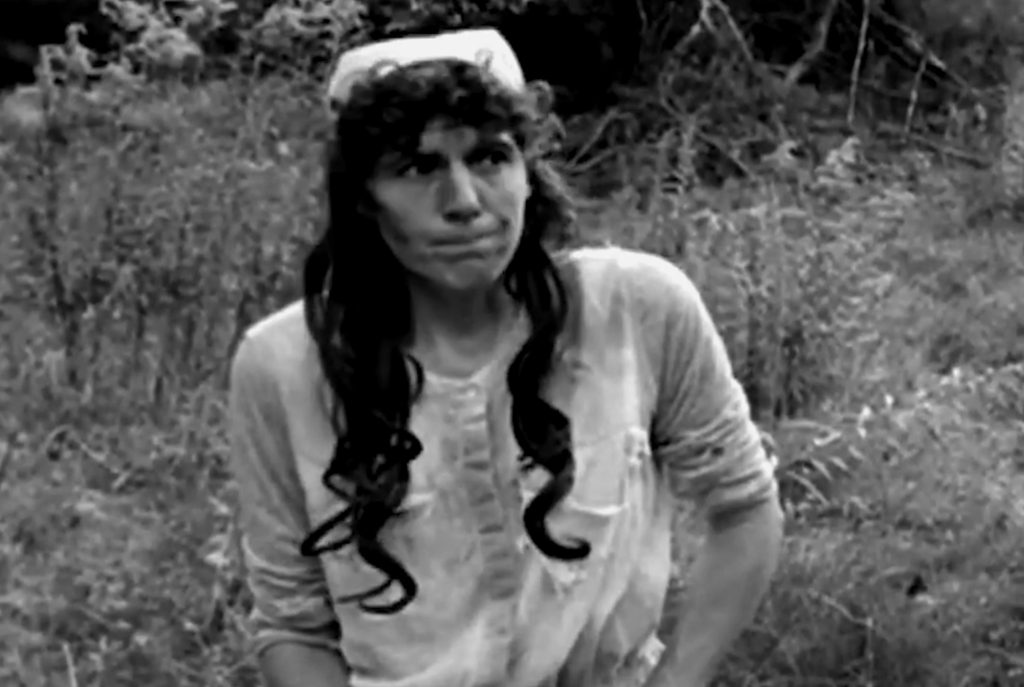
Considering the production was reportedly completed for around $1,200, the craftsmanship is impressive. The cinematography by Zaccur Fettig and Jennifer Graham frequently produces striking compositions, while Jim Landry’s editing confidently embraces the film’s fragmented structure rather than attempting to make it conventionally accessible.
Ultimately, Saint’s Servitude is less concerned with telling a straightforward story than creating an emotional and symbolic experience. Its religious themes, surreal imagery and shifting visual styles invite interpretation rather than explanation, rewarding viewers willing to meet it on its own terms.
It certainly won’t be for everyone, and that’s perfectly acceptable. Experimental cinema has always divided opinion. Yet even those who struggle with the narrative may find themselves appreciating the sheer confidence behind its execution. James Ristas has crafted something unmistakably personal, and in today’s increasingly formulaic filmmaking landscape, originality alone deserves recognition.
Whether audiences ultimately love it or leave bewildered, Saint’s Servitude is unlikely to be forgotten anytime soon.
| Acting | |
| Direction | |
| Cinematography | |
| Writing | |
| Sound | |
| Screen Critix Rating |