
Making an action thriller on a budget of around $50,000 is ambitious enough. Creating one that features military combat, psychological trauma, martial arts, large-scale action sequences and an emotional detective story is an even bigger challenge. Yet that’s exactly what actor, filmmaker and voice artist Johnny Yong Bosch sets out to achieve with Spades, an impressively ambitious independent thriller that consistently punches well above its financial weight.
The film opens with striking imagery of a soldier lying motionless on the battlefield, intercut with shots of him sprinting through combat with rifle in hand. Those fragmented memories soon give way to a quieter flashback, where a group of soldiers relax together while fellow serviceman Spades (Johnny Yong Bosch) entertains them with card tricks and magic, creating genuine warmth and camaraderie before the film abruptly shifts to the present day.
Former soldier James Bishop (Jason Narvy) is now a detective with the San Angeles Police Department, but his military service continues to haunt him. Bosch structures much of the narrative through fragmented flashbacks, regularly cutting between Bishop’s current investigation and memories from his time overseas. The non-linear storytelling isn’t there simply to be clever; it gradually reveals the emotional scars left behind by combat, allowing audiences to understand Bishop’s deteriorating mental state without lengthy exposition.
His latest case begins when a jogger reports discovering the body of a young woman in woodland. Bishop quickly notices inconsistencies in the man’s story. Dirt beneath his fingernails doesn’t match his account of events and, after claiming he was listening to rock music during his run, Bishop checks the victim’s stolen iPod to discover dance music was actually the last genre played. The detective’s instincts prove correct, triggering a tense chase through the forest that ends with Bishop being brutally attacked and hospitalised.
The assault serves as more than just another action beat. Confined to a hospital bed, Bishop’s PTSD intensifies, blurring the line between memory and reality. Visions of Spades begin invading his room, his eyes glowing unnaturally as black smoke fills the air beneath deep purple lighting.
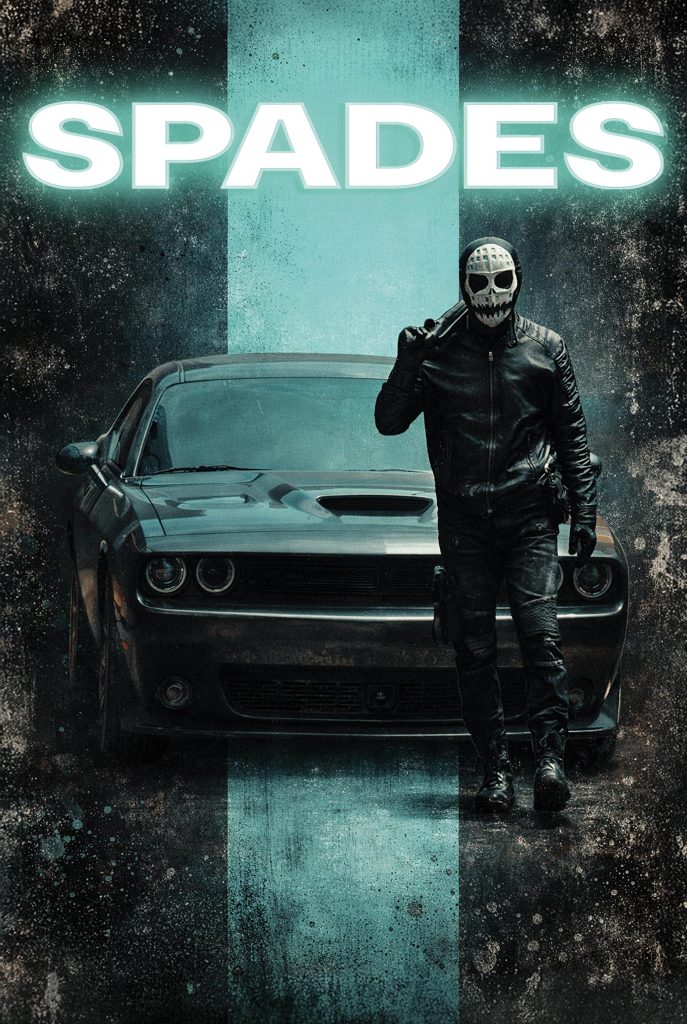
Meanwhile, the investigation grows far larger than a single murder. A ruthless human trafficking organisation is revealed to be abducting women before selling them to the highest bidder, while a mysterious masked vigilante begins systematically eliminating those connected to the operation. Each crime scene is marked with the same chilling calling card: a skull-branded Spades playing card. As Bishop attempts to uncover the vigilante’s identity, he finds himself confronting painful memories from his past while racing against time to stop a far greater threat.
What initially appears to be a fairly conventional police procedural steadily evolves into something much more layered. Bosch wisely resists revealing too much too early, allowing the mystery surrounding Spades himself to build naturally. Is he a hero? A murderer? Or does he share a deeper connection with Bishop’s past than first appears? The screenplay continually feeds audiences new pieces of the puzzle, ensuring the story remains engaging throughout its substantial runtime.
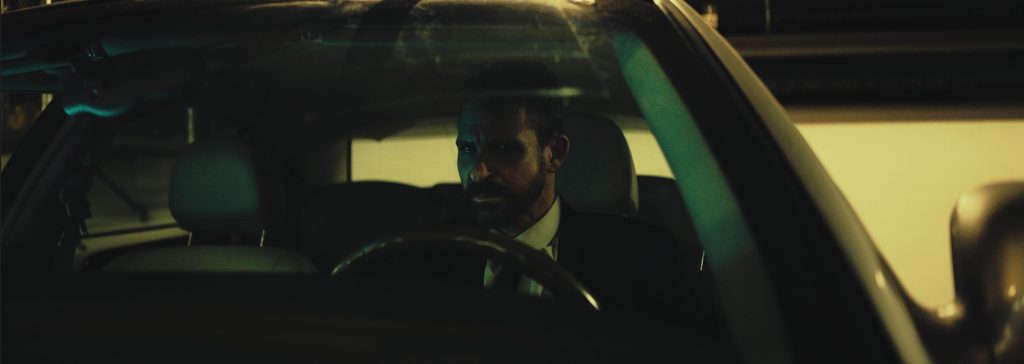
Jason Narvy anchors the film with an excellent lead performance. Bishop is portrayed as a capable detective whose calm professionalism barely disguises the trauma simmering beneath the surface. His struggles with PTSD never feel exaggerated, while the quieter moments exploring grief and emotional isolation provide genuine weight between the action sequences.

The relationship between Bishop and his estranged daughter Lana (Maya Brattkus) also gives the film an emotional core that many action thrillers lack. Their fractured relationship feels believable, with years of pain and distance conveyed through understated performances rather than melodrama. As Lana becomes increasingly connected to the human trafficking investigation, the stakes become deeply personal, giving the audience another reason to invest beyond simply seeing the villains defeated.
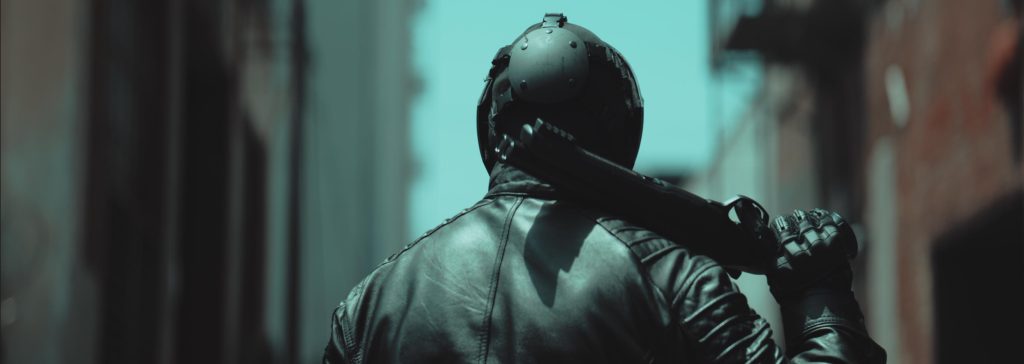
Johnny Yong Bosch also impresses in front of the camera. Hidden behind a distinctive mask for much of the film, he creates an enigmatic anti-hero whose motivations remain unclear until the narrative is ready to reveal them. Rather than relying on dialogue, Bosch allows his physical performance to do much of the work, giving Spades a mysterious presence that keeps audiences guessing.
Nobuaki Shimamoto deserves particular praise as Saito, the head of the trafficking organisation. Calm, intelligent and quietly ruthless, he makes for a compelling antagonist without resorting to cartoon villainy. His composed demeanour only makes his brutality more effective whenever violence erupts.
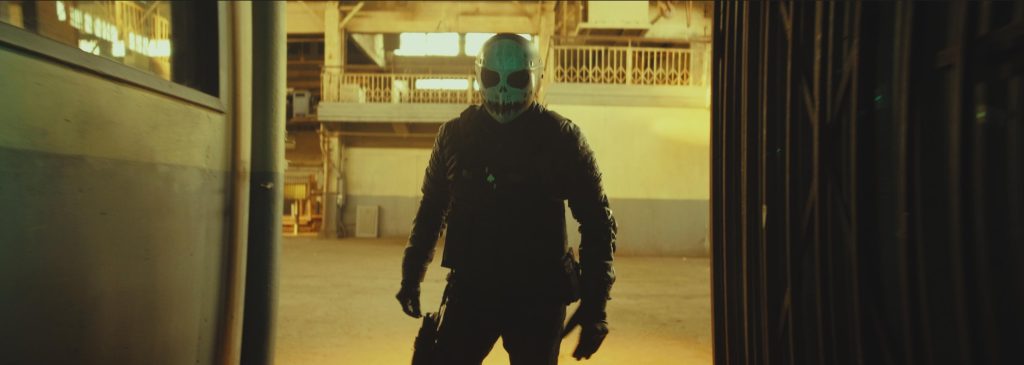
Speaking of violence, Spades delivers plenty of it.
The action sequences are confidently staged throughout, with Hector Soria’s fight choreography blending tactical gunplay, knife combat and martial arts into a series of highly entertaining set pieces. One extended corridor fight stands out in particular, while several slower moments allow audiences to appreciate the choreography rather than burying it beneath frantic editing. Fans of action cinema will also appreciate the film’s willingness to embrace practical stunt work wherever possible.
Technically, it’s difficult not to be impressed by what Bosch and his collaborators have achieved. The cinematography makes excellent use of wide establishing shots and drone photography, while rich blues, reds and purples give the neo-noir presentation a distinctive visual identity. Even simple dialogue scenes benefit from careful lighting and colour grading, making the film feel far more expensive than its modest budget would suggest.
One of Spades’ greatest assets is its musical score. Rich, sweeping and consistently cinematic, the orchestral compositions often sound like they belong in a studio production with a budget many times larger. There are moments where the music recalls the work of composers such as Hans Zimmer, not because it imitates his style directly, but because of the scale and emotion it brings to the film. Whether underscoring Bishop’s psychological turmoil, elevating the military flashbacks or driving the action sequences, the score adds tremendous weight to almost every scene. Combined with crisp sound design that gives every gunshot, punch and explosion genuine impact, the audio work throughout is exceptional and easily ranks among the production’s biggest achievements.
Running at just under two hours, Spades occasionally feels a little overlong. A handful of investigative scenes could perhaps have been tightened to maintain momentum, but the film continually introduces enough fresh developments, action and character work to justify its length more often than not.
Perhaps the film’s greatest achievement is its sheer ambition. It never feels like a production limited by its budget. Instead, Bosch embraces large-scale action, emotionally driven storytelling and layered mystery while trusting audiences to keep pace with its shifting timelines and psychological themes.
Independent action films often struggle to distinguish themselves from bigger studio productions, but Spades succeeds because it places character alongside spectacle. The action is exciting, but it never comes at the expense of Bishop’s personal journey or the emotional consequences of violence. That balance is what elevates the film beyond being simply another low-budget shoot-em-up.
Considering Spades marks Johnny Yong Bosch’s feature directorial debut, it’s an immensely confident piece of filmmaking. From its impressive visuals and outstanding musical score to its strong performances and surprisingly layered storytelling, it demonstrates just how much can be achieved through creativity, passion and careful planning rather than enormous financial resources.
It isn’t flawless, but it’s the sort of ambitious independent feature that deserves to be celebrated. At around $50,000, Spades represents exceptional value on screen, and it’s easy to understand why the film has enjoyed success on the festival circuit. If this is the standard Bosch has set for the first feature from Vox Rocket Studio, the future looks extremely promising indeed.
| Acting | |
| Direction | |
| Cinematography | |
| Writing | |
| Sound | |
| Screen Critix Rating |