
Filmmaker Jack McLoughlin is becoming a familiar name at Screen Critix. We’ve previously reviewed several of his projects, including Are You Okay?, Q&A, The Death of The House Party and the feature film Kate & Jake. His latest short, Uncle Tommy, runs for just ten minutes and once again finds McLoughlin working on a small scale, concentrating on recognisable characters and everyday situations rather than trying to make his limited running time feel bigger than it needs to be.
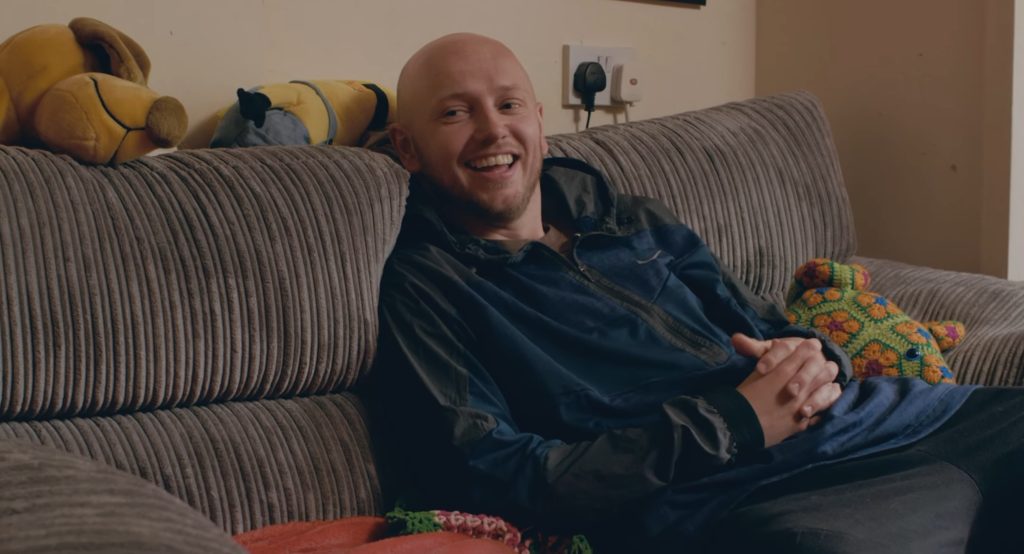
The film opens with schoolboy Mikey (Max Ainsworth) running down the street in his uniform before arriving home and walking into the living room. He’s expecting the house to be empty, so the sight of his Uncle Tommy (AJ Jones) sitting silently on the sofa gives him quite a shock. Tommy finds Mikey’s reaction hilarious, although there’s a more practical lesson to be learned from his unexpected appearance: Mikey forgot to lock the back door.
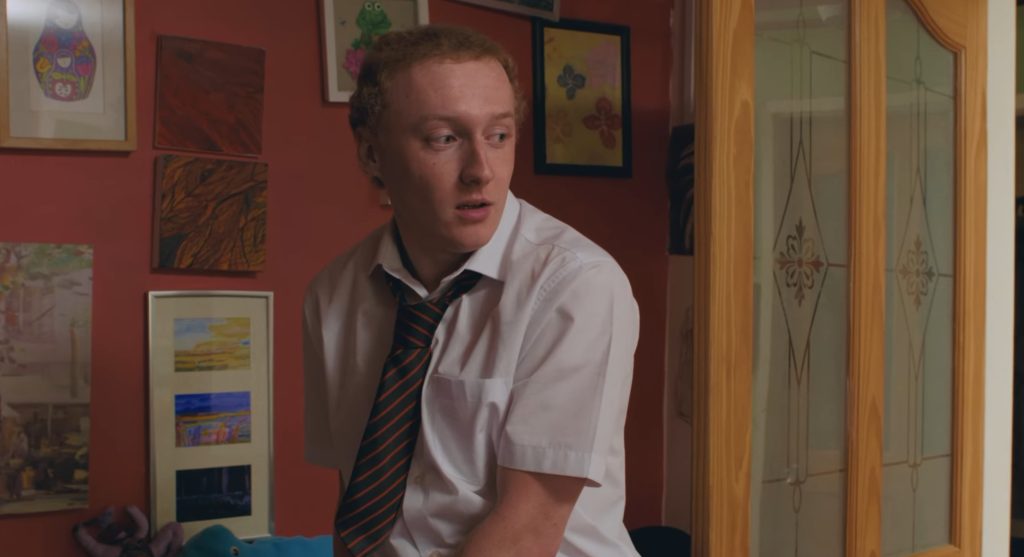
There’s also the question of why Mikey is home from school in the first place. His attempts to explain himself aren’t particularly convincing, beginning with the claim that the school’s heating has broken and everyone has been sent home. The fact that it’s summer rather undermines that particular excuse. He subsequently tries illness and diarrhoea, but Tommy isn’t buying any of it.
Before Mikey can construct another medical emergency, somebody knocks at the front door. It’s Mr Meadows (Matthew Mora Hegarty), one of his teachers, who is looking for Mikey and wants to speak to his mother about his continued absence from school. Tommy covers for his nephew, claiming Mikey isn’t there, while promising that he’ll speak to both Mikey and his mother when he gets the opportunity.
It’s a simple opening, but it establishes the relationship between uncle and nephew effectively. Tommy isn’t presented as an authority figure in quite the same way as Mikey’s mother or teacher. There’s a relaxed familiarity between the pair that allows Mikey to lower his guard around him, something that becomes increasingly important as the short progresses.
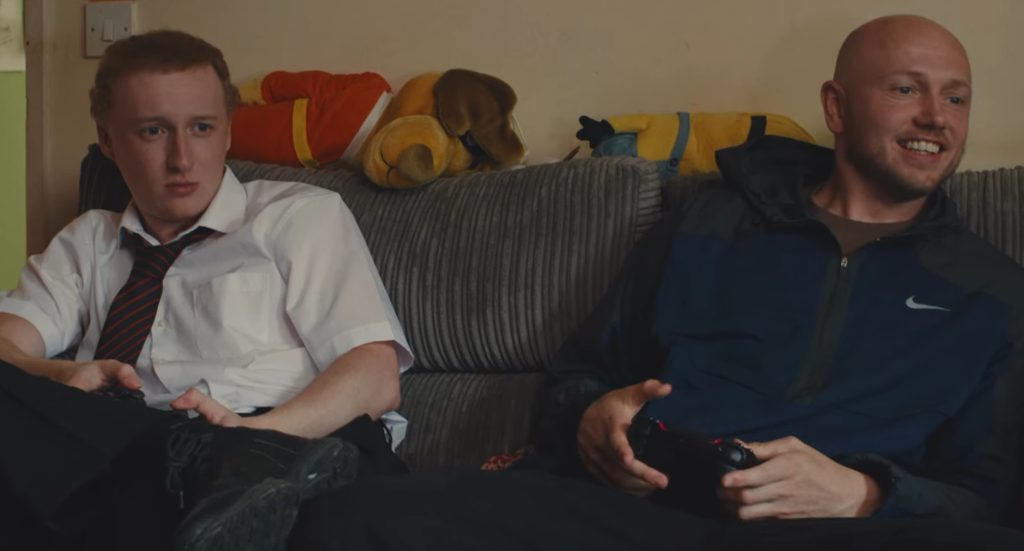
With little else to do, Mikey suggests they play football on a games console and produces a controller from behind a cushion. A game of FIFA follows, with plenty of competitive banter between them before Tommy eventually wins. The sequence feels loose and natural, with the back-and-forth between Jones and Ainsworth giving the impression that at least some of their exchanges may have been improvised. Whether they actually were isn’t established by the information available, so that shouldn’t be stated as fact, but the relaxed performances certainly create that impression.
McLoughlin then uses that comfortable atmosphere to change the direction of the conversation. Tommy asks why Mikey keeps skipping school when he’s apparently intelligent and capable of doing well. More significantly, he asks whether his nephew is still hurting himself.
Mikey is surprised that Tommy knows about the self-harm, having not realised that his mother had discussed it with him. Tommy explains that she’s worried about her son and attempts to reassure Mikey that life can get better. The shift in tone is handled without turning the conversation into a lengthy speech, and the earlier humour helps establish enough warmth between the characters for the more serious exchange to feel believable.
That mixture of humour and difficult subject matter is one of Uncle Tommy’s strengths. McLoughlin doesn’t spend the entire ten minutes telling the audience how serious everything is, nor does he allow the lighter moments to trivialise what Mikey is experiencing. Instead, we see a teenager who is struggling but can still joke around with his uncle and become fiercely competitive over a football game. It makes him feel more like a person than simply a character created to represent an issue.
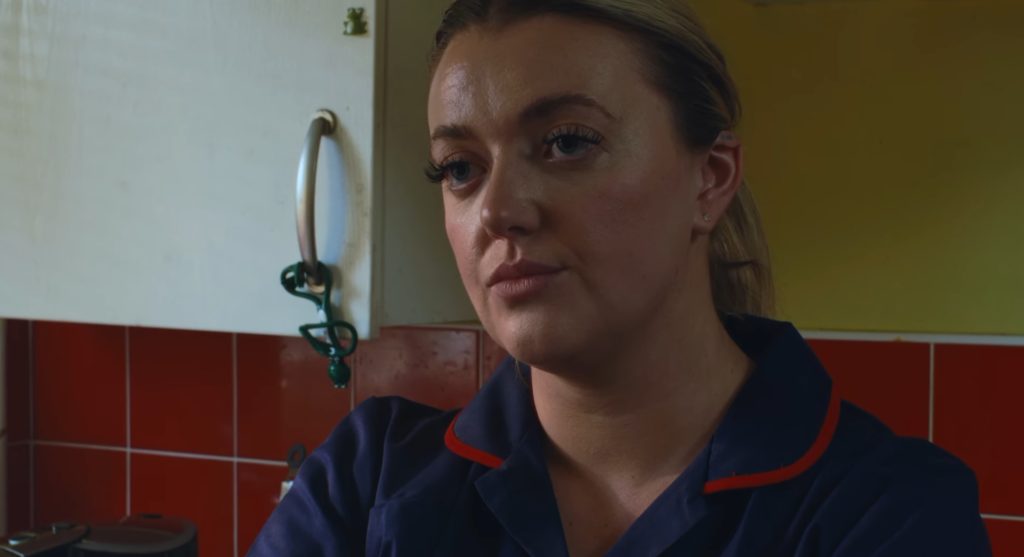
The arrival of Mikey’s mother, Louise (Sarah-Louise Chadwick), introduces another dynamic. She’s understandably angry, having been forced to leave work early because her son has walked out of school again. Chadwick is another familiar face from McLoughlin’s work, having appeared in Are You Okay? and played Kate in Kate & Jake. She also recently appeared in the feature film Semolina Pilchard.
Louise soon makes herself a hot drink and speaks privately with Tommy in the kitchen, where another side of the story emerges. She already has a good idea why her brother has turned up. He needs money, and not an insignificant amount. Tommy asks for £500 to pay people he owes, with the conversation strongly suggesting that he’s once again got himself into trouble.
It’s worth being careful about describing the precise nature of Tommy’s debt. The circumstances may suggest drugs or another questionable situation, but the information presented here doesn’t definitively establish what the money was originally for. What matters dramatically is that Louise has apparently experienced this situation with her brother before and understands enough to know that the people waiting for their money aren’t people Tommy wants to keep waiting.
She agrees to help him, and Jones allows Tommy’s composure to begin slipping. There are several possible emotions behind his reaction. It could be embarrassment at once again needing his sister to rescue him, relief that the immediate problem might be solved, or a combination of the two. The film doesn’t need to provide a definitive explanation because the performance communicates that asking for help has affected him.
This also gives the title character an interesting contradiction. Tommy is able to sit beside Mikey and offer genuine advice about his problems while being incapable of keeping his own life entirely under control. He can recognise that his nephew needs support even while arriving at his sister’s house because he needs support himself. Rather than undermining what he tells Mikey, that imperfection makes their relationship more believable.
For such a short film, the performances are important, and the principal cast work well together. Ainsworth makes Mikey’s combination of cheekiness and vulnerability convincing, while Jones gives Tommy enough warmth for the uncle-nephew relationship to work. Chadwick has less screen time but brings an immediate sense of history to Louise’s interactions with both characters, particularly in the kitchen conversation with her brother.
McLoughlin also understands the limitations of the production and works within them. Apart from the exterior footage of Mikey running through the street, Uncle Tommy is largely confined to the living room, kitchen and front entrance of the house. Rather than attempting to disguise that restriction, the short uses the domestic setting appropriately for what is essentially a small character drama.
Cameron Brown’s cinematography follows the same philosophy. The photography is natural rather than heavily stylised, complementing the everyday realism McLoughlin appears to be pursuing. The sound is similarly clean, with the dialogue remaining clear throughout, including the characters’ Liverpool accents. Max O’Toole’s editing keeps the ten-minute production moving efficiently, while Bobby Locke provides the original score.
Perhaps the most interesting thing about Uncle Tommy is how much character information McLoughlin manages to fit into such a limited running time. We learn that Mikey is repeatedly avoiding school and has been self-harming, that his mother is struggling to deal with his behaviour while working, and that Tommy is capable of being an affectionate and supportive uncle despite having serious problems of his own. None of this requires a complicated plot or an oversized dramatic climax.
There is also a pleasing refusal to solve everybody’s problems before the credits. Tommy telling Mikey that things can improve doesn’t suddenly cure whatever is causing him to avoid school or hurt himself, while Louise giving Tommy £500 doesn’t address the choices that left him needing the money. The characters simply help each other through the immediate problem, which feels more appropriate for the grounded tone of the film.
Uncle Tommy Finds Strength in Family Imperfection
Uncle Tommy is another enjoyable short from Jack McLoughlin and demonstrates how much can be accomplished with a few performers, one principal location and ten minutes of screen time. The humour gives the characters an appealing naturalism, while the more serious material surrounding self-harm, family responsibility and Tommy’s own difficulties provides substance without overwhelming the story.
Most importantly, it feels interested in people rather than issues. Mikey isn’t defined entirely by his self-harm, Tommy isn’t defined entirely by his mistakes and Louise isn’t simply the angry mother or long-suffering sister. They’re a family who frustrate, worry about, laugh with and help one another, and that gives this modest Liverpool short considerably more emotional weight than its simple setup might initially suggest.
| Acting | |
| Direction | |
| Cinematography | |
| Writing | |
| Sound | |
| Screen Critix Rating |