
There comes a point in life when looking backwards can become almost as important as looking ahead. Careers end, families change, ambitions are reassessed and the things once considered measures of success can suddenly seem less important than the people encountered along the way. Neil Garguilo’s documentary Misfit Mentor finds musician and longtime music teacher Jamie Egan at precisely such a moment.
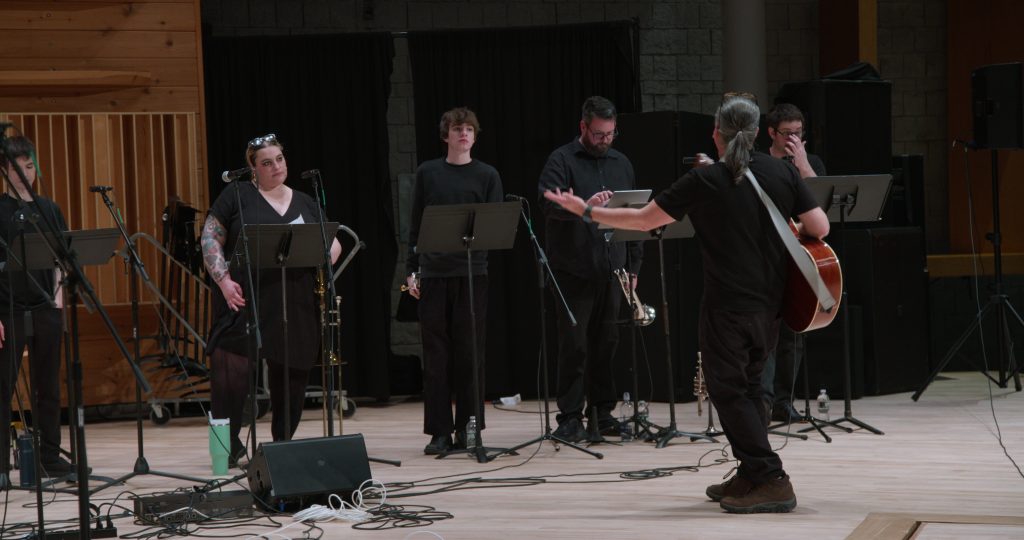
The film opens outside North Brunswick Township school before moving into an auditorium where Egan is conducting his final concert before retirement. As his young musicians play, Garguilo cuts between the present and grainier footage of Egan conducting decades earlier. The sequence immediately establishes one of the documentary’s central questions: what constitutes a legacy? Is it the music Egan has made himself, or the generations of young people he has helped to make theirs?
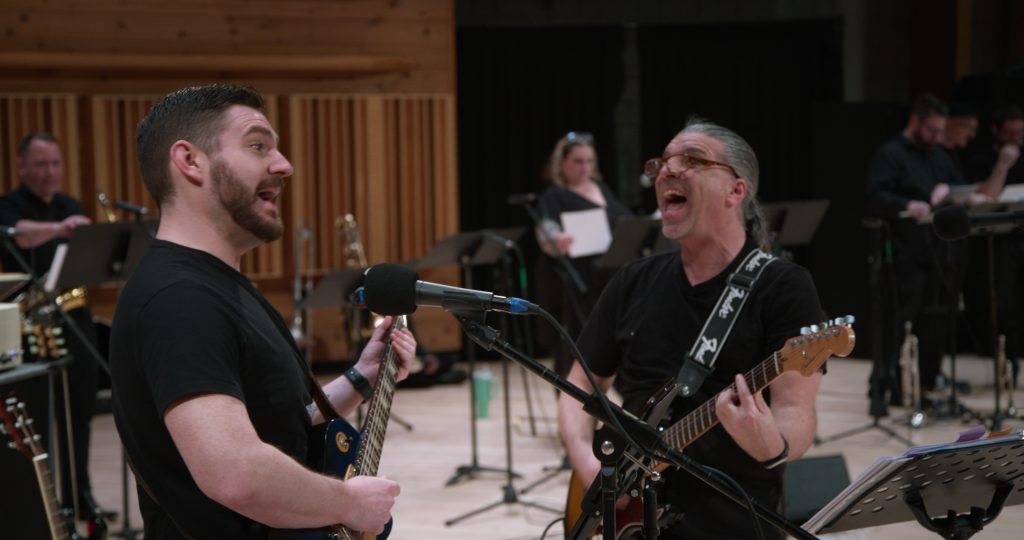
Retirement hasn’t brought Egan the sense of closure he might have expected. He describes experiencing something of an existential crisis. Having spent so much of his life teaching music, he isn’t ready to stop creating it himself. At 57, there are recordings he still wants to make, performances he wants to give and ideas that have spent too long waiting for him to act upon them. Misfit Mentor is therefore not really a documentary about retirement. It’s about what happens when someone realises there is still another chapter to write.
Misfit Mentor Finds Jamie Egan at a Crossroads
Egan has an interesting history beyond the classroom. One of his earliest students was Joshua Ansley, who remembers being 18 and needing a trombone player for a band he’d formed with friends. Egan was around 30 and, more intimidatingly for Ansley, wasn’t merely his teacher but somebody he regarded as a hero. He eventually found the courage to ask him to join.
That band was Catch 22. The project went considerably further than a teacher agreeing to play a few songs with his former student. A record deal followed and Egan became part of a successful ska punk band, with the documentary stating album sales reached 200,000. Archival material takes us back to those days, showing Egan and the band performing and rehearsing, providing a striking contrast with the teacher approaching retirement decades later.
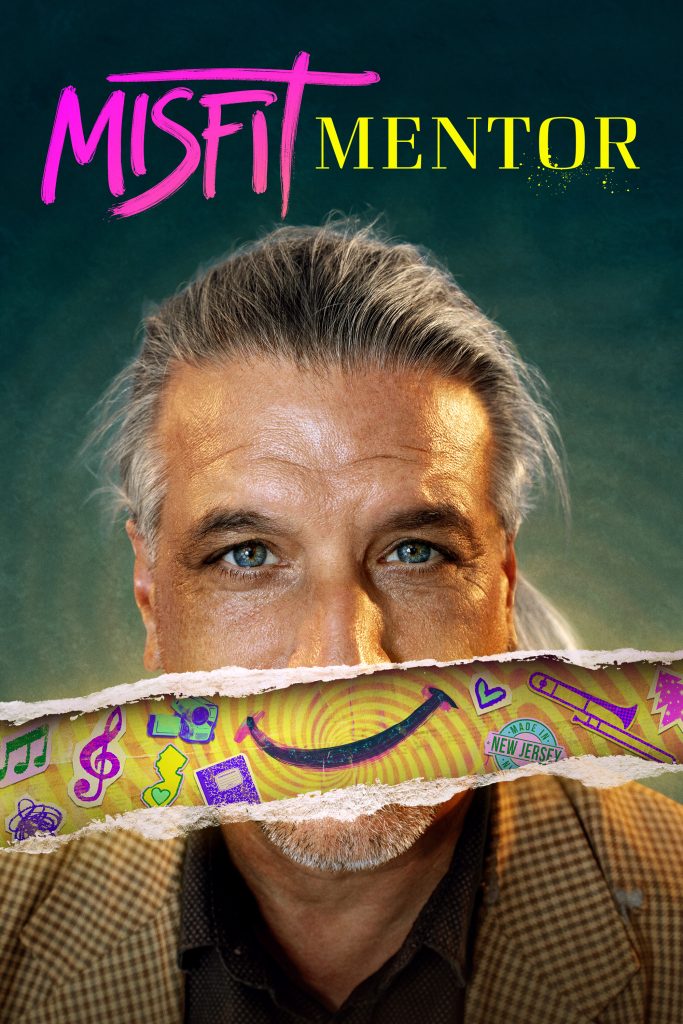
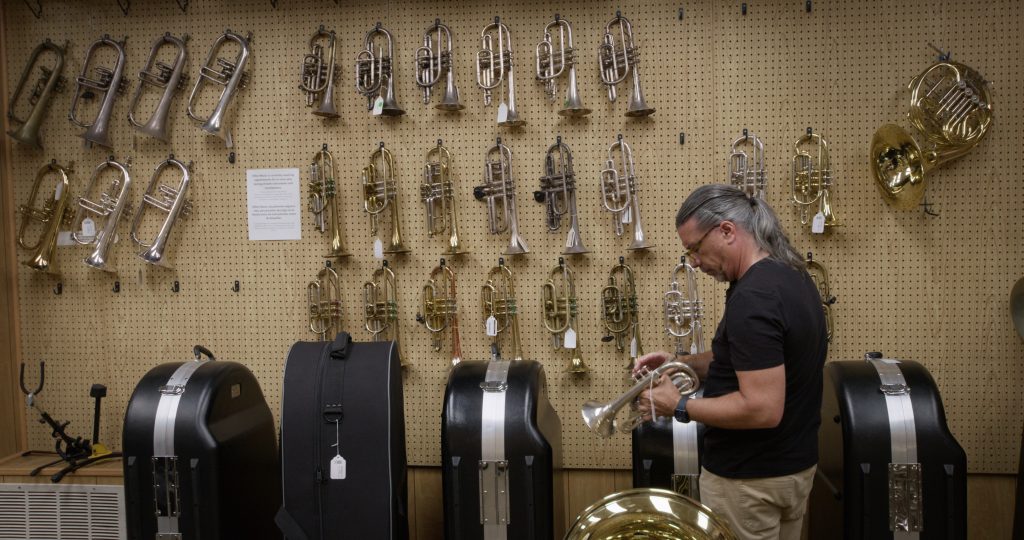
Music has remained a constant, but Garguilo is interested in considerably more than Egan’s résumé. Much of Misfit Mentor simply follows him through everyday life. There isn’t an on-screen presenter steering every encounter or constantly asking questions. Instead, we accompany Egan into shops, watch him repairing instruments, see him spending time with friends and family, and listen when he chooses to explain what he’s thinking.
It’s an effective approach because Egan is an engaging documentary subject without appearing extraordinary in the conventional sense. He isn’t a global superstar reflecting upon a multimillion-selling career. He’s a working musician and former teacher confronting ageing, anxiety, loneliness, regret and the uncomfortable realisation that postponing your ambitions can eventually leave you wondering where the years went.
He’s also refreshingly willing to acknowledge his shortcomings. Egan admits to procrastination and recalls recently losing an entire month without meeting any of the deadlines he’d set himself. His enthusiasm for finally completing his own musical projects is consequently accompanied by the knowledge that wanting to do something and actually doing it are two very different things.
The documentary becomes considerably more emotional when it explores Egan’s family life. His former partner Julie has died, leaving an absence that remains painfully visible when he discusses her. Egan describes her as quirky and larger than life and becomes tearful while remembering their life together. Julie underwent cancer treatment during her life, but importantly, the documentary material provided does not establish cancer as the cause of her death, so it would be wrong to make that assumption. What is clear is that her loss continues to affect Egan deeply.
Particularly touching are his scenes with Julie’s daughter, whom Egan helped raise and who calls him Dad. Their relationship provides one of the film’s clearest illustrations of what fatherhood can mean beyond biology. The two look through old photographs of Julie, and there is no need for Garguilo to force emotion from the situation. Their affection and shared loss are evident without embellishment.
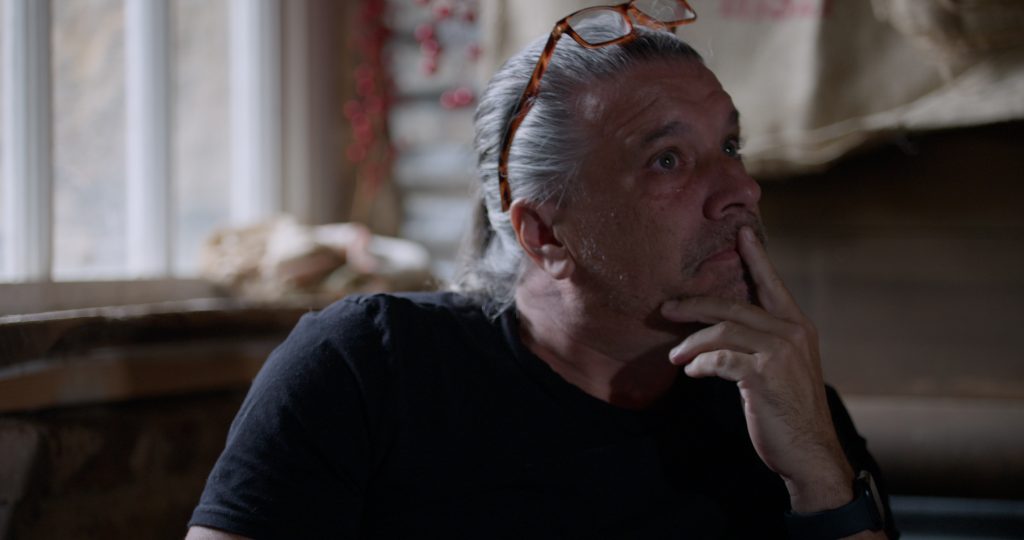
That relationship also fits naturally into the wider portrait being constructed. Again and again, Misfit Mentor introduces people for whom Egan has been something more than a music teacher. Former students describe somebody who treated them with respect, encouraged their creativity and offered support beyond simply teaching them how to play an instrument. The title consequently becomes increasingly appropriate because Egan has spent decades teaching music, but the impression left upon his students appears to extend far beyond notes on a page.
Garguilo doesn’t turn that into uncomplicated hero worship, however. The more revealing sections concern Egan’s own struggles and the experiences that shaped him. In one of the documentary’s most difficult moments, he discusses being sexually abused as a child. He describes burying those memories and feeling for years as though other people could see what had happened to him, almost as though he carried a neon sign identifying him by his abuse.
It’s deeply personal material, and Egan’s willingness to discuss it gives the documentary considerably greater weight. Misfit Mentor isn’t merely compiling testimonials from former students about a beloved teacher. It’s interested in the damaged, uncertain and sometimes lonely person behind the mentor, and in how somebody’s own experiences can influence the way they choose to treat others.
One of the film’s most interesting conversations takes place when Egan and Ansley meet for a meal. What begins with discussion about music and future performances gradually moves towards forgiveness, the past and whether Egan has actually forgiven himself. Ansley encourages him to concentrate upon the present and what can still be achieved rather than continually looking backwards. That conversation gets to the heart of Misfit Mentor because the film is increasingly concerned with whether Egan can apply some of the encouragement he has spent years giving other people to himself.
Both men once walked away from musical projects that appeared capable of becoming much bigger. Years later, the significance of that earlier work hasn’t entirely disappeared. Ansley recalls recently being approached by somebody who asked his name before pulling up a sleeve to reveal a tattoo connected to his old band. For the musicians themselves, those years might belong to another lifetime. For somebody listening, the music became important enough to permanently mark onto their body.
Egan still has the desire to perform, and footage of him singing and moving around on stage at 57 demonstrates that whatever else has changed, the enthusiasm hasn’t disappeared. Retirement from education might have closed one enormous part of his life, but it has also removed one of the reasons for continuing to postpone another.
Technically, Misfit Mentor is a polished documentary. Director of photography Brian Mandle gives the contemporary material a professional appearance, while editor Rob O’Connor has a considerable amount to juggle between present-day observational footage, interviews, family material, old recordings and performances.
The abundance of archival footage is particularly valuable because it allows us to see rather than merely hear about Egan’s past. Young Jamie performing and teaching can exist alongside the older man considering what all those years amounted to. Garguilo also introduces numerous former students, friends and family members, gradually allowing their recollections to build a fuller picture of his subject.
Music naturally holds everything together. Gregory James Jenkins provides the documentary’s score, while Egan’s own musical history gives Garguilo decades of performances and experiences from which to draw. The result never feels like an extended promotional film for a musician attempting a comeback because Egan’s ambitions are only one element of a much broader story.
The question raised at the beginning remains one of the documentary’s most interesting: what is Jamie Egan’s legacy? Misfit Mentor doesn’t need to provide a definitive answer. There are records, performances and musical achievements to which Egan can point, but there are also adults who remember what their teacher did for them years earlier. There is a daughter who calls him Dad. There are musicians who once regarded him as their mentor and who are now sitting across a restaurant table helping him navigate his own uncertainty.
Perhaps the documentary’s greatest strength is recognising that success rarely follows the clean trajectory people imagine when they’re young. Talent can open doors, but relationships, grief, responsibility, fear, procrastination and simple human decisions can send life in directions nobody planned. Before long, decades have passed and some of the things we always intended to do remain undone.
That could make Misfit Mentor a melancholy film, but it isn’t. There is sadness here, particularly surrounding Julie and Egan’s childhood experiences, but there is also considerable warmth. Garguilo’s documentary is ultimately looking forwards as much as backwards, with Egan’s retirement offering an opportunity to decide what he wants the next part of his life to become.
At 57, Egan hasn’t decided that the opportunity has passed, and he still wants to write, record and perform. After spending much of his adult life helping other people develop their talents, retirement finally gives him the chance to devote more attention to his own.
Misfit Mentor is an engaging and moving portrait of a musician, teacher and father confronting what he has achieved, what he has lost and what he might still accomplish. More importantly, it offers a worthwhile reminder that dreams don’t necessarily disappear with age, but they can disappear if we continually assume there will always be more time to pursue them.
| Acting | |
| Direction | |
| Cinematography | |
| Writing | |
| Sound | |
| Screen Critix Rating |