
Few stories have been revisited as often as L. Frank Baum’s The Wonderful Wizard of Oz. The 1939 film starring Judy Garland became one of cinema’s most recognisable fantasies, while the property has continued to inspire everything from Return to Oz and Oz the Great and Powerful to the hugely successful Wicked stage musical and its recent film adaptations. Dorothy, Toto, the Yellow Brick Road and the Emerald City have become so embedded in popular culture that even people who have never opened Baum’s novel probably know where the story is going.
That familiarity makes Dustin Lee Loop’s The Wonderful Wizard of Oz AI Version an interesting experiment. Running just under 14 minutes, this 2026 short was created using AI and Canva, condensing Dorothy’s journey through Oz while simultaneously demonstrating both how impressive generative technology has become and how far it still has to go before it can convincingly replicate conventional filmmaking.
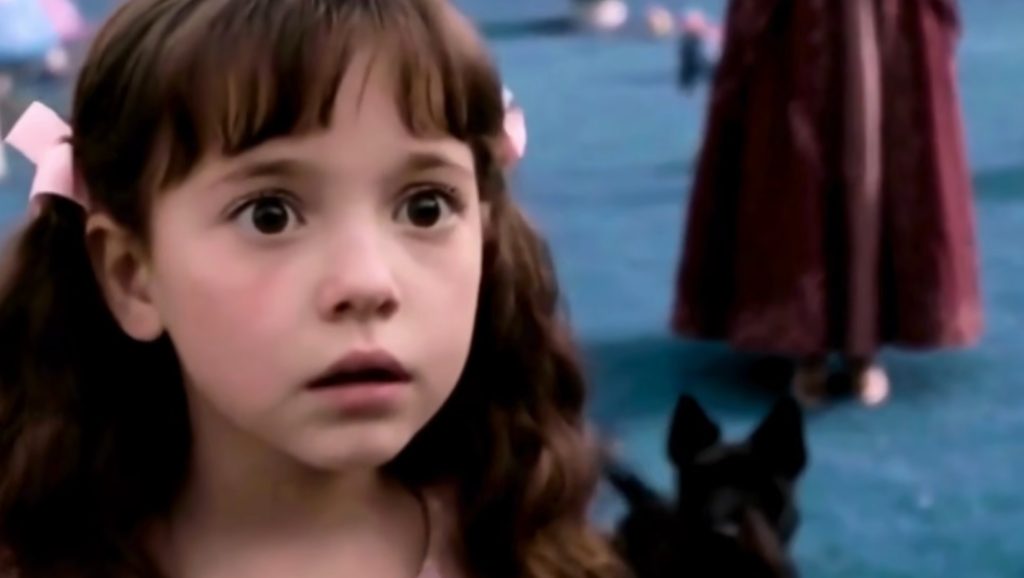
The basic story remains immediately recognisable. Dorothy is a young Kansas girl who, accompanied by her dog Toto, finds herself caught up in a storm and transported to the magical land of Oz. Her arrival results in the accidental death of a witch, she receives the dead witch’s magical slippers and must journey towards the Wizard in the hope that he can help her return home.
Loop begins his version with two witches walking through woodland, immediately placing the AI-generated imagery front and centre. On a purely visual level, there are moments throughout The Wonderful Wizard of Oz where it’s difficult not to acknowledge how rapidly this technology has progressed. At the same time, its limitations reveal themselves almost as quickly.
Dorothy and Toto run into a barn as the storm arrives before Dorothy eventually emerges into a very different world. This Oz has fields of blue surrounding tiny houses inhabited by Munchkins dressed in blue clothing and tall blue hats. The Good Witch arrives and gives Dorothy the slippers belonging to the witch killed by her house, while the Munchkins celebrate her arrival by singing “thank you to the girl who came from the sky.”
The film’s interpretation of Oz is easily its greatest strength. Rather than simply attempting to recreate the imagery everyone associates with the famous 1939 adaptation, Loop’s AI-generated environment has some imaginative flourishes of its own. Dorothy’s Yellow Brick Road is bordered by enormous toadstools, some seemingly as large as houses, giving the landscape the exaggerated scale expected from a children’s fantasy.
It can look genuinely impressive.
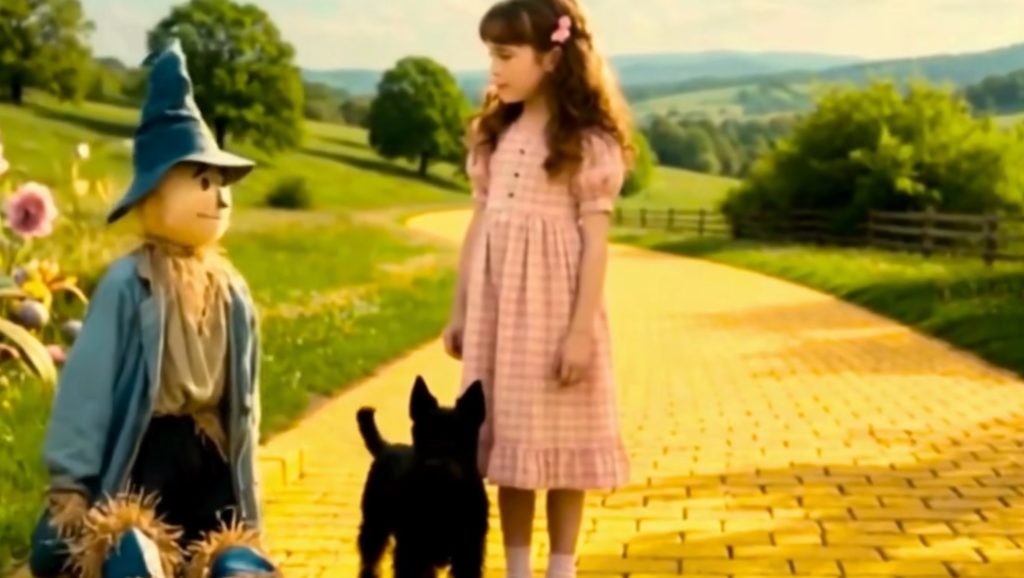
The difficulty is maintaining that illusion once the images have to function as part of a film rather than simply exist as individual pieces of AI-generated artwork. Characters can subtly change appearance or size between shots, movements don’t always feel natural and the editing has to negotiate the inconsistencies generated by the technology.
One particularly disruptive moment suddenly introduces a huge gate and wall surrounding a city. A man wearing green goggles briefly announces that he guards the gate before the film abruptly returns to Dorothy. The transition is so quick that rather than introducing something we’ll encounter later, it momentarily feels as though we’ve jumped into a different scene by mistake.
The Wonderful Wizard of Oz Shows Both Sides of AI Filmmaking
Dorothy’s familiar travelling companions gradually join the adventure. She discovers the Scarecrow, unties him and sets off with him towards the Wizard. The Tin Man subsequently joins them, although his introduction feels slightly awkward because he doesn’t properly introduce himself until the group has already begun walking together.
His design provides one of the film’s amusing visual touches. This Tin Man wears what resembles a saucepan as a helmet, an unusual choice that nevertheless suits the strange handmade fantasy aesthetic of this particular Oz.
Then comes the Cowardly Lion, and this is where AI allows Loop to make a substantial visual departure from the version audiences may instinctively picture. Rather than a human-like lion character, this one appears as a photorealistic actual lion. He still needs courage, however, and consequently joins Dorothy and her companions on their journey to see the Wizard.
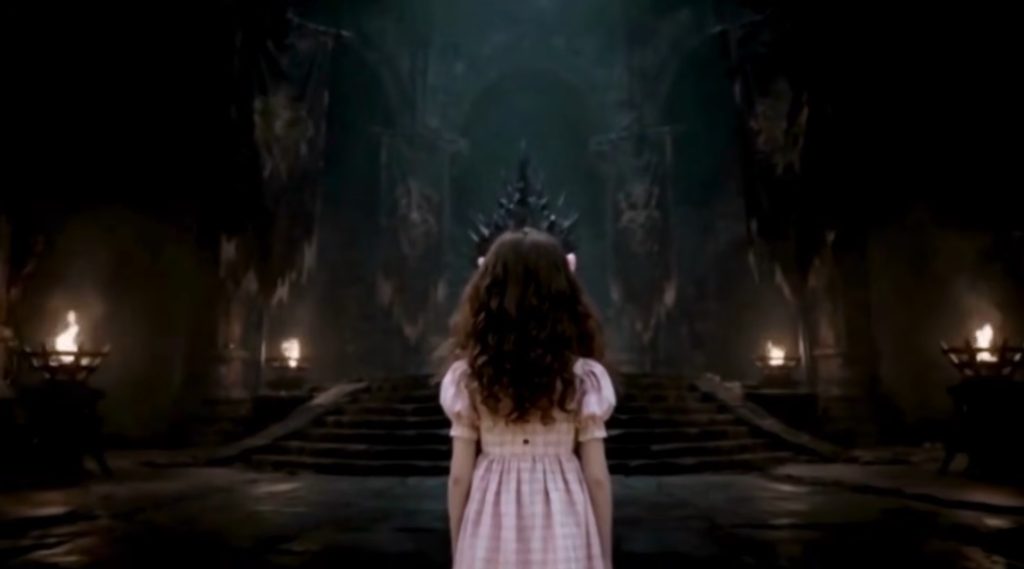
Eventually they arrive at the city and encounter the gatekeeper glimpsed earlier. Before entering, they’re provided with green goggles to protect their eyes from the brilliance of the emeralds, after which Dorothy finally comes face to face with the Wizard.
Compressing such a well-known journey into 13 minutes and 59 seconds inevitably means that the film moves extremely quickly. That’s compounded by the technical characteristics of the AI-generated material. There are abrupt jump cuts, occasional black-screen pauses and repeated imagery, while dialogue isn’t always given enough breathing room. At times one character begins responding before another has properly finished, producing exchanges that sound less like natural conversation and more like individual generated components being placed alongside one another.
Sound is another area where the experiment struggles. Transitions aren’t consistently smooth and some of the pauses and changes interrupt the flow of the story. Combined with the visual inconsistencies, these issues make it difficult to forget the technology behind what we’re watching.
But perhaps that’s also where The Wonderful Wizard of Oz becomes most interesting.
There is understandably considerable anxiety surrounding generative AI and its place within creative industries. Artists, actors, writers and other creative professionals have legitimate concerns about technology potentially being used to replace paid human work. Loop’s film doesn’t resolve any of those arguments, nor could a 14-minute Wizard of Oz experiment realistically be expected to.
What it does provide is an opportunity to consider where this technology might actually prove useful.
Watching The Wonderful Wizard of Oz as a finished narrative short reveals numerous weaknesses. Watching the same material while imagining it as previsualisation for a traditionally produced movie changes the equation considerably. A filmmaker could potentially use something like this during pre-production to explore the appearance of a fantasy landscape, communicate ideas about locations and environments, or provide a rough visual representation of sequences before committing considerable resources to shooting them.
Seen from that perspective, some of the material here becomes genuinely exciting. The enormous mushrooms beside the Yellow Brick Road, the blue fields, tiny Munchkin houses and imposing architecture demonstrate how quickly a filmmaker can begin visualising a fantasy world that might previously have existed only in their imagination.
As a finished film, however, the technology isn’t yet able to hide its limitations. Continuity matters. Timing matters. Performance matters. The tiny pause before somebody responds, consistency in a character’s appearance and the decision to hold a shot for another second can make enormous differences to how we experience a scene. AI can generate increasingly impressive imagery, but assembling those images into convincing cinematic storytelling remains another challenge entirely.
Loop has nevertheless clearly put considerable work into the project. The Wonderful Wizard of Oz AI Version isn’t simply a collection of random generated images. There is an attempt to tell Baum’s familiar story from beginning to end within an extremely restricted running time, create a consistent fantasy aesthetic and explore what the available technology can achieve.
The original version was selected for the August 2026 edition of the Direct Monthly Online Film Festival, and Loop himself describes the project as a form of metacommentary. That description feels appropriate because the most interesting thing about the short ultimately isn’t another retelling of Dorothy’s journey. It’s what the film inadvertently tells us about the current state of AI filmmaking.
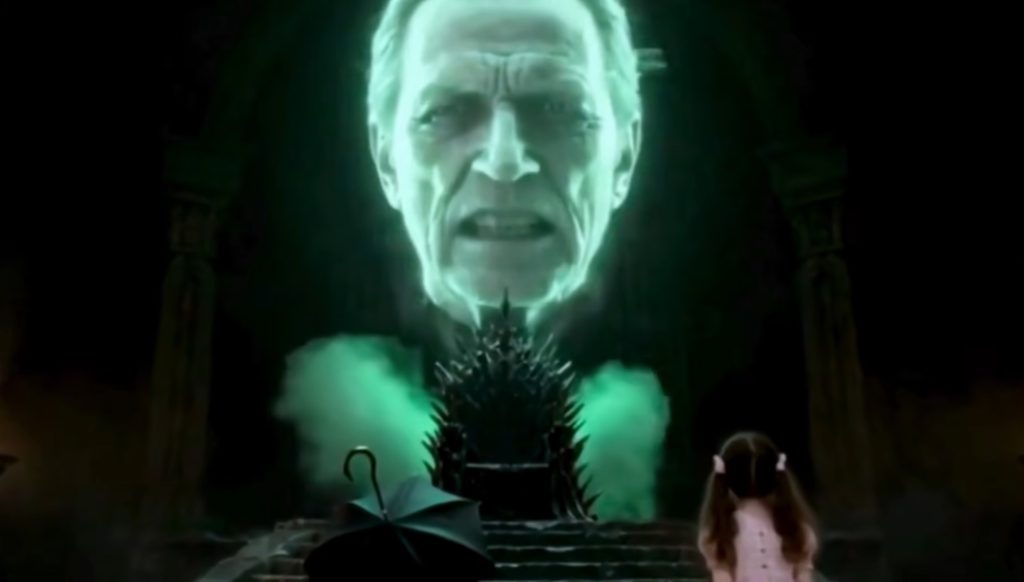
The technology can create remarkable individual images. It can establish worlds, produce fantastical environments and suggest things that would be enormously expensive to construct physically. Yet the cracks remain readily visible once those images have to move, interact and maintain continuity across an entire sequence.
For that reason, The Wonderful Wizard of Oz AI Version works better as an experiment than it does as a polished short film. The sound problems, abrupt edits, black-screen pauses, dialogue timing and changing character appearances are simply too noticeable to ignore. They repeatedly break the spell that the strongest imagery manages to create.
Yet dismissing the whole thing would be equally unfair. There are moments when Loop’s interpretation of Oz looks fantastic, and the short provides a fascinating snapshot of where readily available AI filmmaking tools stand in 2026. It doesn’t convince us that traditional filmmakers have anything to fear from this particular production, but it does suggest potentially useful applications for the technology when treated as another tool rather than a replacement for the people who make films.
The Wonderful Wizard of Oz AI Version is flawed, sometimes awkward and unmistakably experimental, but that’s also what makes it interesting. Loop hasn’t created the definitive new journey through Oz, nor does the technology come close to replacing conventional filmmaking. What he has created is a curious demonstration of both the possibilities and present limitations of AI, wrapped inside one of the most familiar fantasy stories ever told.
| Acting | |
| Direction | |
| Cinematography | |
| Writing | |
| Sound | |
| Screen Critix Rating |