
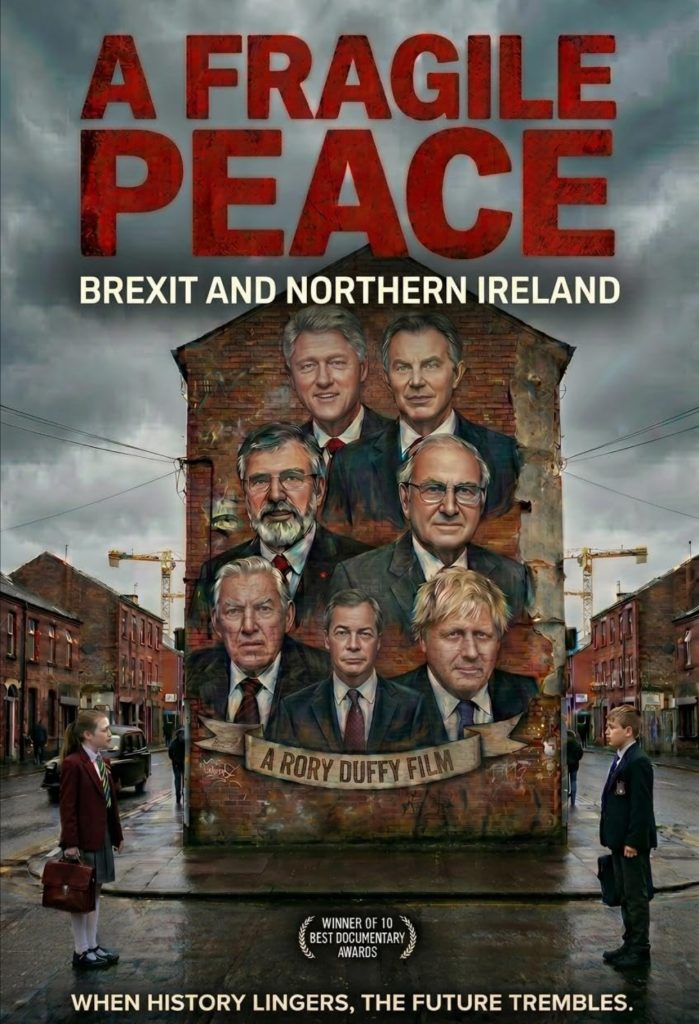
Political documentaries can easily become little more than illustrated lectures, particularly when tackling subjects carrying decades of history, division and competing identities. A Fragile Peace: Brexit and Northern Ireland, the feature documentary debut of director Rory Duffy, avoids that trap. Rather than allowing politics to become an abstract discussion conducted entirely by politicians and academics, Duffy repeatedly brings the consequences back to the people who actually have to live with them.
The film begins by establishing the historical foundations of its subject. Ireland’s relationship with British rule, partition and religious conflict leads into the 1998 Good Friday Agreement and the end of the three decades of violence known as The Troubles. Then comes Brexit and the possibility that decisions made about Britain’s relationship with the European Union could destabilise a peace that took decades to achieve.
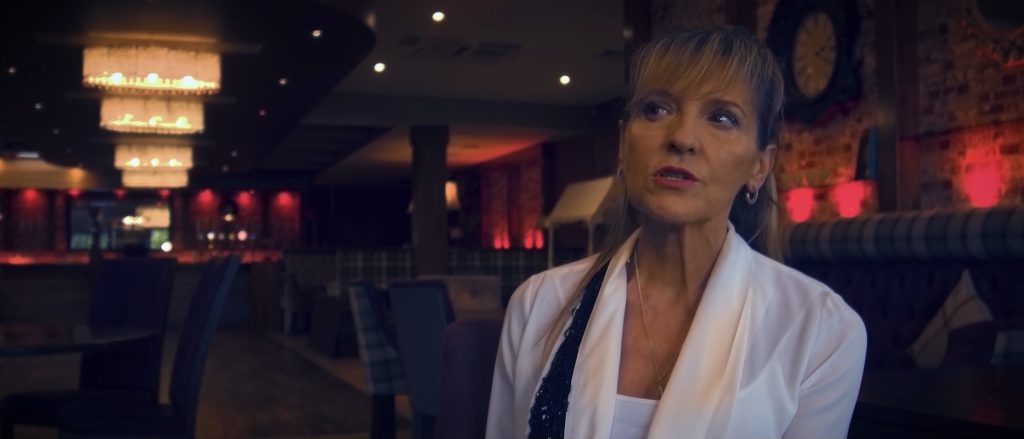
It is an enormous subject for a documentary, but Duffy immediately gives it a human face through Martina Anderson, the former Sinn Féin Member of the European Parliament. Anderson’s history is extraordinary. A former IRA volunteer, she was sentenced to life imprisonment before eventually being released, and the documentary allows her to discuss both her past and her feelings about Brexit and Northern Ireland’s future.
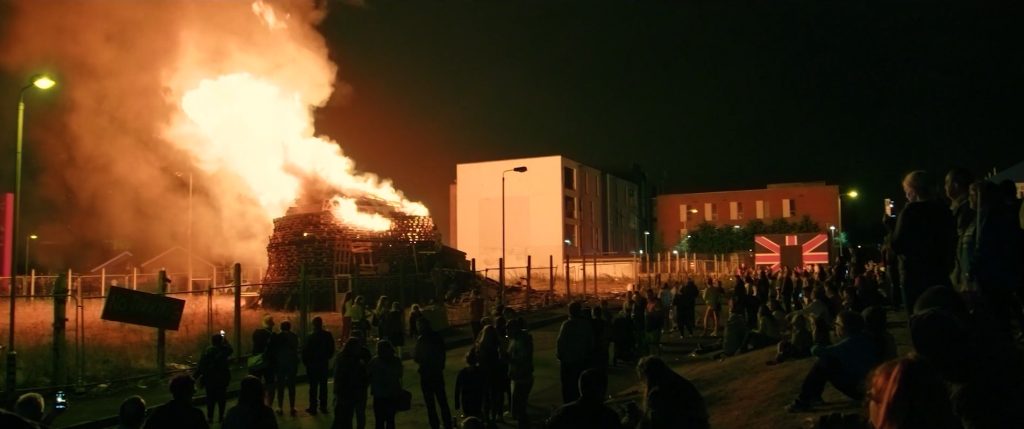
Anderson speaks directly to an interviewer positioned away from the camera, but Duffy doesn’t simply leave us watching a conventional talking head. Her words are accompanied by striking images of enormous bonfires burning against the night sky as crowds gather around them. It establishes something that becomes apparent throughout the film: A Fragile Peace has been made with a genuine eye for imagery rather than merely using pictures to fill the space between interviews.
That becomes even clearer when the opening credits arrive. Historical images of civilians, soldiers, police and the conflict are accompanied by an aggressive industrial score that gives the sequence a surprisingly large and stylish quality. It’s a bold opening for a political documentary, immediately signalling that Duffy isn’t interested in producing something visually anonymous.
The documentary then introduces Damian McGenity, a farmer and political activist whose life demonstrates how strange the concept of a border can become when viewed on the ground rather than on a political map. Near his farm, the boundary between Northern Ireland and the Republic runs along a narrow rural road. There are no enormous walls or dramatic checkpoints. It’s simply part of the landscape through which people live and work.
McGenity’s 60-acre farm was passed down by his parents and is something he hopes eventually to pass to his children. Brexit, however, has created uncertainty for farmers and border communities, and he discusses the difficulties facing his livelihood and those of others around him. Duffy doesn’t define McGenity solely through his politics. We also spend time around his home, seeing the laughter and affection between him, his wife and their children before following him into his activism and demonstrations against Brexit and the return of a hard border.
That combination is essential. Discussions of customs arrangements, political agreements and international negotiations can quickly become impersonal. Seeing a farmer standing on land inherited from his parents, contemplating whether it will remain viable for his children, makes the consequences tangible.
McGenity also remembers what a hard border actually meant during The Troubles. Military personnel, concrete structures and barbed wire weren’t historical abstractions for people living in these communities. They were part of everyday existence. When the possibility of borders is discussed throughout A Fragile Peace, Duffy therefore ensures the audience understands why the terminology carries considerably more weight here than it might elsewhere.
A Fragile Peace Makes Politics Personal
Another of the documentary’s principal subjects is Aron Hughes, whom we first encounter in December 2019 as he drives to vote for the first time. He’s young, enthusiastic and already frustrated by the political claims surrounding Brexit. When the documentary returns to him in January 2023, several years have passed and political activism has become a much larger part of his life. We also meet fellow young activist Doire Finn, another member of a generation attempting to influence what Northern Ireland will become rather than simply inheriting decisions made for them.
Placing younger voices alongside people who remember The Troubles is one of Duffy’s smartest choices. The documentary isn’t solely concerned with what happened decades ago. Its real subject is what happens next. A generation exists that didn’t experience the worst years of the conflict first-hand, yet they will live with the political consequences of decisions being made now.
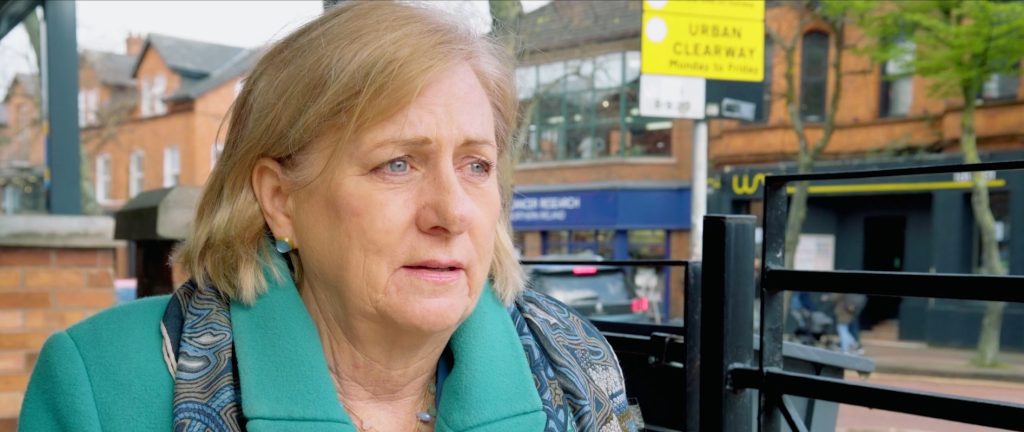
Duffy broadens the discussion considerably as the film progresses. Senator George Mitchell, who chaired the negotiations that produced the Good Friday Agreement, appears alongside figures including Congressman Richard Neal, Sinn Féin president Mary Lou McDonald, Ambassador Nancy Soderberg and peacebuilder Rev. Dr. Gary Mason. These contributions give the film access to people with first-hand knowledge of both the peace process and the political landscape that followed it.
Historical footage is used extensively throughout. Bill Clinton’s involvement in the peace process appears alongside Tony Blair, while the documentary also moves beyond Ireland and Britain to consider political developments in the United States. Footage of the January 6, 2021 attack on the US Capitol remains extraordinary to watch, with crowds forcing their way into one of the world’s most recognisable political buildings.
The international material widens the documentary’s examination of political division, but A Fragile Peace is at its strongest whenever Duffy brings us back to Northern Ireland itself. The landscape contains reminders of a conflict that hasn’t simply vanished because an agreement was signed.
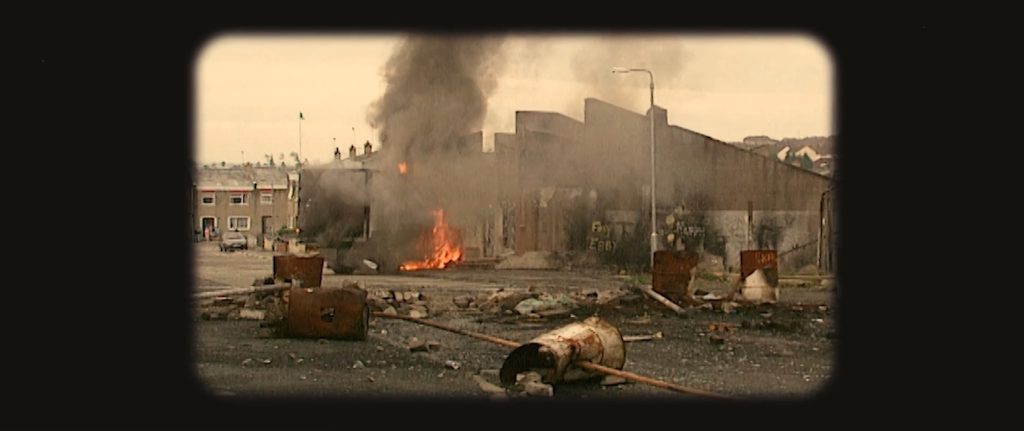
Martin Hughes takes us around West Belfast and discusses the barriers separating communities. He shows his former home and recalls an area affected by nail bombs, petrol bombs, shootings and the killing of a young man. He also discusses violence around marching season and the precautions he takes when tensions rise. Around him are walls, memorials and images commemorating people killed during the conflict.
These sequences are powerful precisely because Duffy doesn’t need to manufacture drama. A wall still standing, a memorial to somebody who died or the recollection of violence on an otherwise ordinary residential street carries its own weight. The past is physically present within the environment.
Technically, the documentary is extremely accomplished. Duffy and his team have assembled an enormous amount of material, combining newly filmed interviews and observational footage with decades of archive material. The editing is particularly impressive. Despite running for approximately 94 minutes, the documentary rarely feels static, with imagery constantly being used to complement, contextualise or contrast what we’re hearing.
There is also a confidence to the presentation that separates A Fragile Peace from the conventional television-documentary aesthetic. Interviews are attractively composed, the newly captured material frequently produces striking images, and the archival footage has been integrated rather than simply inserted whenever somebody references a historical event. The result feels constructed as a feature film rather than an extended current-affairs programme.
Most importantly, Duffy never loses sight of the people inside the politics. Damian isn’t simply “the farmer”. Aron isn’t merely there to represent young voters. Anderson isn’t reduced to her extraordinary history. Spending time with them allows the larger political arguments to be understood through individual experience.
The film also has the confidence to acknowledge how complicated Northern Ireland remains. The Good Friday Agreement didn’t erase history, remove every physical division or make generations of mistrust disappear. The documentary’s own footage of Belfast makes that impossible to pretend. What the agreement achieved was peace after decades of violence, and that makes anything capable of destabilising the arrangements surrounding it worthy of serious examination.
A Fragile Peace approaches Brexit from a clear perspective, concentrating primarily on those concerned about its consequences for Northern Ireland and the peace process. It isn’t presented as a point-by-point debate between Leave and Remain campaigners, nor does it need to be. Duffy’s subject is what Brexit means when viewed from communities for whom the question of borders carries an unusually painful history.
That focus ultimately gives the film its power. Brexit dominated British political discussion for years, becoming an endless succession of slogans, parliamentary votes, negotiations and television arguments. A Fragile Peace strips away much of that noise and asks us to consider something far more fundamental: what happens when major political decisions collide with a peace that people spent decades fighting to achieve?
Duffy has spent years following his subjects, and that commitment is visible in the scope of the finished documentary. The production information lists 34 festival selections, 27 nominations and finalist placements, and ten wins, including awards for Best Documentary Feature at several festivals. Whatever one’s personal politics, the filmmaking itself deserves considerable praise.
A Fragile Peace: Brexit and Northern Ireland is polished, visually engaging and exceptionally well edited, but its greatest achievement is making a complicated political subject feel immediate and human. Duffy gives us history, archive material and significant political figures, yet it’s the farmers, families, activists and communities living alongside the consequences that remain most memorable.
For anyone interested in Ireland, Northern Ireland, Brexit or modern British political history, this is essential viewing. More importantly, it demonstrates why agreements that can appear permanent on paper should never be taken for granted. A Fragile Peace is an excellent political documentary, powerful in its subject matter and remarkably assured in its construction, and one of the strongest documentaries we’ve encountered in some time.
| Acting | |
| Direction | |
| Cinematography | |
| Writing | |
| Sound | |
| Screen Critix Rating |