
Dystopian cinema often imagines worlds devastated by war, disease or environmental collapse, but The Quiet Ocean takes a far more intimate approach. Rather than focusing on how civilisation crumbles, it explores what happens when hope itself begins to disappear. Directed by Katie McNeice and written by Barry Smyth, this thoughtful Irish short imagines a future where love has become so rare that ending one’s life has become not only accepted, but commercialised.
It is an unsettling premise, yet one handled with remarkable warmth, humour and humanity.
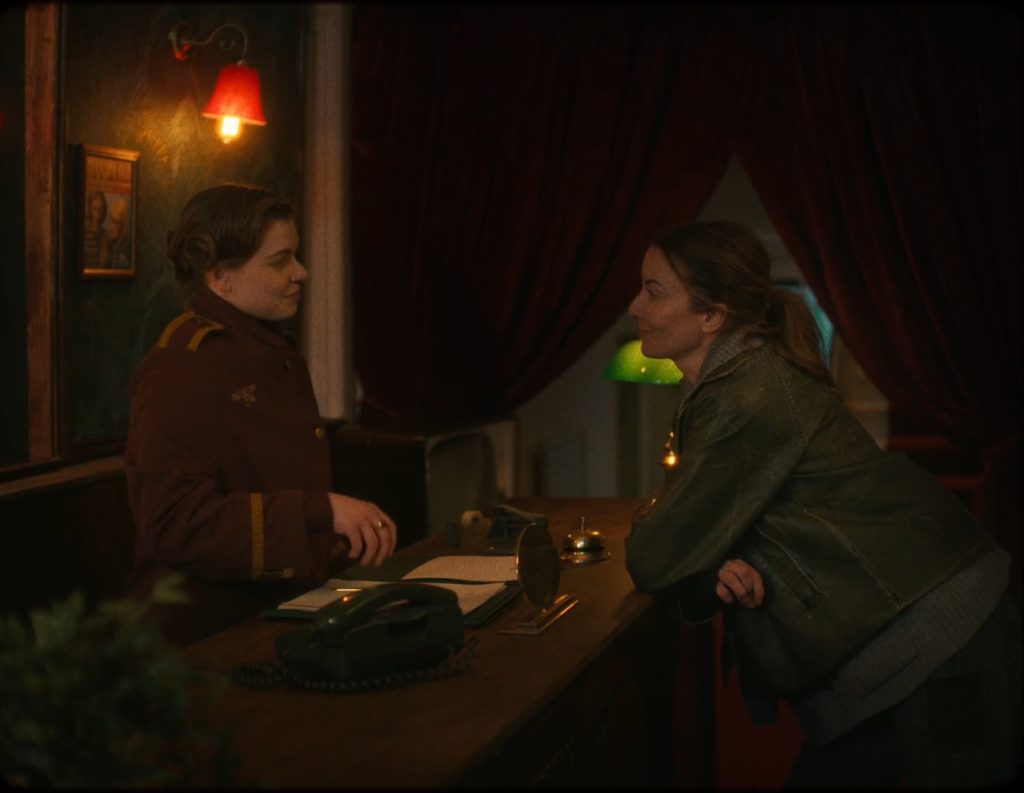
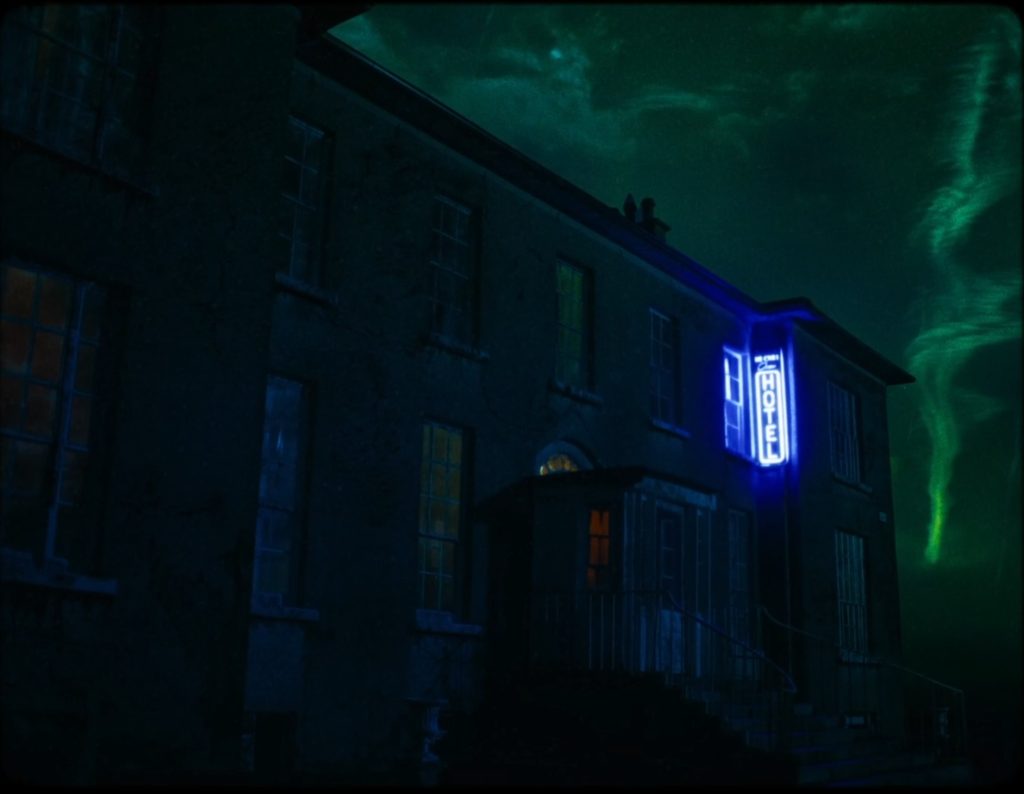
The film opens with a wonderfully conceived retro television advertisement promoting The Quiet Ocean Inn, Ireland’s leading end of life service provider. Styled like an old commercial, an announcer calmly informs viewers that the world is dying, humanity is slowly disappearing, and only one percent of people have ever experienced love. It is a chilling introduction to a bleak future where people can simply book into a hotel if they no longer wish to continue living.
The disturbing tone continues as we watch a cleaner dressed in an absurdly oversized hazmat suit disinfecting hotel rooms after previous guests have died. Death has become just another part of the daily routine.
Shot entirely in a nostalgic 4:3 aspect ratio, The Quiet Ocean immediately establishes a distinctive visual identity. Combined with subtle film grain and beautifully controlled lighting, the cinematography gives the film an almost timeless quality, feeling both retro and futuristic at the same time. Carol Tormey’s photography is consistently excellent, transforming the hotel’s corridors and bedrooms into spaces that are simultaneously comforting and quietly unsettling.
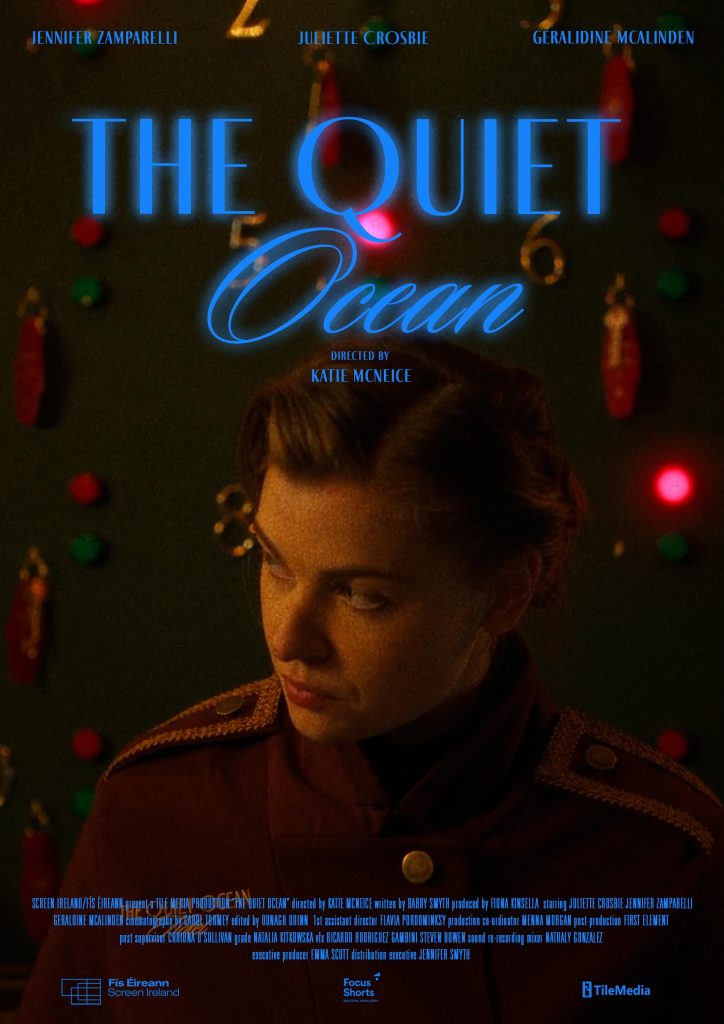
We are then introduced to Kansas (Juliette Crosbie), the hotel’s receptionist, who welcomes a new guest, Maria (Jennifer Zamparelli). Maria requests a room for the entire night rather than one of the hotel’s hourly packages, intended for guests who wish to end their lives immediately. As Kansas escorts her upstairs, what initially appears to be a routine check-in gradually develops into an unexpectedly personal conversation. Rather than simply processing another guest, Kansas and Maria begin discussing life, loneliness and the emotional weight of working in a place where death has become an everyday occurrence.
As their conversation continues, Kansas recalls the saddest experience she has witnessed while working at the hotel. A married couple checked in believing the husband was close to death. When he unexpectedly survived, rather than celebrating, they continued renting a room for another month in the hope they would eventually die together. In a world where genuine love has become incredibly rare, the thought of continuing without one another was simply too much to bear. It is a quietly heartbreaking anecdote that reinforces the film’s central themes without resorting to melodrama.
Barry Smyth’s screenplay deserves considerable praise. Despite its relatively short runtime, it creates a believable world with very little exposition, allowing conversations between the characters to naturally reveal how society has reached this point. The dialogue is thoughtful throughout, but importantly it never becomes overly heavy. Small moments of dark humour are sprinkled throughout the script, providing welcome relief from the otherwise melancholy subject matter.
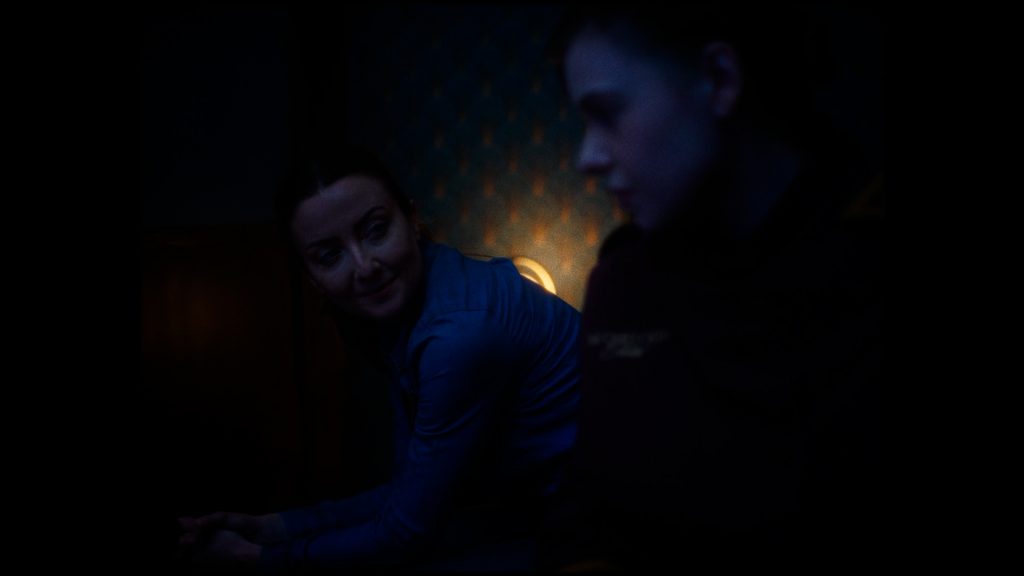
Juliette Crosbie delivers a wonderfully understated performance as Kansas. She brings a quiet empathy to the role that makes her instantly likeable, while Jennifer Zamparelli’s Maria arrives with confidence, humour and an infectious warmth that slowly chips away at Kansas’ emotional reserve. Their chemistry develops naturally through conversation, making their growing connection easy to invest in.
That connection reaches its emotional peak when Maria unexpectedly leans in for a kiss. Kansas instinctively pulls away, surprised by the sudden intimacy. Rather than creating awkwardness, Maria instead puts on a record, takes Kansas gently by the hand and invites her to dance. The scene is beautifully performed by both actresses and becomes the emotional centrepiece of the film.
Accompanying the dance is “I’ll Be Out Here” by Mick Flannery featuring Susan O’Neill, a gorgeous piece of music that perfectly complements the tenderness of the moment. The song continues into the end credits and lingers long after the film has finished.
If there is one slight criticism, it is that the romantic spark between Kansas and Maria perhaps develops a little too quickly considering they have only just met. Both performances sell the emotional connection convincingly, but another scene or two allowing the relationship to breathe may have made the final emotional beats even stronger.
Importantly, The Quiet Ocean avoids taking the predictable route. Even after sharing this connection, Maria does not suddenly abandon her plans. She still requests the room for the night, leaving Kansas visibly conflicted and emotionally affected by someone she has only recently met.
Technically, the production is superb. Carol Tormey’s cinematography gives the short an impressively cinematic appearance throughout, while the lighting design creates a rich visual texture rarely seen in productions of this length. The film looks considerably larger than its runtime might suggest.
Oonagh Quinn’s editing keeps everything moving at an assured pace, allowing scenes room to breathe while never overstaying their welcome. Likewise, the sound department deserves recognition. Anthony Egan’s location sound is crisp throughout, while Nathaly Gonzalez’s re-recording mix ensures every conversation remains clear and natural. Combined with Mick Flannery and Susan O’Neill’s beautiful closing song, the audio work is among the film’s strongest technical achievements.
Katie McNeice directs with tremendous confidence, allowing performances and atmosphere to take centre stage rather than relying on flashy filmmaking. Every creative decision feels deliberate, and the film’s restrained style suits the material perfectly.
What makes The Quiet Ocean particularly memorable is that, despite revolving around assisted death and a world seemingly devoid of love, it never feels relentlessly bleak. Instead, it quietly explores companionship, kindness and human connection in the darkest of places. Even its blackly comic moments feel earned, helping balance the heavier themes without diminishing them.
In under fifteen minutes, The Quiet Ocean successfully builds an entire dystopian world, introduces compelling characters and delivers an emotionally satisfying story. That is an impressive achievement in itself.
Beautifully acted, gorgeously photographed and anchored by an intelligent screenplay, The Quiet Ocean is an affecting piece of science fiction that lingers in the mind long after the credits have rolled. It is thought-provoking, emotionally engaging and technically accomplished, demonstrating exactly what can be achieved through strong writing and confident direction rather than spectacle alone.
One of the strongest Irish short films of recent years, The Quiet Ocean is a beautifully crafted reminder that even in humanity’s darkest imagined future, hope can still emerge through the briefest moments of genuine connection.
| Acting | |
| Direction | |
| Cinematography | |
| Writing | |
| Sound | |
| Screen Critix Rating |