
Making a feature film at just nineteen years old is no small achievement. Most filmmakers spend years honing their craft through short films before attempting a full-length production, so there is something admirable about Metecan Duren aiming high with Pretty. Serving as writer, director, cinematographer, editor and composer, Duren wears almost every creative hat on the production, making this an intensely personal project. While the ambition is clear throughout, the finished film ultimately feels like the work of a young filmmaker still finding his voice.
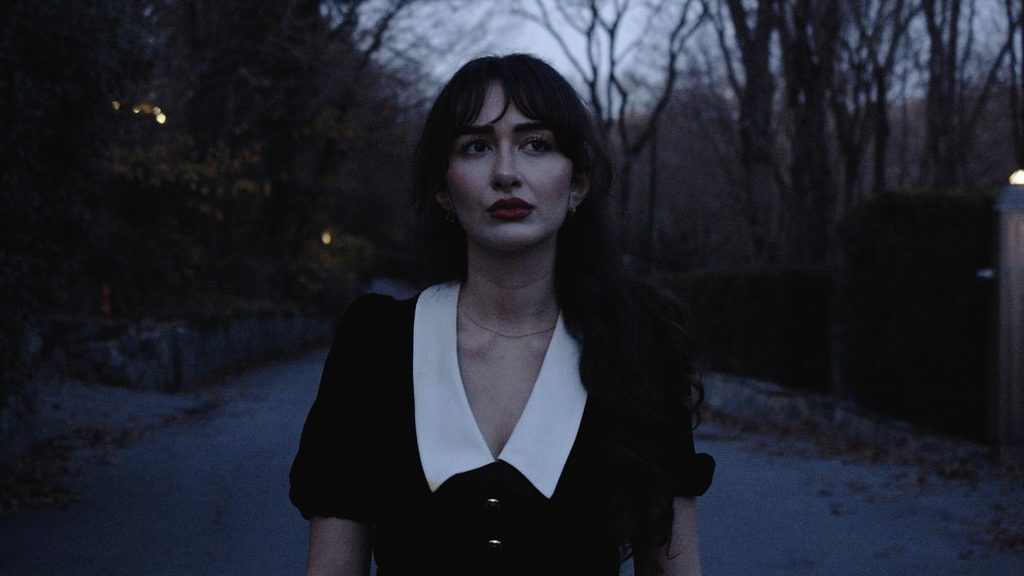
Pretty opens with the title card “Act One – I’ve Heard Your Name Before” before introducing us to Pretty (Melisa Kihtir) and Tom (Omer Gursoy), who stroll through a quiet street deep in conversation. After hearing a strange noise, Pretty investigates a nearby house, only to hear a mysterious female voice calling out to her. She quickly leaves, but the encounter marks the beginning of a supernatural mystery that slowly unfolds over the film’s lengthy runtime.
Almost immediately, continuity issues become noticeable. One moment the pair are walking through daylight, and the next it has suddenly become night. It’s a small detail in the grand scheme of things, but it is the sort of mistake that momentarily pulls the audience out of the story.
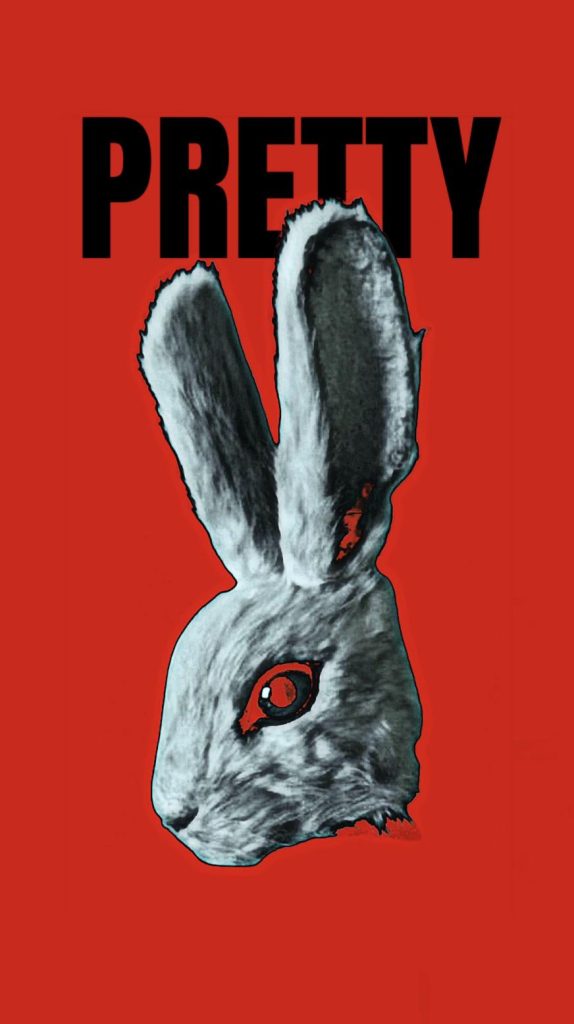
Back home, Pretty endures constant bullying from Emma (Saran Duren), who cruelly tells her that Tom will never love her and that nobody else ever will either. Before long, Emma mysteriously disappears, prompting Pretty to search for her. Outside she spots a lone figure standing silently in the middle of the road before it suddenly sprints directly towards her. She flees back inside, where more unsettling visions begin to plague her, including the appearance of a sinister rabbit-masked figure watching through the patio doors. It turns out to be a dream, but the uneasy atmosphere continues when a stuffed rabbit is later discovered on her doorstep.
With her parents away on a trip to Moscow, Pretty returns to the mysterious house where she first heard the voice. There she finally discovers its owner: the ghost of a murdered young girl named Betty (Alina Zakharova), trapped somewhere between worlds. Betty reveals that she has heard Pretty’s name before and warns her that an evil entity is manipulating events and drawing her towards the house. From this point onwards, Pretty becomes increasingly obsessed with uncovering the truth behind Betty’s death while strange messages, supernatural encounters and increasingly dangerous events begin surrounding her.
The premise itself is an intriguing one. A ghost story wrapped inside a mystery involving obsession, murder and an unseen supernatural force has plenty of potential, and there are flashes throughout the film that demonstrate Duren has a genuine eye for horror imagery.
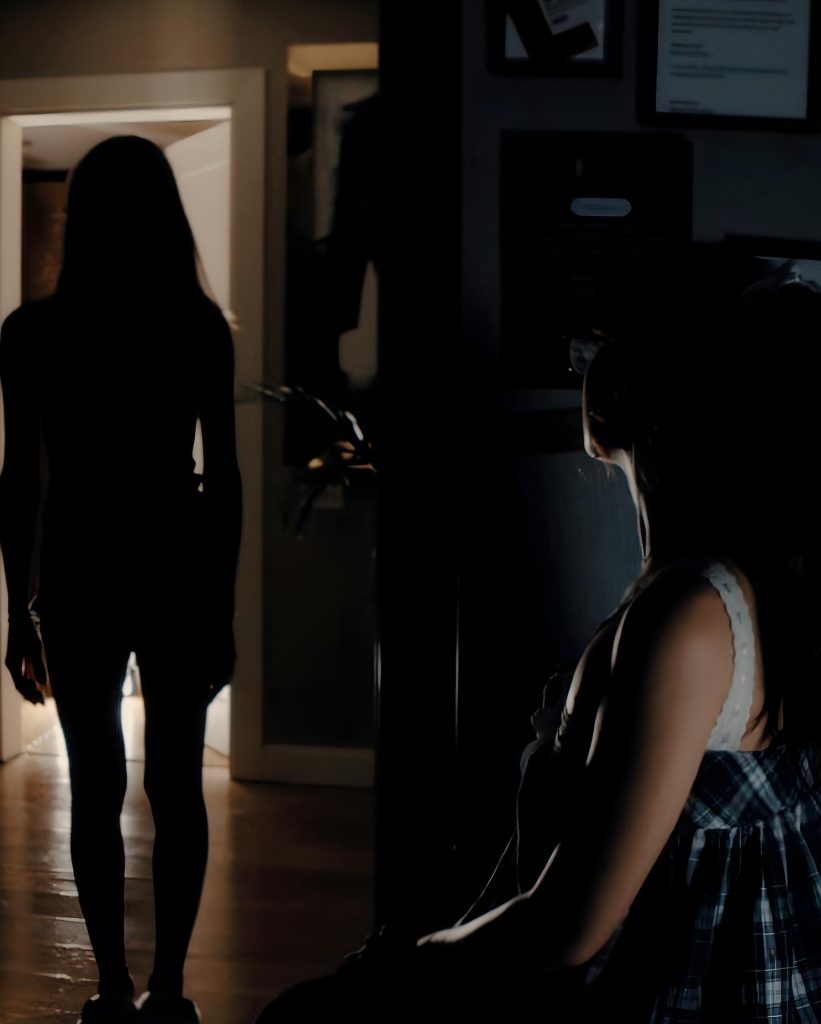
Perhaps the strongest aspect of Pretty is its visual style. Considering the film’s obvious low-budget origins, the lighting is surprisingly effective throughout much of the runtime. Several scenes make strong use of shadows and practical lighting to create atmosphere, while some of the framing demonstrates real promise behind the camera.
One sequence in particular stands out. Pretty is sitting alone on the edge of her bed when she notices a terrifying figure standing silently in the hallway, staring directly into her bedroom. The creature’s make-up design is genuinely creepy, creating one of the film’s most memorable scares. It’s an excellent visual moment that shows Duren understands how unsettling simple imagery can often be.
Unfortunately, moments like this are often undermined by the characters’ reactions. Rather than behaving in ways that feel believable, characters frequently make decisions that stretch credibility. After witnessing the terrifying hallway figure, Pretty simply closes the bedroom door rather than fleeing the house or contacting the authorities. Horror audiences are generally willing to suspend disbelief, but they still expect characters to react like real people in extraordinary situations.
The screenplay also leans heavily on extended text message exchanges. While these conversations help advance the plot, watching prolonged close-ups of mobile phone screens rarely creates compelling cinema. There are more visual ways of conveying the same information that would have maintained the film’s momentum.
The pacing also proves challenging. Running for around two hours, Pretty asks a lot from its audience, particularly for what is essentially a slow-burning supernatural horror. There are stretches where the narrative loses focus, and trimming the runtime considerably would almost certainly have resulted in a tighter, more engaging experience.
Performance-wise, the film struggles to find consistency. Some cast members handle the material better than others, but overall the acting varies between inexperienced and overly theatrical. Given the film’s independent nature and limited resources, attracting established performers is understandably difficult. However, stronger casting would have elevated many of the emotional scenes and helped audiences become more invested in Pretty’s journey.
Where Duren deserves genuine praise is in his ambition. Taking on directing, writing, cinematography, editing and composing is an enormous undertaking for any filmmaker, let alone someone still in their teens. While not every creative decision works, there is an enthusiasm behind the camera that shines through. Certain compositions are attractive, the supernatural mythology has potential, and when the horror imagery lands, it lands well.
Pretty often feels like a filmmaker experimenting with ideas, learning what works and what doesn’t. It is far from a polished production, but neither is it without merit. There are enough interesting concepts and well-crafted visual moments to suggest that Duren possesses genuine talent waiting to be refined.
Perhaps the biggest lesson here is one of scale. Jumping straight into a two-hour feature is an incredibly difficult challenge, even for experienced directors. Building experience through shorter projects may have allowed Duren to sharpen his storytelling, tighten his pacing and develop actors more confidently before tackling such an ambitious production.
Still, everyone starts somewhere, and Pretty represents an admirable first step. The technical rough edges, uneven performances and overlong runtime prevent it from becoming the compelling supernatural mystery it clearly wants to be, but its ambition, occasional striking visuals and flashes of effective horror show real promise.
If Metecan Duren continues learning from each project, develops his storytelling instincts and keeps making films, there is every reason to believe he could produce something genuinely impressive in the future. Pretty may not fully succeed, but it demonstrates enough potential to make his future work worth watching.
| Acting | |
| Direction | |
| Cinematography | |
| Writing | |
| Sound | |
| Screen Critix Rating |