
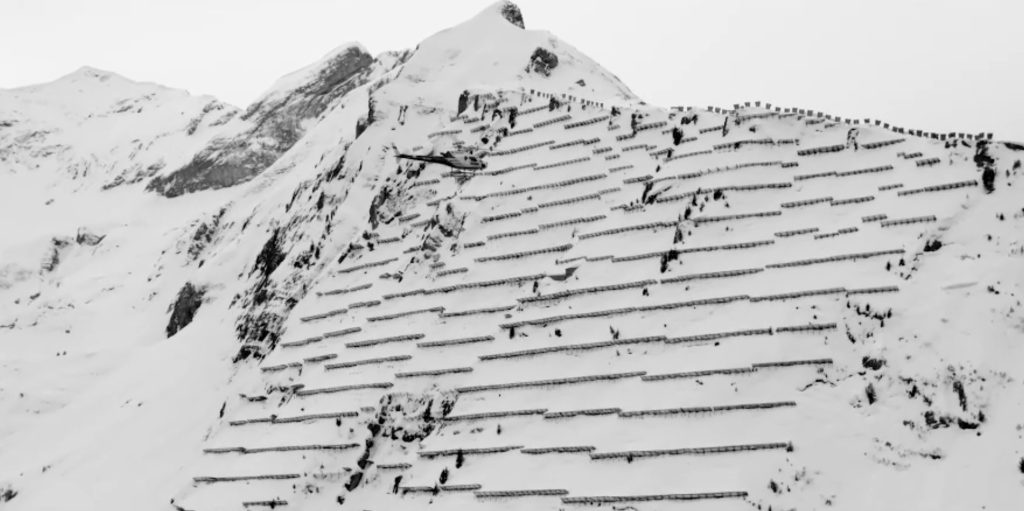
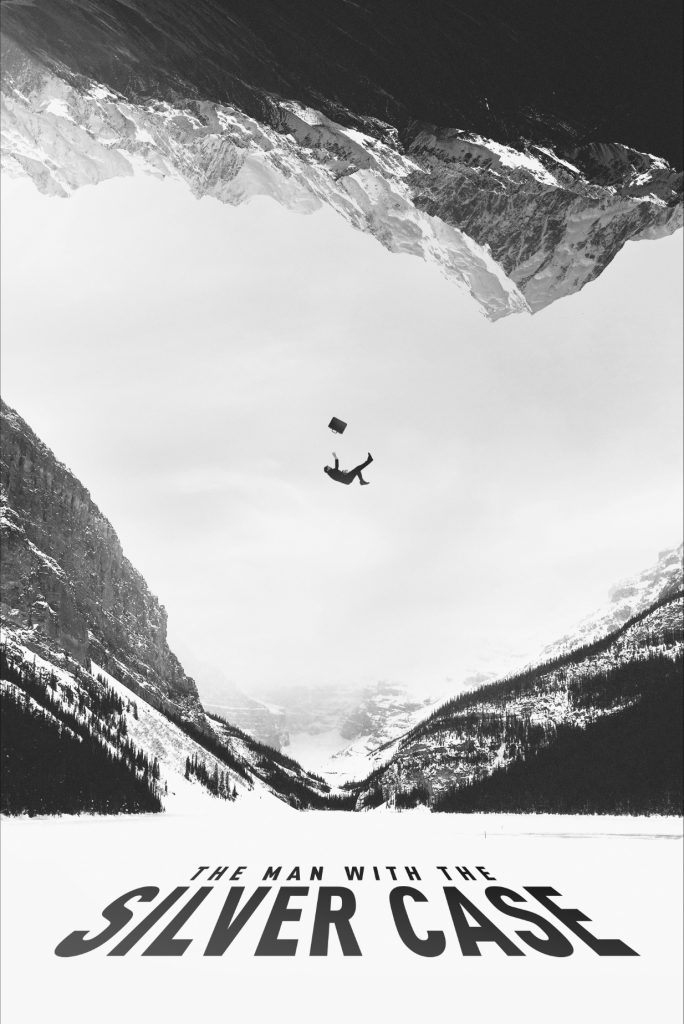
The Man with the Silver Case establishes its visual ambitions almost immediately. Three men board a helicopter surrounded by an imposing mountain range, and as the aircraft travels across snow-covered peaks and forests, cinematographer Jay Keitel captures the landscape in striking black and white. Within minutes, the tranquillity is shattered by violence as one of the passengers kills the other two men, threatens the pilot, throws a briefcase from the helicopter and parachutes after it.
It’s an arresting introduction, both narratively and visually, and it immediately demonstrates the confidence of writer and director Colin Best. The sequence also establishes a world in which death can arrive suddenly and allegiances mean very little. Having survived his dramatic descent and retrieved the case, the gunman meets an associate on the ground only to be murdered himself shortly afterwards.
From there, the film introduces its real central figure, the Man in Gray, played by Stuart Reid. He’s involved in the same shadowy world of clandestine assignments and violence, but Best avoids presenting him as an impossibly polished secret agent. The Man in Gray is capable of killing when required, yet he’s also battling serious alcohol and drug dependency, making him a considerably more damaged and vulnerable protagonist than the genre might initially suggest.
Stuart Reid Leads The Man with the Silver Case
Reid’s performance is one of the film’s greatest strengths. The Man in Gray isn’t a character who constantly verbalises his thoughts or motivations, so much of the performance depends upon physicality, expression and Reid’s ability to communicate what is happening beneath an often controlled exterior.
An early sequence demonstrates the contrast particularly well. The Man in Gray takes cocaine in a bar restroom before returning to watch a jazz performance, visibly affected by the drugs. When he later steps outside for a cigarette, he’s shot in the stomach by an unseen attacker.
After recovering in an unusual medical facility, he approaches his employers looking for another assignment. They’re understandably concerned about his addictions and whether he’s capable of completing the work, but he’s eventually sent on another job. The assignment leads him across Switzerland by train before he’s handed the silver case and begins transporting it towards an unknown destination.
Reid handles the character extremely well throughout. Born in Northern Ireland and trained at LIPA in Liverpool, his previous credits include appearances in Testament, Coronation Street and several short films. The Man with the Silver Case provides him with a substantial leading role, and he demonstrates the screen presence required to carry a film in which the central character frequently says very little.
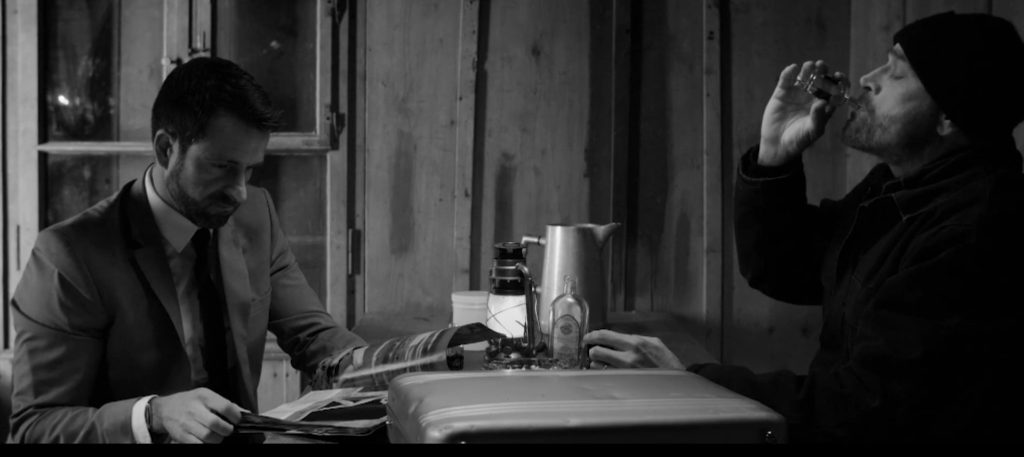
He’s surrounded by a solid supporting cast that includes Tom Ohmer as the Father and Lara Marian as the Mother. Pasted markdown However, this remains Reid’s film for much of its running time, and his performance gives the Man in Gray enough complexity to prevent him from becoming simply another anonymous cinematic assassin.
Stunning Black-and-White Cinematography
The most immediately impressive aspect of The Man with the Silver Case is undoubtedly Jay Keitel’s cinematography. The American production was filmed in Switzerland, chiefly around Lauterbrunnen, and the locations become fundamental to the film’s identity. Pasted markdown
Best and Keitel make excellent use of snowy towns, railway stations, forests, mountains and stark interiors. One train journey is particularly beautiful, with wide and elevated compositions placing the train against the enormous surrounding landscape. Elsewhere, the camera captures characters moving through stations and between trains, giving the film a sense of scale even when the narrative itself remains deliberately intimate.
Shooting in black and white proves to be far more than a stylistic novelty. It complements the film’s noir influences while allowing the contrasts of snow, dark clothing, forests and architecture to create some genuinely beautiful compositions. There are numerous moments that could almost be lifted from the film and presented as still photography.
This visual confidence becomes particularly important because The Man with the Silver Case contains lengthy passages with little or no dialogue. Best is comfortable allowing movement, geography and atmosphere to communicate information, rather than filling every silence with exposition.
The approach requires strong photography to maintain interest, and Keitel consistently provides it. He’s credited as cinematographer, with Caspar Brog serving as gaffer and Natalie Wallrapp as first assistant camera. Pasted markdown Pasted markdown Together, the visual team gives the film a remarkably polished and distinctive appearance.
Atmosphere Over Exposition
The Man with the Silver Case is equally confident in its use of sound. Dialogue is clear and well recorded, but some of the most effective work comes from the less obvious details. Foley, room tone and environmental sounds such as birdsong give the locations a convincing presence, particularly during the quieter sequences.
Vu Le and Steve Maslow are credited as re-recording mixers, with Le also serving as sound editor and Billy Theriot handling Foley editing. Pasted markdown Their work supports a film that frequently depends upon atmosphere rather than conversation.
The music is similarly effective and occasionally unexpected. Jazz fits naturally alongside the monochrome crime imagery, but Best also incorporates musical choices that contrast with what we might traditionally expect from this kind of noir-influenced thriller. Rather than undermining the atmosphere, those contrasts help give the film a personality of its own.
Editor Youssef Delara also deserves credit for allowing the film to breathe. Pasted markdown There are extended sequences of travel, pursuit and observation in which Best doesn’t appear concerned about rushing towards another dialogue scene. The Man in Gray waits at stations, moves through landscapes and attempts to evade the people following him, with the filmmaking itself carrying much of the narrative.
That restrained storytelling won’t necessarily suit everyone. The plot deliberately withholds information, and the mysterious case at the centre of everything functions more as the catalyst for the Man in Gray’s journey than something the film feels compelled to explain immediately. For viewers accustomed to thrillers that continually clarify character motives and narrative mechanics, the sparse approach may require some adjustment.
An Impressive Directorial Debut
What makes all of this particularly noteworthy is that The Man with the Silver Case is Colin Best’s first feature film as a director. Best previously produced the 2016 documentary The Black Jacket, but this represents a significant move into narrative feature filmmaking.
There is considerable assurance in the way he approaches the material. Best clearly understands the importance of location, composition and atmosphere, and he’s prepared to trust the audience during stretches where another filmmaker might have relied upon explanatory dialogue.
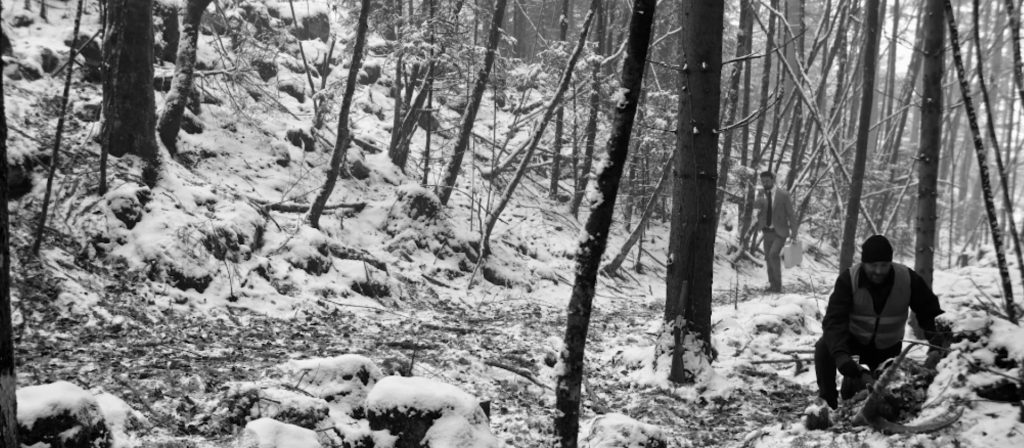
The film draws upon recognisable traditions of noir, spy thrillers and stories about professional killers, but it doesn’t simply imitate them. The Man in Gray’s addictions immediately remove some of the glamour normally associated with such characters, while the Swiss setting and monochrome photography create an identity that remains consistent throughout.
Best also handles the action with restraint. Violence can be sudden and brutal, beginning with the helicopter sequence and continuing as the Man in Gray encounters increasingly dangerous people during his assignment. It fits naturally within the world of the film rather than feeling included merely to provide regular action beats.
There are deliberately ambiguous elements to the story, and not every narrative question receives an obvious answer. Yet the film’s commitment to its atmosphere meant that we remained engaged by the Man in Gray’s journey even during sequences where very little was being said.
A Beautifully Crafted Crime Thriller
The Man with the Silver Case is ultimately a film in which craftsmanship matters enormously. Its story provides the framework, but the experience comes from watching Best, Keitel, Reid and the wider production team construct a bleak, mysterious world around it.
Reid is excellent in the central role, bringing vulnerability and damage to a character who could easily have become a familiar genre archetype. His Man in Gray is capable and dangerous without ever seeming invulnerable, and the character’s addictions ensure that his greatest threat isn’t necessarily limited to the people pursuing him.
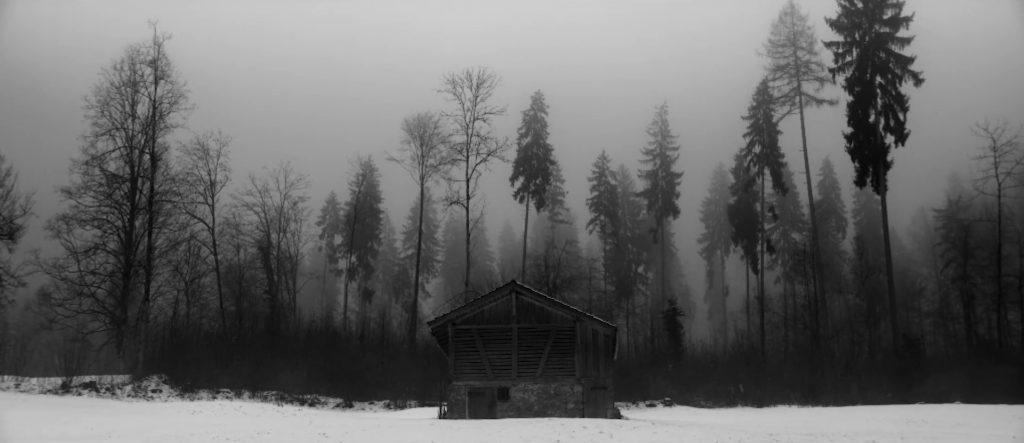
The sound work is equally accomplished, the unusual musical choices complement the film surprisingly well, and the Swiss locations provide production value that Best exploits at every opportunity. Above everything else, however, it’s Keitel’s photography that remains most memorable.
For a first feature, this is an exceptionally confident piece of filmmaking. Best demonstrates a strong understanding of visual storytelling and an ability to create atmosphere without relying upon constant dialogue or exposition, while Reid proves more than capable of carrying the film’s quiet central character.
The Man with the Silver Case is stylish, beautifully photographed and impressively performed. Its measured storytelling may not appeal to viewers looking for a conventional action thriller, but those willing to surrender to its quieter rhythms will find a distinctive crime film with a strong identity of its own. Most importantly, it marks Colin Best as a filmmaker worth watching and Stuart Reid as a leading man we’d be very interested to see more from.
| Acting | |
| Direction | |
| Cinematography | |
| Writing | |
| Sound | |
| Screen Critix Rating |