
She Listens Alone is built around an increasingly uncomfortable imbalance between two people who initially meet in a setting designed to provide support. Sabrina Nolan is an online therapist accustomed to listening to people at vulnerable moments in their lives, while Andrew is a troubled young client struggling after leaving college. What begins as a relatively ordinary professional interaction gradually develops into something far more complicated, giving director Sean O. McGuiness a strong foundation for an intimate psychological thriller.
Alivia Levie plays Sabrina with a calmness that suits the character’s profession. Her early conversations with clients establish someone who is comfortable listening, taking notes and attempting to understand the person speaking to her rather than simply providing easy reassurance. When Andrew becomes defensive during one of their earliest conversations, Sabrina challenges him rather than retreating, encouraging him to recognise that his circumstances do not necessarily determine his future.
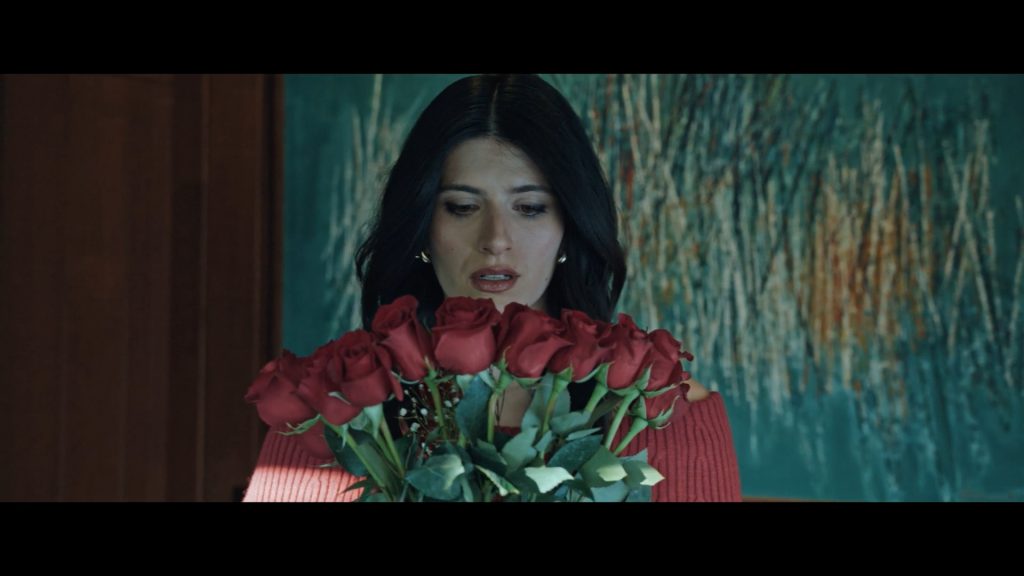
That interaction becomes important because Wyatt Tithof initially presents Andrew as someone who is frustrated rather than threatening. His difficulties at college and apparent loneliness provide an understandable reason for seeking help, while his occasional hostility feels connected to that frustration. Tithof avoids signalling too much too early, allowing the relationship between the two characters to develop before the darker implications of Andrew’s behaviour become apparent.
McGuiness takes his time establishing Sabrina outside those conversations. Her relationship with Mike (Forest Quaglia) is deteriorating, and his closeness to Jessica (Chelsea Vale) introduces emotional instability into a life that otherwise appears carefully controlled. Sabrina may spend her working hours helping other people address their difficulties, but the film makes clear that professional understanding offers no immunity from disappointment or poor judgement in her own life.
Joseph Verrastro’s screenplay gradually brings Sabrina’s personal and professional worlds into conflict. Rather than treating Andrew’s changing behaviour as an immediate switch from vulnerable client to obvious antagonist, the film allows uncertainty to remain for a significant portion of the story. Sabrina has legitimate reasons to become concerned, but determining when concern becomes genuine danger is considerably more difficult when many of the individual incidents can initially be explained away.
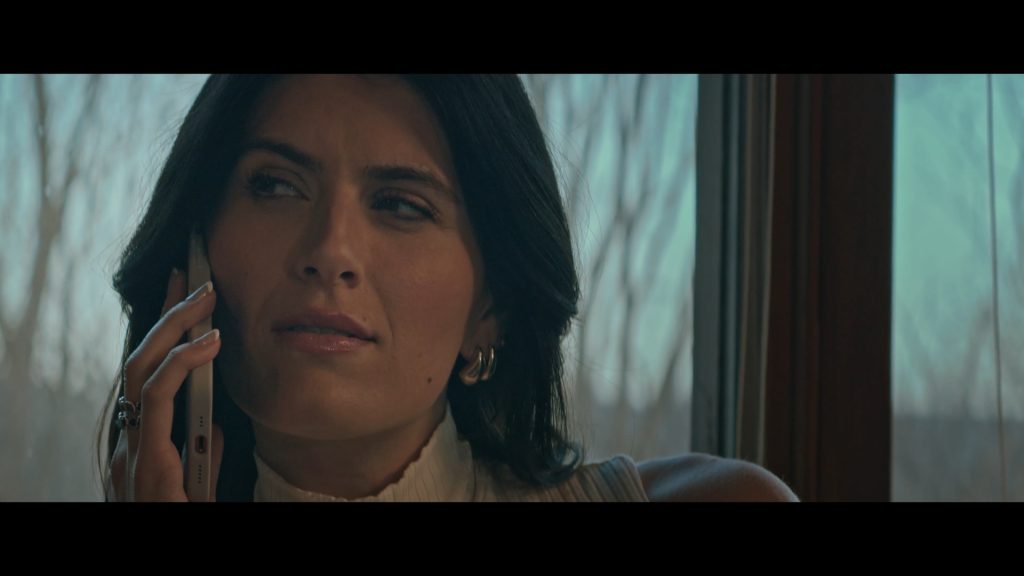
This creates some of the film’s most effective tension. A vehicle repeatedly appearing nearby, increasing attempts at contact and Andrew’s changing attitude accumulate rather than arriving as one dramatic revelation. McGuiness understands that repetition can become threatening when the person experiencing it begins to recognise a pattern, and the film becomes increasingly uneasy as Sabrina realises that events she might previously have dismissed are no longer isolated.
Levie is particularly good during this transition. Her performance doesn’t rely upon exaggerated panic, instead allowing Sabrina’s confidence to erode as the situation becomes harder to control. There is a notable difference between the composed professional seen during the opening sequences and the woman later attempting to convince others that the behaviour she’s experiencing represents a genuine threat.
Tithof complements her effectively. Andrew’s vulnerability never entirely disappears beneath his more disturbing behaviour, which prevents the character from becoming a simple thriller villain. There remains a sense of emotional immaturity and dependency even as his actions become increasingly unacceptable, making him more credible than he would have been had the film presented him as overtly sinister from his first appearance.
The consequences also extend beyond Sabrina’s immediate fear. As allegations are made against her and her professional standing comes under pressure, the story broadens from physical intimidation into something capable of affecting her livelihood and credibility. That development gives the second half greater dramatic weight because Sabrina isn’t simply attempting to avoid an unwanted presence. She is watching control of her own circumstances gradually move away from her.
McGuiness handles the film’s independent scale particularly well. She Listens Alone doesn’t depend upon large action sequences or elaborate set pieces, instead using a relatively small collection of characters and locations to maintain its focus on Sabrina. That containment suits the material and allows the production to concentrate its resources where they’re most visible.
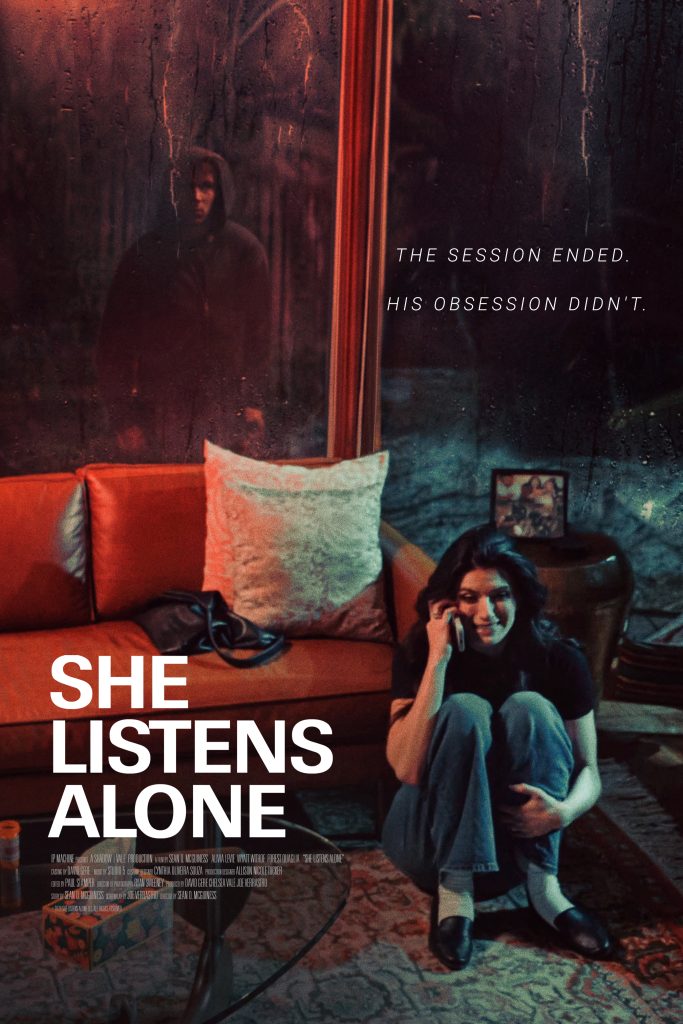
Ryan Sweeney’s cinematography is consistently impressive. The film contains some beautifully photographed interiors and exterior material, while the lighting frequently gives scenes a finish that compares favourably with productions operating at a considerably larger scale. Sabrina’s surroundings are presented with clarity and visual confidence, and McGuiness appears comfortable allowing compositions to establish atmosphere without drawing unnecessary attention to the camera.
Mario Mckenna’s music supports that restraint, while Paul Stamper’s editing becomes increasingly important as the story moves towards more immediate danger. The technical presentation as a whole is accomplished, particularly considering the film’s independent origins, and there is a clear sense that McGuiness and his collaborators have approached the production with considerable care.
There are occasional limitations. Some sound transitions are noticeable, particularly where the ambience changes between shots, and certain dialogue sequences could benefit from greater visual variation. These are comparatively minor issues, however, and they rarely interfere significantly with the performances or the progression of the story.
More importantly, She Listens Alone maintains interest because Sabrina and Andrew remain at the centre of the film. The thriller elements work because the audience has been allowed to spend time observing how their connection develops and how differently each character comes to understand it. By the time events become openly dangerous, the escalation feels connected to behaviour that has been developing throughout rather than introduced simply because the story requires a more dramatic final act.
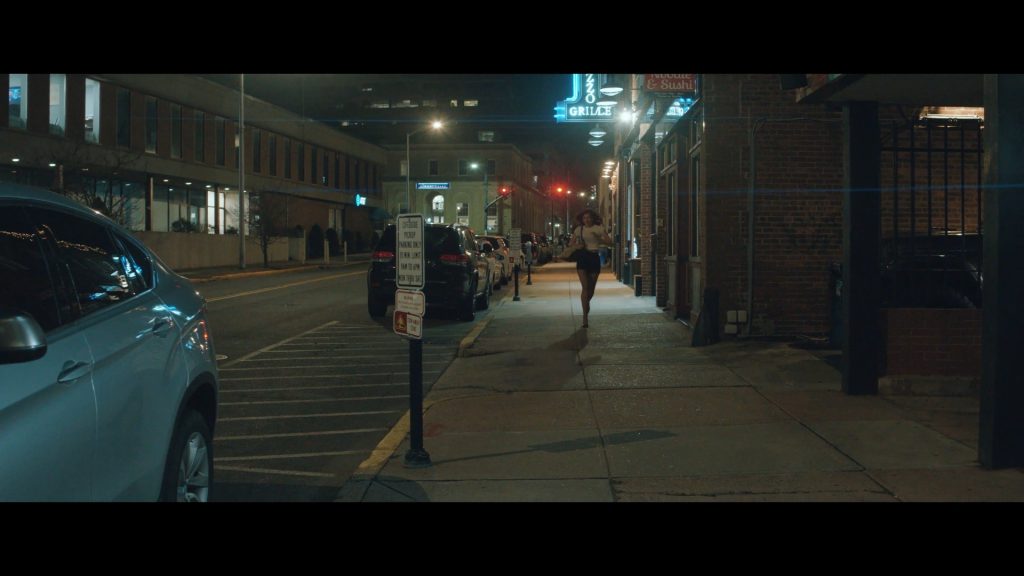
For a feature directorial debut, McGuiness demonstrates considerable assurance. He has taken a relatively contained premise and produced a polished psychological thriller that benefits from strong central performances, impressive photography and a measured approach to its escalating conflict. The material may draw upon familiar ideas surrounding obsession and unwanted attention, but the online therapeutic setting gives those ideas a convincing contemporary context.
She Listens Alone ultimately succeeds because Levie and Tithof make its central relationship believable. Levie carries the film with a controlled and increasingly vulnerable performance, while Tithof makes Andrew troubling without reducing him to a caricature. Supported by McGuiness’ confident direction and Sweeney’s accomplished cinematography, they help turn a modestly scaled independent production into a compelling and impressively crafted thriller.
| Acting | |
| Direction | |
| Cinematography | |
| Writing | |
| Sound | |
| Screen Critix Rating |