
Making a film is difficult. Finishing one can be even harder. The Last Screenplay, the feature directorial debut of Thomas J Ward, understands the pressure, uncertainty and constant firefighting that can accompany independent filmmaking, but gradually reveals that its collapsing production is connected to something considerably more personal.
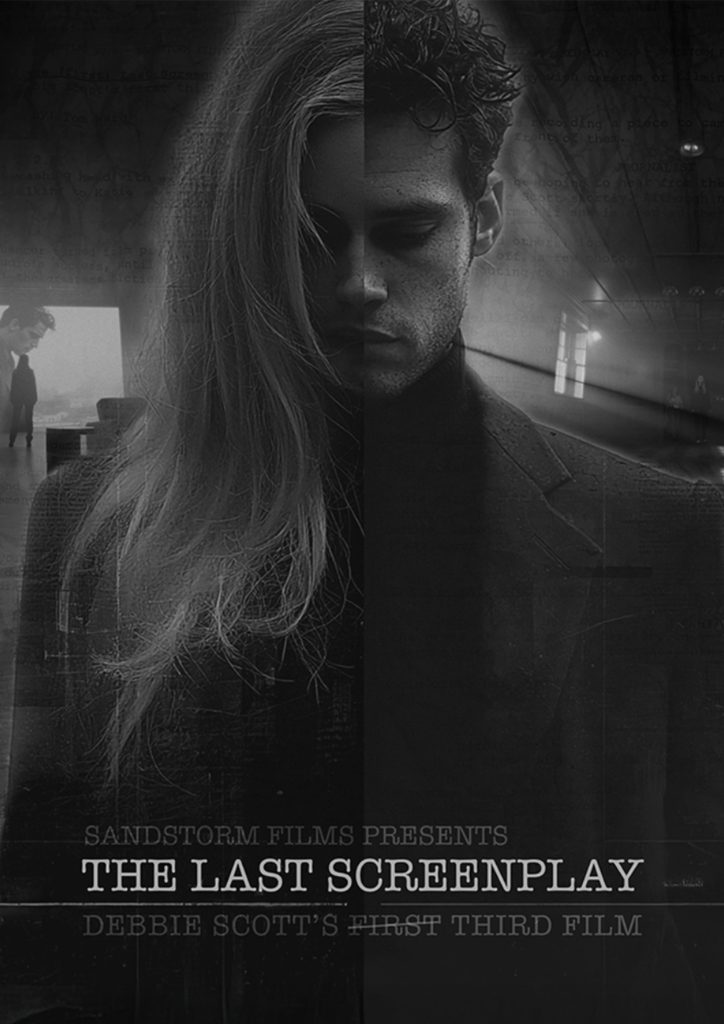
Ward establishes the film’s playful relationship with failure from its opening moments. Piano music accompanies the title before “Debbie Scott’s First Third Film” appears beneath it, with “First” crossed out. The music skips, another song begins, and we are introduced to Debbie Scott, played by Jane Lee Jones, an influencer and former model attempting to reinvent herself as a successful film producer.
Newspaper coverage provides some unfortunate context. Two previous film projects have fallen apart, one during the COVID period and another amid industry strikes, while her latest production, The Last Screenplay, is hardly proceeding smoothly either. The director has quit, money is becoming a problem and the editor has disappeared, leaving executive producer Richard to become involved in the edit.
Debbie nevertheless maintains the appearance that everything is under control, even when journalists arrive at her studio asking increasingly uncomfortable questions. When she gives one of them a tour, the cracks become harder to disguise. A member of staff doesn’t appear to know who anybody is, a lounge set is conspicuously devoid of furniture and production coordinator Katie isn’t answering her phone after apparently not being paid. Debbie even discovers that her keycard no longer grants her access to parts of her own studio.
Ward uses these problems to capture something recognisable about filmmaking: once one problem appears, another is often patiently waiting behind it. Debbie moves through the studio attempting to locate people, find solutions and maintain authority while the infrastructure around her appears increasingly unstable. Thomas Ward, who also served as cinematographer, is at his best visually during these sequences, with the camera following Debbie through the building and contributing to the mounting sense of pressure.
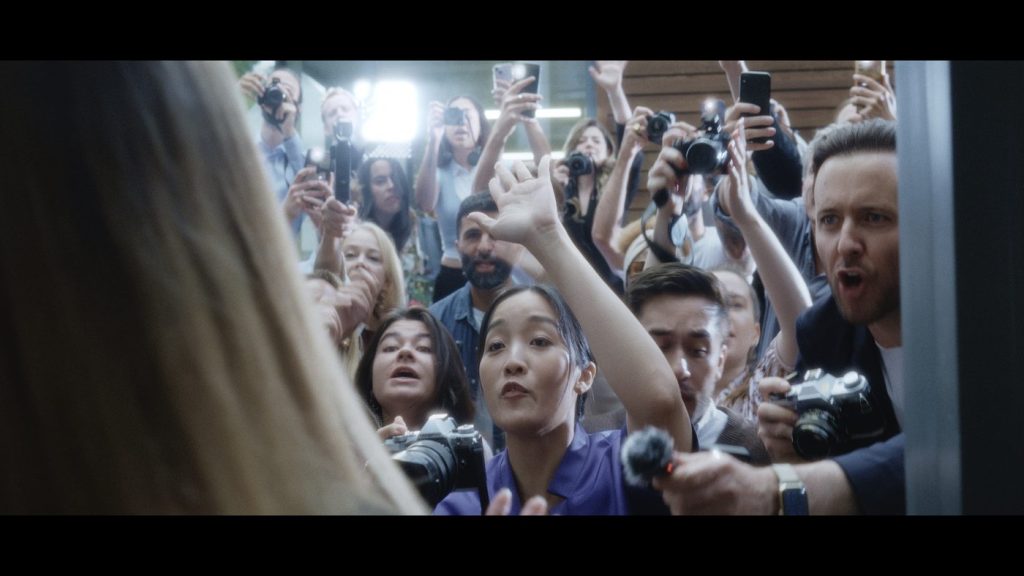
Debbie’s professional predicament also provides an interesting examination of the difference between visibility and experience. Building an audience online might provide somebody with a platform, but producing a feature requires an entirely different collection of skills. Debbie wants desperately to prove that she belongs in the film industry, yet ambition alone cannot make missing personnel, financial problems and production difficulties disappear.
The arrival of a funding representative introduces another familiar filmmaking conflict. Debbie needs support but doesn’t necessarily want the creative conditions that can accompany it, particularly when suggestions are made about changes that might improve the film’s commercial prospects. Her resistance contributes to a portrait of someone determined to retain control even as that control becomes increasingly questionable.
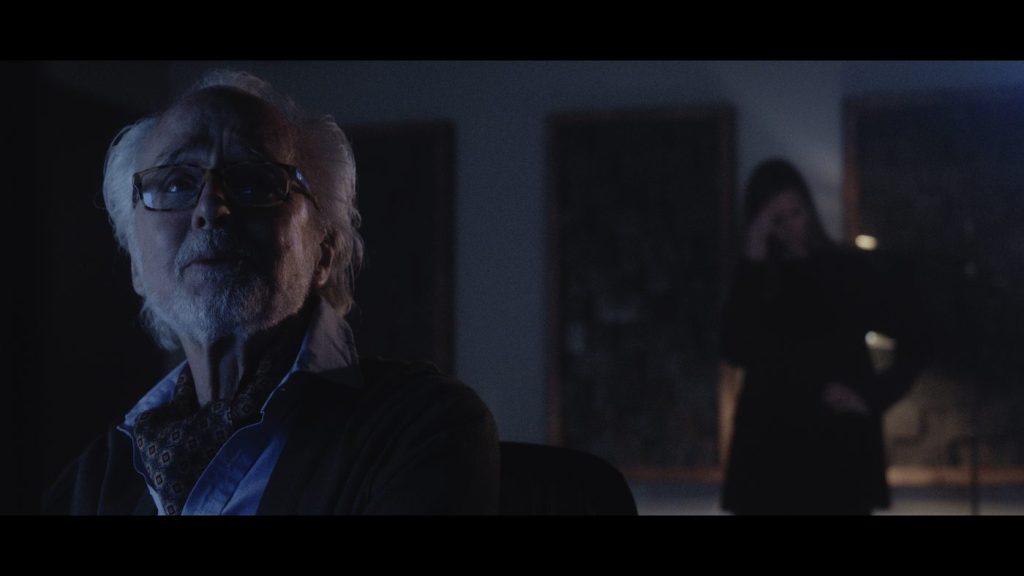
Running alongside Debbie’s struggle is Richard Wadsworth, played by Andrew Norman. Richard is an ageing retired Hollywood editor whose memory is deteriorating, something that becomes progressively more difficult to ignore. He is supposed to be assembling material from Debbie’s current production but begins talking about one of her previous films instead. At another point he cannot remember whether he has eaten, yet he remains involved in helping Debbie keep the production moving.
This is where The Last Screenplay develops beyond an industry drama about a disastrous film shoot. Editing is fundamentally about constructing continuity from fragments, deciding what belongs together and establishing an order that makes sense. Richard is performing that task professionally while increasingly struggling to maintain continuity within his own memory, giving the film’s central filmmaking device a more poignant significance.
Jones and Norman are crucial to making this work. Jane Lee Jones makes Debbie convincing as someone desperately trying to hold together both a production and her own conception of success. She can be difficult and stubborn, but Jones prevents her from becoming merely an exaggerated portrait of an influencer who wandered onto a film set and decided she was David O. Selznick.
Norman, meanwhile, brings vulnerability to Richard without allowing the character’s declining memory to become a dramatic gimmick. The relationship between Debbie and Richard gradually gives the film its emotional foundation, particularly as professional chaos becomes increasingly intertwined with questions of memory, responsibility and care.
Charlie Flint’s music is another significant strength. The piano-led score works effectively with the more reflective passages, while the use of older music played through record players gives other moments a distinctive texture. The heightened crackle of the needle becomes part of the film’s soundscape, complementing a story preoccupied with memory, deterioration and things slipping imperfectly between past and present.
The film isn’t always as urgent as the situation it depicts. The Last Screenplay is deliberately measured, but there are stretches where a slightly quicker pace could have strengthened the accumulating tension. Debbie is surrounded by enough professional disasters to give most producers heart palpitations before lunchtime, yet the film sometimes allows those problems more breathing room than they require.
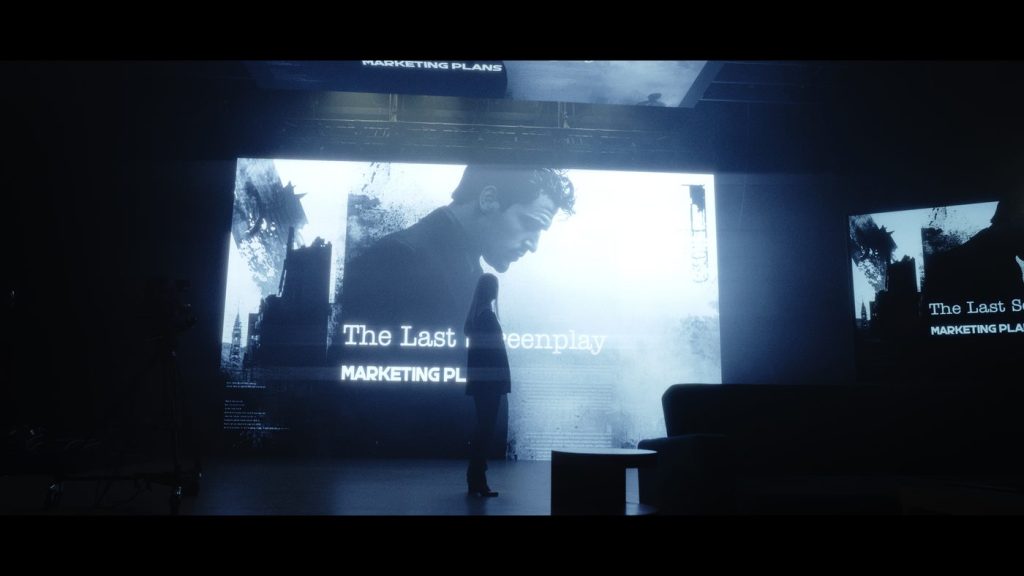
Even so, Ward succeeds in drawing us into Debbie’s increasingly precarious world. The studio itself becomes an important part of that experience, initially representing her ambition before gradually exposing the distance between the image she has created and the reality underneath it.
There is considerable ambition here for a first feature. Ward is attempting to make a film about filmmaking while simultaneously exploring memory, ageing, ambition and the uncomfortable gap between the stories people construct about themselves and what is actually happening around them. Not every element lands with equal force, and the pacing occasionally prevents the drama from tightening its grip as firmly as it might, but the central ideas are compelling.
The filmmaking setting also gives those ideas an appropriate framework. Productions are built on continuity, schedules, budgets and the belief that seemingly unrelated pieces can eventually be assembled into something coherent. The Last Screenplay places characters inside that machinery while showing what happens when continuity, whether professional or personal, begins breaking down.
As a directorial debut, it demonstrates that Ward is willing to tackle difficult material rather than choosing an easier route for his first feature. Strong performances from Jones and Norman, confident camerawork and Flint’s effective score compensate for some of the film’s slower passages, while the behind-the-scenes chaos provides an engaging route into its more serious concerns.
The result is a thoughtful and promising first feature that understands filmmaking can be exhilarating, ridiculous, stressful and deeply personal, sometimes within the same five minutes. The Last Screenplay may occasionally take its time reaching the next scene, but once we are drawn into Debbie and Richard’s increasingly fragile world, there is plenty here worth staying for.
| Acting | |
| Direction | |
| Cinematography | |
| Writing | |
| Sound | |
| Screen Critix Rating |