
“After dinner I sit by the window, watching. It’s been going on for months now.”
Those opening words immediately establish the peculiar domestic world of The Idea, an eight-minute short directed by Henry Chastain and adapted from Raymond Carver’s short story of the same name. Melora Walters plays a woman who has developed an unusual nightly routine. Rather than settling down in front of the television, she sits beside the window and watches the neighbours.
Her husband, played by Dar Dixon, joins her as the evening’s familiar spectacle begins. Across the way, their male neighbour leaves his house and walks into the garden before staring towards an illuminated upstairs window. The blinds eventually open to reveal his wife, who begins undressing while her husband watches from outside. Once she has changed, the light disappears and he returns indoors.
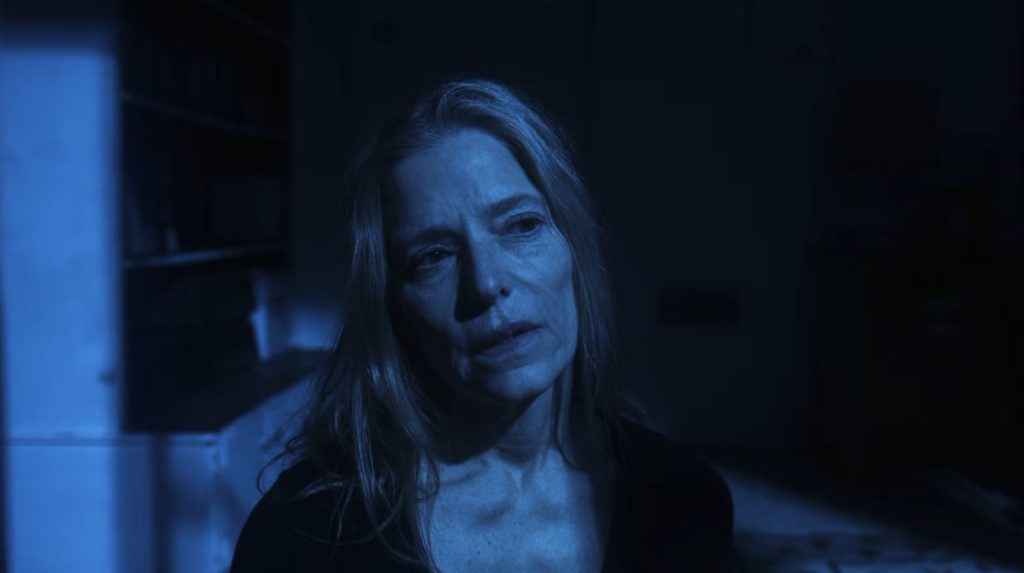
Whatever private arrangement exists between the neighbouring couple has clearly become a source of fascination for the people watching them. The irony, of course, is immediately apparent. Walters’ character is highly judgemental about what she is witnessing and considers confronting the neighbour’s wife to tell her that she and her husband have been watching their activities every night. Her husband sensibly thinks involving themselves any further would be a terrible idea.
The voyeur condemning the voyeur is central to Carver’s original story, which was first published in the early 1970s before appearing in his 1976 collection Will You Please Be Quiet, Please? Chastain retains that wonderfully uncomfortable contradiction. The woman considers the behaviour across the street sufficiently improper to deserve her condemnation without appearing particularly concerned about the fact that she has spent months observing it from the darkness of her own home.
Once the neighbours’ performance has ended, her husband loses interest and wanders into the living room, where he flicks through television channels without finding anything worth watching. The mundane nature of his behaviour is important because The Idea finds much of its appeal in contrasting ordinary suburban domesticity with the peculiar things occurring just beyond its walls.
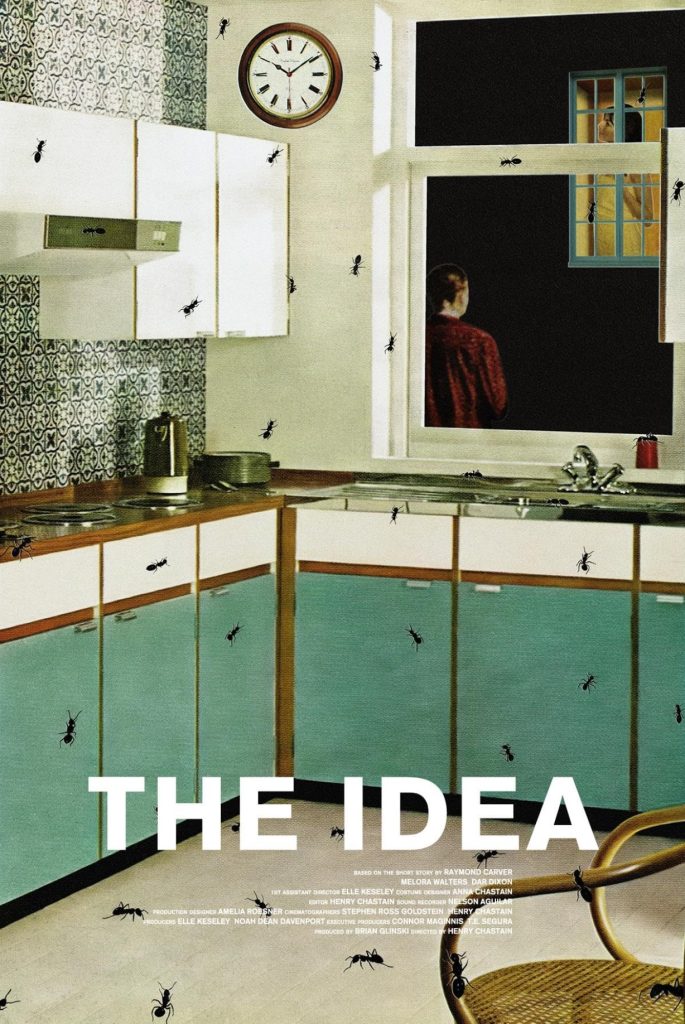
The film also makes the decision to relocate Carver’s story to the 1990s, and considerable effort has gone into making that period convincing. The large television, furniture, kitchen cupboards, decorations and clothing all contribute to the illusion, while the neighbour’s tracksuit feels particularly appropriate to the decade. Production designer Amelia Roesner and costume designer Anna Chastain deserve considerable credit here because the period isn’t established through a large explanatory caption or constant references to contemporary events. Instead, it is communicated through the physical environment surrounding the characters.
Who Is Really Watching Whom?
The second half turns its attention more completely towards Walters’ character. While washing the dishes, she discovers a solitary ant crawling across one of the plates. Her response is somewhat disproportionate. Rather than simply removing the insect and washing the plate, she throws the entire plate away and launches into an extensive late-night cleaning operation.
Surfaces are scrubbed and sprayed, powder is distributed and furniture is moved as she attempts to eliminate any possibility of further unwanted visitors. What begins as cleaning gradually starts looking obsessive, and the connection with her earlier behaviour becomes increasingly apparent.
She has spent the evening judging another couple for their strange ritual, yet her own behaviour is hardly conventional. She watches the neighbours night after night, becomes personally invested in their private activities and then responds to a single ant by tearing through the house on an obsessive cleaning mission. The Idea doesn’t need to announce the hypocrisy because Chastain can simply place these behaviours beside one another and allow the audience to recognise it.
Walters handles that transition particularly well. Much of the latter portion of the short consists of watching her clean, meaning the performance has to communicate increasing fixation through movement and behaviour rather than lengthy dialogue. Dixon provides an effective contrast as the husband, whose response to the evening’s events is considerably less intense. Once the show across the street is finished, he is largely ready to move on with his night.
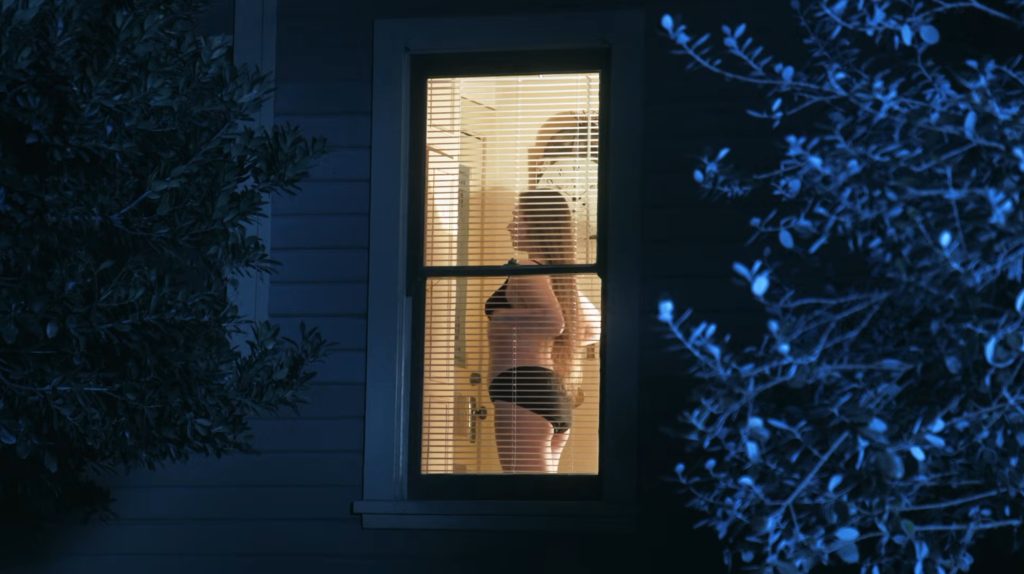
The short’s visual construction is similarly controlled. Chastain shares cinematography duties with Stephen Ross Goldstein, and the lighting is particularly effective during the nighttime interiors. The window naturally becomes an important visual element, creating a boundary between private spaces while simultaneously allowing the characters to violate that privacy simply by looking through it. Framing and camera placement make the act of watching fundamental to the film without unnecessarily drawing attention away from the performances.
The sound work is also strong. With such a small cast, limited locations and restrained dramatic premise, there is nowhere for weak production audio to hide, but the dialogue remains clear and the domestic environment feels appropriately grounded. The overall technical presentation is polished without becoming overly elaborate for material that benefits from simplicity.
A Successful Carver Adaptation
At less than nine minutes, The Idea doesn’t outstay its welcome. Chastain understands that the appeal lies in observation rather than incident, and the film moves quickly from the neighbours’ strange nighttime behaviour to the increasingly questionable behaviour of the woman judging them.
The adaptation is particularly effective because Carver’s material is naturally suited to a filmmaker interested in visual behaviour. The original story concerns people watching other people, private actions becoming entertainment and a narrator whose judgement of others reveals something about herself. Cinema can communicate much of that simply through where characters look, what they observe and how long they continue watching.
The decision to set the film in the 1990s also gives this adaptation its own visual identity. It isn’t merely decoration. In a world before smartphones, social media and cameras being permanently within reach, the window itself becomes the screen through which this couple consumes somebody else’s private life. Their neighbours have effectively become their nightly programme, which perhaps explains why ordinary television seems considerably less interesting once the performance has ended.
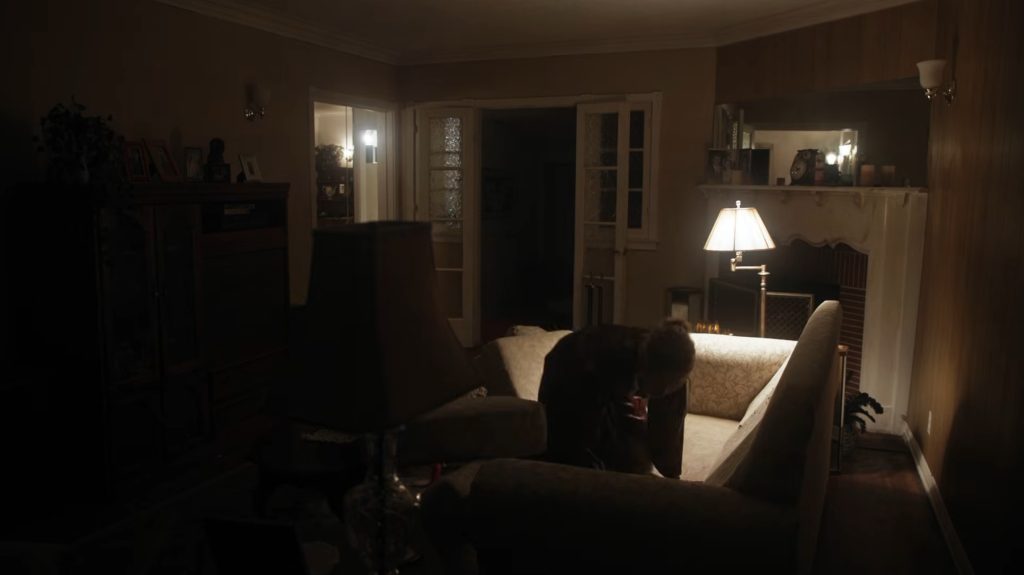
Walters and Dixon both give convincing performances, while the production design, costumes, lighting, cinematography and sound create an impressively cohesive little world around them. Most importantly, Chastain doesn’t overcomplicate material that works precisely because of its simplicity.
The Idea is a swift, unusual and thoroughly enjoyable short that finds considerable entertainment in watching people who really shouldn’t be watching other people. Its central joke is ultimately on the woman sitting beside the window. She might believe the strangest people in the neighbourhood live across the street, but by the time she is frantically deep-cleaning the house because she discovered a single ant, the audience may have reached a rather different conclusion.
| Acting | |
| Direction | |
| Cinematography | |
| Writing | |
| Sound | |
| Screen Critix Rating |