
There is something rather wonderful about independent horror filmmakers who look at good taste, restraint and conventional storytelling, then decide they want absolutely nothing to do with any of them. The Flesh People, a 103 minute horror comedy from writer and director Keshav Srinivasan, is one of those films. It’s grubby, drug fuelled, frequently disgusting and populated by characters whose solutions to financial hardship become increasingly insane. Somehow, underneath all the blood, addiction and cannibalism, it also develops into a strangely compelling story about two damaged people finding precisely the wrong person to encourage their worst impulses.
The film wastes little time announcing its intentions. The opening credits arrive alongside flashes of violence, stabbing, blood and extreme close ups before the story jumps back several weeks and introduces Ricky (Jorge Carrión Álvarez), who moves into a rundown New York apartment already occupied by Geraldine (Louise Heller). Calling the place a fixer upper would be generous. Its walls are covered in Geraldine’s graffiti and artwork, including an enormous naked woman above the sofa, while the entire apartment has the sort of grimy, lived in appearance that immediately tells us these characters aren’t exactly thriving.
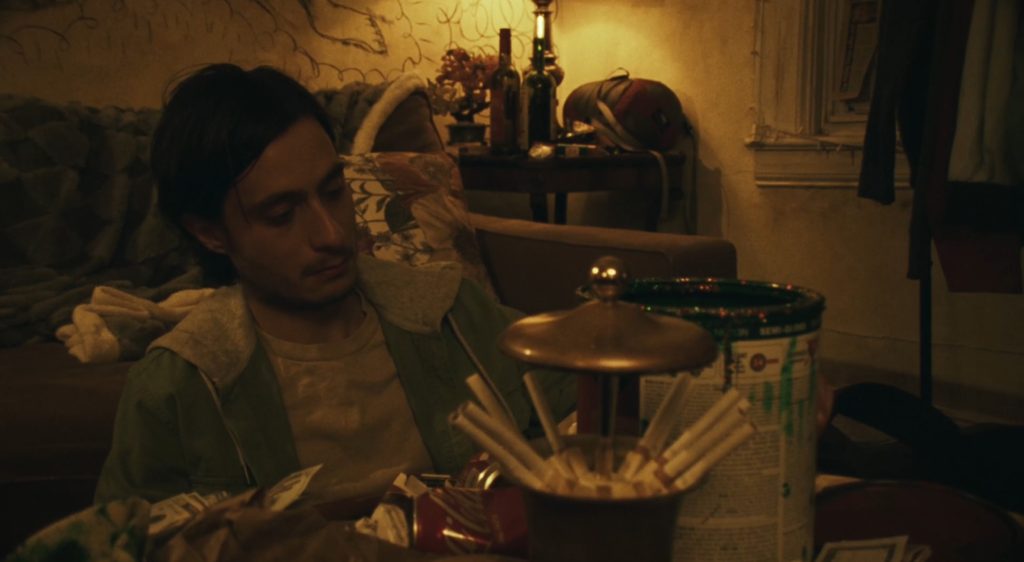
Geraldine is an ageing, unsuccessful stage actress prone to emotional breakdowns and getting high by inhaling paint fumes. Ricky initially claims that he dropped out of medical school after three years, but the truth is considerably darker. He was expelled following problems involving Vicodin and a morphine addiction, having previously overdosed and almost died. His mother, living back in South America, still believes her son is studying medicine. A flashback also reveals that after being expelled Ricky deliberately walked into traffic in an attempt to end his life, only to survive that as well. These aren’t simply two eccentric roommates. Both are deeply troubled, both have serious addiction problems and neither appears particularly well equipped for conventional adulthood. Put them together and you have a partnership practically designed to produce terrible decisions.
Their first significant money making scheme begins when Geraldine decides she wants to sell one of her organs on the black market. Her proposed first step is completely reasonable, at least by Geraldine’s standards. She wants Ricky to cut her open so they can photograph one of her kidneys. Ricky understandably isn’t particularly enthusiastic about performing makeshift surgery on his roommate, but Geraldine is persistent. Before long, he’s carrying out a medical procedure on their kitchen floor, with Srinivasan using close ups and suitably revolting sound effects to make the sequence something you may find yourself watching through partially covered eyes.
That operation gives them an even more ridiculous idea. Why not open an illegal medical practice in the apartment? Soon Ricky and Geraldine are offering cheap medical treatment for just $25, despite Ricky never actually qualifying as a doctor and their home looking like somewhere you’d be reluctant to eat a sandwich, never mind undergo surgery. One unfortunate blind woman arrives with problems around her eyes, only for Ricky to accidentally remove an eyeball entirely. Their solution is wonderfully absurd. Rather than admit something has gone catastrophically wrong, they replace the missing eye with what appears to be a ping pong ball decorated to resemble an iris and pupil. It’s revolting, ridiculous and very funny.
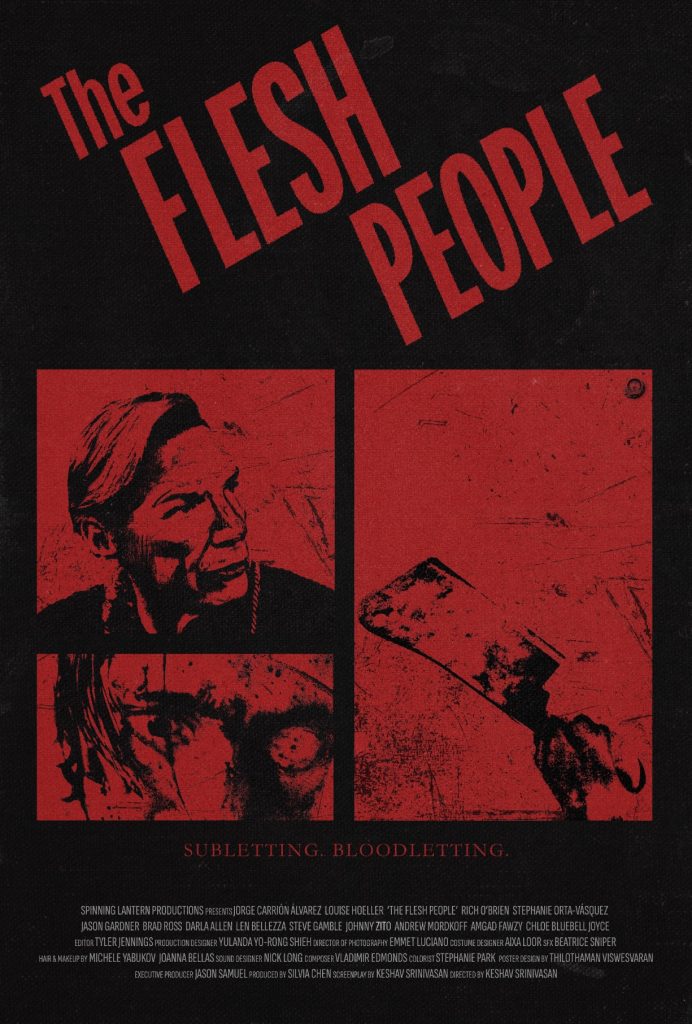
The customers continue arriving, Ricky and Geraldine begin earning money, and much of that money promptly disappears on drink and drugs. The increasingly deranged medical practice gives The Flesh People some of its strongest material because Srinivasan finds humour in just how casually these two accept situations that would send any remotely sensible human being screaming from the building. This is a world where opening an unlicensed surgery in a filthy apartment doesn’t seem to register as particularly outrageous once you’ve spent enough time around Ricky and Geraldine.
Then Geraldine gets hungry, and her latest solution involves chopping off one of her own fingers, dropping it into a frying pan and discovering that she rather likes the taste. Ricky initially refuses to join her, because apparently even he has limits, but Geraldine eventually persuades him to take a bite. To his horror, and perhaps even greater horror for everyone watching, he likes it too. The discovery leads them towards their next entrepreneurial venture: cannibalism. Even prospective cannibals need standards, however, and Ricky and Geraldine establish rules about who can and cannot become dinner. Children and anyone under 21 are off limits, as are adults over 70, although apparently exceptions can be made if the elderly person happens to be racist. It tells you almost everything you need to know about the particular wavelength of black comedy on which The Flesh People operates.
There is an amusing absurdity running throughout Srinivasan’s screenplay. Ricky and Geraldine discuss organ removal, underground medical procedures and eventually eating people with a matter of fact quality that makes their conversations considerably funnier than they have any right to be. The film doesn’t need the characters constantly acknowledging how insane everything is because the joke frequently comes from how normal it has all become to them. At the same time, there is genuine ugliness underneath the comedy. Addiction, desperation, failure and self destruction aren’t merely decorations around the cannibalism. They’re central to who these people are and why their lives can descend this far.
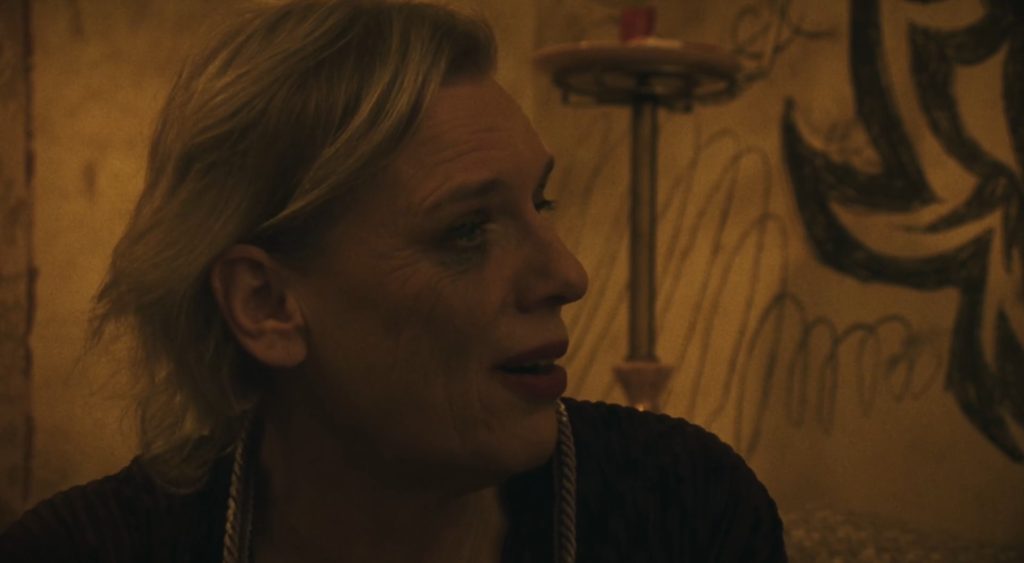
At the centre of everything are Jorge Carrión Álvarez and Louise Heller, and both are excellent. Álvarez gives Ricky enough vulnerability early on that he doesn’t immediately feel like someone destined to become involved in a cannibalistic criminal enterprise. His addiction, shame and lies to his mother provide something darker beneath the comedy, and watching him gradually become increasingly comfortable with Geraldine’s madness gives the performance somewhere to go. Heller has the more immediately flamboyant role and absolutely commits to it. Geraldine is chaotic, damaged, theatrical, funny and exhausting, sometimes all within the same scene, yet Heller finds enough humanity amongst the madness to keep her interesting rather than merely irritating.
Heller’s performance has already received recognition, winning Outstanding Performance in a Feature Film at The Art of Brooklyn Film Festival, while Srinivasan won Best Director at the WILDSound International Film Festival. The film has also played the Austin, New York and Los Angeles Lift-Off Film Festivals, the Big Apple Film Festival and the New Jersey International Film Festival. It’s easy to understand why the two central performances would attract attention because The Flesh People contains plenty of dialogue heavy scenes, with Srinivasan willing to leave his actors together for extended conversations. The relationship between Ricky and Geraldine has to carry considerable portions of the movie, and thankfully Álvarez and Heller are more than capable of doing so.
The Flesh People Is Beautifully Filmed Filth
For all its deliberately grubby subject matter, The Flesh People is a surprisingly accomplished looking independent feature. Cinematographer Emmet Luciano does some excellent work throughout, with thoughtful framing, strong lighting and a colour grade that complements the grimy world inhabited by the characters. The film grain is particularly attractive, lending the movie a slightly weathered texture that feels entirely appropriate. There are also some lovely tracking shots and occasional zooms, used sparingly enough that they actually register when they arrive. This doesn’t look like somebody has simply pointed a camera at two actors in an apartment and hoped the screenplay will do everything else. There is a visual identity here.
Production designer Yulanda Yo-Rong Shieh deserves considerable praise too. Ricky and Geraldine’s apartment is a memorable location precisely because it looks so unpleasant. The graffiti, artwork, clutter and general state of decay tell us something about the people inhabiting it before the screenplay needs to explain anything. It’s a shithole, but it’s a beautifully designed shithole, and that distinction matters. A huge amount of the film takes place within this environment, so making it visually distinctive helps prevent the limited locations from becoming anonymous.
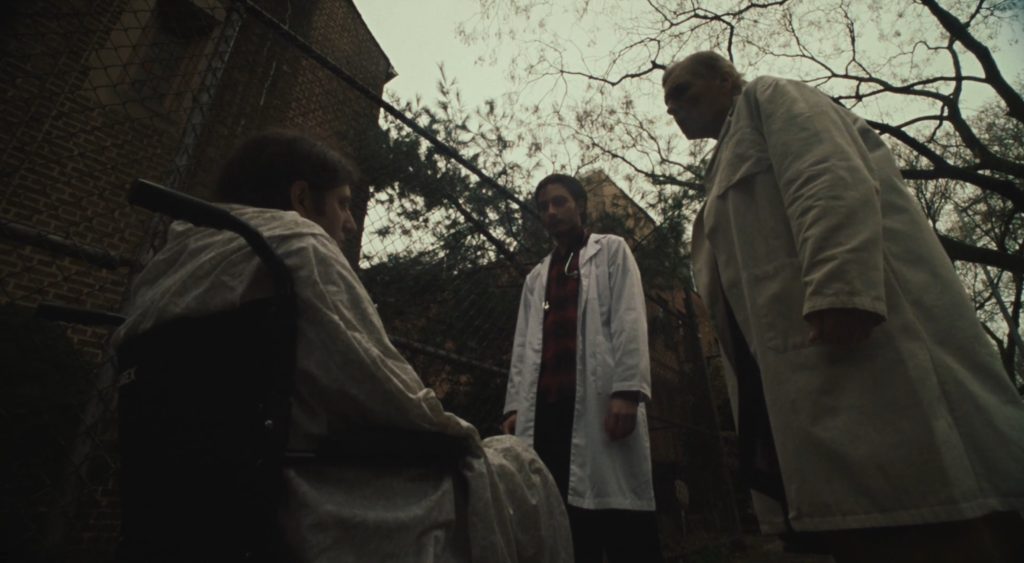
The practical gore is another major strength. The Flesh People isn’t simply a comedy that occasionally splashes some stage blood around. There are some genuinely nasty effects, including a particularly memorable drug fuelled nightmare in which Ricky encounters a horrifying version of Geraldine without eyes. Things become considerably worse from there as his body is ripped apart, guts and intestines spill onto the floor and Geraldine begins eating him. It’s disgusting, excessive and brilliantly executed, exactly the sort of sequence practical gore fans will appreciate. Special effects are credited to Beatrice Sniper, while Michelle Yakubov served as key makeup artist.
The sound work also helps sell the nastier material. Surgical sequences are accompanied by suitably unpleasant noises, making the procedures feel even more uncomfortable, while the wider soundscape remains polished throughout. Nick Long is credited as re-recording mixer and sound designer, and the film understands that when you’re showing someone cutting into flesh, what the audience hears can be just as important as what they see.
Another element that stands out is Vova Faust’s original music. There is a strong noir quality to portions of the score, particularly through its use of saxophone and brass, and at times it recalls the smoky, melancholy musical atmosphere associated with films such as Chinatown, L.A. Confidential and even Blade Runner. We’re not suggesting the score is copying those films, but it operates in a similarly moody musical space. It’s an interesting choice for something as grubby and grotesque as The Flesh People, and that contrast gives the film another layer of personality.
Where the film does stumble is its pacing. At 103 minutes, The Flesh People takes its time getting to the premise that will probably attract most horror viewers in the first place. The cannibalism doesn’t properly arrive until around the hour mark, and there are scenes before then that could have been tightened considerably. Some conversations continue after they’ve made their point, while certain sequences linger just a little longer than necessary. There is a tighter version of this film hiding inside the existing cut, and shaving some material from the first hour could have given the increasingly deranged second half even more momentum.
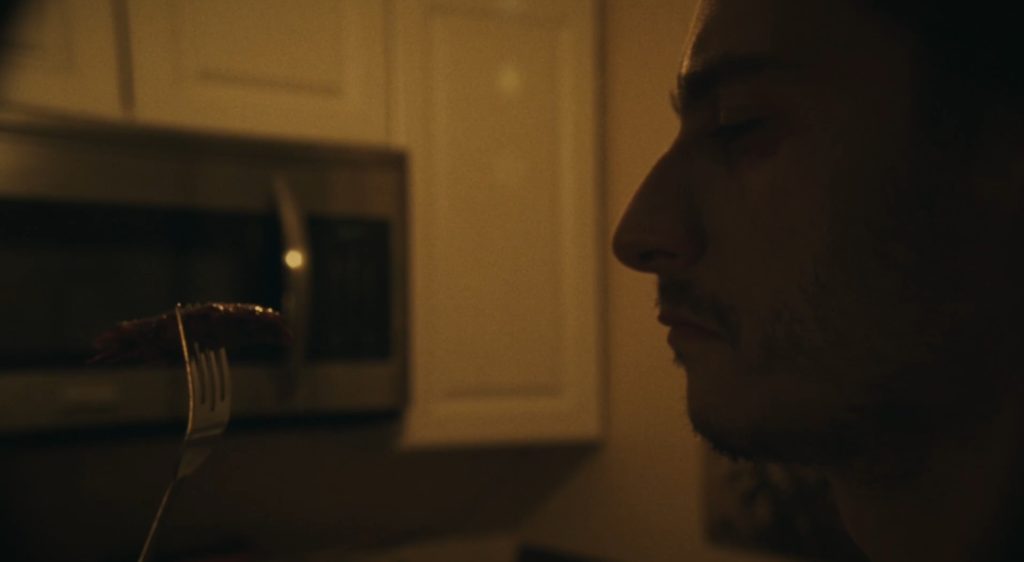
That said, reducing The Flesh People to nothing more than its cannibalism would be doing it a disservice. The underground surgery material is entertaining in its own right, and much of the film’s appeal comes from simply watching the relationship between Ricky and Geraldine mutate. They begin as strangers sharing a miserable apartment and gradually become co-conspirators, feeding one another’s addictions, schemes and increasingly warped sense of what constitutes acceptable behaviour. The official synopsis describes their relationship as evolving from strangers to murderous co-conspirators, and that progression is ultimately more important than simply waiting to see who ends up on the menu.
Srinivasan deserves credit for committing to the tone as well. The Flesh People could easily have become an awkward mixture of comedy and horror in which neither side worked, but the best moments understand that the humour and horror should come from the same place. The sight of a kitchen floor becoming an operating theatre is funny precisely because it’s horrifying. Geraldine cooking part of herself is disgusting, but the casual conversation surrounding it makes it absurd. The movie rarely seems embarrassed by its own bad taste, and that confidence is one of its most appealing qualities.
It certainly isn’t going to be for everybody. Anyone with a weak stomach should probably approach with caution, while viewers who need sympathetic characters behaving rationally may wonder what they’ve wandered into. Ricky and Geraldine are addicts making appalling decisions, and the film isn’t interested in sanding down their edges to make them conventionally likeable. Yet Álvarez and Heller make them watchable, and after spending so much time in their filthy little world, there is something perversely entertaining about seeing just how much worse their next idea can possibly be.
The Flesh People is a very good example of what independent horror can accomplish when filmmakers embrace personality rather than attempting to imitate something much larger and more expensive. Its rougher qualities become part of its character, while the cinematography, production design, performances, practical effects, sound and unusual score demonstrate real craft behind all the depravity. Srinivasan knows the kind of film he’s making and, more importantly, commits to making that film rather than apologising for it.
The pacing prevents it from being quite as strong as it could have been, and getting to the cannibalistic heart of the story sooner would have made for a leaner, nastier experience. Nevertheless, The Flesh People is funny, revolting, visually impressive and genuinely distinctive. Jorge Carrión Álvarez and Louise Heller make a terrific dysfunctional pairing, while Keshav Srinivasan has created a horror comedy with enough blood, drugs, terrible decisions and fried human flesh to ensure you’re unlikely to confuse it with anything else we’ve reviewed recently.
It’s filthy, completely unhinged and occasionally stomach churning, but beneath all that nastiness is a well made independent feature with two excellent leads and a personality entirely of its own.
| Acting | |
| Direction | |
| Cinematography | |
| Writing | |
| Sound | |
| Screen Critix Rating |