
There cannot be many horror subgenres that have been stretched, twisted and thoroughly wrung out quite as enthusiastically as found footage. Ever since filmmakers realised that handing characters a camera could provide both a stylistic choice and a convenient explanation for a modest budget, we have been subjected to supposedly recovered tapes from haunted houses, abandoned hospitals, dark forests and practically everywhere in between. It takes something genuinely unusual to make the format feel fresh again. Snapshot, the new British period horror from director Joseph Archer, manages it by taking found footage somewhere it has rarely, if ever, ventured before: all the way back to 1888.
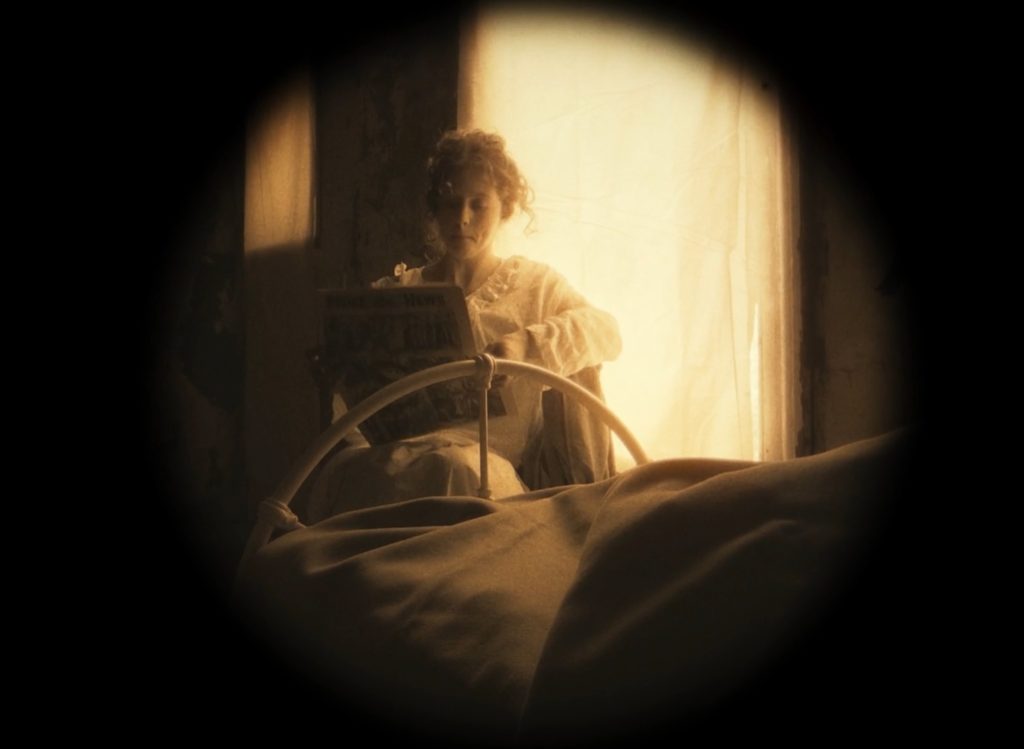
Set against the backdrop of the Jack the Ripper murders, Snapshot presents itself as recently discovered material dating from the very birth of moving pictures. An opening title explains that on 3 April 2026, a box was donated to the British Film Archives through the will of Mary Tamworth. Inside are reels purportedly dating back to 1888, described as being among the earliest known moving images and subsequently cut, reordered and manipulated. From there, the film commits itself wholeheartedly to the conceit. The footage appears in sepia, covered in the scratches, dirt and imperfections associated with extremely old film, while the image itself is presented within an unusual circular 1:1 frame designed to mimic the pinhole camera at the centre of the story.
The camera belongs to amateur inventor Tamworth, voiced by Tom Stourton (All My Friends Hate Me, 100 Nights of Hero), whose face remains unseen because he is the man recording everything. Tamworth demonstrates his extraordinary moving-image invention to a group of women who are understandably fascinated by technology unlike anything they have encountered before. The women, however, quickly see another potential use for his invention: what if a camera could capture something the human eye cannot? What if it could photograph the dead?
It is a particularly effective premise because Snapshot combines three things that immediately complement one another: the still-unsolved mystery of Jack the Ripper, Victorian fascination with spiritualism and the conventions of found-footage horror. Here, the women at the centre of the story begin to suspect that the prostitutes being murdered around Whitechapel aren’t necessarily victims of the mysterious human killer the newspapers have christened Jack the Ripper. They consider the possibility that something supernatural is responsible and set out to find evidence of it. The film’s official premise similarly describes Tamworth documenting five female ghost hunters who believe a violent spirit rather than Jack is committing the murders.
It doesn’t take long for their investigation to brush against the horrors unfolding around them. After news arrives of another murder, Tamworth takes his camera into the street and discovers the body of a prostitute in an alleyway. Later, the group searches an abandoned building reportedly used by sex workers who have nowhere else to take their customers. Their ghost hunt is initially interrupted by a group of men whose presence seems far more sinister than their actual intentions, before Tamworth discovers another murdered woman inside, an interior door repeatedly knocking against her corpse.
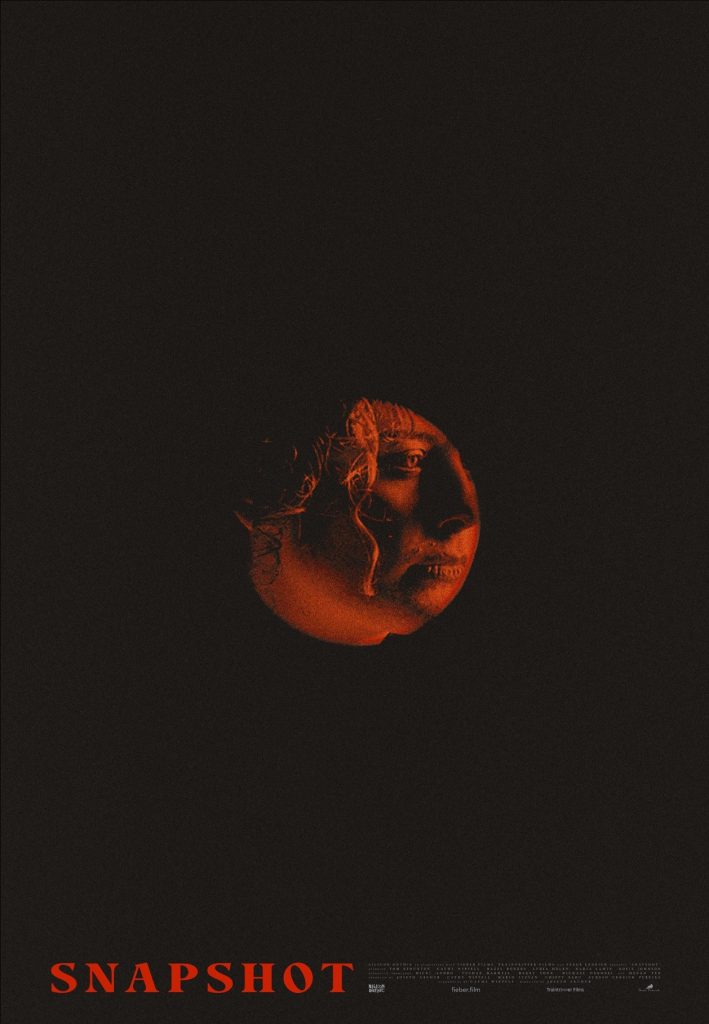
Archer doesn’t use the Ripper setting simply as an excuse to send characters wandering through foggy Victorian streets. A considerable portion of Snapshot is concerned with the people living through the murders and the stories circulating around them. Tamworth interviews men and women about the killings, while conversations with other prostitutes reveal the grim fascination the murders have already begun generating. One particularly disturbing account concerns customers asking women to recreate the positions in which murdered victims were discovered, with the considerable payment of two pounds enough for some to agree. Elsewhere, the supernatural investigation leads to a séance intended to contact the spirit of a murdered woman, only for a candle to extinguish and one participant to begin convulsing before collapsing.
This means anyone approaching Snapshot expecting 86 minutes of relentless scares should adjust their expectations. Archer is frequently more interested in conversations, characters and atmosphere than conventional horror set-pieces. There are stretches where we simply spend time with these people as they drink, play cards or discuss their lives and theories. For the most part, this slower approach works. It helps sell the illusion that we aren’t watching a carefully constructed modern horror movie but fragments of ordinary lives accidentally captured by an extraordinary invention.
There is, however, a slight contradiction in the conceit. The opening establishes that the surviving material has been cut, reordered and manipulated into something intended to illuminate one of history’s most famous unsolved mysteries. If that’s the case, it raises the question of why some of the more inconsequential conversations, drinking and card-playing would have survived that editing process. If someone were specifically assembling these reels to reveal what happened and potentially identify the truth behind the killings, surely much of that material would have ended up discarded. It’s a relatively minor complaint, but one created by the film’s own framing device rather than the slower pacing itself.
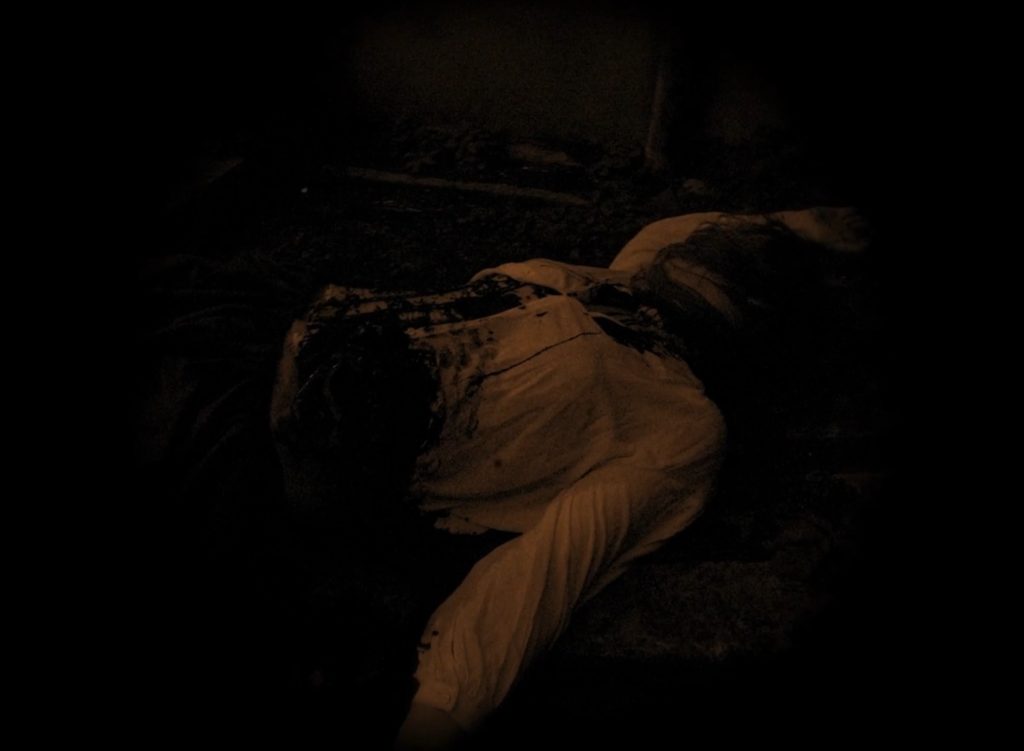
Where Snapshot really excels is in the commitment required to make its central illusion work. The production design, locations, costumes, hair and make-up combine to create a convincing late-Victorian world. The old buildings and streets are particularly important: one obviously modern intrusion could have shattered the conceit, but the environment consistently feels appropriately removed from the present day. The costumes and hairstyles similarly demonstrate the amount of work that has gone into selling the period rather than merely throwing a sepia filter over contemporary-looking actors.
The sound design deserves particular praise. Horses’ hooves can be heard against cobbled streets, clocks tick away in interiors and distant church bells help create a London existing beyond the boundaries of Tamworth’s tiny circular image. The dialogue remains impressively clear despite the intentionally antiquated visual presentation, while sudden fragments and echoes of earlier sounds and images occasionally puncture the film’s otherwise measured rhythm. Dan Hibbert and Oliver Mapp are credited as re-recording mixers and sound designers, with Simon Panayi as dialogue editor and Christopher Wynne credited for sound.
Snapshot Takes Found Footage To The Past
Naturally, the supposed 1888 footage is considerably cleaner and more comprehensible than genuine surviving moving imagery from the period would be. But complete historical authenticity on that front would probably make an 86-minute feature exhausting, if not virtually unwatchable, for a modern audience. Snapshot instead finds a sensible compromise. The circular framing, sepia photography, scratches and accumulated dirt create the impression of something ancient while still allowing us to clearly see the performances and environments. It isn’t literally what an 1888 feature film would look like — an obvious impossibility in itself — but it creates a convincing cinematic language for the fiction.
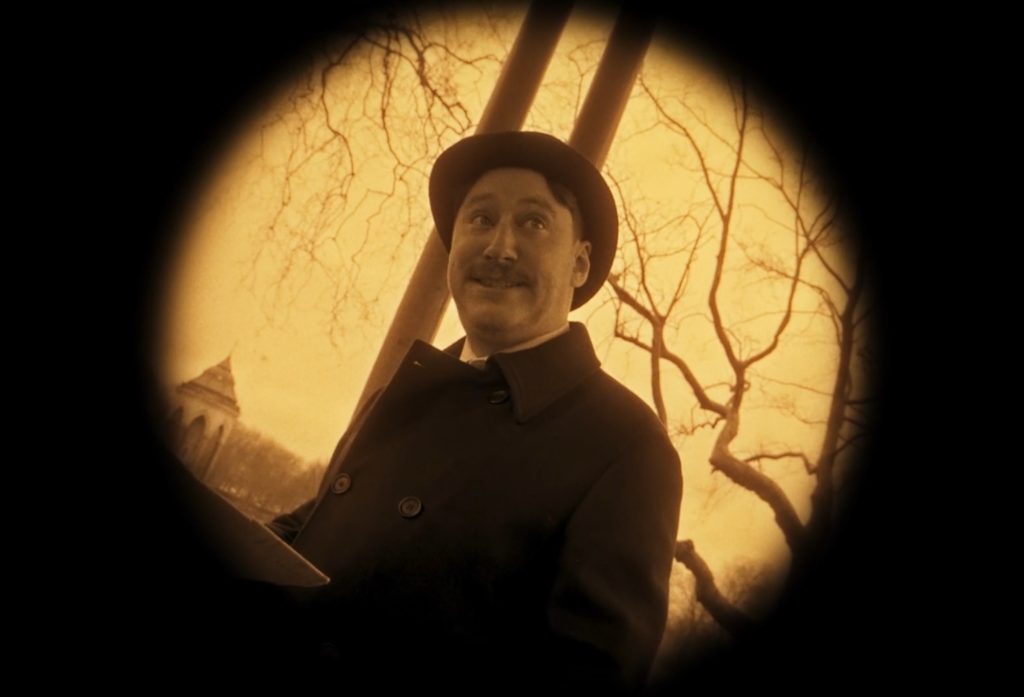
The performances are another major part of why that fiction holds together. Cathy Wippell plays Minnie Penworth, with Hazel Rogers as Fanny, Lydia Helen as Molly O’Brien, Nadia Lamin as Madam Evelyn, Rosie-Bella Johnson as Constance Lovell, Ishtar Currie-Wilson as Alice and Freya Parks as Clara, while Stourton provides Tamworth’s voice from behind the camera. The ensemble convincingly inhabits the period, with the various RP, Irish and Cockney voices helping create a social cross-section of Victorian London rather than a collection of modern performers conspicuously pretending to belong there.
There is more going on beneath the period-horror surface too. Archer’s stated intention is for the fractured nature of the material to reflect the discordant manner in which information reaches us today. The film draws a line between sensationalised and unreliable Victorian reporting and the chaotic flow of information through modern social-media feeds. Tamworth’s camera may appear to promise objective truth, but what he records is still dependent upon where he points it, whom he believes and what information those people themselves have received. Newspapers can mislead him, interviewees can be mistaken, footage can be incomplete, and the eventual record can be reordered. The technology changes; our vulnerability to unreliable narratives does not.
That gives Snapshot considerably more to chew on than its admittedly excellent elevator pitch. Jack the Ripper remains perhaps the most famous unidentified serial killer in history, with the absence of a definitive solution allowing generation after generation to construct new suspects, theories and interpretations. Archer takes that uncertainty and asks what might happen if we possessed seemingly impossible photographic evidence from the period itself — before reminding us that even seeing something recorded doesn’t necessarily mean we understand what we’re seeing.
Written by Cathy Wippell and directed by Joseph Archer, Snapshot is produced by Archer, Chippy Babu, Suresh Cedrick Pereira and Mario Stefan. Archer and Wippell’s Silicon Gothic leads the production, alongside minority co-producers and financiers Fieber Film in Germany, TrainTripper in India and Serge Cedrick Films in Canada.
Most importantly, though, Snapshot takes risks. Found footage has been around long enough that merely pretending something really happened isn’t much of a hook anymore. Archer and his collaborators instead look backwards, imagining what the genre might have looked like had somebody invented it more than a century ago. The result is an atmospheric, impressively constructed and frequently fascinating British horror film whose measured pace won’t satisfy viewers looking for constant shocks, but whose commitment to its unusual premise rewards those willing to enter its strange little circular window into Victorian London.
Snapshot takes one of modern horror’s most exhausted formats and, quite literally, makes it old again. Somehow, that makes it feel new.
| Acting | |
| Direction | |
| Cinematography | |
| Writing | |
| Sound | |
| Screen Critix Rating |