
Adventure documentaries often celebrate reaching the summit or completing an impossible challenge. Another Way certainly contains its fair share of breathtaking feats, but Alice Rosano’s beautifully crafted short documentary is more interested in everything surrounding the adventure itself. Rather than simply documenting slackliners crossing impossible distances high above the Egyptian landscape, the film explores curiosity, cultural exchange and the relationships that develop when people step outside their comfort zones.
Running at just over fifteen minutes, Another Way introduces the expedition team before a single line is rigged. Rope technician Timo Elony recalls first discovering Egypt in 2017 after seeing what appeared to be paradise advertised on a beach, while cultural liaison and fixer Ahmed Selim provides valuable historical context, explaining that Egypt is one of the oldest civilisations in the world and one of the first to master agriculture, astronomy and engineering. Even before the journey begins, there is uncertainty, with concerns that obtaining permission from local authorities could prove challenging.
Rosano wisely focuses on the people behind the expedition rather than treating them simply as athletes. Professional highliner Giuseppe Di Bella speaks passionately about following dreams, believing that genuine passion has the power to make seemingly impossible ambitions become reality. Fellow highliner Davide Spaccasassi offers an equally thoughtful perspective, suggesting that human beings naturally seek new experiences because life quickly becomes repetitive without fresh challenges. Rosano herself also appears on camera, while cinematographer Laura Heilanen discusses the scale and ambition of the production, explaining that the goal isn’t simply to film slacklining, but to capture an expedition unlike any the team has attempted before.
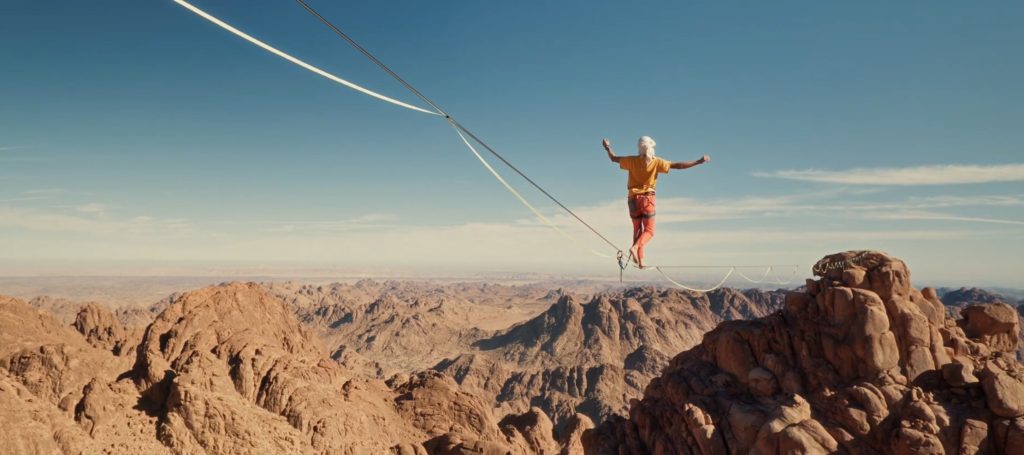
For those unfamiliar with the sport, slacklining, sometimes described as air walking, involves crossing a narrow line suspended between two points, often hundreds of feet above the ground. Even from the safety of a cinema seat, it’s enough to make your palms sweat.
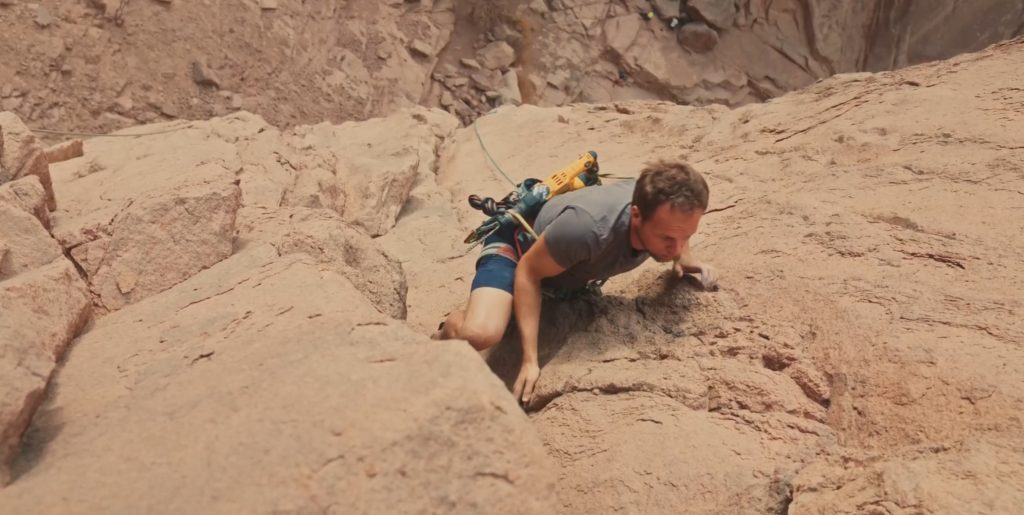
The expedition begins in London before travelling to Dahab and eventually into the spectacular landscapes of Wadi Shellal. Here, the documentary truly comes alive. Watching experienced climbers scale enormous rock faces is both fascinating and nerve-racking, with the cameras moving in close enough to capture fingers desperately searching for tiny crevices and drills boring into the rock to secure the equipment. Every movement feels calculated, every grip essential.
Once the slackline is finally suspended between towering rock formations, the film delivers some genuinely jaw-dropping moments. Watching an athlete calmly step onto a line hanging high above the desert floor is enough to make anyone with a fear of heights instinctively look away. One participant explains that all they have ever wanted was to “walk in the sky,” and Another Way captures that dream with remarkable intimacy. It is equal parts terrifying and mesmerising.
The journey continues to Um Bogma, where the audience learns a little about the area’s history. Once an important centre of British mining activity between 1882 and 1956 after manganese deposits were discovered, the settlement was ultimately abandoned in 1967. The historical context is brief but welcome, grounding the expedition within the wider story of the places the team visits rather than reducing them to spectacular backdrops.
The documentary also highlights how little known slacklining remains within Egypt itself, reinforcing that this isn’t simply a sporting expedition but an opportunity to introduce something new while engaging with local communities.
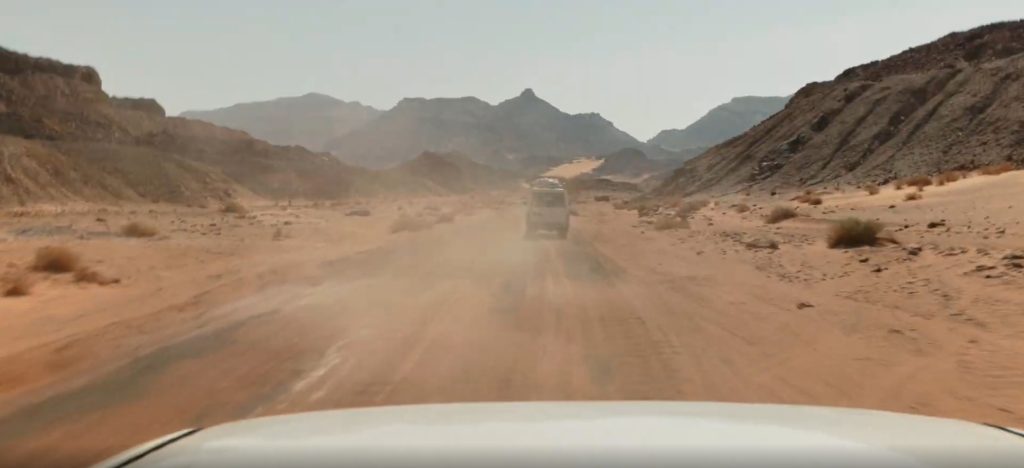
From there, the team travels to Matamir, searching for two towering rock pillars rising above sweeping sand dunes that might provide the perfect location for another crossing. Against endless desert horizons, the cinematography reaches another level. Tiny figures suspended above vast landscapes create images that are both beautiful and humbling, emphasising the sheer scale of the environment surrounding them.
Their final stop takes them back towards Dahab before reaching St Catherine, where another suitable location is discovered. Here, the documentary offers some of its most suspenseful footage as the athletes cross the line before occasionally losing balance and dropping away, saved only by their safety harnesses. Knowing they are protected does little to reduce the tension. Every stumble still produces an involuntary gasp.
Visually, Another Way is exceptional.
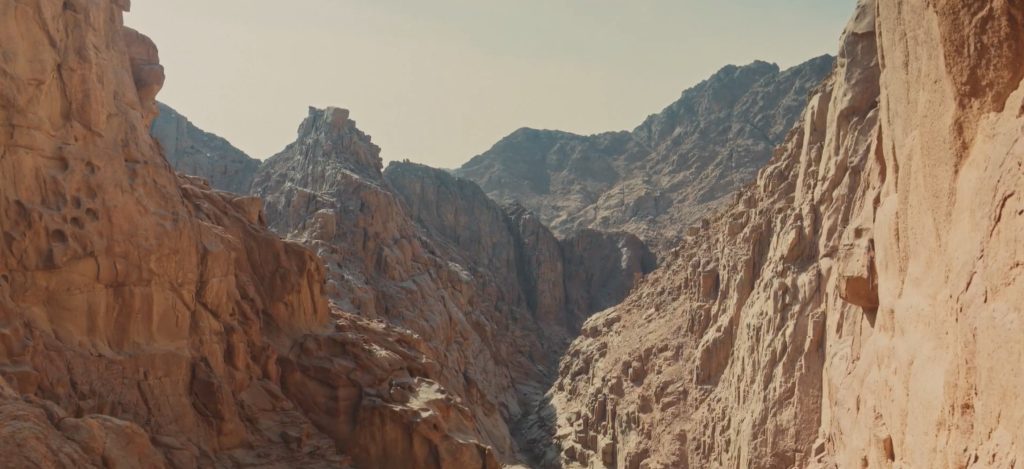
The cinematography by Laura Heilanen and Alice Rosano is consistently stunning, whether capturing everyday life around Dahab, the dramatic cliffs of Wadi Shellal or the endless golden deserts stretching towards the horizon. Wide aerial shots establish the breathtaking scale of the landscapes before intimate close-ups pull viewers into the physical demands of climbing and rigging the lines. Even the interview segments avoid becoming static thanks to varied framing and thoughtful multi-camera setups that keep the talking heads visually engaging throughout.
The musical score deserves equal praise. Sweeping, cinematic and perfectly judged, it enhances both the grandeur of the Egyptian landscapes and the emotional spirit of the expedition without ever overwhelming the visuals. Combined with polished editing, the soundtrack gives the documentary a production value that feels far beyond what many independent short documentaries achieve.
Perhaps the documentary’s greatest strength is that it never becomes solely about extreme sports. As Rosano explains through the film’s underlying philosophy, the slackline becomes a tool for exploration rather than the destination itself. The most rewarding moments come through the conversations, the shared experiences and the genuine connections formed between people from different backgrounds. It is an approach that gives Another Way far greater depth than simply showcasing daredevil feats.
Knowing the documentary was filmed independently over twenty days in Egypt, entirely self-funded by Rosano with a production budget of approximately £10,000, makes the finished result even more impressive. Every frame reflects careful planning and genuine passion, demonstrating what can be achieved through collaboration rather than enormous financial resources. The film also succeeds in presenting a side of Egypt that extends beyond familiar headlines and clichés, instead celebrating its landscapes, history and people through fresh eyes.
At just over fifteen minutes, Another Way leaves audiences wanting to spend more time alongside this remarkable group of adventurers. It is visually stunning, thoughtfully constructed and genuinely inspiring, whether you’re fascinated by extreme sports or simply appreciate beautifully crafted documentary filmmaking.
Alice Rosano and Laura Heilanen emerge as two immensely talented filmmakers with an exceptional eye for visual storytelling. Whether their future lies in further documentaries or narrative features, Another Way suggests exciting things lie ahead. As for us? We’ll happily continue admiring these incredible skywalks from the comfort and safety of solid ground.
| Acting | |
| Direction | |
| Cinematography | |
| Writing | |
| Sound | |
| Screen Critix Rating |