
The ability to tell a compelling story within a limited running time is one of the greatest challenges facing short filmmakers. Without the luxury of extensive character development or elaborate narrative construction, every scene must contribute something meaningful, whether through performance, imagery or the smallest details of human behaviour. Occasionally, a short film achieves this balance so effectively that its modest duration becomes one of its greatest strengths. Asa Bailey’s Something Pointless is one such production, delivering a beautifully observed and emotionally rewarding drama in just fourteen minutes.
Written by Neil Graham and David Cormican, the film explores the unlikely connection between two individuals at very different stages of life, both struggling with circumstances that have left them isolated from the world around them. Through a deceptively simple premise, Bailey examines loneliness, mortality and the importance of finding happiness in places where we might least expect it.
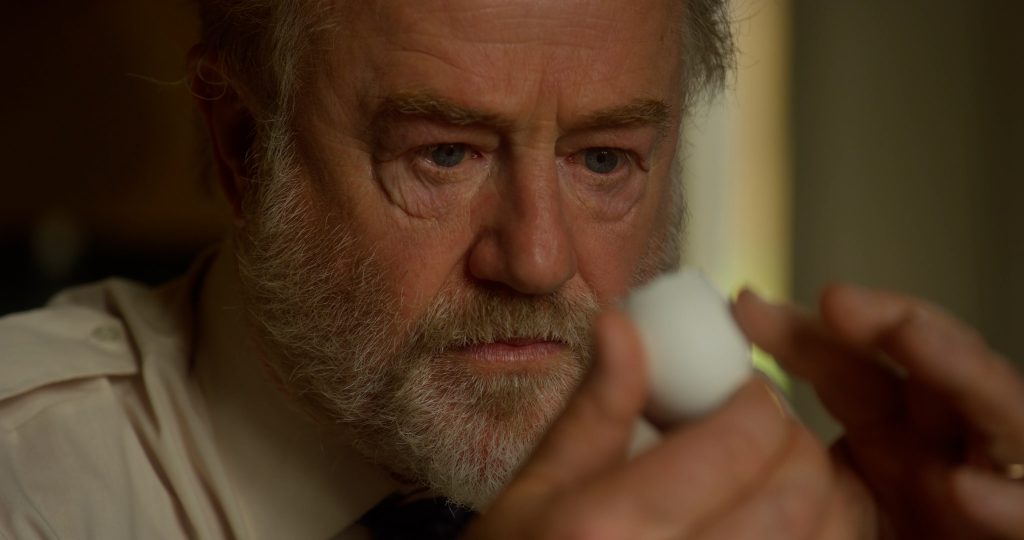
The story introduces Aldous Evans (Owen Teale), an elderly gentleman whose quiet routine is accompanied by a rather unusual philosophy. Aldous believes that everyone should make time each day to do something entirely pointless, an activity without any practical benefit or particular purpose. In his view, temporarily stepping away from the responsibilities and expectations of everyday life can help us appreciate the things that genuinely matter.
It is an intriguing idea, particularly in a world where almost everything we do is measured by productivity, achievement or some form of tangible reward. Aldous is not suggesting that people abandon their responsibilities, but rather that they occasionally allow themselves the freedom to do something simply because they enjoy it.
For Aldous, this takes the form of an unconventional artistic project. Each day, he carefully places pieces of painted eggshell onto an otherwise unremarkable wall in a quiet alleyway. There is no obvious reason for the activity, nor any indication that he expects recognition for his efforts. It is simply something that gives him satisfaction, transforming an ordinary corner of his neighbourhood into a place where he can briefly escape the concerns occupying the rest of his life.
Those concerns are considerable. Aldous is experiencing serious health difficulties, something the film establishes through small but effective details rather than lengthy explanations. A persistent cough, a bloodstained tissue and a visit to hospital suggest that his circumstances are far more troubling than his cheerful philosophy might initially imply.
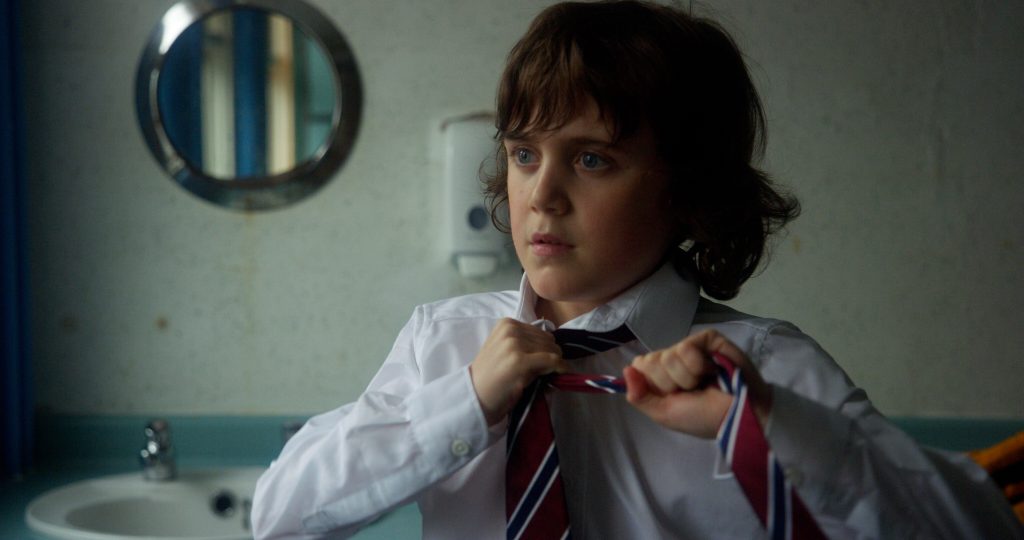
Running parallel to his story is that of a young schoolboy (Leo Harris) who has become the target of relentless bullying. Quiet, withdrawn and seemingly incapable of finding happiness in his surroundings, the boy endures humiliating treatment from classmates who appear to take considerable pleasure in making his schooldays miserable.
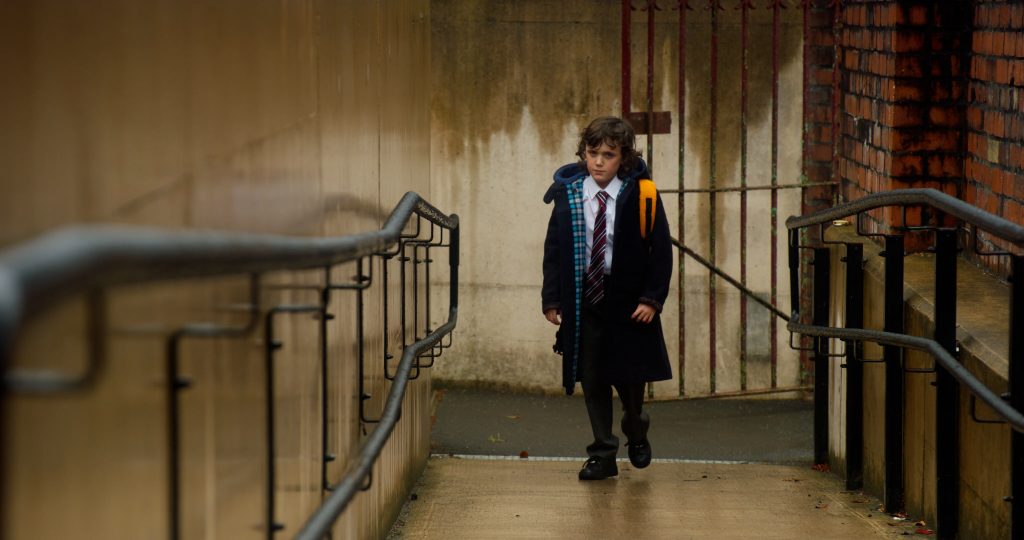
One particularly effective sequence shows him repeatedly attempting to clean his stained school shirt in the toilets, a simple visual device that communicates the repetitive nature of his experiences without requiring unnecessary dialogue. The accumulation of these incidents makes his isolation increasingly apparent, establishing a character whose emotional difficulties are expressed primarily through behaviour.
His unhappiness has not gone entirely unnoticed. During a meeting with his parents, the headteacher (Sule Rimi) raises concerns that nobody at school can remember seeing the boy smile. His parents initially reject the suggestion that their son is unhappy, but their confidence begins to falter when they struggle to recall an occasion when they have witnessed him smiling themselves.
It is a quietly uncomfortable moment, suggesting how easily emotional distress can remain unrecognised even among those closest to someone. The scene also demonstrates the screenplay’s ability to communicate meaningful observations about human relationships without becoming overly sentimental or unnecessarily complicated.
The connection between Aldous and the boy begins when their paths cross near the alleyway where the elderly man is creating his unusual artwork. What follows is a gentle exploration of how seemingly insignificant actions can influence the lives of others, even when those responsible have no intention of making such an impact.
Bailey handles the material with considerable sensitivity, allowing the film’s central ideas to emerge naturally through its characters and their circumstances. The narrative does not require elaborate revelations or excessive dialogue to communicate its themes, relying instead upon carefully observed moments that gradually acquire greater emotional significance.
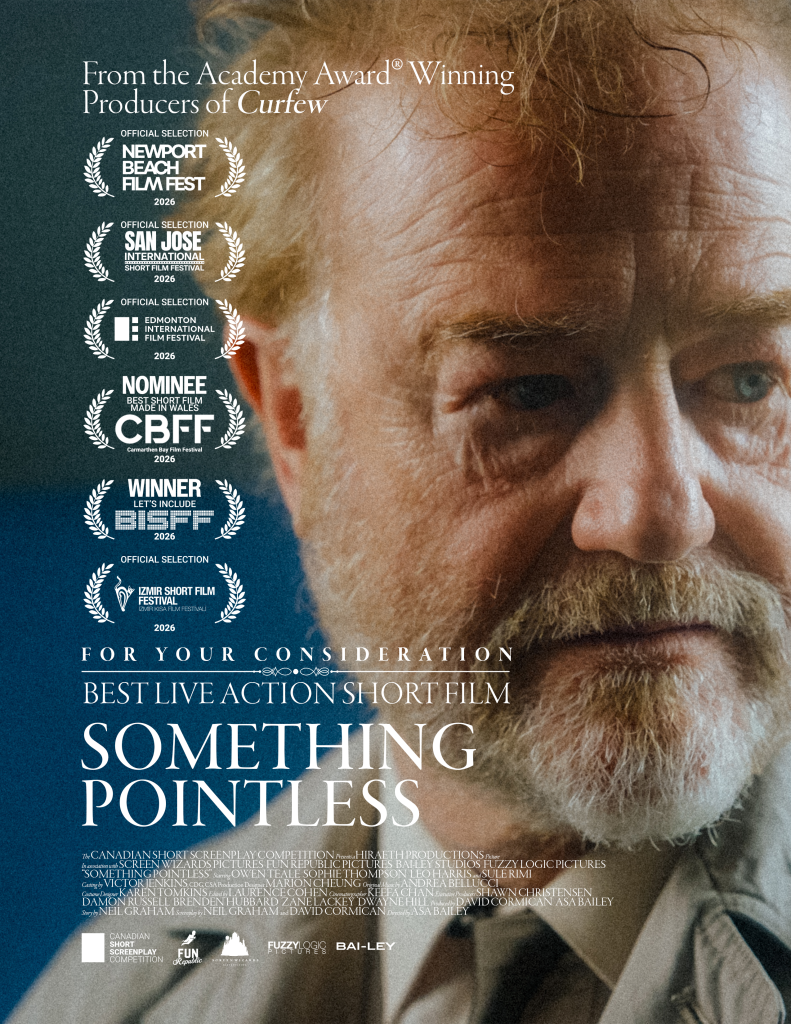
Much of the film’s success can be attributed to its performances, particularly that of Owen Teale. An experienced actor with an extensive career across film, television and theatre, Teale brings warmth, dignity and an understated sense of humour to Aldous. His performance feels entirely natural, presenting a man whose outward optimism exists alongside an awareness of his own vulnerability.
There is something particularly appealing about the way Teale delivers Aldous’s philosophical observations. Rather than presenting them as profound declarations, he approaches them with the relaxed confidence of someone who has simply arrived at a personal understanding of what makes life worthwhile. The result is a character who feels believable and immediately engaging.
Leo Harris is equally impressive as the young boy, delivering a restrained performance that relies heavily upon facial expressions and physical behaviour. His character is not afforded the opportunity to explain his feelings through lengthy conversations, making Harris’s ability to communicate sadness, frustration and curiosity particularly important.
The contrast between the two performances provides the film with much of its emotional foundation. Aldous has accumulated a lifetime of experiences and developed his own methods of coping with uncertainty, while the boy is still attempting to understand a world that has offered him relatively little kindness. Their circumstances are different, but their shared need for connection creates an effective dramatic relationship.
Sophie Thompson also contributes to the film’s emotional authenticity as Aldous’s wife, Eleri. Although the story’s limited duration necessarily restricts the supporting characters’ development, Thompson makes her presence felt through a performance that complements Teale’s understated approach.
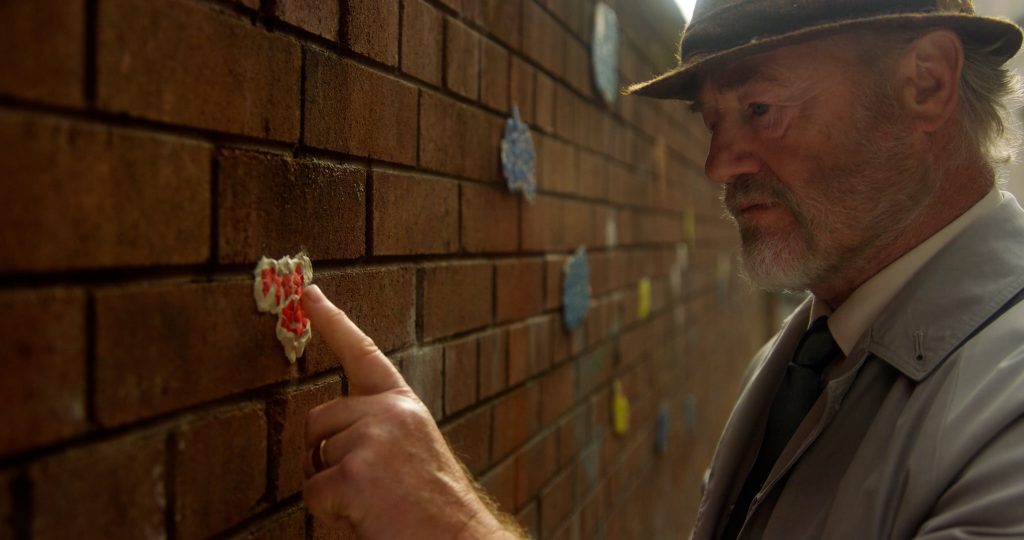
The technical presentation is equally accomplished. Cinematographer Keefa Chan captures the Welsh locations with an attractive, naturalistic quality, finding visual interest in ordinary streets, interiors and overlooked corners of the surrounding environment. The photography is carefully composed without drawing unnecessary attention to itself, allowing the characters and their experiences to remain the focus.
Filmed in Newport, Wales, Something Pointless benefits from locations that feel authentic to the story being told. There is no attempt to make the surroundings appear more glamorous or picturesque than necessary. Instead, the film finds beauty within familiar urban spaces, reinforcing its central suggestion that meaningful experiences can emerge from the most ordinary circumstances.
The editing by Laurence Cohen is particularly effective in establishing the relationship between the two parallel narratives. The film moves confidently between Aldous and the boy, gradually developing their circumstances without sacrificing clarity or emotional momentum. Despite the relatively short running time, neither storyline feels neglected, and the progression towards their eventual connection is handled with considerable assurance.
Andrea Bellucci’s musical score provides another important contribution. Gentle and melodic, the music complements the film’s emotional tone without overwhelming the performances or attempting to dictate the audience’s response. Its restraint is particularly welcome in a story that could easily have become excessively sentimental in less confident hands.
What makes Something Pointless especially impressive is its understanding of the short-film format. Too often, filmmakers attempt to compress the narrative ambitions of a feature into fifteen minutes, resulting in hurried developments and characters who exist primarily to advance the plot. Bailey and his collaborators take a more considered approach, concentrating upon a relatively simple idea and allowing its implications to provide the necessary dramatic substance.
The screenplay also benefits from its refusal to treat Aldous’s philosophy as an uncomplicated solution to life’s difficulties. His circumstances remain serious, just as the boy’s experiences at school cannot be dismissed through a single act of kindness. Instead, the film suggests that small moments of enjoyment, creativity and human connection can provide something valuable even when larger problems remain unresolved.
There is considerable emotional intelligence in that distinction. Something Pointless does not argue that happiness requires ignoring hardship, but that an appreciation of life’s smaller pleasures can help us navigate experiences that might otherwise feel overwhelming.
Something Pointless Is Anything But
The film has already attracted recognition on the international festival circuit, including awards for its performances and filmmaking. Such recognition is understandable, given the confidence with which Bailey and his collaborators approach material that might easily have become overly sentimental.
Ultimately, Something Pointless is a beautifully crafted short film that demonstrates how much can be achieved through thoughtful writing, accomplished performances and confident direction. Owen Teale and Leo Harris are excellent, the cinematography and score complement the story wonderfully, and the film delivers a genuinely affecting experience without overstaying its welcome.
At just fourteen minutes, it manages to explore ideas about happiness, loneliness and the value of human connection with greater sensitivity than many considerably longer productions. It is a touching, intelligent and highly accomplished piece of filmmaking, one that encourages us to reconsider the importance of those seemingly insignificant moments we so often overlook.
Perhaps Aldous Evans has the right idea after all. There may be something rather wonderful about making time for something utterly pointless.
| Acting | |
| Direction | |
| Cinematography | |
| Writing | |
| Sound | |
| Screen Critix Rating |