
Artificial intelligence continues to be one of the most debated topics in modern filmmaking. Some see it as a threat to traditional artistry, while others view it as another tool that can help creators tell stories that may otherwise never be realised. Whatever side of the argument you sit on, Snow Colored Ashes serves as an example of just how far the technology has already come.
Directed by R.L. Lyone, this six-minute short film is a music-driven drama that explores the devastating impact of war on ordinary families. Running at just over six minutes, it manages to pack a surprising amount of emotion and visual spectacle into its brief runtime.
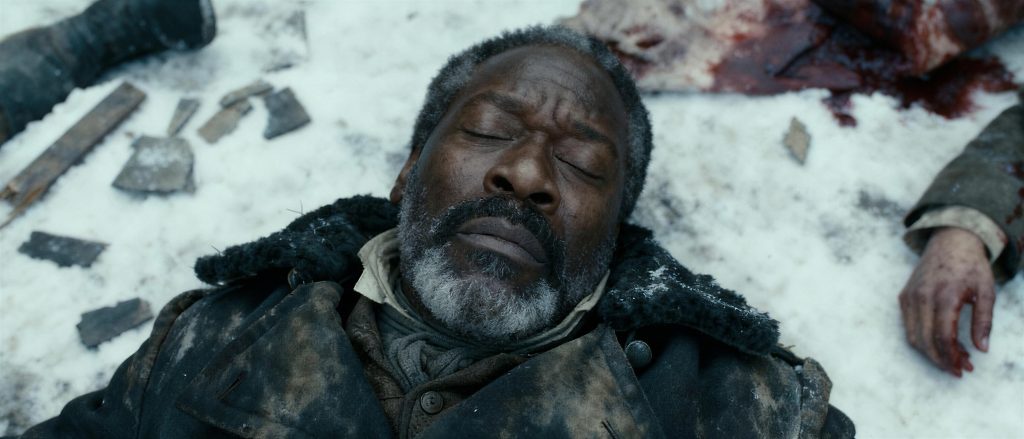
The film opens in the aftermath of catastrophe. A snow-covered village has been devastated by an attack. Bodies lie scattered across the frozen landscape, survivors cling to life, and a young boy struggles to hold on before disappearing into a vast crater left behind by a missile strike. Accompanied by a powerful musical score, these opening moments are immediately striking. There is very little dialogue, yet the imagery alone tells viewers everything they need to know about the scale of the tragedy.
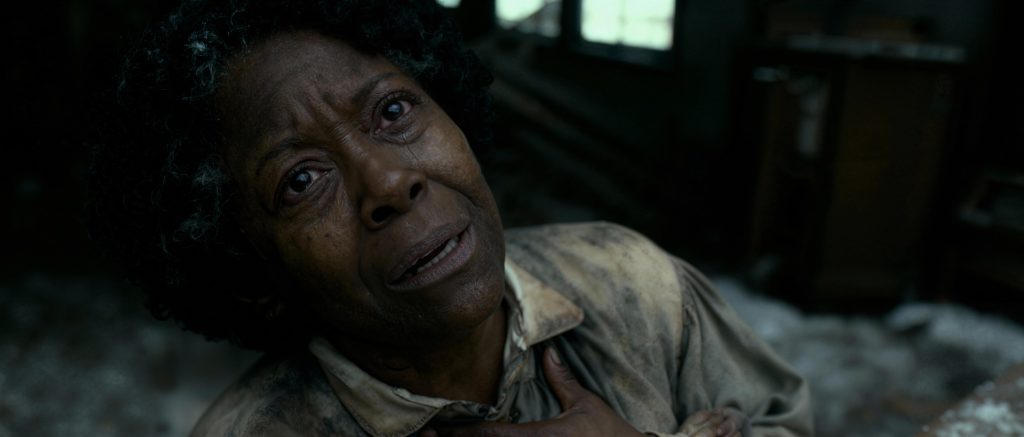
Among the destruction lies a father, unconscious and surrounded by death. As he drifts between life and dreams, he sees visions of his daughter. When he finally awakens, he catches sight of an angel flying away into the distance, as though some higher power has offered him one final chance. Moments later, he receives an urgent audio message from his wife, pleading with him to find their daughter Anira and keep her safe.
From there, Snow Colored Ashes becomes a journey through grief, hope and survival. The narrative is simple but effective. Rather than attempting to tell a large-scale war story, Lyone focuses on one family and the emotional devastation that conflict leaves behind. The father searches through the ruins while his wife clings to faith and prayer, hoping her family can somehow survive the horrors unfolding around them.
What immediately stands out is the visual quality. If viewers were shown Snow Colored Ashes without any prior knowledge, many would likely assume they were watching a traditionally produced short film with a sizeable budget. The environments are expansive, the destruction is convincing, and many of the individual shots possess a cinematic quality that would not look out of place in a much larger production.
Particularly impressive are the sequences involving the supernatural imagery. The angel soaring above the battlefield, buildings transforming from places of life into decaying ruins, and the haunting image of a dying horse with tears running down its face all leave a lasting impression. These moments demonstrate both the strengths and growing sophistication of modern AI-assisted filmmaking.
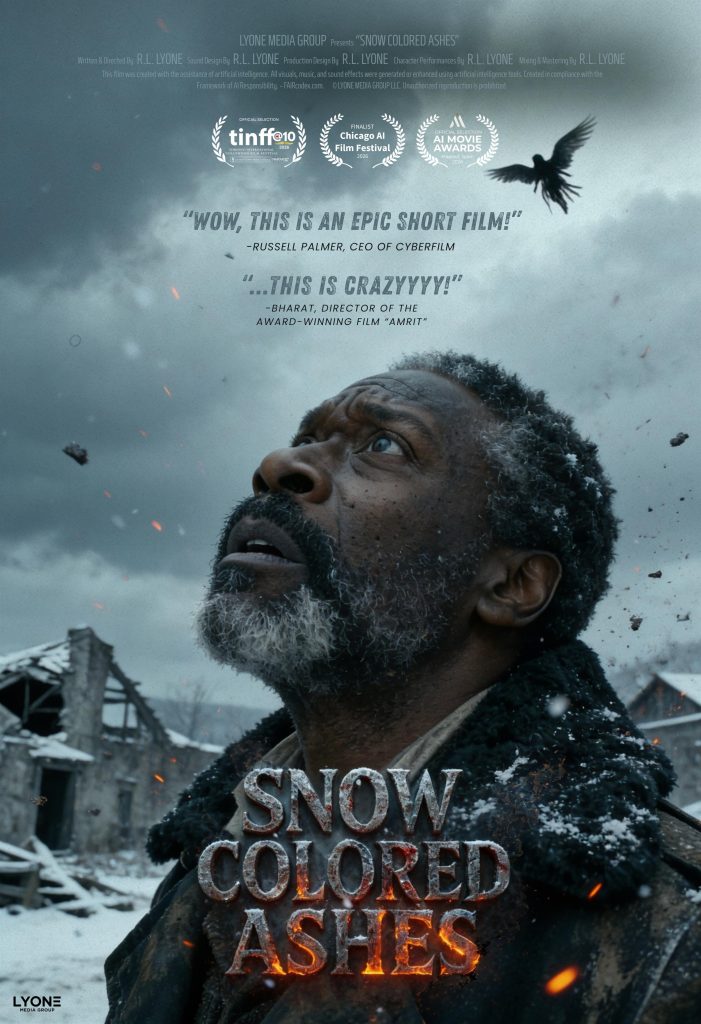
The soundtrack deserves significant praise as well. Because dialogue is kept to a minimum, much of the emotional weight falls upon the music. Thankfully, it rises to the challenge. The score gives the film a sense of scale and grandeur, elevating scenes that are already visually impressive and helping maintain an emotional connection throughout the short runtime.
Of course, discussions surrounding Snow Colored Ashes will inevitably return to the subject of AI. R.L. Lyone is very open about the production process, describing the project as an experiment designed to explore both the potential and limitations of generative technology. Produced over five months with a budget reportedly under $700, the film demonstrates what independent creators can now achieve without access to large crews, expensive equipment or visual effects departments.
Yet Snow Colored Ashes is more than a technical showcase. What gives the film value is the personal inspiration behind it. Lyone has explained that the project was influenced by stories from her own family, particularly her mother’s experiences growing up during conflict in Uganda. Those memories of violence, loss and trauma help give the film an emotional foundation that prevents it from becoming merely a demonstration of technology.
The short also avoids glorifying war. Instead, it focuses on the human cost. Throughout history, conflicts have been fought by governments and armies, but it is often ordinary families who suffer the consequences. Snow Colored Ashes repeatedly reminds viewers of this reality through its imagery of destroyed homes, grieving parents and frightened children.
If there is a criticism to be made, it is simply that the runtime feels too short. At just over six minutes, there are moments where the film leaves viewers wanting more. The father’s journey, the family’s story and even the world surrounding them all feel rich enough to support a longer piece. However, that could also be viewed as a compliment. When a film leaves audiences wanting additional time with its characters, it has clearly succeeded in creating an emotional connection.
The film’s premiere at the Chicago AI Film Festival earlier this year feels entirely fitting. It represents the kind of project that many AI-focused festivals are embracing: a film that uses emerging technology while still attempting to tell a meaningful human story.
Whether AI filmmaking becomes a major part of cinema’s future remains to be seen, but Snow Colored Ashes provides a fascinating glimpse at what may be possible. More importantly, it succeeds as a piece of storytelling in its own right. Beneath the impressive visuals and technical achievements lies a simple, heartfelt story about family, faith and survival in the face of unimaginable tragedy.
Beautifully crafted, emotionally engaging and visually remarkable, Snow Colored Ashes is a powerful short film that demonstrates both the possibilities of AI-assisted filmmaking and the enduring importance of human stories.
| Acting | |
| Direction | |
| Cinematography | |
| Writing | |
| Sound | |
| Screen Critix Rating |