
Independent filmmaking frequently requires ambition to be negotiated against available resources. Demon Dancer: Sua/Nara presents writer-director Attila Korosi with an unusually difficult version of that challenge, combining supernatural fantasy, Korean mythology, ballet, martial arts, romance and a nonlinear narrative within a 94-minute feature. The resulting film is unconventional and occasionally unwieldy, but there is a genuine sense of creative purpose behind the world Korosi has constructed.
Sua (Jiyeon Han) is a Korean ballerina whose life has been devastated by the death of her husband, Jack. His fate was connected to a demonic curse, and rather than attempting to escape the supernatural world responsible for her loss, Sua chooses to enter it. She allows a demon named Nara (Anita Korosi) to share her body, hoping that their connection will lead her towards those responsible.
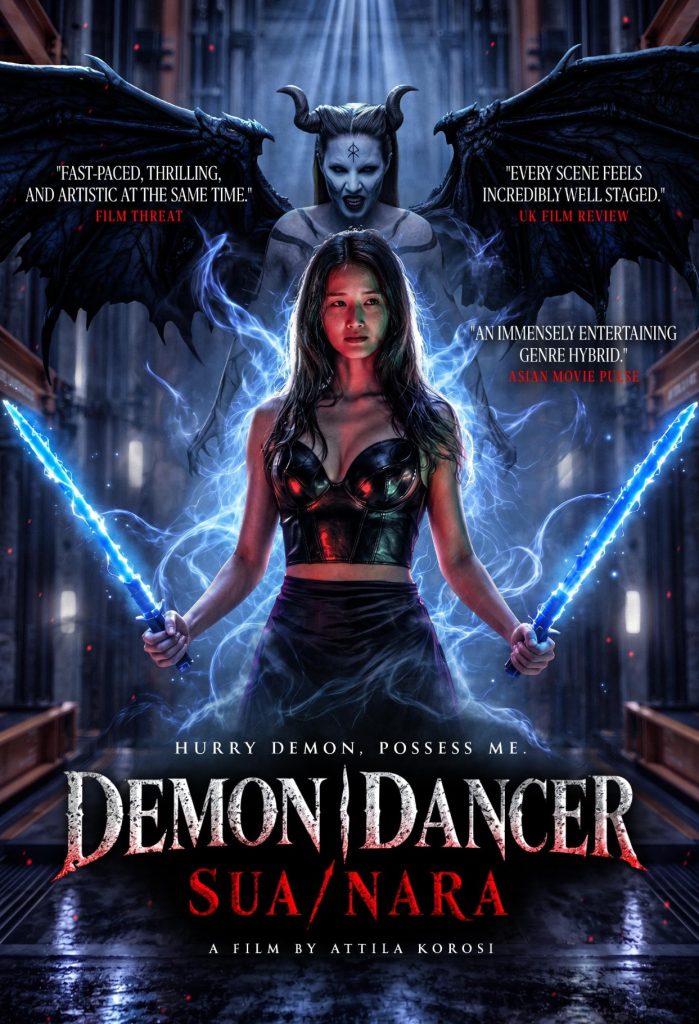
It is an intriguing reversal of the conventional possession story. Nara isn’t simply an evil presence that Sua needs to expel, and their relationship becomes central to understanding the film. They are separate personalities occupying an increasingly interconnected existence, with Nara able to appear before Sua in human form while also providing access to abilities that would otherwise be impossible.
Korosi doesn’t present this history conventionally. The narrative moves between Sua’s present circumstances and fragments of her past, gradually revealing her relationship with Jack and the events that transformed her into the woman we initially encounter. Memories therefore function as more than exposition, becoming part of Sua’s attempt to retain her identity while pursuing a mission built upon grief.
That emotional idea is arguably more interesting than the straightforward revenge story surrounding it. Sua has responded to losing someone she loves by willingly accepting another presence into herself, creating an unusual contradiction at the centre of the character. She seeks justice for what supernatural forces took from her while simultaneously becoming dependent upon one of those forces.
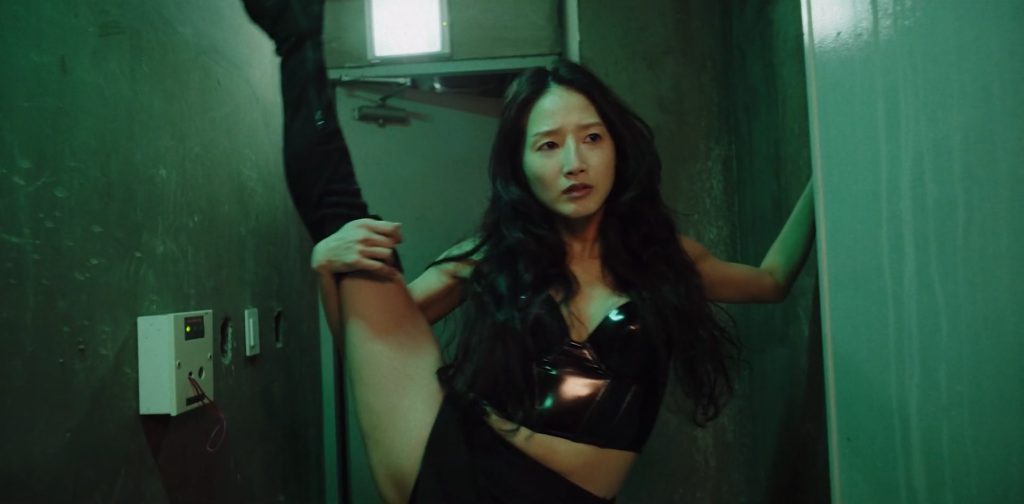
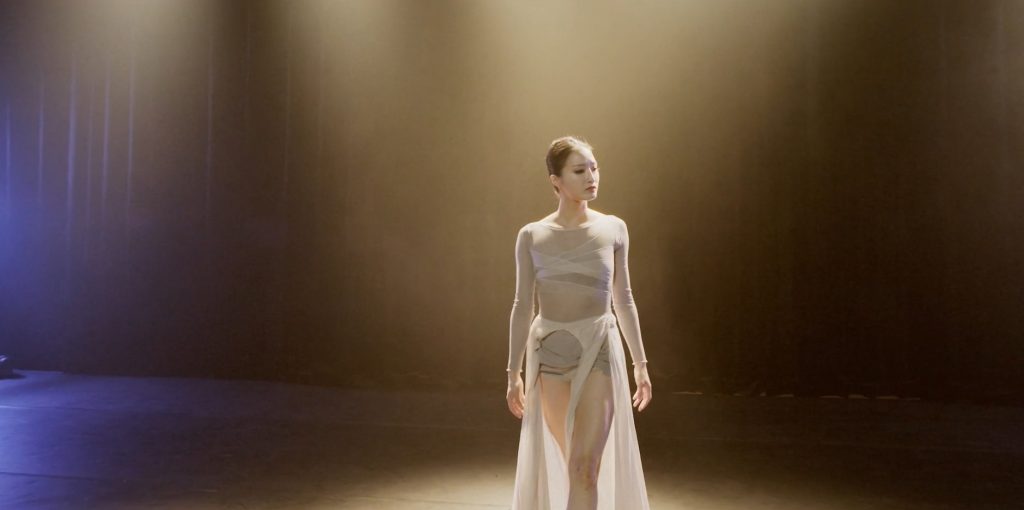
Jiyeon Han proves an effective choice for such a physically demanding role. Her background in ballet is particularly valuable because movement becomes an important part of Sua’s identity rather than simply an aesthetic addition. The film repeatedly incorporates the control and flexibility associated with dance into the way she occupies the frame, allowing her previous life as a performer to remain visible even after her circumstances have changed dramatically.
There is also an interesting contrast between Sua’s ballet sequences and the harsher environments into which her mission takes her. Korosi moves between stages, industrial spaces, nightlife and more abstract supernatural imagery without attempting to make them visually uniform. The shifts can occasionally be abrupt, but they contribute to the feeling that Sua is moving between different aspects of her own existence.
Gareth Taylor’s cinematography plays an important role in holding those elements together. Strong colour, carefully controlled lighting and fluid camera movement give Demon Dancer a recognisable visual character. Brodie Alexander’s colour work complements that photography, particularly when the film embraces saturated reds and blues, while the darker environments retain sufficient detail to prevent the imagery from becoming visually muddy.
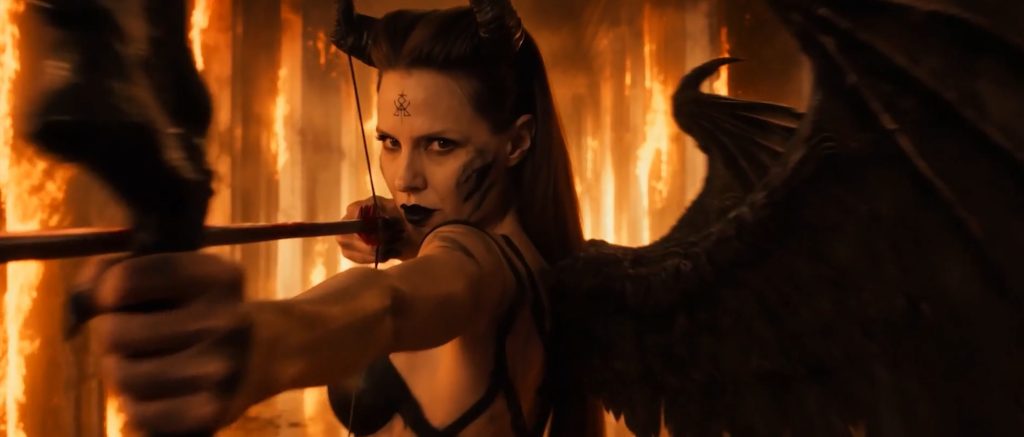
The supernatural design also benefits from some effective practical work. Nara’s demonic appearance establishes immediately that the film is willing to commit fully to its fantasy elements, with the makeup providing something tangible for the camera rather than leaving every unusual image to post-production. Digital effects are used alongside those practical elements, and although their effectiveness varies, the overall design remains consistent with the deliberately heightened reality Korosi has created.
The relationship between Sua and Jack provides the story with its emotional motivation. Their history is revealed through memories rather than presented as a continuous romantic subplot, requiring the audience to piece together why his death continues to determine Sua’s actions. Attila Korosi plays Jack himself, and these quieter sections represent a considerable tonal change from the more fantastical material surrounding them.
Not every transition between these different modes is completely smooth. Demon Dancer contains a substantial amount of mythology to communicate while simultaneously attempting to maintain momentum, and some dialogue consequently carries more explanatory responsibility than would ideally be necessary. The nonlinear structure can also require concentration while the rules surrounding Sua, Nara and the wider demonic world are being established.
There are nevertheless some imaginative ideas within that mythology. The skull-like mask associated with Sua and Nara gives their union a physical symbol, while the ability for Nara to exist both as an individual presence and as part of Sua creates visual opportunities beyond conventional possession imagery. Korosi clearly wants the supernatural world to have its own rules and iconography rather than simply using demons as anonymous opponents.
Chris Potter’s score has the equally difficult task of accompanying material that can move rapidly between intimacy, fantasy and heightened physical conflict. It contributes to the film’s deliberately larger-than-life identity, while Itai Levin’s editing has to negotiate both the fragmented chronology and considerable changes in tempo. The amount of material being balanced is substantial, particularly for a production operating outside the studio system.
Where Demon Dancer becomes most interesting is in its refusal to restrict itself to a single genre. There is horror imagery, romantic tragedy, fantasy mythology and dance alongside its action-film framework. Some viewers may find that mixture challenging, particularly when the film moves quickly from one mode into another, but the willingness to combine such disparate ingredients also gives the production an identity of its own.
Korosi has therefore made a film whose strengths are closely connected to its ambition. It would have been considerably easier to simplify the mythology, abandon the nonlinear storytelling or reduce Sua to a conventional supernatural heroine. Instead, Demon Dancer attempts to establish an entire world around the relationship between a grieving woman and the demon she has voluntarily accepted into herself.
The execution isn’t seamless, and the density of its ideas sometimes works against narrative clarity, but there is considerable imagination on display. Han provides the film with a convincing central presence, Taylor’s photography gives the production a distinctive visual identity, and the fusion of ballet with supernatural mythology offers something genuinely unusual.
Demon Dancer: Sua/Nara ultimately feels like the beginning of a world rather than merely a self-contained exercise in genre filmmaking. Korosi’s mythology leaves considerable room for further exploration, while Sua’s unusual relationship with Nara gives that world a compelling central concept. For all its rougher edges, this is an ambitious independent feature prepared to pursue its own identity rather than imitate a safer and more conventional model.
| Acting | |
| Direction | |
| Cinematography | |
| Writing | |
| Sound | |
| Screen Critix Rating |