
Making a short film with little or no budget is never easy. Every filmmaker starts somewhere, learning the craft through experimentation, discovering what works and, just as importantly, what doesn’t. Next You, a five-minute independent short from Indian filmmaker Sumit Saurav, certainly feels like one of those learning experiences. While it may not fully achieve the psychological horror it sets out to be, it does contain enough interesting visual ideas to suggest its creator has potential.
The film opens with an unexpected quote from The Dark Knight, specifically Alfred’s famous observation that “Some men aren’t looking for anything logical, they just want to watch the world burn.” It’s an unusual choice for an opening quotation. Most films that begin this way typically borrow from literature, philosophy or religious texts, so seeing a line from Christopher Nolan’s Batman film immediately catches you off guard.
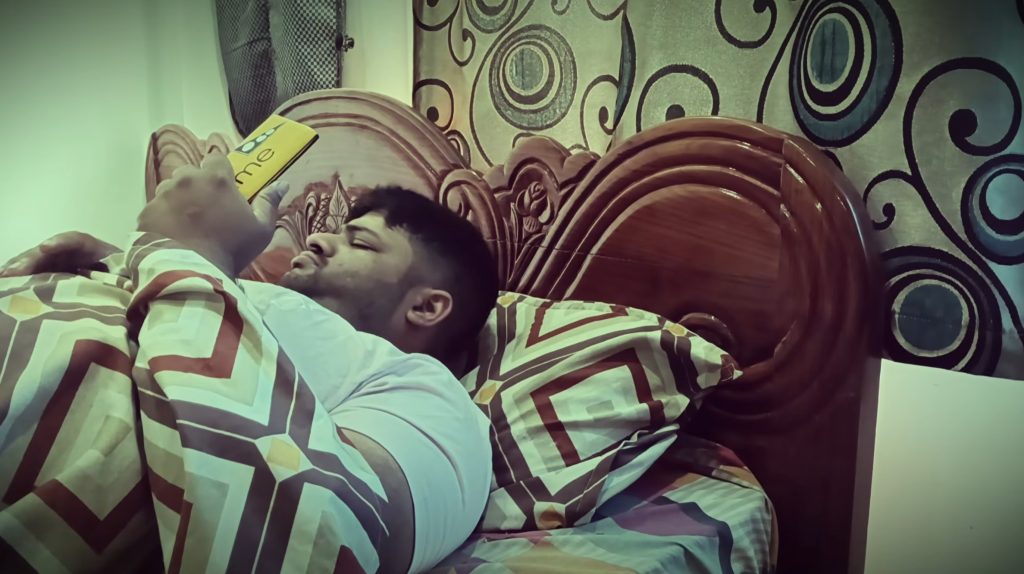
From there, we meet an unnamed man asleep in his modest apartment before he’s awakened by repeated phone calls from someone listed on his mobile as “My Love”. Before he even answers the phone, however, something appears to be very wrong. A gas cylinder slowly begins moving across the floor of its own accord.
Things only become stranger.
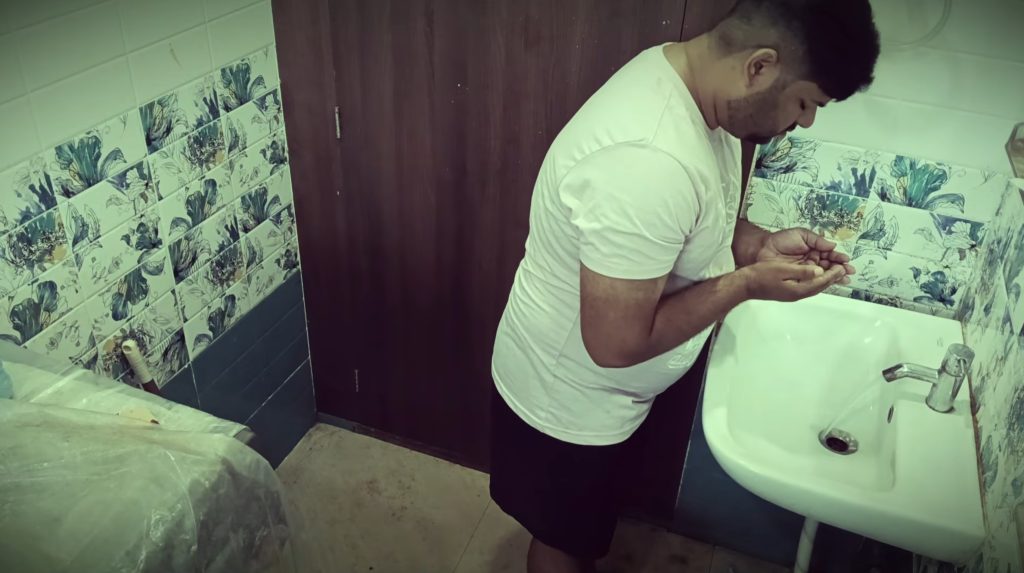
Standing in the bathroom, the man runs his hands under the tap, yet they remain completely dry. Looking into the mirror, he discovers he has no reflection staring back at him. Convinced he’s trapped inside a dream, he repeatedly tells himself to “close your eyes”, desperately hoping he’ll wake up.
As the surreal events continue, he begins questioning whether what he’s experiencing is the work of demons, witchcraft or some other unexplained supernatural force. The phone finally rings again, and this time he answers. On the other end is a woman asking for his advice after receiving a marriage proposal before abruptly ending the conversation, leaving him even more confused than before.
Meanwhile, the mysterious gas cylinder continues sliding around the room, eventually accompanied by unsettling growling sounds.
Desperate to convince himself he’s dreaming, the man starts testing reality. Pinching himself causes part of his reflection to return in the mirror. Hitting himself with a household utensil restores a little more. Finally, he takes a knife and cuts his own wrist, watching as his reflection almost completely reappears, although now he has a genuine injury that requires attention.
It’s certainly an unusual premise, and one that leans far more towards surrealism than traditional horror.
The filmmakers describe Next You as psychological horror, but in truth there are very few horror elements present. There are no genuine scares, no sustained suspense and very little sense of escalating terror. Instead, the film functions more as an abstract visual puzzle, leaving audiences to interpret what they are seeing rather than attempting to frighten them.
Visually, there are flashes of creativity throughout. Sumit Saurav employs frequent whip pans, accompanied by dramatic whooshing sound effects, giving the short a frantic, dreamlike rhythm. Some of these stylistic flourishes work better than others, but it’s encouraging to see a filmmaker experimenting with visual language rather than simply pointing a camera at actors.
The production itself is understandably modest. The film appears to have been made with extremely limited resources, and while this occasionally shows in the presentation, it’s equally clear that a considerable amount of passion has gone into the project. Independent filmmaking has always been about making the most of what you have available, and Next You demonstrates that determination.
Where the film arguably lets itself down is in how it presents itself to audiences.
Its promotional material describes the short as “If Christopher Nolan directed a modern psychological horror short.” It’s a bold statement, but one that ultimately creates expectations the film cannot realistically meet. Christopher Nolan’s work is defined by intricate structure, meticulous visual precision and large-scale cinematic storytelling. Next You isn’t trying to achieve those things, nor does it need to.
Ironically, Nolan himself made a low-budget surreal short early in his career called Doodlebug, proving that every filmmaker starts small. Rather than inviting comparisons to one of the world’s most celebrated directors, Next You would benefit from allowing its own identity to speak for itself. There’s nothing wrong with ambition, but audiences are often more receptive when they discover similarities naturally instead of being told what those similarities should be.
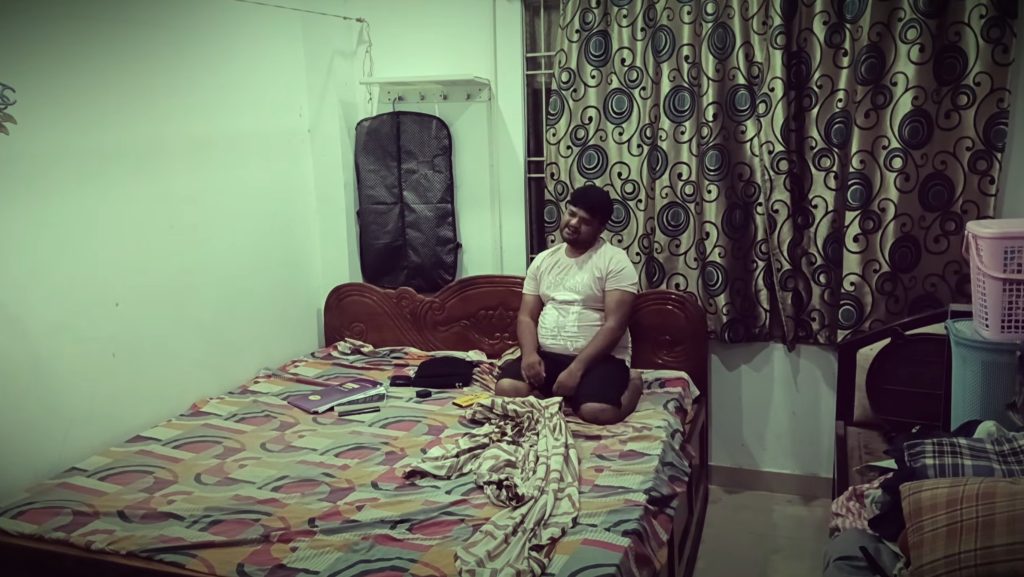
Performance-wise, the film largely relies on Sumit Saurav carrying the story alone, and he does a respectable job conveying confusion and growing desperation despite the deliberately abstract narrative. The supporting cast have little screen time, with the film remaining almost entirely focused on its central character’s increasingly bizarre experiences.
At just over five minutes long, Next You never overstays its welcome. Its surreal imagery and open-ended storytelling will likely divide audiences, with some appreciating its ambiguity while others may simply be left scratching their heads.
Ultimately, Next You feels less like a finished psychological horror and more like an exercise in visual experimentation. Not everything lands, and the horror label doesn’t quite fit the final product, but there are glimpses of creativity throughout that make it worth watching. More importantly, it shows a filmmaker willing to try unusual ideas rather than simply following convention.
Every director improves through practice, and Next You provides a solid foundation on which Sumit Saurav can continue developing his craft. The technical skills, storytelling and confidence will inevitably grow with each new project. For now, this remains an intriguing, surreal short that demonstrates promise, even if it never quite becomes the nightmare it sets out to be.
| Acting | |
| Direction | |
| Cinematography | |
| Writing | |
| Sound | |
| Screen Critix Rating |