
History has a habit of preserving the names of the people who lead movements while allowing those living alongside them to disappear into the margins. Revolution’s Wife takes one such figure, Padmavati Chandra, and places her at the centre of a handsome historical drama inspired by the events surrounding the 1917 Hindu-German Conspiracy Trial.
Running for just over 13 minutes, the film marks the directorial debut of Reenita Malhotra Hora, who also co-wrote the screenplay with Candace Egan. Set primarily in San Francisco in 1917, it approaches a much larger political story through Padmavati, played by Naosheen Ahmed, whose marriage to revolutionary Ram Chandra Bhardwaj draws her into circumstances she does not initially understand.
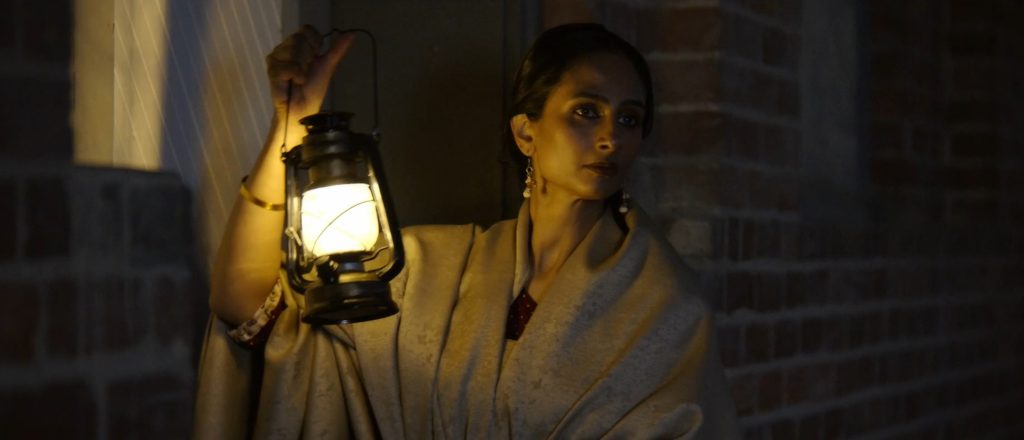
The Gadar Party’s campaign against British rule in India provides the historical backdrop. Operating from the Yugantar Ashram in San Francisco, revolutionaries produce newspapers, pamphlets and other material calling for resistance against British colonial rule. Padmavati exists within this world without necessarily possessing the same knowledge as the men around her, and Revolution’s Wife is most interesting when exploring that imbalance.
Her husband Ram, played by Rishi Jaiswal, is involved in matters he deliberately keeps from her. Padmavati is expected to help with the work around her, including folding printed material and signing documents, while being denied a full explanation of what those documents actually mean. It creates an effective contradiction at the centre of the film. She is close enough to the revolution to become vulnerable to its consequences, yet sufficiently excluded from it that she cannot properly assess the danger.
That perspective distinguishes Revolution’s Wife from what could easily have become a miniature historical thriller about conspirators, informants and law enforcement. Hora is more interested in the woman standing beside the revolutionaries than simply recreating their activities. Padmavati’s position as “just a wife” becomes increasingly loaded as the film reveals how little protection that supposed distance actually provides.
The production does an impressive job of establishing its period setting within the obvious practical limitations of a short independent film. Newspaper headlines, photographs and archival-style material are interwoven with the dramatised sequences, expanding the historical world beyond the handful of physical locations available to the filmmakers. The approach gives the film a broader sense of events unfolding around Padmavati, even when the narrative itself remains relatively contained.
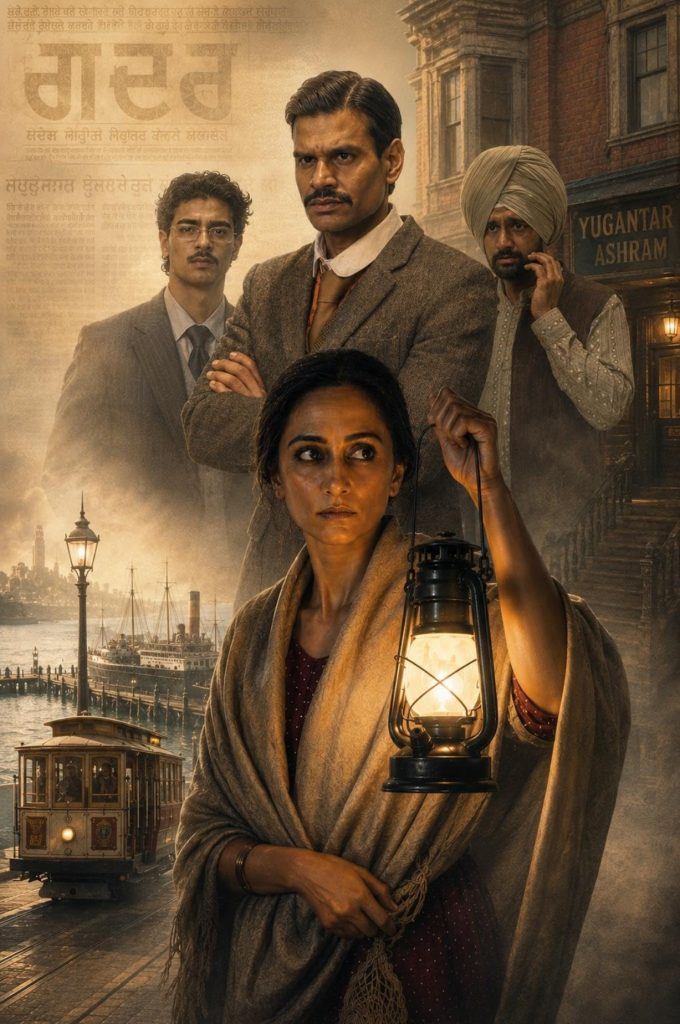
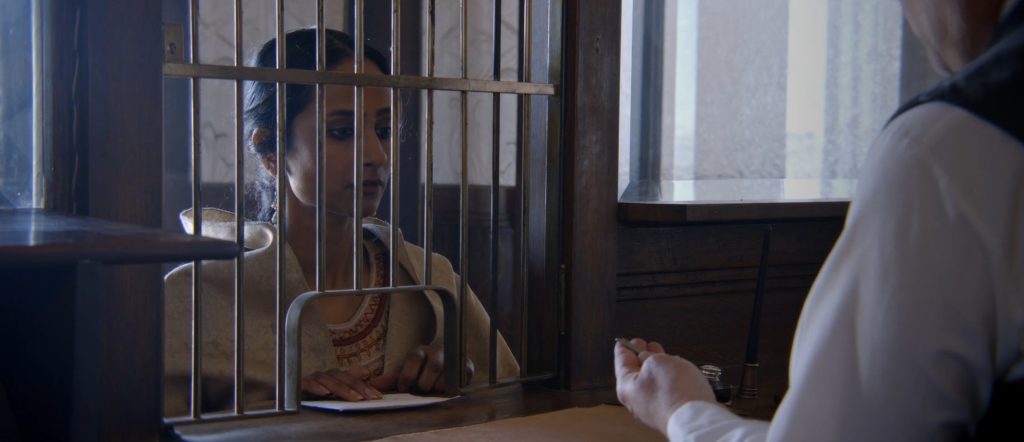
Anup Kulkarni’s cinematography is one of the production’s strongest elements. Revolution’s Wife is frequently beautiful to look at, with confident framing, controlled camera movement and particularly attractive use of colour and light. The Yugantar Ashram material has a tactile period atmosphere, while the lighting gives several interiors considerably more depth than might be expected from a modestly scaled production.
The music is similarly effective, complementing the images without overwhelming them. The combination of cinematography, production design, period detail and score allows Revolution’s Wife to feel more substantial than its short running time might suggest. Historical filmmaking is rarely an easy proposition on an independent budget because virtually everything visible can potentially betray the period, making the level of visual polish achieved here particularly commendable.
Ahmed gives Padmavati a believable vulnerability without making her simply passive. Much of the character’s predicament comes from being surrounded by information that other people possess and she does not, meaning her performance frequently depends upon reaction and observation. Jaiswal, meanwhile, gives Ram an authority within their relationship that helps communicate the imbalance between husband and wife without requiring the film to continually verbalise it.
The supporting performances are equally convincing, and the film generally avoids the theatrical quality that can sometimes creep into small-scale historical productions. Even when characters are discussing revolution, betrayal and the possibility of an informant operating among them, the performances remain grounded enough for the political material to feel connected to personal consequences.
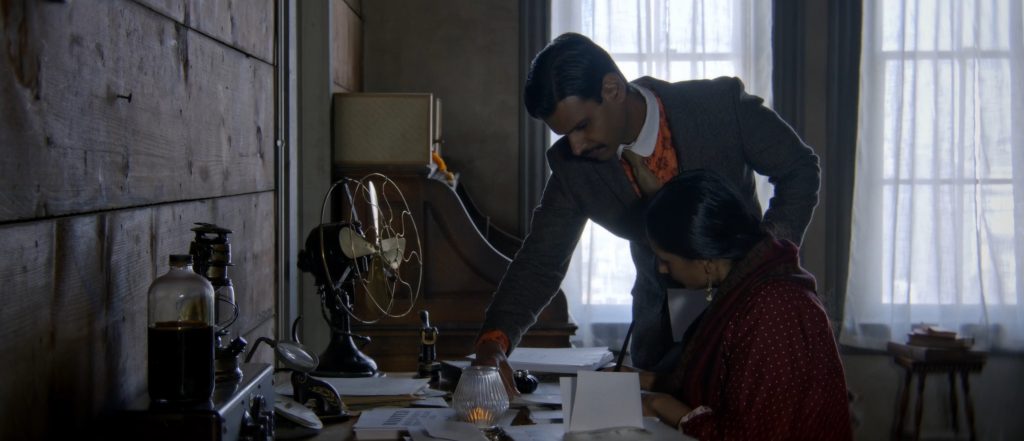
Ironically, the biggest limitation of Revolution’s Wife is that its subject is considerably larger than the film containing it. At 13 minutes and 31 seconds, there is only so much space available to establish Padmavati, Ram, the Gadar Party, the political situation, the internal distrust surrounding the movement and the consequences of Ram’s arrest.
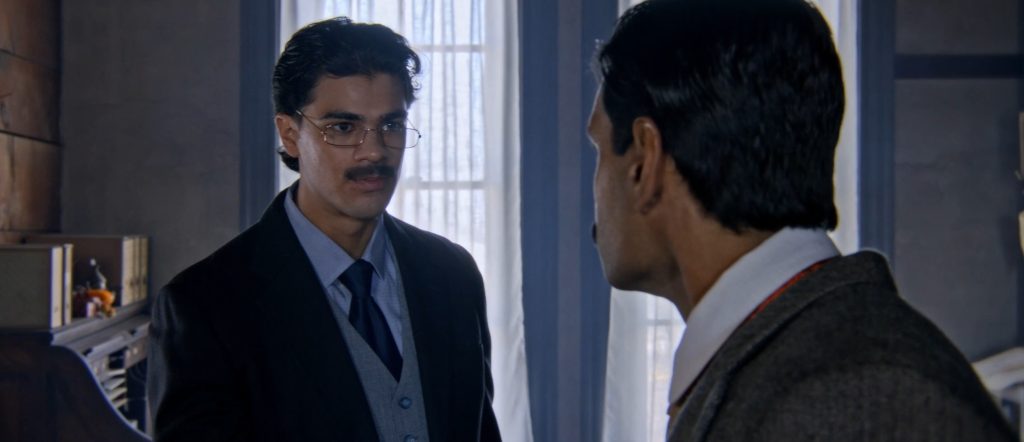
As a result, the film can move extremely quickly. The printing of revolutionary material gives way to suspicions surrounding leaked information, conflict between the men and the arrival of federal agents with little opportunity for the tension between those developments to fully breathe. Individual moments work, but the cumulative impact isn’t always as powerful as the historical circumstances suggest it could be.
This is one of those occasions where wanting more from a short isn’t simply a polite compliment. Revolution’s Wife genuinely feels as though its story could support a substantially longer production. More time within its version of 1917 San Francisco, more opportunity to understand Padmavati’s relationship with Ram and greater development of the suspicions within the Gadar Party could have transformed the material into an absorbing longer historical thriller.
Of course, recreating San Francisco during the First World War on an independent budget is considerably easier to request than to achieve. Hora and her team make intelligent use of inserts, historical imagery and tightly controlled locations to suggest a world they understandably cannot build in its entirety. Nevertheless, the effectiveness of what is here makes the boundaries of the production more noticeable because there is clearly a much bigger story waiting beyond them.
The framing device set decades later is less successful. Revolution’s Wife opens at the University of California, Berkeley in 1974, with an older Padmavati being interviewed about the events of 1917. We hear the conversation over a close-up of a tape recorder before the film moves into the past.
It provides an immediate route into Padmavati’s memories, but the film never visually returns to that interview or gives the framing sequence a corresponding conclusion. We don’t see the older Padmavati reflecting upon where those events ultimately took her, leaving the opening feeling somewhat detached from the dramatic structure that follows. Given how little time the film has available, beginning directly within 1917 might have created additional room for the historical story itself.
There are also moments where the use of historical material invites closer scrutiny. One newspaper shown during the Gadar Party printing sequences appears to carry a January 1943 date despite the drama taking place in 1917. If that date is indeed what appears on the prop, it is an unfortunate period inconsistency in a film otherwise working hard to establish its historical setting.
Those issues don’t diminish the considerable craft evident throughout Revolution’s Wife. This is a visually accomplished short with convincing performances, excellent cinematography and a fascinating piece of history at its centre. Its problem is less a shortage of material than an abundance of it.
Hora’s decision to approach the historical events through Padmavati rather than allowing the revolutionaries around her to dominate the narrative is particularly worthwhile. The political conspiracy provides the machinery of the story, but the more compelling question concerns what happens to someone whose name becomes attached to decisions and documents she may not completely understand.
That makes the film’s perspective feel contemporary without requiring the filmmakers to artificially modernise its characters. Padmavati’s vulnerability comes from something very simple: other people possess knowledge and power that she does not, yet she may still have to live with the consequences of their actions.
Revolution’s Wife is therefore an impressive directorial debut from Reenita Malhotra Hora, even if it ultimately feels like an introduction to a story rather than its fullest possible telling. Its rapid pacing occasionally prevents the drama from achieving the weight it deserves, while the 1974 framing device feels underdeveloped, but the quality of the filmmaking itself is difficult to overlook.
Beautifully photographed, confidently performed and accompanied by an effective score, Revolution’s Wife demonstrates considerable ambition within a very compact running time. Most importantly, it succeeds in making Padmavati Chandra more than the wife standing beside a revolutionary. It asks us to consider the person history almost allowed to disappear behind that description, and leaves us wishing the film had given her even more time.
| Acting | |
| Direction | |
| Cinematography | |
| Writing | |
| Sound | |
| Screen Critix Rating |