
There is something rather brave about attempting to tell a complete and emotionally meaningful story in little more than three minutes. Chris Easterly’s The Best She Could has barely introduced its characters before the end credits arrive, yet within that tiny window it finds room for a thoughtful examination of compassion, death and the importance of simply being present for another person.
The premise is beautifully simple. A young and relatively inexperienced priest, Father Charles, played by Russell Teagle, is sitting beside a dying woman named Carolyn, played by Candy Dennis. As he attempts to comfort her during her final hours, Carolyn makes a request. She wants a mother with her, specifically “one who knows”.
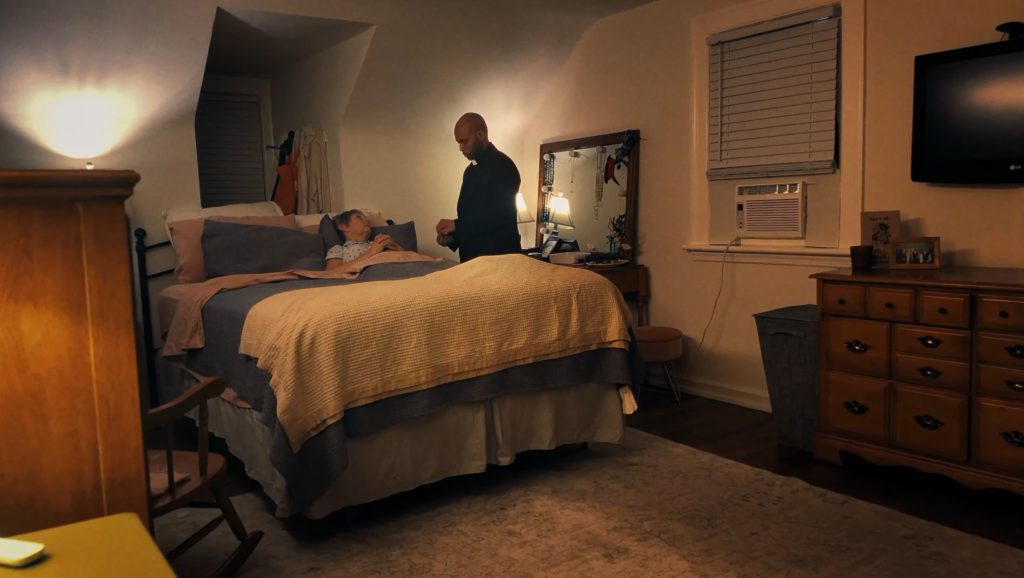
What follows is less concerned with religion than with an act of basic human kindness. Charles accepts Carolyn’s request and attempts to find somebody willing and able to sit with a stranger as she dies. The circumstances make that more difficult than it might initially sound, particularly given the late hour, but his determination to honour the wishes of a dying woman provides the short with its emotional foundation.
Easterly wastes remarkably little time establishing this idea. Lydia, played by Carol Easterly, doesn’t believe she would be of much help, while another woman, played by Shekala Wonders, has children at home and cannot leave them. Neither response is treated with cruelty or judgement. People have their own circumstances, responsibilities and fears, and wanting to help somebody doesn’t necessarily mean knowing how.
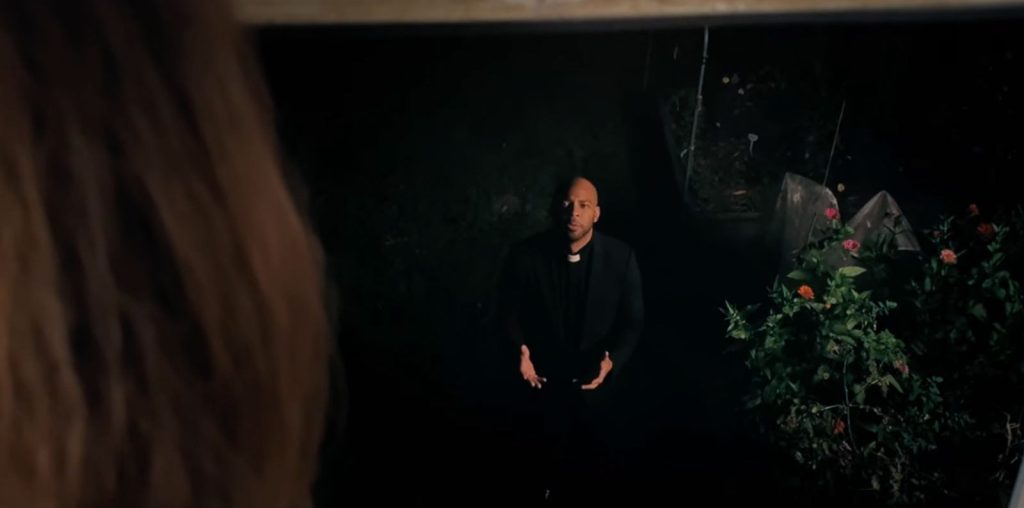
It is Anna, played by Abril Mendez-Herrold, who ultimately answers Charles’s request. Awoken when the priest throws a small stone towards an upstairs window, she learns that a woman needs help and makes the decision to go. Her response, “I do the best I can”, contains essentially everything the film wants to communicate.
That idea becomes considerably more affecting when Anna reaches Carolyn’s bedside. She cannot prevent what is happening and she doesn’t possess some miraculous answer that the others lacked. What she can do is sit beside Carolyn, offer comfort and ensure that another human being isn’t alone at the end of her life.
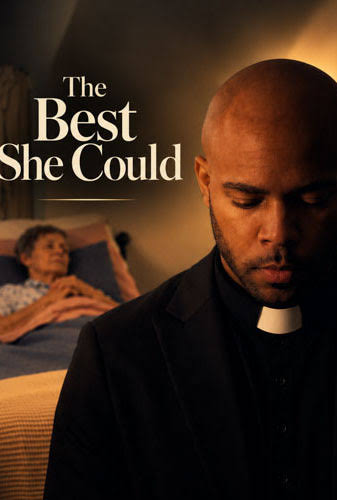
The Best She Could understands that sometimes helping somebody has nothing to do with solving their problem. There are circumstances that cannot be fixed, and death is the most obvious of them. Presence itself can become the act of kindness, particularly when there is nothing else left to offer.
That gives Easterly’s film an emotional weight considerably greater than its running time would suggest. At approximately three minutes and 22 seconds including the end credits, there is simply no space for elaborate character histories or lengthy explanations. The film instead reduces its story to the essential question of whether somebody will answer when another person needs them.
Russell Teagle gives Father Charles an appealing sincerity. The character’s relative inexperience doesn’t prevent him from recognising that Carolyn needs something he cannot personally provide, and there is something quietly admirable about his willingness to go looking for it rather than deciding that his own presence should be sufficient.
Candy Dennis has very little screen time in which to establish Carolyn’s vulnerability, but the situation itself carries considerable emotional force. Her request gives the film its purpose, while Dennis communicates enough fragility to make Charles’s subsequent efforts understandable without the short having to manufacture additional drama around her condition.
Mendez-Herrold similarly has only moments in which to establish Anna, yet her willingness to leave her home in the middle of the night and comfort somebody she apparently doesn’t know tells us what we need to understand about the character. The final bedside interaction is appropriately restrained, allowing the simple act of companionship to carry the scene.
The story has its roots in a meditation by theologian and writer Frederick Buechner, which recounts an incident from 1880 involving minister George Shinn and a dying woman who asked for another woman to remain with her. Easterly relocates the essential idea into his own compact screen narrative while retaining the fundamental importance of somebody agreeing to come when called.
The film is also notable for having been shot on an iPhone 16. Mobile phone filmmaking has progressed enormously, but the technology still depends upon the choices being made behind it, and The Best She Could looks impressively polished for such a small production. Nothing about the presentation distracts from the intimacy of the story, which is particularly important when the film has so little time in which to establish its emotional tone.
Colourist Hunter O’Brien contributes to that polished appearance, helping give the images a consistency that prevents the production from simply looking like footage captured on a phone. It is another example of how accessible camera technology can become a legitimate filmmaking tool when supported by thoughtful composition and careful post-production.
Eric Mulder’s music is equally important to the atmosphere. There is a gentle, almost ethereal quality to the score that suits a story positioned so closely to death and faith, but it doesn’t overwhelm the human interaction at its centre. With such a short running time, every creative element has to establish itself quickly, and the music does so effectively.
The extreme brevity inevitably means that The Best She Could offers only the smallest glimpse of these people. There is little opportunity to learn about Carolyn, Anna or Charles beyond what is required for this particular moment, and viewers looking for extensive character development simply aren’t going to find it within three minutes.
Yet expanding everything might also work against what makes the film effective. The Best She Could resembles a cinematic parable more than a conventional narrative drama, presenting a situation, a choice and the quiet consequence of somebody choosing to help. Its simplicity is very much part of its identity.
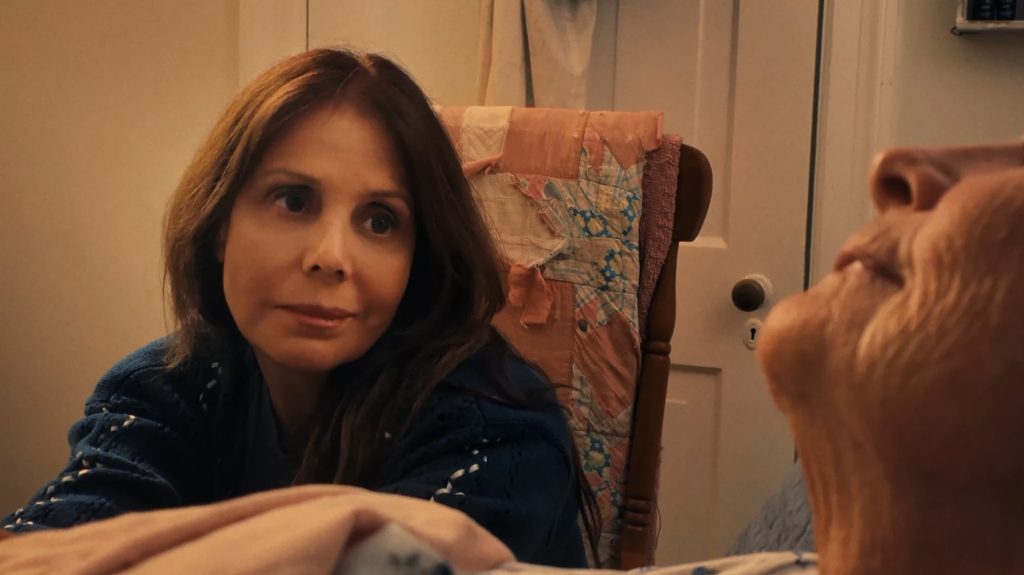
Most importantly, Easterly avoids making the material excessively sentimental. A dying woman doesn’t need a grand gesture. She needs another person beside her. Anna doesn’t arrive with the ability to make everything better, but that was never what was being asked of her.
The Best She Could is therefore a tiny film built around a substantial human idea. Teagle, Dennis and Mendez-Herrold bring sincerity to a story that could easily have become overly saccharine, while the iPhone photography, careful colour work and Eric Mulder’s gentle score give the production an unexpectedly polished finish.
At just over three minutes, it is over almost as quickly as it begins, but its central message doesn’t require much longer. We cannot always know what to say, fix what is wrong or take somebody’s pain away. Sometimes the best we can offer another person is our presence, and sometimes doing the best we can is more than enough.
| Acting | |
| Direction | |
| Cinematography | |
| Writing | |
| Sound | |
| Screen Critix Rating |