
Sometimes a very simple setup is all a film needs. Regressions, an Irish short running for around 14 minutes, spends most of its time with three siblings sitting around a dining table talking. There are no elaborate locations or dramatic set pieces required. Instead, writer, director and lead actress Rebecca Hickey puts her faith in dialogue and performance, gradually turning what begins as familiar family banter into a more serious disagreement about relationships, independence and responsibility.
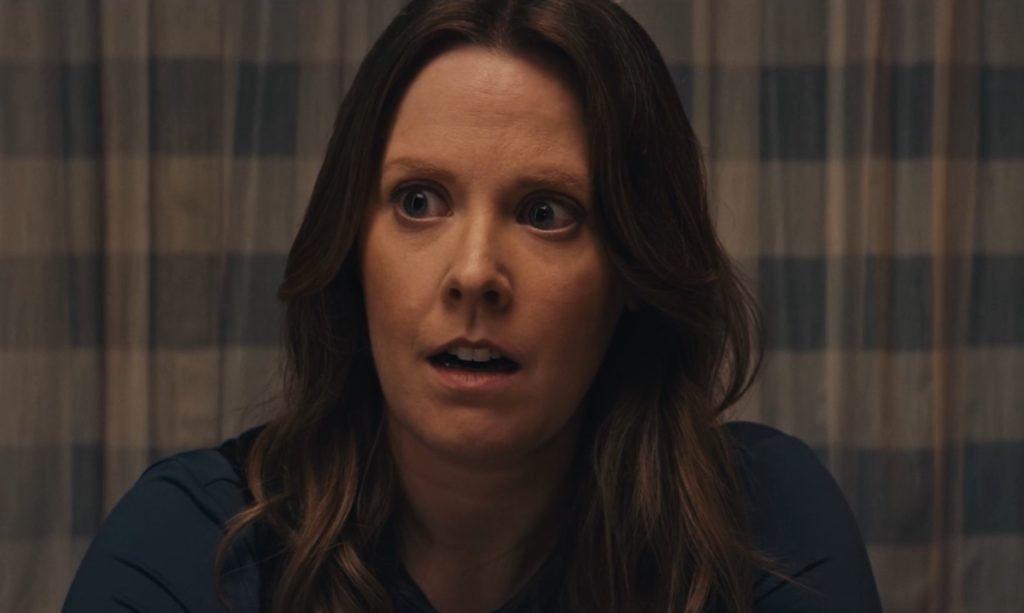
Claire Moore (Hickey) is back in Ireland from London and sitting with her two older brothers, Michael (Peter Coonan) and Patrick (Barry John Kinsella). The siblings have gathered following the death of their father, with their mother Barbara (Caoilfhionn McDonnell) upstairs. What initially appears to be a late-night drink and conversation between family members soon begins digging into considerably more personal territory.
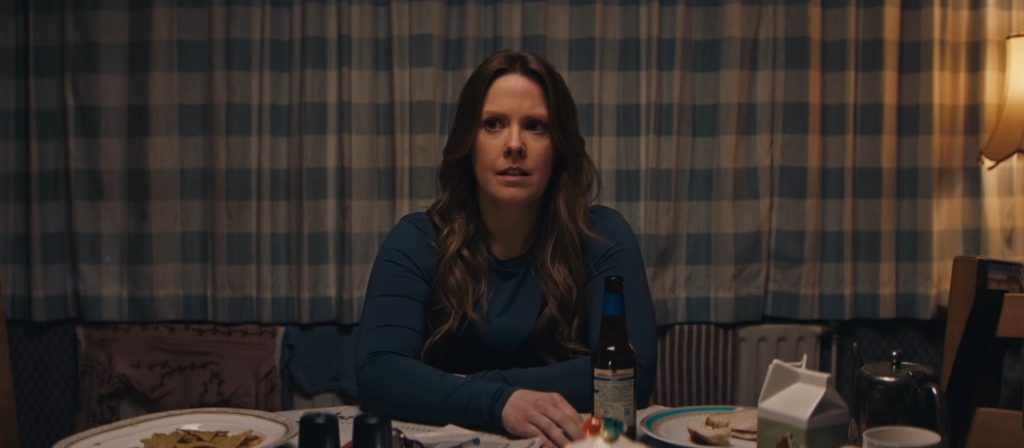
Michael accidentally reveals that he and Patrick aren’t particularly keen on Claire’s partner. When Claire understandably wants to know why, the brothers struggle to provide a particularly convincing explanation. Among Michael’s complaints are that the boyfriend doesn’t share the Chinese takeaways he orders and apparently doesn’t take sufficient care of Claire. That latter comment immediately gets Claire’s back up. She’s an independent adult with a life and career of her own and doesn’t require a man to look after her.
The conversation takes another turn when Claire reveals that her boyfriend has proposed. Her brothers are shocked, prompting Claire to list his positive qualities. He’s a decent man, has no children, gets along with his mother, has a pension, openly tells people how much he adores Claire and, as an added bonus, apparently smells nice. Michael and Patrick respond by questioning their sister’s track record with relationships, which proves to be a spectacular tactical error because Claire has plenty of ammunition of her own.
She reminds them of their questionable romantic and life decisions, and the conversation quickly becomes a wonderfully familiar exchange of sibling insults and embarrassing memories. University failures, arrests and past relationships all become fair game as each attempts to gain the upper hand. One of the strengths of Hickey’s screenplay is that nobody gets to occupy the moral high ground for very long. These people know one another too well for that.
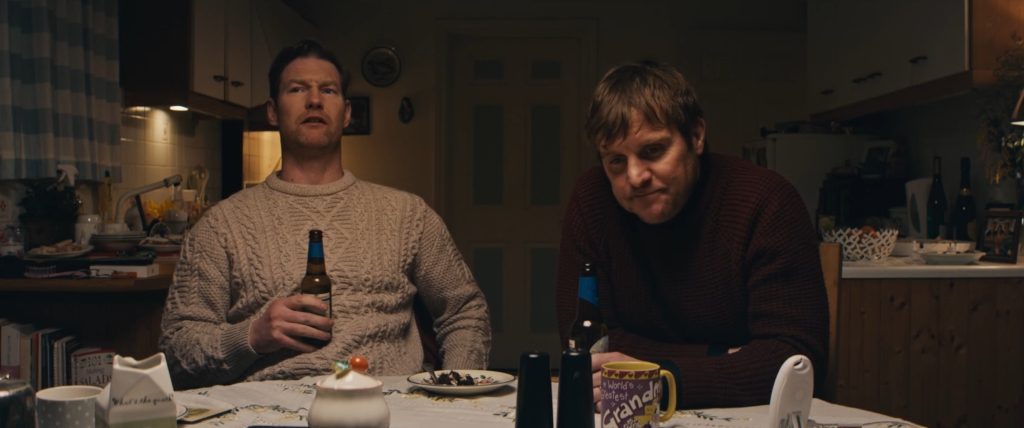
Eventually the brothers ask the obvious question. What did Claire say to the proposal? She turned him down, news that delights Michael and Patrick. Their reaction soon reveals another reason they’re pleased, however. As far as they’re concerned, Claire can now return home to Ireland and help keep their mother company. The fact that Claire already has a life and a good job in London seems almost secondary to them, despite the brothers themselves living considerably closer to their mother.
This is where Regressions becomes more interesting than its simple premise initially suggests. The disagreement is no longer about Claire’s boyfriend. Instead, it’s about the assumptions families make regarding who should take responsibility and whose life is considered flexible enough to accommodate everyone else’s needs. Claire quite reasonably questions why she should automatically be expected to rearrange the life she has built when her brothers are much closer to home.
Regressions Finds Drama Around the Dinner Table
The screenplay allows the disagreement to develop naturally rather than beginning with everybody already shouting. Anyone with siblings will probably recognise something in the way the conversation unfolds. A harmless remark becomes a joke, the joke becomes a dig, somebody remembers something embarrassing from years earlier and another person retaliates. Before long, a grievance that has clearly been sitting beneath the surface has found its way into the conversation.
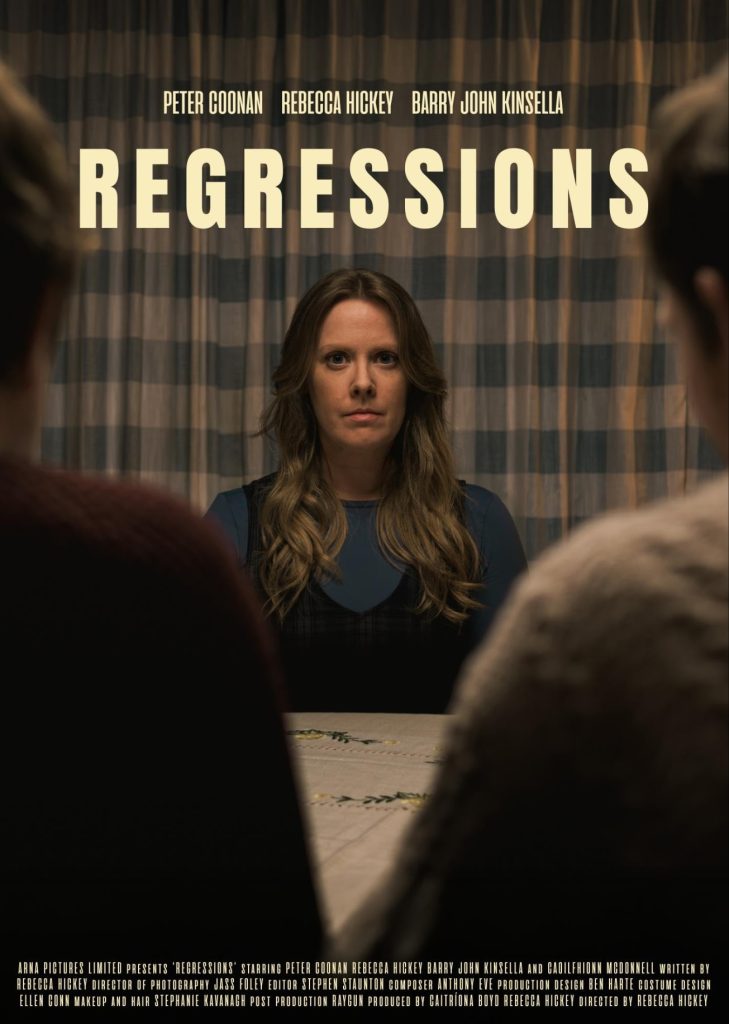
That approach works because the three central performances are strong. Hickey is very good as Claire, capturing both her frustration with her brothers and the affection underneath it. She isn’t arguing with two villains, she’s arguing with family, and that distinction is important. Claire can defend herself and become irritated without the character suddenly sounding as though she’s delivering a prepared speech about her independence.
Peter Coonan and Barry John Kinsella are equally convincing as Michael and Patrick. Their characters can be presumptuous and ridiculous, but they’re never reduced to caricatures. The three actors share an easy chemistry, particularly when they’re teasing or attacking one another with information accumulated over years of being siblings. Their exchanges have the familiarity required to make us believe these people have been winding each other up since childhood.
Coonan will be recognisable to many viewers from his extensive Irish film and television work. For us, it was also nice seeing him again after his appearance in the Ireland-set horror film Hokum, alongside Adam Scott. Here he works nicely with Kinsella, while Hickey holds her own between them and gives Claire the confidence necessary to prevent her brothers from dominating either the conversation or the film.
The confined setting also places considerable responsibility on cinematographer Jass Foley. Regressions is nicely presented, with strong framing and warm interior lighting that suits the intimate nature of the story. Practical lamps around the room contribute to the atmosphere and prevent the film from simply looking like three performers have been placed around somebody’s dining table while a camera records them.
At around 14 minutes, Hickey also knows not to stretch the idea beyond its natural length. The film has enough time to establish the sibling relationship, let the humour breathe and reveal the more serious disagreement underneath it without unnecessarily expanding a story that benefits from being intimate.
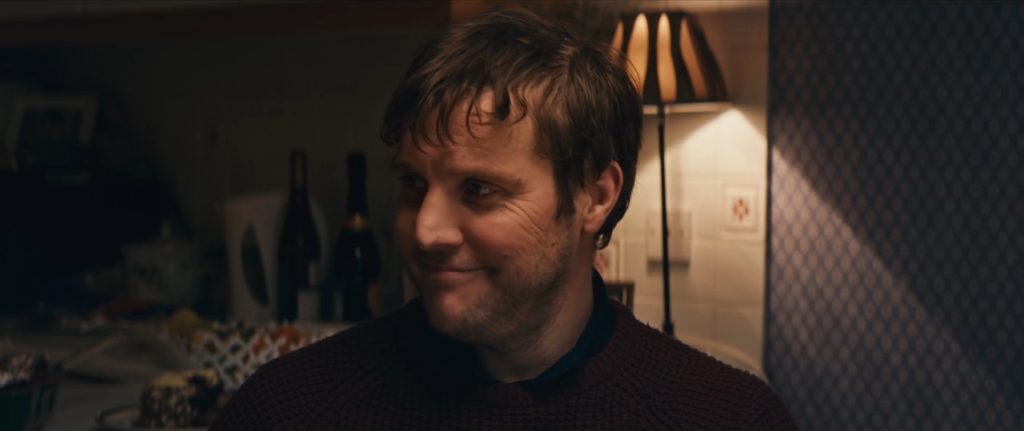
There’s more going on beneath the humour than initially appears, particularly in Claire’s frustration at the assumption that her life should be the easiest one to rearrange. Yet the film doesn’t labour the point. The comedy keeps things light enough that Regressions never becomes an overly serious statement about family responsibility. One moment they’re discussing an important decision, and the next somebody’s disastrous history is being dragged back into the conversation.
As both filmmaker and lead performer, Rebecca Hickey takes on considerable responsibility. She wrote and directed the short in addition to playing Claire, with Caitriona Boyd producing alongside Hickey, who is also credited as executive producer. The simplicity of the finished film shouldn’t disguise the challenge involved. When your story largely consists of three people talking, the writing and acting have nowhere to hide.
Thankfully, Regressions has confidence in both. It’s humorous without becoming a broad comedy and dramatic without unnecessarily forcing emotion. Hickey, Coonan and Kinsella make a convincing family unit, while the technical work complements the performances rather than trying to overwhelm them.
Regressions is a well-made, sharply performed Irish short that understands both the affection and irritation that can exist between siblings. It proves that you don’t necessarily need a sprawling story to hold an audience’s attention. Sometimes three good actors, strong dialogue and a family argument around a dining table are more than enough.
| Acting | |
| Direction | |
| Cinematography | |
| Writing | |
| Sound | |
| Screen Critix Rating |