
Twenty five years can turn even the most shocking events into history for a generation that did not experience them firsthand. News footage becomes archive material, photographs appear in textbooks and places that once represented scenes of unimaginable destruction become memorials. Memories From Ground Zero, a 31-minute documentary written and directed by Rory Duffy, works against that inevitable distancing by returning to September 11, 2001 through the memories of two men who experienced the attacks and their aftermath from very different perspectives.
The film doesn’t ease its audience into the subject. A title card reads September 11, 2001, followed by footage of the World Trade Center attacks and contemporary news coverage. We see the horrifying images of the planes striking the towers before witnessing both buildings collapse into enormous clouds of dust and debris. Even a quarter of a century later, these images haven’t lost their power. They remain heartbreaking and deeply disturbing, particularly with the knowledge of the enormous loss of innocent life taking place within and around those buildings.
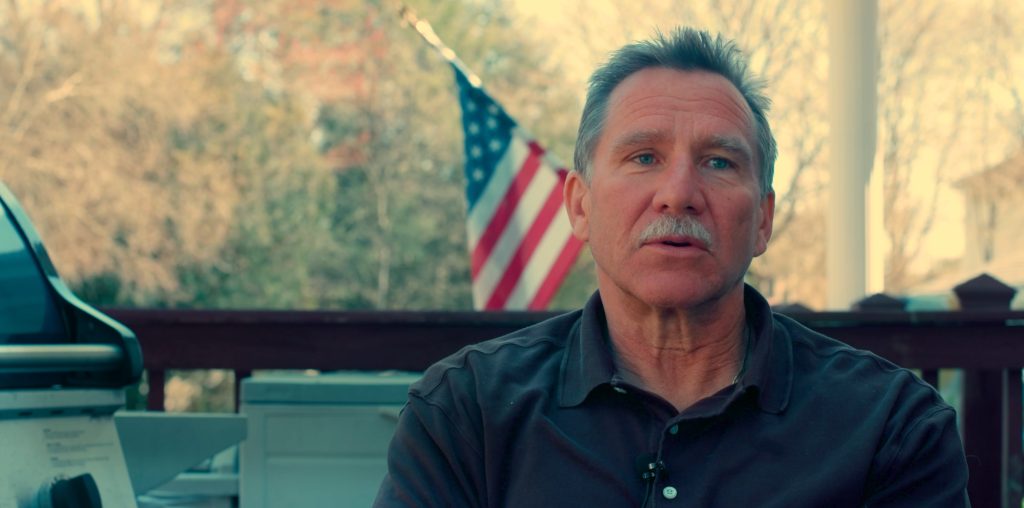
Duffy then brings us into the present day and introduces the first of his two principal subjects under the title The Fireman. Brad Hores served with FDNY Engine 298, Ladder 127, and his contribution begins far removed from the devastation we’re about to hear him describe. He talks about putting a flagpole in his garden before September 11 and how the American flag has flown there ever since.
Hores was on medical leave when the attacks occurred. He remembers September 11 beginning as a beautiful morning without a cloud in the sky. While travelling to a medical office, he noticed a large amount of smoke and initially assumed there must be a high-rise building on fire somewhere in the city. He then saw that the World Trade Center was burning.
After calling his wife, Hores learned that an aircraft had struck the building. During that same telephone call, he looked towards the World Trade Center and witnessed the second plane hitting the South Tower. Any possibility that what had happened was simply a terrible accident had disappeared.
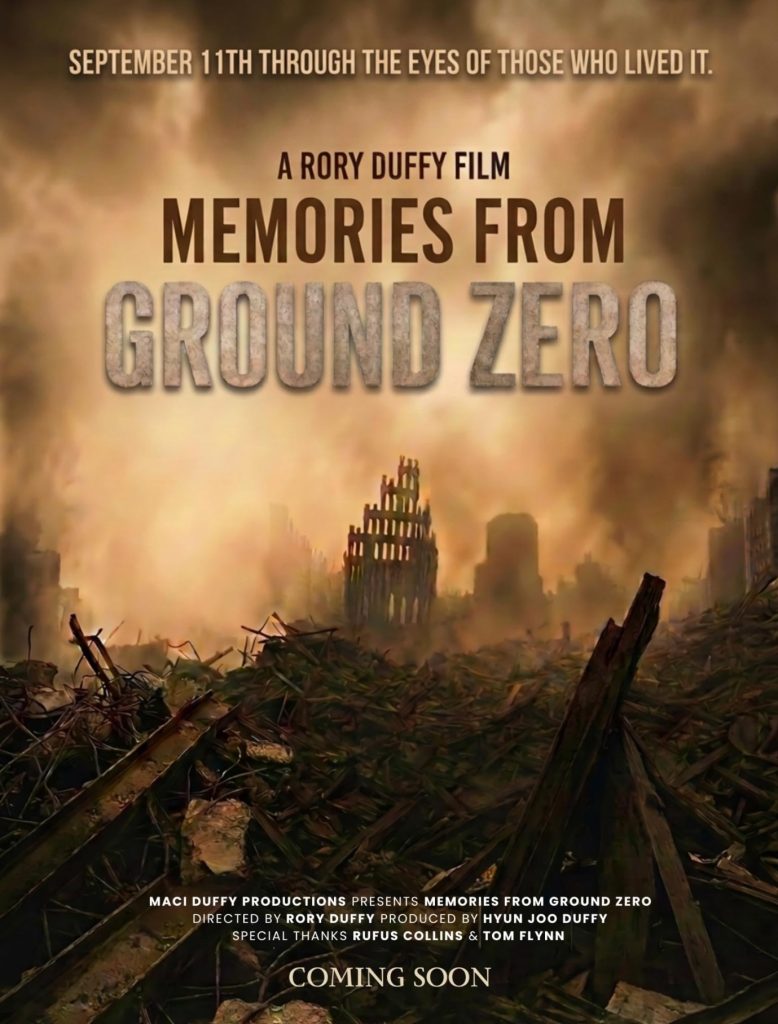
His recollections of Ground Zero are among the documentary’s most powerful moments. Hores describes the scene as surreal and eerie, remembering screaming and crying amid almost unimaginable destruction. Everything appeared to have been pulverised into dust and ash. Particularly difficult is his memory of the smell, something he describes as the stench of death and a sensory memory that has remained etched into his mind.
These are details that archive footage alone cannot provide. We have all seen those enormous clouds of dust swallowing streets and people running through Manhattan, but hearing someone who was physically there describe what remained afterwards brings another dimension to those familiar images. The documentary also acknowledges the terrible consequences that continued long after September 11 itself, with Hores discussing firefighters who subsequently lost their lives to illnesses associated with their work at Ground Zero.
Duffy then returns to contemporary CBS coverage. Amid the confusion, a journalist talks about becoming separated from his cameraman and not knowing whether he was alive or dead. It’s another haunting glimpse of just how little anybody understood about what was happening while events were unfolding.
Then comes another title card: The Journalist.
The documentary cuts to the same man many years later. Tom Flynn is now retired, and we first encounter him in the wonderfully ordinary surroundings of his garden, watering his plants and vegetables with a hose. The contrast is striking. The frantic journalist seen amid one of the most horrifying days in American history is now standing peacefully at home, but his memories of that morning remain vivid.
Flynn recalls being in his Greenwich Village apartment when he heard an extremely loud popping sound. A neighbour who had been outside drinking coffee told him that a plane had struck the World Trade Center. Flynn says he immediately believed the United States was under attack, reasoning that aircraft simply didn’t fly through the centre of New York City in such a manner. Duffy combines his present-day testimony with material from CBS’s The Early Show, allowing us to move between the man remembering the event and the broadcasts documenting it as it happened.
Memories From Ground Zero Keeps the Past Present
This combination of testimony and archive material is where Memories From Ground Zero becomes particularly effective. We see a great many documentaries at Screen Critix, and one problem that frequently occurs with short documentaries is an overdependence on talking-head interviews. No matter how interesting the subject may be, repeatedly cutting between people sitting in chairs can eventually make a film visually monotonous.
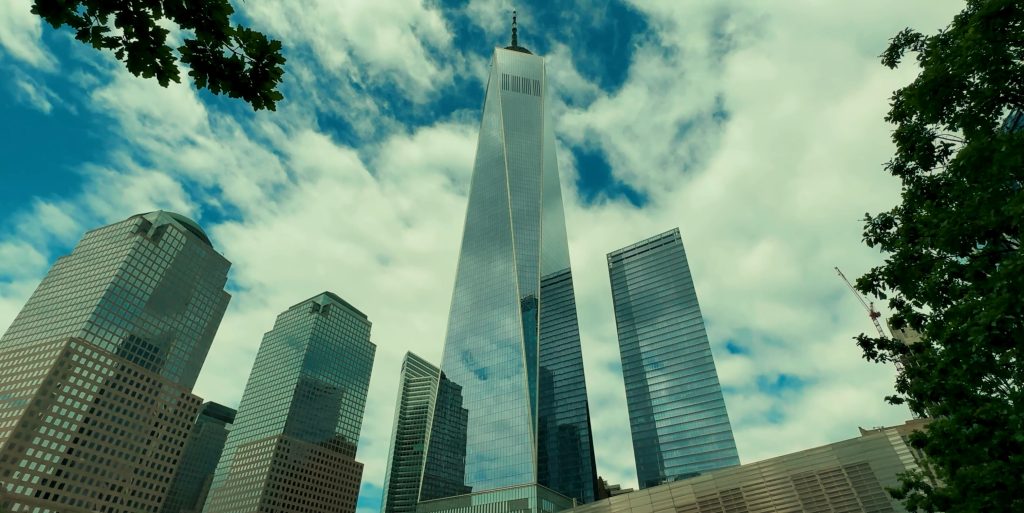
Duffy avoids that problem. The interviews form the documentary’s emotional foundation, but they’re accompanied by a considerable amount of footage from September 11, including news reports, interviews and material captured as the events unfolded. The result is a documentary that continually moves between memory and the event being remembered.
It also means that Hores and Flynn aren’t simply telling us what happened. We can see elements of what they’re describing, while their testimony gives the images additional context. The past and present constantly interact, and that becomes especially important for a documentary being released around the 25th anniversary of the attacks.
The contemporary interviews themselves are professionally presented. They’re well framed and attractively lit, while the sound is crisp and clear. Memories From Ground Zero is presented in 4K, and there is an obvious level of care behind the modern material. The polished filmmaking never becomes distracting, however, because Duffy understands that the people and their memories are what matter.
Perhaps most importantly, the documentary treats its subject with dignity. There is an enormous amount of horrifying material associated with September 11, and it would be easy for a filmmaker to rely on the sheer shock of those images. Duffy instead uses the archive footage to support the human testimony at the centre of his film. The attacks remain horrifying enough without needing to be sensationalised.
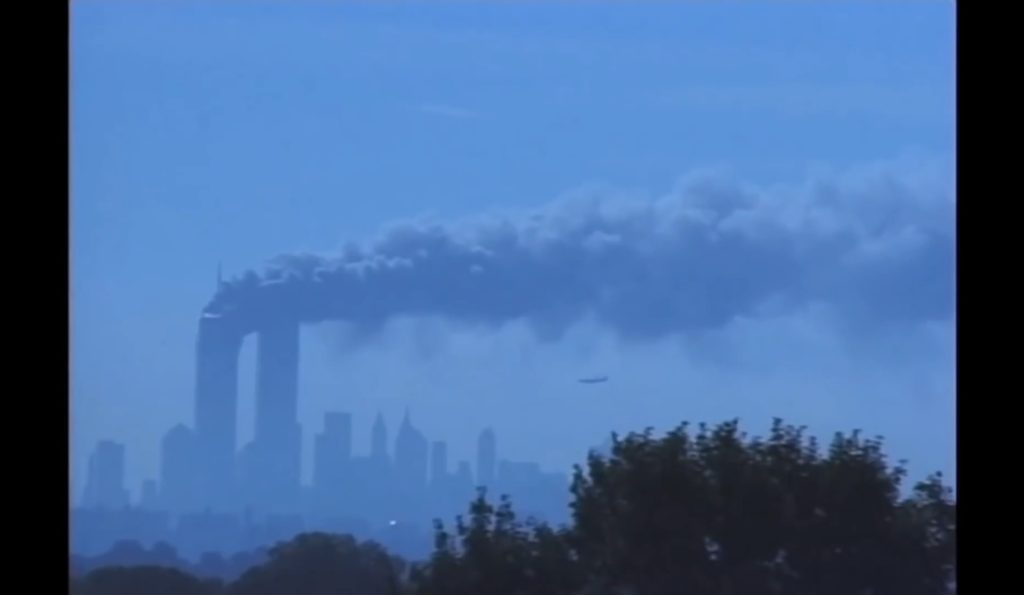
There is also something valuable about recording these testimonies now. Duffy describes the documentary as a living archive, created partly from his sense of responsibility as both a filmmaker and historian, as well as the son of a New York City firefighter. His intention is to preserve the experiences of people who witnessed September 11 before those firsthand memories are eventually lost to time.
That purpose gives Memories From Ground Zero significance beyond its 31-minute running time. For those old enough to remember September 11, the footage can immediately return you to the shock of watching the events unfold on television. For younger viewers who know the attacks primarily as history, testimony from people such as Hores and Flynn helps restore the human reality behind images that have now been replayed for a quarter of a century.
The documentary has already received recognition on the festival circuit, including Best Documentary at the New York Shorts Film Festival, Best Documentary Short at the Crown Point International Film Festival in Chicago and the Grand Jury Prize at the Unisphere Film Festival in Queens, New York. It has also received nominations, semi-finalist placements and official selections at a number of other festivals.
Memories From Ground Zero doesn’t attempt to provide an exhaustive history of September 11, nor could a 31-minute documentary reasonably do so. Its focus is much more personal. Through Brad Hores and Tom Flynn, Rory Duffy concentrates on what it was like to experience that morning and to carry those memories into the decades that followed.
It is a polished, respectful and heartfelt documentary about one of the greatest tragedies of our lifetime. By combining firsthand testimony with a substantial collection of footage from the day itself, Duffy ensures the film remains visually engaging while never losing sight of the people behind the history. Twenty five years later, Memories From Ground Zero reminds us that September 11 isn’t merely an event preserved in archive footage. For those who were there, it remains something they saw, heard, smelled and survived, and something they will carry with them for the rest of their lives.
| Acting | |
| Direction | |
| Cinematography | |
| Writing | |
| Sound | |
| Screen Critix Rating |