
There is something immediately inviting about a film that knows exactly what world it wants to inhabit. From its opening moments, Love Loaded makes its intentions clear. Writer and director Jan Miller Corran takes us back to the crime dramas and film noir of the 1940s and 1950s, complete with smoky clubs, torch singers, dangerous secrets and complicated romances. Considerable effort has gone into making this independent feature look, sound and feel as though it belongs to another era.
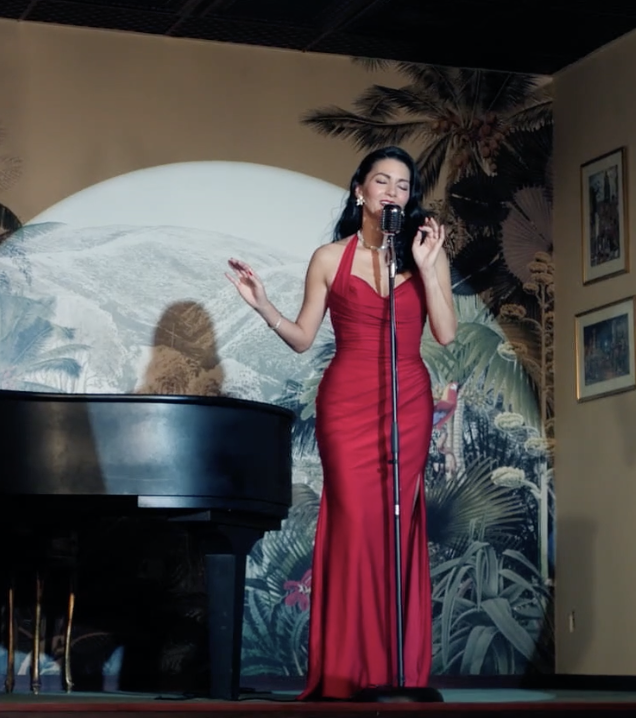
It is October 1958 and we’re in Los Angeles. The film initially presents the city in black and white, accompanied by narration as cars travel through its streets, before taking us inside Club Figaro. Onstage is singer Didi Scanlon (Monica Young), performing “Dream a Little Dream of Me” as the film makes the transition into colour. It’s an effective introduction that immediately establishes the period and the importance music will play in creating the film’s atmosphere.
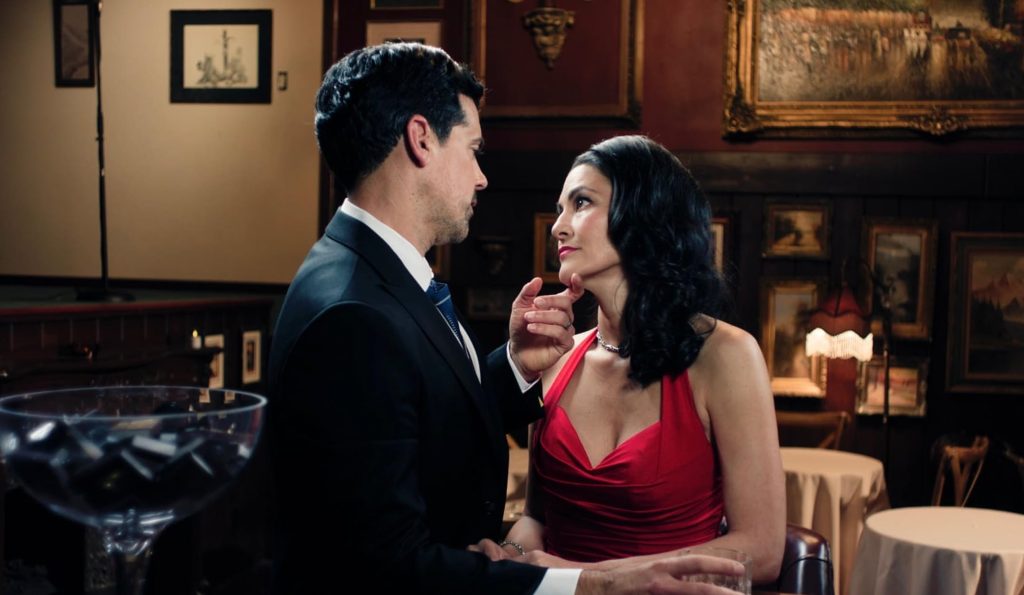
Watching from the bar is Didi’s husband, Jack Scanlon (Adam Huss), and it doesn’t take long to realise their marriage isn’t exactly idyllic. Jack is a surgeon, he’s drinking heavily, and fidelity doesn’t appear particularly high on his list of priorities. He makes suggestive comments towards a nurse he works with despite her husband being present and openly flirts with a waitress while his own wife is only metres away. If we’re assembling a mystery around somebody who might have accumulated enemies, Jack is an excellent place to start.
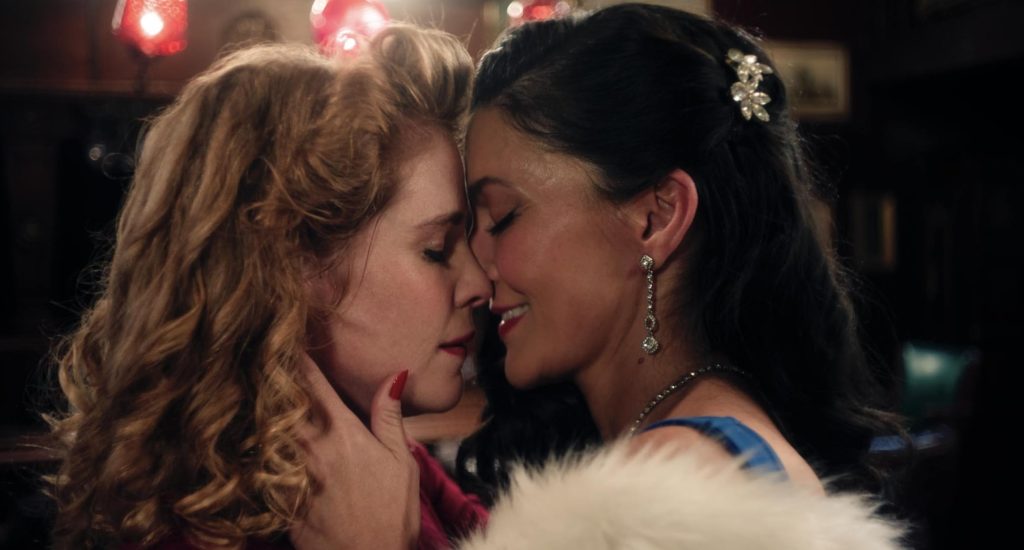
Didi has complications of her own. April Davis (Erin Chambers), her former singing partner, has unexpectedly returned to town and wants them to perform together again. Their history goes considerably deeper than music. Didi and April previously had an affair behind Jack’s back, meaning April’s reappearance brings unresolved emotions into an already fragile marriage. Neither Didi nor Jack enters the mystery with an entirely uncomplicated past.
Jack’s problems extend beyond his marriage. He has been receiving anonymous notes warning him to watch his back, and we eventually learn that a patient died during an operation he performed. More worryingly, the woman was connected to feared local mobster Marco Ponzetti (Tom Katsis).
The threat becomes very real after Club Figaro closes for the night. Didi and bartender Bill Smith (Rich Ceraulo Ko) hear gunshots outside and rush into the street, where they discover Jack bleeding from the forehead. He’s alive, with the bullet having grazed him, but someone has clearly attempted to kill him.
Then Jack disappears.
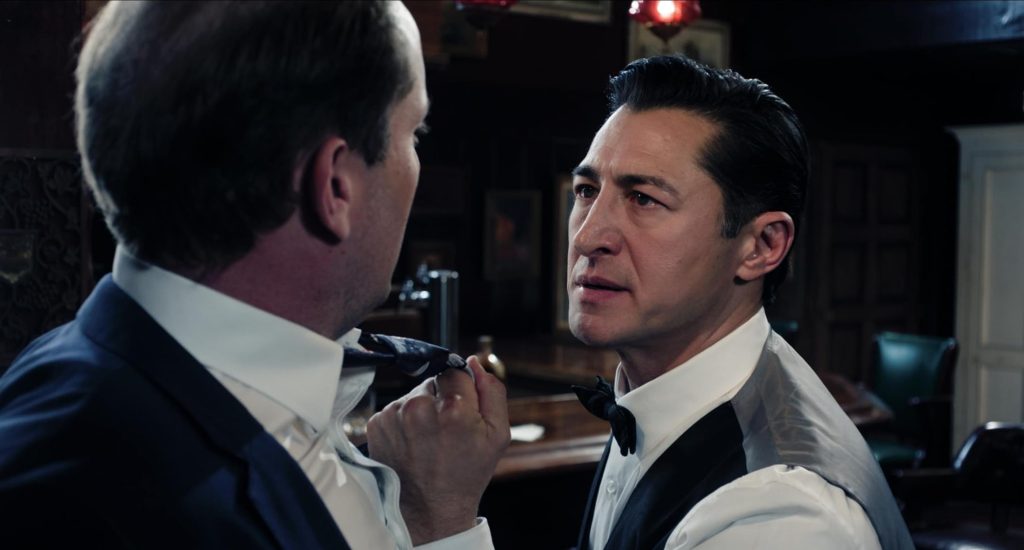
When he doesn’t arrive for work the following day, Didi begins searching for him and eventually discovers that her husband is hiding at the home of a former lover. Rather wonderfully, given that somebody has just attempted to put a bullet in his head, Jack still finds enough energy to be furious about April returning to Didi’s life.
It tells us plenty about the marriage at the centre of Love Loaded. Didi and Jack have both made mistakes, both carry secrets and both have reasons to distrust the other, yet their connection hasn’t disappeared. The attempted murder provides the mystery, but the damaged relationships give the film much of its personality.
Jack has also accumulated a rather impressive collection of people who might wish him harm. There is the mob connection, of course, but affairs, jealous partners, professional relationships and romantic obsessions surround both Jack and Didi. Detectives Lance Green (Max Adler) and Paul McBride (Thomas Hobson) therefore have plenty to untangle as the investigation begins.
This is where Love Loaded becomes particularly enjoyable. Corran understands one of the essential pleasures of a whodunit: there needs to be more than one plausible answer. As more information comes to light, we’re encouraged to question motives, relationships and what various characters might be keeping to themselves without being immediately handed the solution.
The mystery is only part of what the film is doing, though. There is plenty of interpersonal drama surrounding it, and the screenplay repeatedly returns to the idea suggested by its title. Love can make people protective, jealous, irrational and dishonest. The characters aren’t simply being positioned as possible suspects. Their relationships with one another drive much of the story.
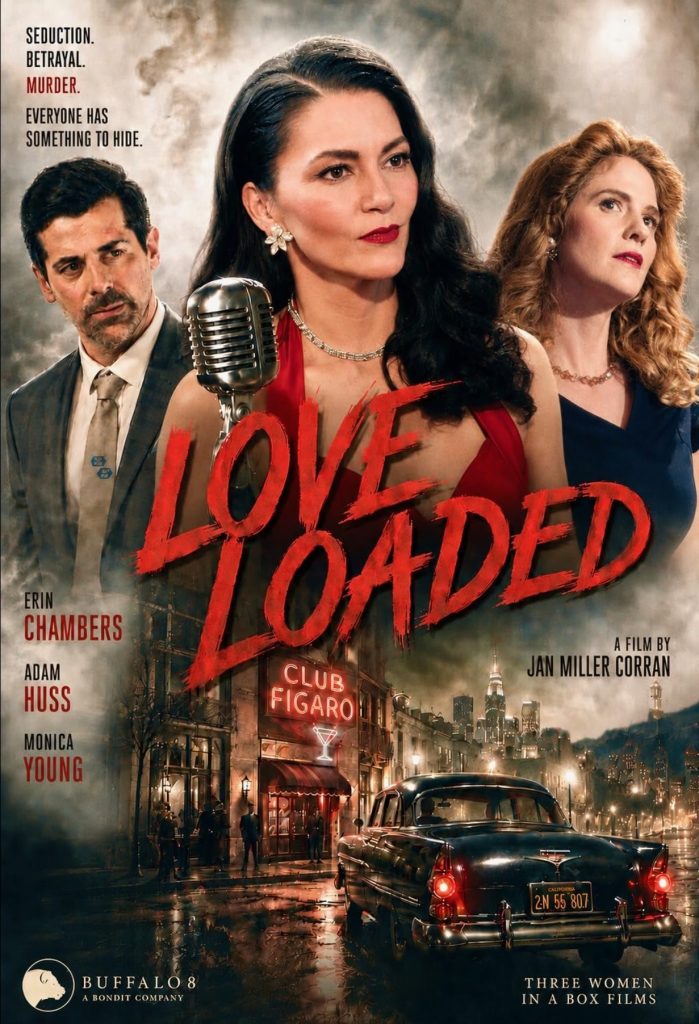
Love Loaded Takes Us Back to 1958
One of Love Loaded’s greatest strengths is its recreation of the period. This is an independent production, and there are occasional locations where the available budget becomes more apparent, but the amount of work that has gone into creating 1958 deserves considerable credit.
Club Figaro is particularly effective. The microphones, telephones, jewellery, posters, cars and other props help sell the period, while the costumes, hair and makeup complete the illusion. Didi looks as though she belongs behind the microphone in a late 1950s nightclub rather than like a contemporary performer who has simply wandered onto set wearing an old dress. Those details matter enormously in a period film because one obviously modern element can immediately pull us out of the world being created.
Vicki Conrad is credited as costume designer, with Alyssa Huss serving as property master, and the wider hair and makeup departments deserve recognition for helping establish the era. The filmmakers aren’t always able to disguise the limitations of the budget, and some environments are less richly dressed than others, but it’s impressive how often the illusion works.
Music is equally important. Saxophone and piano recur throughout, providing precisely the sort of soundscape we associate with the period and genre. Kanoa Wolfe-Doblin is credited with the score, Tim Redfield with arranging and Monica Young as music supervisor.
Young herself gives the film a strong central presence as Didi. She has to convince us both as a nightclub performer and as a woman whose personal life is becoming increasingly complicated, and she handles both sides successfully. Didi isn’t simply the faithful wife trying to discover who attacked her husband. Her history with April means she’s carrying secrets and regrets of her own.
Young also performs her own singing, which gives the Club Figaro sequences additional authenticity and helps Didi feel like someone who genuinely belongs on that stage.
Adam Huss has perhaps the more difficult job because Jack isn’t especially easy to like. He’s drinking too much, he’s unfaithful and his behaviour towards women doesn’t exactly encourage sympathy. Then somebody tries to murder him and the film asks us to become invested in whether he’ll survive.
Huss makes that contradiction work. Jack can be selfish and frustrating without becoming so unpleasant that we stop caring what happens to him. There is also something appropriately noirish about a man surrounded by the consequences of his own terrible decisions, unable to work out which particular mistake has finally resulted in somebody pointing a gun at him.
Young and Huss sell the complicated connection between Didi and Jack too. Their marriage is damaged and unhealthy in places, but there’s enough history and emotion between them for us to understand why they haven’t simply walked away.
Erin Chambers brings another dimension as April Davis. Her return doesn’t merely provide Didi with a former lover and Jack with another reason for jealousy. April represents a part of Didi’s past that hasn’t been neatly resolved, and her presence immediately changes the dynamics between the central couple.
The wider ensemble is substantial, with Rich Ceraulo Ko as Bill Smith, Emily Goss as Molly Goodrich, Chase Bennett as Gary Goodrich, Tim Heurlin as Dr Richard Lawrence, Tom Katsis as Marco Ponzetti and Adam Bucci as Alex Storm among those populating the mystery.
Cameron Schmucker’s cinematography embraces elements of noir without simply presenting the entire film in black and white. The opening transition from monochrome into colour is a particularly nice acknowledgement of the genre’s visual history, while allowing the costumes and production details to become part of the film’s appeal. Schmucker is credited as cinematographer, with Josh Rifkin editing and Darin Wooldridge handling colour.
Love Loaded isn’t trying to convince us that it is literally a lost movie discovered in a vault from 1958. It’s a contemporary independent production affectionately recreating that cinematic world for a modern audience, and that’s an important distinction.
The screenplay also has more on its mind than simply discovering who fired a gun. Secrets, infidelity, revenge and guilt all work their way through the story. Didi’s relationship with April gives the period setting additional significance too, with their romantic history existing within the restrictions and prejudices of the era. The various relationships become as important as the mechanics of the mystery itself.
There is also something refreshing about seeing an independent filmmaker attempt a period production of this nature. Every costume, vehicle, hairstyle, prop and location potentially exposes the illusion if something doesn’t belong. Add nightclub performances, a sizeable ensemble, romantic entanglements and an attempted murder, and this isn’t the easiest material to tackle without studio resources.
Corran and her team largely pull it off.
The film isn’t without imperfections. Its independent origins occasionally become visible, particularly when it moves away from its more impressively realised locations, and not every sequence carries the visual richness of Club Figaro. There is also a considerable amount of story to accommodate, with an attempted murder sitting alongside infidelity, complicated histories and numerous interconnected characters.
Yet those issues don’t prevent Love Loaded from being an entertaining mystery. What stays with us most is the commitment to its world. From Didi singing beneath the lights of Club Figaro to the period costumes, vintage props, cars, saxophones and romantic complications, there’s genuine affection for classic noir running through the production.
At the centre of everything are Didi and Jack, two people whose relationship is messy enough that the attempted murder almost seems like another problem to add to the list. Young and Huss give that relationship enough substance to ensure we care about more than simply identifying the shooter, while the ensemble around them provides plenty of secrets and suspicious behaviour.
For viewers who enjoy old-fashioned mysteries, classic noir and stories where almost everybody has something they’d prefer to keep hidden, Love Loaded offers plenty to enjoy. It has style, good performances, an engaging central mystery and an impressive amount of period detail for an independent production.
The money may not always be visible on screen, but the effort certainly is. With Monica Young providing a strong central performance, Adam Huss embracing Jack’s many faults and an ensemble surrounding them with secrets and complications, Love Loaded is an enjoyable trip back to 1958 that wears its affection for classic noir proudly.
| Acting | |
| Direction | |
| Cinematography | |
| Writing | |
| Sound | |
| Screen Critix Rating |