
Hawaii is such a naturally cinematic location that filmmakers already have one major advantage before pointing a camera at anything. Frank Merle’s Namaka makes good use of that advantage, combining Hawaiian scenery and mythology with supernatural mystery, romance and occasional found-footage-style imagery. There are worthwhile ideas here, along with a welcome appearance from Scream favourite Jamie Kennedy, but an uneven pace and some difficult-to-believe character decisions prevent the film from making the most of its premise.
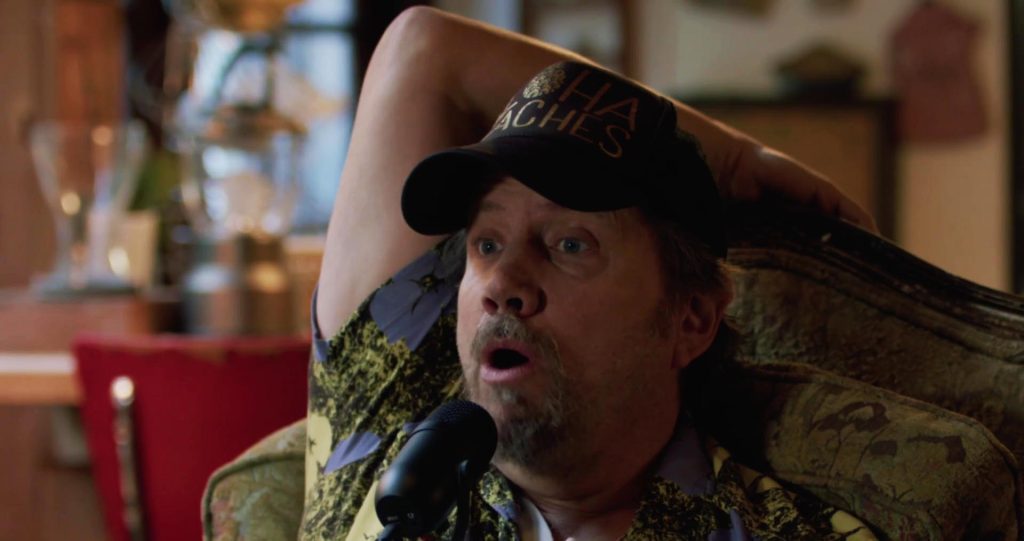
The film begins with an aerial view of the coast before introducing Guy Torino, played by Kennedy, a radio and podcast host who discusses supernatural occurrences with his listeners. One particular story takes us to Alex Cook (Jason Markoff), an ordinary Midwesterner preparing for his first visit to Hawaii with his wife Erica (Erin Killean) and her family. Alex is particularly excited about a new gadget he intends to use throughout the holiday: a baseball cap fitted with a small camera, allowing him to record his experiences without constantly holding a phone or conventional camera.
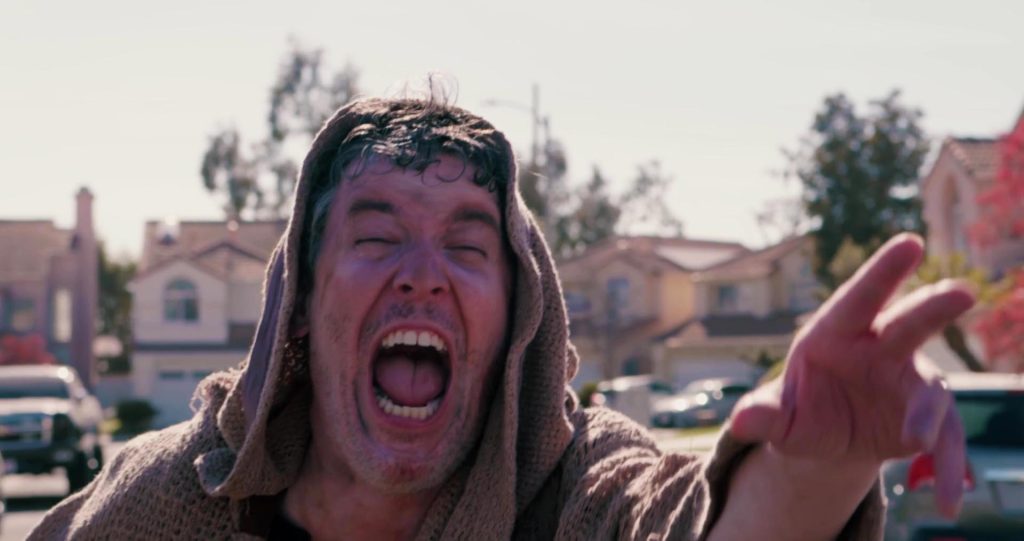
Before Alex has even reached the airport, the film delivers its first familiar horror omen. Their vehicle is stopped by a ragged stranger, Walter Notch, played by David Howard Thornton. Best known as Art the Clown in the Terrifier films, Thornton’s appearance is essentially a cameo, with Walter filling the time-honoured role of the strange man warning unsuspecting travellers that heading towards their destination might not be such a wonderful idea. It is hardly a subtle horror convention, but Thornton is an amusing choice for the part and immediately provides genre fans with a recognisable face.
Once in Hawaii, Alex’s enthusiasm for recording everything gives Namaka one of its more interesting stylistic devices. Conventional cinematography is regularly interrupted by footage captured through the hat camera, giving portions of the film an almost found-footage quality. We accompany Alex through streets, shops and tourist attractions, and while some of this material contributes to the film’s pacing problems, it also gives his holiday an appropriately personal quality.
Alex eventually finds himself at a tiki bar, where he meets Guy. The pair strike up a conversation after Alex orders a Zombie, with Guy soon revealing his status as a popular podcaster specialising in the stranger stories surrounding Hawaii. Alex, meanwhile, explains that he was once part of a band and is now pursuing music as a solo artist. Kennedy is immediately comfortable in the role, giving Guy an eccentric, laid-back personality that fits naturally into the film’s supernatural world.
It is a genuine pleasure to see Kennedy pop up in this kind of genre picture. Horror audiences will forever associate him with Randy Meeks in Wes Craven’s Scream and Scream 2, where his movie-obsessed character became one of the franchise’s early favourites. Namaka gives Kennedy something lighter and more eccentric to play, and he provides some much-needed personality whenever Guy appears. The frustrating part is that the film doesn’t use him quite enough.
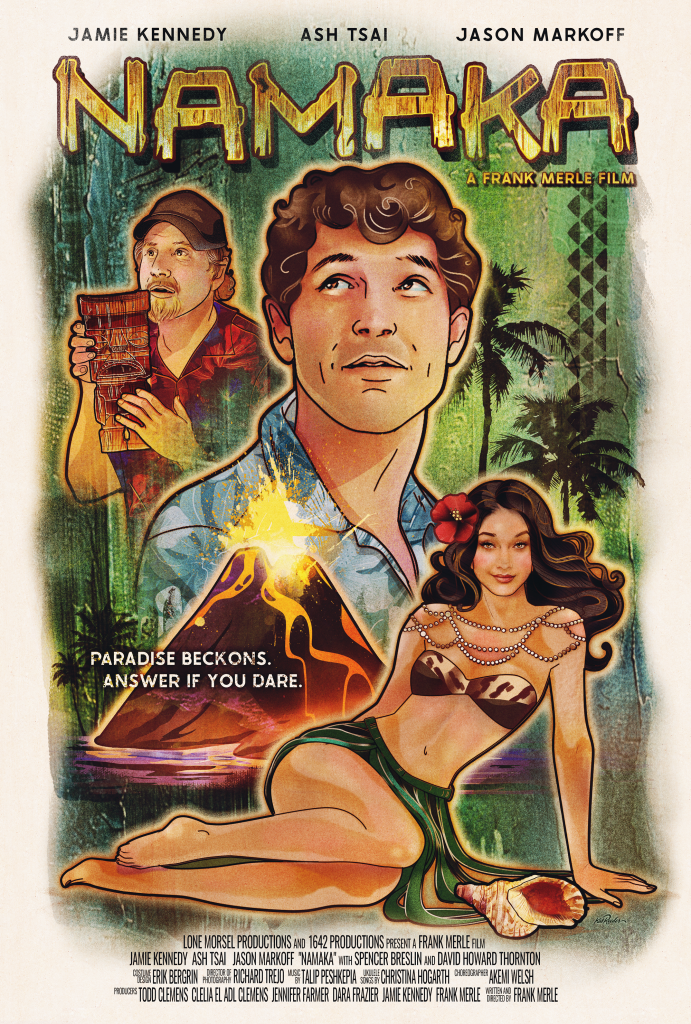
Namaka Finds Mystery in Hawaii
The central mystery begins when Alex ventures into the woods to play his newly acquired ukulele. He notices a woman watching him and calls out, causing her to run away. Alex’s response is bizarre. Rather than accepting that a stranger in the woods might not want to speak to him, he immediately gives chase, shouting after her as he runs through the trees.
It is the first of several moments where Namaka asks the audience to accept behaviour that doesn’t feel especially natural. Alex has no obvious reason to pursue this unknown woman at such speed, and the sequence becomes unintentionally funny when he subsequently trips over a corpse that appears conspicuous enough that he really should have noticed it.
The mysterious woman returns and introduces herself as Namaka, played by Ash Tsai. She explains that the dead person was her friend and that Alex’s music attracted her attention while she was looking for help. When Alex suggests contacting the police, Namaka disappears again. Officers eventually accompany Alex back into the woods, only for the body to have vanished. With no corpse and no mysterious woman to corroborate his story, the police understandably begin wondering whether Alex’s holiday activities have involved something rather stronger than a ukulele.
This is where Merle’s film begins drawing more heavily upon local supernatural lore. Alex visits Guy and describes what happened, with a reference to hearing drums immediately catching the podcaster’s attention. Guy’s programme subsequently becomes a useful storytelling device through which Namaka can introduce mythology and supernatural possibilities without stopping everything for straightforward exposition.
According to the film’s supplied synopsis, its Namaka is connected to the Hawaiian figure associated with the sea and presented as the half-sister of Pele, the goddess of fire. The story uses the relationship between these supernatural figures as part of its explanation for events affecting Alex and the island. This gives Namaka a cultural and mythological foundation more interesting than simply presenting its mysterious woman as another generic supernatural seductress.
Unfortunately, the film takes quite a while getting there.
At around 90 minutes, Namaka develops at a leisurely pace, alternating lengthy dialogue scenes with sightseeing, hat-camera material and Alex’s increasingly strange encounters. There is nothing inherently wrong with a slow-burn supernatural story, particularly when its setting provides so much atmosphere, but too many stretches here feel as though they are delaying rather than developing the mystery.
Alex’s relationship with Namaka also becomes difficult to invest in because some of his behaviour requires considerable suspension of disbelief. He is married, yet repeatedly returns to meet a strange woman who initially appeared beside a mysteriously disappearing corpse. Even before the supernatural explanation becomes clearer, there are enough warning signs to encourage most people to reconsider their holiday friendship.
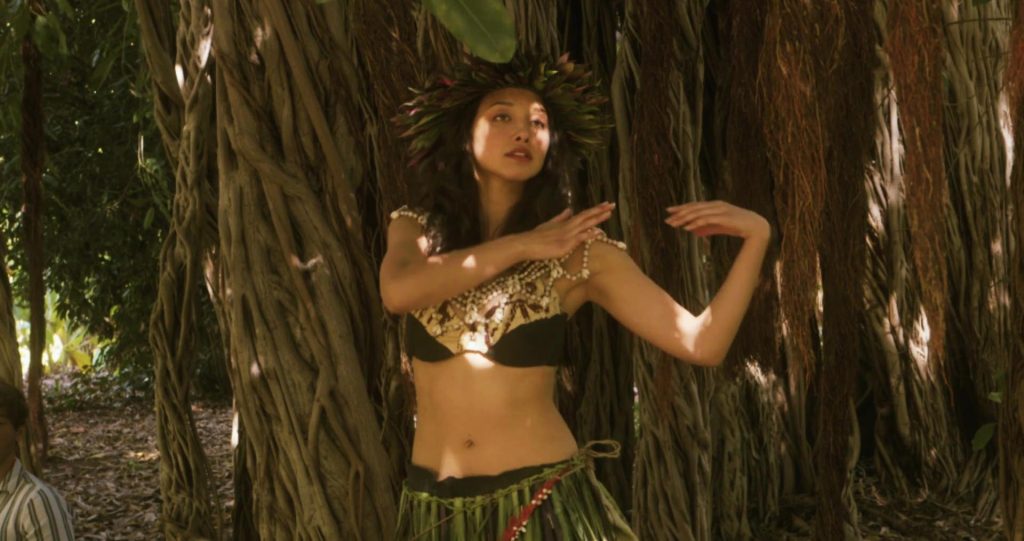
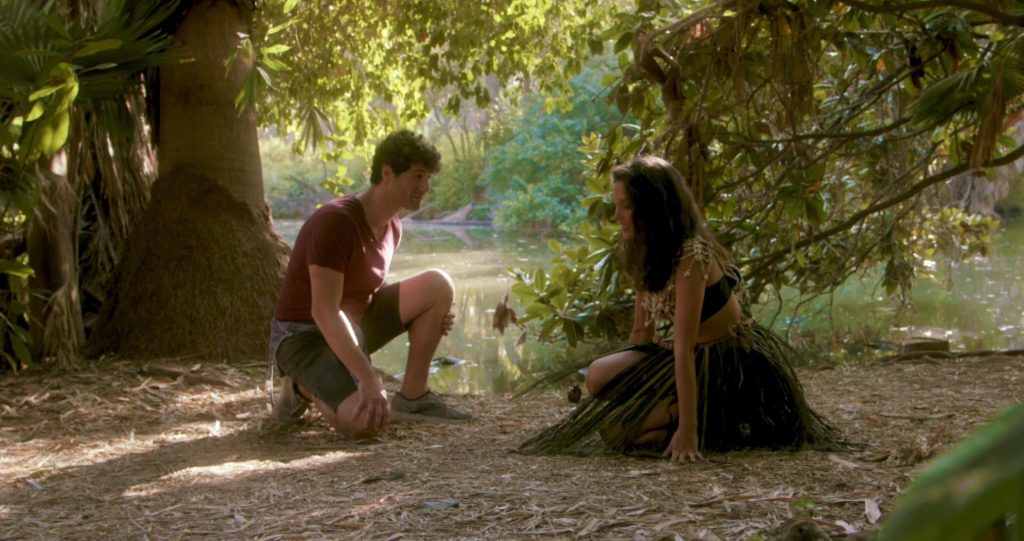
Instead, Alex returns with a gift after Namaka gives him a shell and asks for something intended specifically for her. The film spends a surprisingly long period following him through local shops before he settles on a hula-girl doll. Back in the woods, Namaka listens while Alex plays his ukulele and performs a traditional dance before their encounter takes a considerably stranger turn. She cuts Alex’s palm and then her own, joining their bleeding hands together in a ritual that binds them before the pair kiss. Alex being married makes the encounter problematic even without the blood ceremony.
There is potential in the idea of a tourist being seduced by something ancient that he doesn’t understand, particularly when the story places modern technology alongside mythology. Alex records everything through a camera embedded in his hat, while Guy broadcasts supernatural stories to a huge modern audience, yet neither technology nor contemporary knowledge necessarily equips them to understand what Alex has encountered.
The hat camera is actually responsible for some of the film’s more distinctive imagery. Cinematographer Richard Trejo captures several attractive conventional shots, particularly when Namaka takes advantage of its Hawaiian locations, but many dialogue sequences rely upon relatively basic coverage, including over-the-shoulder shots and alternating close-ups. Blocking can feel static, making some conversations visually flatter than the surrounding landscapes deserve.
By comparison, Alex’s camera gives the film an immediate perspective and occasionally makes it feel as though we are watching evidence rather than a conventional narrative. It is an interesting device, although the sheer quantity of sightseeing material captured through it can also contribute to the feeling that the story is taking too long to move forward.
The location remains one of Namaka’s greatest assets throughout. Beaches, forests, cliffs, streets and other Hawaiian environments provide natural production value, while the volcanic activity that becomes increasingly important to the story gives the supernatural events a much larger backdrop. The film is at its strongest visually when it allows Hawaii to provide the atmosphere rather than relying upon conventional shot construction.
Ash Tsai has the difficult task of keeping Namaka enigmatic while still providing enough humanity for Alex’s fascination with her to make sense. The character deliberately shifts between alluring, vulnerable and increasingly troubling, although the writing sometimes telegraphs that there is considerably more going on with her before Alex appears willing to acknowledge it. Jason Markoff gives Alex an enthusiastic, slightly naive quality, but some of the character’s questionable decisions make him harder to connect with as the story progresses.
Kennedy is the cast member we most wanted to see more of. Guy’s knowledge of supernatural stories makes him useful to the plot, but Kennedy also brings an easy comic energy that helps break up the film’s slower passages. His podcast scenes are particularly suited to the material, allowing the film to explore local stories while retaining Guy’s slightly offbeat personality.
David Howard Thornton’s appearance is much smaller but still enjoyable. Anyone expecting a substantial role because of his presence in the cast should temper those expectations, although his early warning gives the film a fun connection to the tradition of horror characters who know perfectly well that the protagonist is heading somewhere they probably shouldn’t.
Director and writer Frank Merle has assembled a film with several ingredients that should work extremely well together. Hawaiian mythology, a mysterious woman in the forest, volcanic activity, a supernatural podcaster and footage captured through an inconspicuous camera offer plenty to play with. Composer Talip Peshkepia and the sound team also contribute to the atmosphere surrounding the island’s mysteries, while the beautiful setting continually gives the production something interesting to photograph.
The problem is less the concept than the journey through it. Namaka is frequently held back by its pacing, familiar horror conventions and moments where characters behave in ways that seem designed primarily to keep the story moving. When a film already asks us to believe in supernatural beings and ancient mythology, the ordinary human behaviour surrounding those elements needs to feel convincing. Too often, Alex makes decisions that draw attention to the screenplay rather than allowing us to become absorbed by the mystery.
There is still enough here to make Namaka an interesting curiosity. Merle has chosen a fantastic location, the mythology gives the supernatural story its own identity, the hat-camera material provides an unusual visual ingredient and the presence of Kennedy and Thornton will undoubtedly attract horror fans.
Namaka ultimately feels like a film that could have been considerably more effective with a tighter pace and stronger character logic. Its best ideas suggest a stranger and more atmospheric supernatural thriller waiting beneath the surface, but they have to compete with prolonged conversations, familiar genre devices and an uneven central relationship. Hawaii looks spectacular, the mythology has potential and Jamie Kennedy remains great company, but this particular island mystery never quite casts the spell it is aiming for.
| Acting | |
| Direction | |
| Cinematography | |
| Writing | |
| Sound | |
| Screen Critix Rating |