
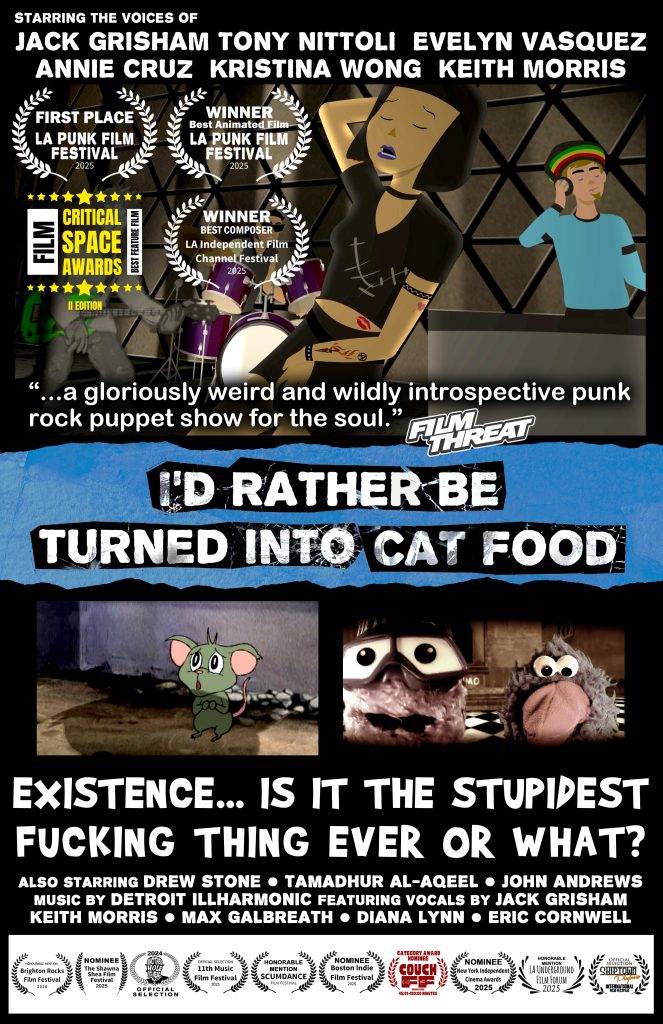
There probably aren’t many films that can move from Buddha to RZA, punk music, anti-God graffiti, foul-mouthed puppets and a serious philosophical discussion about whether nature itself is inherently cruel without completely collapsing under the weight of their own ideas. Walter Santucci’s I’d Rather Be Turned Into Cat Food somehow manages it, and the biggest surprise is just how intelligent this strange little film turns out to be.
Running for approximately 74 minutes, Santucci’s independent feature mixes hand-drawn animation with live-action puppetry, music and surreal comedy. Its visual eccentricity initially suggests something deliberately outrageous for the sake of it. Spend a little time with Human, Foo and Satchmo, however, and it becomes apparent that the puppets swearing inside a burned-out church are merely the delivery system for a much more thoughtful discussion about religion, nature, love, physical appearance, depression and the frustrating business of being alive.
The film announces that combination of seriousness and irreverence immediately. Quotes attributed to Buddha and RZA open proceedings before loud music takes over and Human begins spraying graffiti across walls, much of it aimed directly at God. His voice-over makes his position even clearer. Human really, really doesn’t like God.
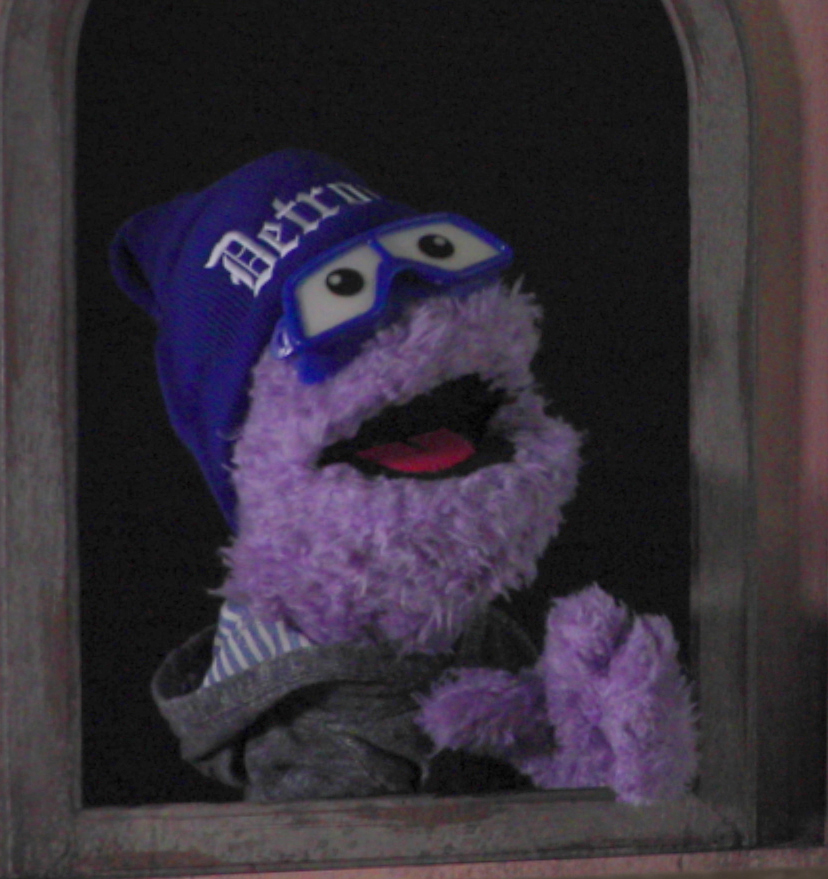
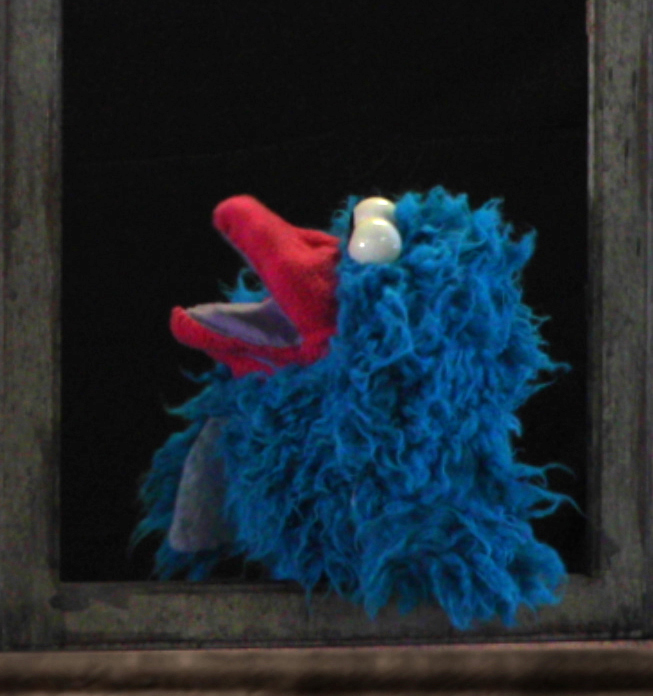
Human is voiced by Jack Grisham, frontman of punk band T.S.O.L., and his character is soon joined by Foo and Satchmo, voiced by Tony Nittoli and Evelyn Vasquez respectively. The puppets could visually wander onto the set of a children’s television programme without immediately raising suspicion. Then they open their mouths.
The burned-out church where Human spends his time becomes the unlikely setting for an extended debate. Human describes God in terms unlikely to earn him an invitation to Sunday service, while Foo and Satchmo challenge the logic behind attacking something he doesn’t believe exists. If God is fictional, they ask, how can he be evil? If Human doesn’t believe in him, why spend so much time being angry with him?
It’s here that I’d Rather Be Turned Into Cat Food reveals what it actually wants to do. Human isn’t simply an angry graffiti artist shouting obscenities at religion. He’s articulate, inquisitive and capable of defending his worldview. The discussion consequently becomes more interesting because Santucci allows his characters to challenge one another rather than constructing an easy argument in which one side exists solely to be proven wrong.
The question of whether a fictional character can still be described as evil, for example, hardly requires belief in that character’s literal existence. Nobody needs to believe Freddy Krueger is currently wandering around Springwood to conclude that murdering teenagers in their dreams isn’t particularly nice behaviour. The same applies to Lord Voldemort or the Joker. Human’s argument is therefore not dependent upon accepting God’s existence, but upon examining the morality of the God described by religion.
For an animated film featuring puppets who swear like they’ve just discovered an unattended swear jar, this gets surprisingly deep.
I’d Rather Be Turned Into Cat Food Has Plenty on Its Mind
Human’s argument gradually expands beyond religion and into nature itself. Images of Nazis and slavery accompany a broader discussion about good and evil, while the characters begin considering whether love is genuinely something profound or simply part of humanity’s biological drive to reproduce.
Human takes an especially bleak interpretation. Humans reproduce and spread across the planet because that is what organisms are programmed to do, making our species comparable, in his view, to a virus covering the Earth. Love can therefore be reduced to another mechanism helping us accomplish the basic biological objective of producing more humans.
Foo and Satchmo aren’t buying it.
Their counterargument is wonderfully simple. People love animals. Somebody can adore a kitten without having any reproductive motivation whatsoever, which rather complicates Human’s attempt to explain every form of love through sex and propagation.
Human, however, has another card ready to play. Nature isn’t the benevolent force people sometimes romanticise it as being. Animals kill other animals, disease exists, famine exists and even that adorable kitten is biologically equipped to hunt smaller creatures. Something being natural doesn’t automatically make it kind.
The conversation even drags Disney into the firing line. Human considers The Lion King’s presentation of the “circle of life”, questioning the comforting simplicity of accepting predators killing other animals because that is supposedly the natural order. From the lion’s perspective, everything might indeed be functioning as nature intended. The animal desperately trying not to become lunch might have a slightly different review.
It’s funny, but there is an actual question underneath the joke. I’d Rather Be Turned Into Cat Food repeatedly takes concepts that are usually presented in reassuring terms and asks what they look like when viewed from somewhere else.
Satchmo contributes her own observations about nature, including an encounter with ducks outside a symphony hall. A dominant male was swimming with several females and repeatedly chased away other males that approached them. Her story undermines her own earlier suggestion that nature is fundamentally pleasant apart from occasional unfortunate events. Nature isn’t following a human moral code. It simply is.
That willingness to let its characters contradict themselves is important. The film isn’t presenting a lecture with puppets replacing PowerPoint slides. It is a conversation in which arguments evolve, ideas collide and nobody possesses a neat answer capable of solving existence before the closing credits.
Human’s cynicism also has a personal history.
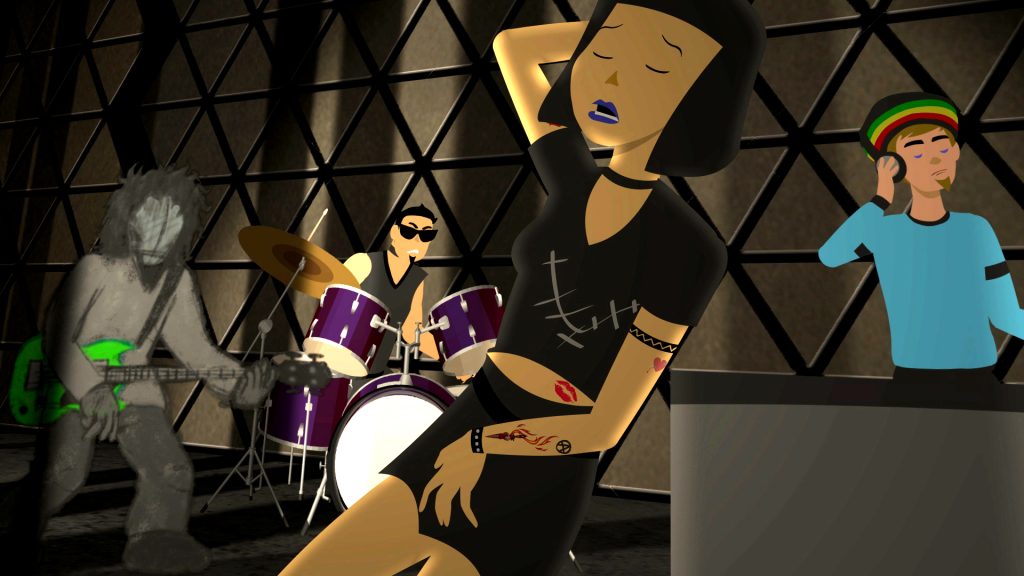
Flashbacks reveal that he was once a musician and wrote his band’s successful song Everything Is Shattered, performed by Souled Out. It’s the track heard during the opening and, frankly, it’s a banger. Human’s relationship with the band eventually fell apart after they found success, with Human believing he was removed because he wasn’t physically attractive enough to fit the image required of somebody expected to become famous.
His anger towards God therefore becomes connected to something more personal than theology. Human believes existence itself has been unfairly designed. People don’t choose their faces, bodies or many of the circumstances into which they’re born, yet those things can have an enormous effect upon how others treat them and which opportunities become available.
He extends that argument to women, believing physical appearance places even greater pressure upon them. Whether every conclusion Human reaches is convincing is almost beside the point. The film is interested in how somebody arrives at such a worldview and what happens when disappointment, rejection and resentment are allowed to accumulate.
According to the film’s supplied synopsis, Human’s experiences include corporate exploitation, religious hypocrisy and pressure to make himself commercially “marketable”, with his dismissal from the band contributing to a destructive spiral. That gives the film’s philosophical wandering an emotional foundation. Human isn’t sitting around inventing theoretical problems because he’s bored. He’s attempting to make sense of why his life went wrong.
Then, just in case things are becoming dangerously sensible, Joy Road arrives.
The programme within the film resembles another brightly coloured children’s puppet show, except its inhabitants perform a number called Doo Doo on a Stick while enthusiastically waving exactly what the title promises. Philosophy can wait. Apparently somebody has put a turd on a stick.
That combination of intelligence and stupidity is part of the film’s charm. Santucci doesn’t appear interested in making philosophy respectable. He surrounds serious questions with profanity, punk music, bizarre animation and ridiculous characters, making the material accessible without pretending that the questions themselves are easy.
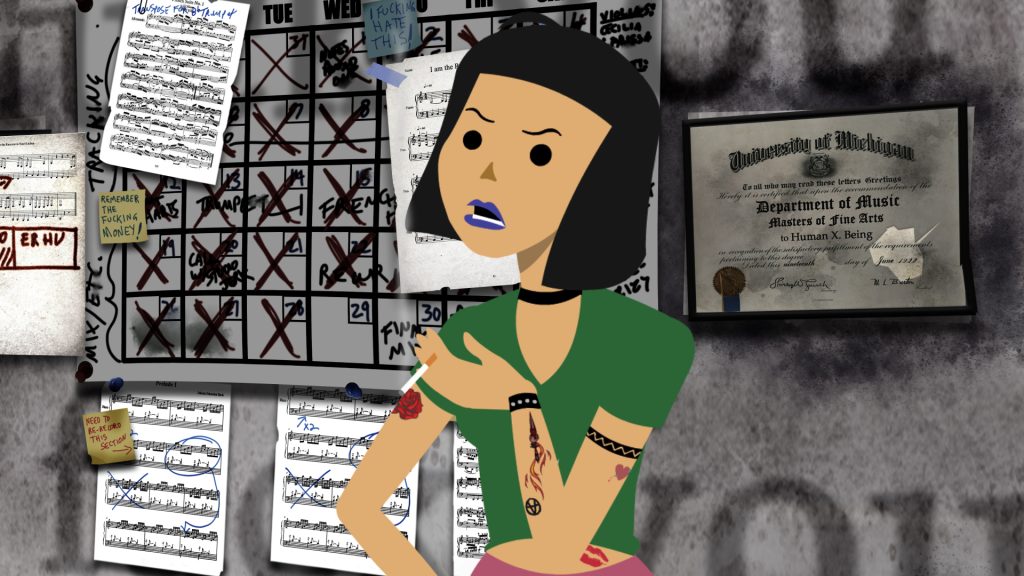
It also separates the film from the obvious assumptions surrounding the term “adult animation”. When I’d Rather Be Turned Into Cat Food first landed at Screen Critix HQ, Fritz the Cat inevitably came to mind. Santucci’s film is something quite different. The “adult” designation comes partly from its language and humour, but also from the ideas it wants to explore.
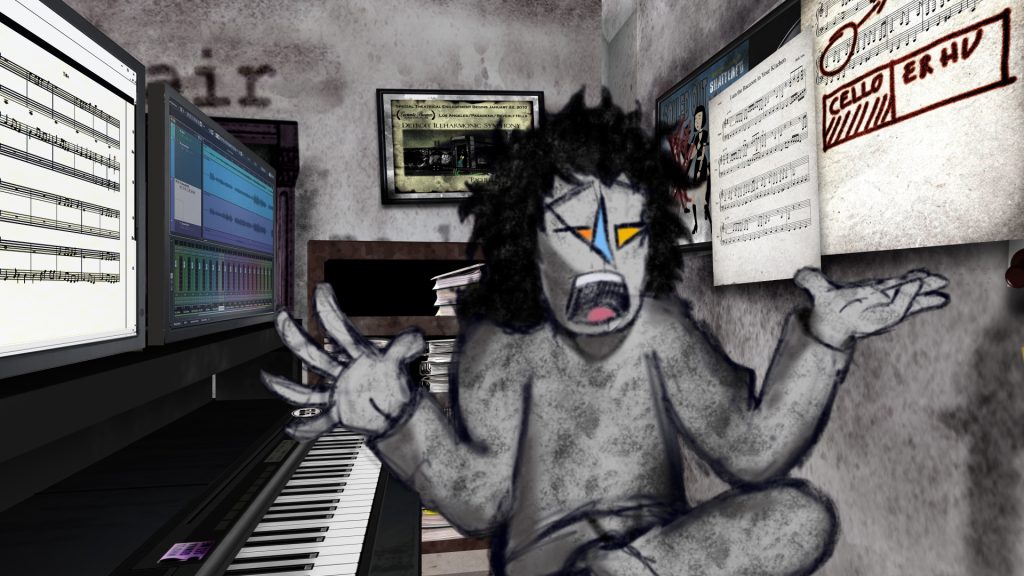
Visually, it has an identity entirely of its own. Hand-drawn animation and live-action puppetry coexist rather than feeling like two unrelated techniques forced together, and Santucci’s background as an animator is evident throughout. His previous work includes creating the animated opening title sequence for 2004’s The Punisher, and here he serves as director, writer, producer, composer, animation director and puppeteer.
The deliberately handmade quality works in the film’s favour. This isn’t animation trying to imitate the immaculate finish of a major studio production. Its roughness, puppetry and shifting visual language fit Human’s punk sensibility and the film’s willingness to wander into increasingly strange territory.
Grisham is also well suited to Human, bringing the required weariness and anger to a character who could easily have become exhausting. Fellow punk veteran Keith Morris of Circle Jerks voices Officer Rational, while the wider cast includes Kristina Wong, Annie Cruz, Drew Stone and Tamadhur Al-Aqueel. The involvement of genuine punk figures gives the film’s musical identity an authenticity that matches its scrappy aesthetic.
There will undoubtedly be viewers who disagree strongly with Human, just as others will find themselves nodding along with some of his arguments. That is arguably where I’d Rather Be Turned Into Cat Food works best. It doesn’t require agreement to be interesting. Foo and Satchmo are there precisely because Human’s worldview needs resistance.
For all the profanity, nihilism and deliberate absurdity, Santucci has made something unexpectedly thoughtful. Strip away the swearing puppets, graffiti, punk songs and excrement-based musical numbers and there is a genuine conversation underneath about whether life has meaning, whether nature can be judged morally, what love actually is and why people continue searching for fairness in a world that frequently doesn’t provide it.
Thankfully, Santucci doesn’t strip those things away, because then we’d just have 74 minutes of people discussing philosophy.
I’d Rather Be Turned Into Cat Food is strange, funny, angry, occasionally ridiculous and considerably smarter than its title suggests. Its mixture of animation and puppetry gives it a distinctive visual personality, while the arguments between Human, Foo and Satchmo provide plenty to think about long after the jokes have finished.
Any film capable of discussing God, Darwinian impulses, beauty standards, predatory animals and the nature of love before introducing singing puppets brandishing faeces deserves some credit for ambition alone. More importantly, I’d Rather Be Turned Into Cat Food makes that combination work. It took us completely by surprise, made us laugh and, more impressively, made us think.
| Acting | |
| Direction | |
| Cinematography | |
| Writing | |
| Sound | |
| Screen Critix Rating |