
British independent cinema has always had a strong relationship with gritty crime stories, underground culture, and hard men settling differences with their fists. Cage Rage attempts to blend all three with the world of mixed martial arts, following one fighter’s turbulent journey through violence, heartbreak, ambition, and self destruction.
Directed by Chas Appeti and Matt Newton, Cage Rage centres on Joey, an up and coming MMA fighter whose life outside the cage is considerably messier than his performances inside it. The film opens with Joey fighting in the cage, where he earns a knockout victory in front of an energetic crowd. However, rather than celebrating the win properly, he immediately calls his ex girlfriend Ellie, clearly unable to move on from their relationship. Ellie, now pursuing a career as a singer, tells him bluntly to stop calling and get on with his life.
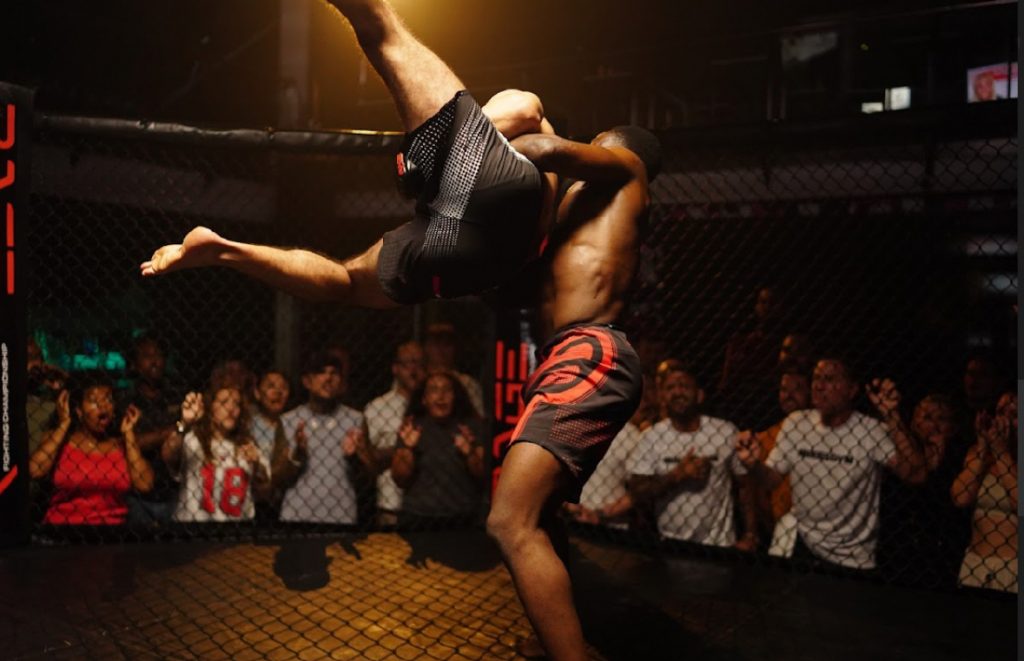
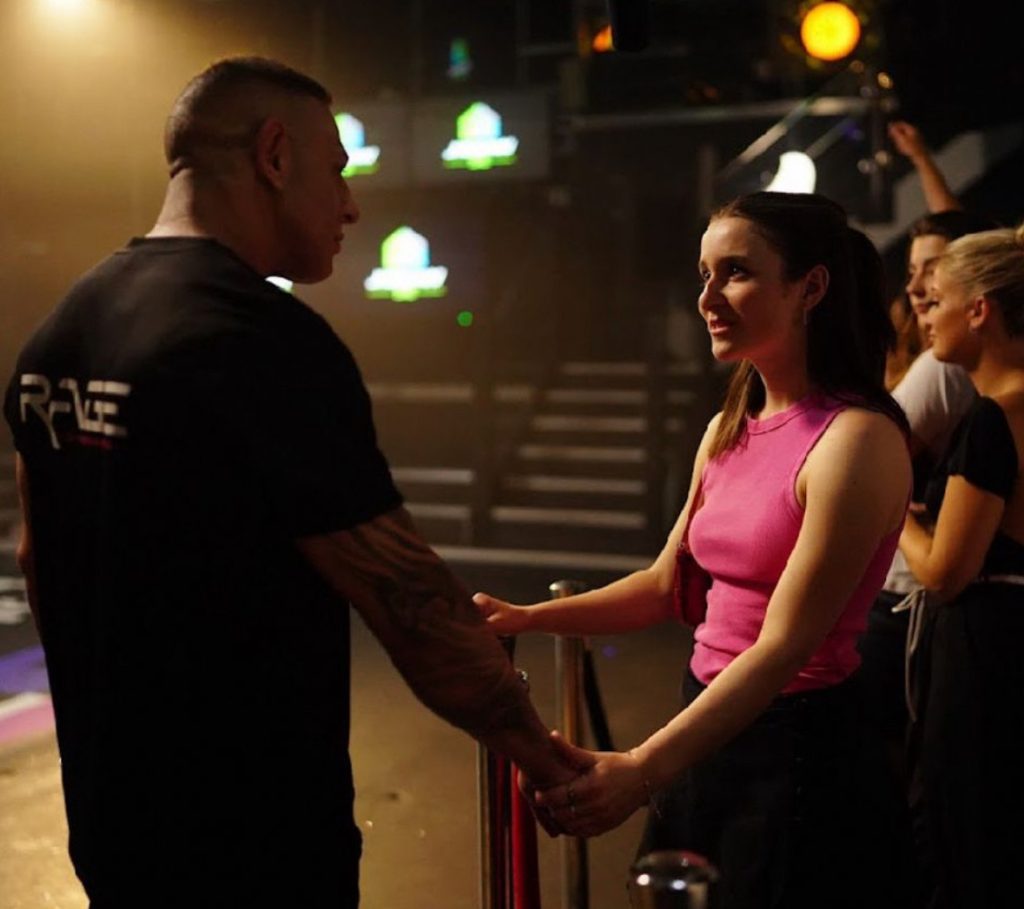
Things only spiral further when Joey later encounters Ellie at a nightclub and discovers she is now dating another fighter, Sammy Asante. An altercation soon follows, setting the stage for a grudge match between the two men inside the cage.
While Joey trains for the fight, life outside the gym becomes increasingly complicated. Amateur MMA is not exactly a lucrative profession, and struggling financially, Joey begins dealing drugs in order to fund his lifestyle and free up time to train. Naturally, this opens another dangerous door, bringing him into contact with criminals and violent situations that threaten to derail his future entirely.
The strongest aspect of Cage Rage is arguably its visual style. Chas Appeti’s cinematography often looks impressive for an independent production, particularly in terms of lighting and colour grading. Many scenes have a slick urban atmosphere, especially the nightclub sequences and cage fights, giving the film a polished aesthetic despite its modest scale. There is clear ambition behind the camera, and the filmmakers deserve credit for creating a feature that frequently looks far bigger than its resources probably allowed.
That said, the film does lean heavily on close ups and medium close ups throughout. While this creates intensity during certain moments, it occasionally becomes distracting during the fight scenes themselves. MMA is a highly physical sport built around movement, positioning, and technique, and there are times when the framing is so tight that viewers cannot fully appreciate what is happening in the choreography. Wider shots during submissions and exchanges would have elevated the action considerably.
Still, the fight scenes themselves are energetic and well choreographed. The editing keeps the pace moving quickly and the bouts never feel lifeless. There is genuine effort here to capture the chaos and brutality of MMA competition.
Matt Newton, who co directed, wrote, produced, and stars as Joey, clearly poured a huge amount into the project. Physically, he certainly looks the part of an MMA fighter and handles the action material convincingly. Performance wise, he delivers a solid enough central turn, even if some scenes expose his relative inexperience as a leading man. The same can be said for much of the supporting cast. Nobody gives a terrible performance, but there are moments where the dialogue and delivery feel a little rough around the edges.
Kim Michelle fares sympathetically as Ellie, particularly because the script unintentionally makes Joey difficult to root for at times. His constant calls, appearances at her house, and interruptions at her performances often feel less romantic and more uncomfortable, leaving audiences feeling more sympathy toward Ellie than Joey himself.
The screenplay itself has some interesting ingredients but struggles with repetition. The narrative often cycles between Joey training, dealing drugs, confronting Ellie, and preparing for fights without always pushing the story forward in meaningful ways. With some tighter editing and restructuring, the film could have felt leaner and more impactful.
One element that feels like a missed opportunity is the connection to British MMA itself. Considering the title Cage Rage shares its name with the iconic UK MMA promotion, fans of British mixed martial arts may have expected more recognisable faces from the sport. While there are appearances from former Cage Rage promoter Dave O’Donnell and referee Grant Waterman, the inclusion of veteran fighters from Britain’s MMA scene could have added another layer of authenticity.
Despite its flaws, there is something undeniably admirable about Cage Rage. Independent filmmaking is never easy, particularly when dealing with action choreography, fight sequences, multiple locations, and a relatively small crew. The production manages to create a feature that feels ambitious and genuinely passionate about the world it is portraying.

At 107 minutes long, the film occasionally overstays its welcome, but there is enough energy, heart, and commitment on display to keep viewers invested. It may not reach the heights of studio backed fight dramas like Warrior or classic combat films such as Bloodsport, but it never feels lazy or cynical either.
Cage Rage ultimately lands as a rough but entertaining British MMA drama that shows plenty of promise from the filmmakers involved. There are issues with pacing, scripting, and performances, but there is also obvious passion, strong visual work, and a clear love for both filmmaking and combat sports. With more refinement and experience, the team behind this could produce something truly impressive in the future.
| Acting | |
| Direction | |
| Cinematography | |
| Writing | |
| Sound | |
| Screen Critix Rating |