
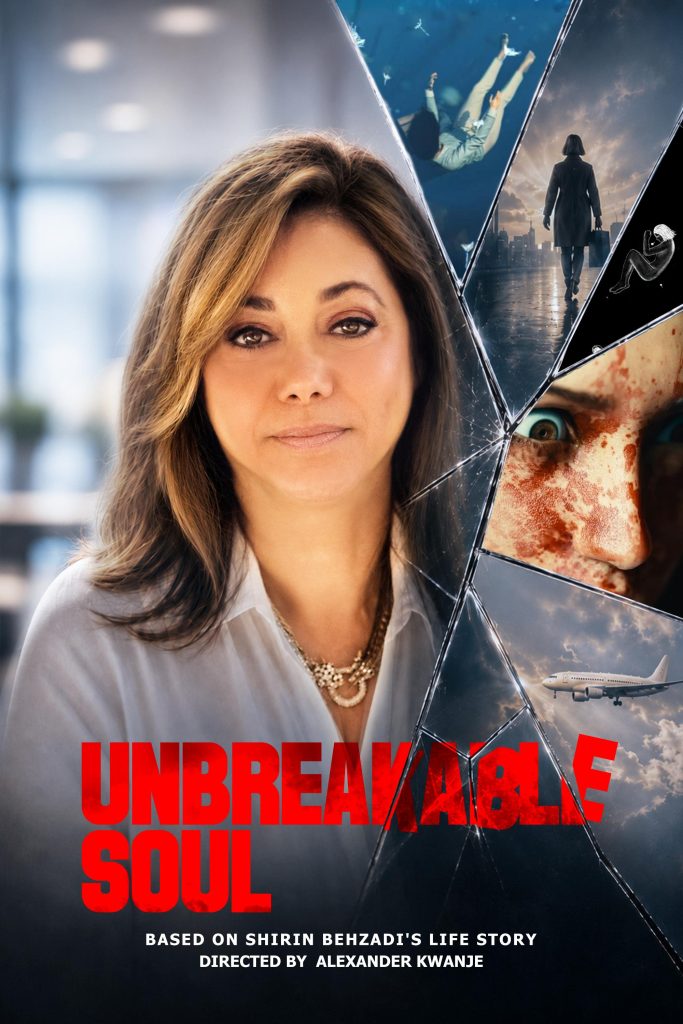
Unbreakable Soul is a three-part documentary series charting the extraordinary life of Shirin Behzadi, an Iranian-born businesswoman whose journey has taken her from the turmoil of revolutionary Iran to the upper levels of corporate America. Directed by Alexander Kwanje, the opening episode, Resilience Amidst Chaos, concentrates largely on Behzadi’s childhood and the dramatic transformation of the country around her, establishing the experiences that would shape the woman she eventually became.
There are some people whose lives seem almost too eventful to fit comfortably into a documentary. Shirin Behzadi appears to be one of them. Her story includes revolution, oppression, immigration, poverty, enormous business success and a life-threatening brain tumour. Trying to cover all of that in a single feature documentary could easily result in important periods of her life being reduced to little more than a montage. The decision to tell her story across three episodes therefore makes sense, giving each stage of her journey room to breathe.
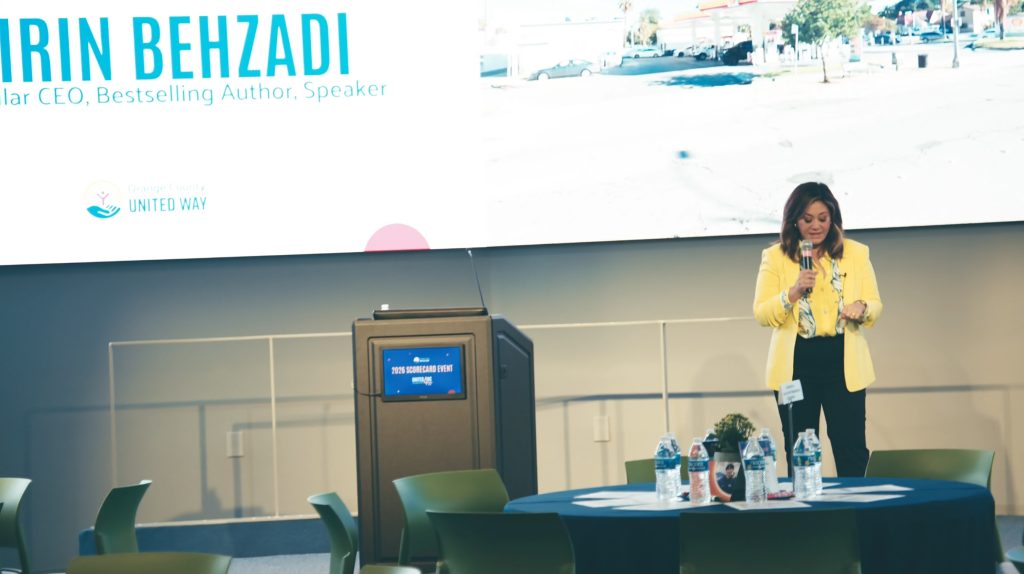
Episode One opens with Behzadi talking about her professional achievements, including raising more than $900 million in private equity. It is a statement that immediately establishes the level of success she has reached, but the documentary quickly moves away from the boardrooms and financial figures to ask a much more interesting question: where did that determination come from?
Director Alexander Kwanje uses animation to take us into Behzadi’s past. The camera travels through an illustrated garden, past a swimming pool and towards a family home before moving inside. It is an attractive and effective way of introducing the world of her childhood, while further animated sequences depict the much larger geographical journey that would eventually take her from Iran to Turkey and then the United States.
The contrast between the different stages of her life is remarkable. Behzadi would eventually become a highly successful business leader, but her early days in America included working at a gas station behind bulletproof glass. Unbreakable Soul does not present her success as something that simply happened after she reached the United States. The point is that Behzadi believed she could build something greater even when the circumstances around her offered little evidence that such a future was waiting.
The documentary then brings us into the present day. Behzadi prepares in her kitchen before dressing in a striking lemon-coloured blazer and travelling to deliver a speech about vision and using adversity to your advantage. We see her driving to the event in her Porsche, speaking to the camera along the way. It could have been presented as a simplistic before-and-after contrast, from hardship to wealth, but the episode is more interested in exploring the experiences and personality that connect those two vastly different parts of her life.
Unbreakable Soul Explores the Childhood Behind the Success
Behzadi was born into a large family and was the youngest of five children. She describes a childhood that could be chaotic but was also filled with love. Her father was a busy man, yet she remembers him making time for her, taking her on walks and encouraging her potential. That relationship becomes an important part of the episode because the confidence he placed in his daughter appears to have remained with her during much darker periods.
As a child, Behzadi was selected for a school for gifted students after being assessed. The environment encouraged both the arts and sciences, and she found ways to express her creativity and leadership from an early age. She started a handwritten school newsletter and, while still young, worked with friends to write a play that teachers subsequently asked them to perform for the entire school.
It is tempting to view those childhood moments with the benefit of hindsight. The young girl producing newsletters and performing before her peers would later become a business leader and keynote speaker addressing large audiences. The documentary allows those connections to emerge naturally rather than repeatedly underlining them.
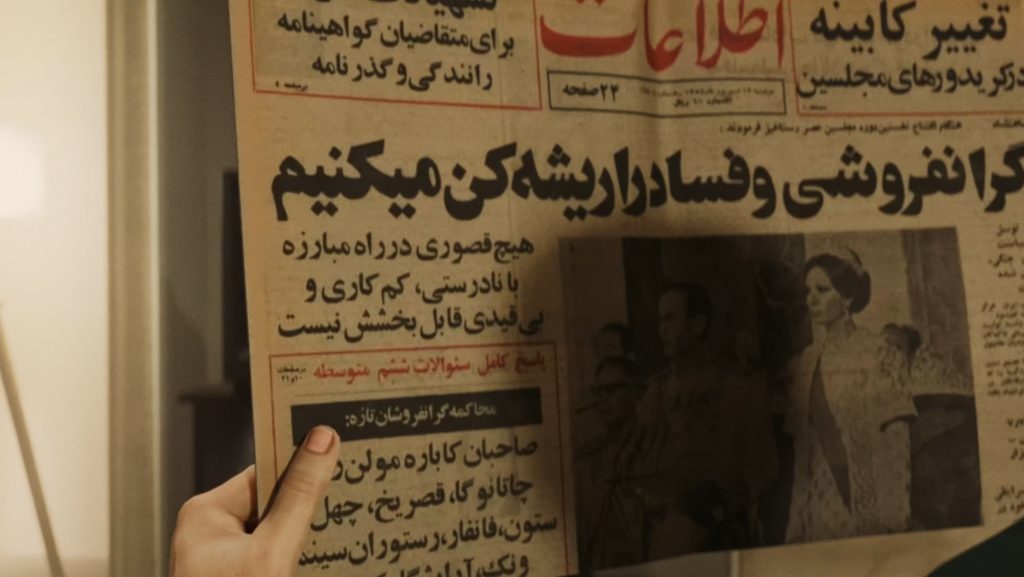
The tone changes considerably when Resilience Amidst Chaos reaches the 1979 Iranian Revolution. Behzadi experienced these events as a young girl, and her recollections are combined with archival material, news reports and animated recreations. She remembers watching television with her family as news arrived that the government had been overthrown, before stepping outside into a dramatically altered environment.
For Behzadi, the political transformation was not an abstract event studied years later in a history book. It was something she experienced as a child and which changed the direction of her life. She recalls seeing armed young men in the streets and describes the increasing restrictions imposed upon women, including compulsory dress requirements and limits on their freedom.
Some of the episode’s most powerful material concerns the messages directed at girls and women during this period. Behzadi recalls an Ayatollah visiting her school and making claims about the supposed intellectual inferiority of women. Rather than quietly accepting what she had heard, the young Behzadi questioned the female headteacher about it. When the headteacher supported the claim, Behzadi challenged her, an act of defiance that resulted in trouble and contact with her family.
The incident says a great deal about the documentary’s subject. The successful executive we see preparing to speak in front of an audience did not suddenly discover her voice after reaching America. According to the story presented in this opening episode, that willingness to question authority and reject what she considered unjust was already present during childhood.
It also gives the title Resilience Amidst Chaos genuine meaning. The episode is not merely concerned with Behzadi surviving difficult events. It is interested in how a personality develops within them. Her later achievements are placed in the context of a childhood in which the world around her changed dramatically and the freedoms of women were increasingly restricted.
Kwanje’s direction is one of the episode’s greatest strengths. At approximately 61 minutes including the end credits, the documentary could have become visually repetitive, particularly given the amount of personal testimony and historical context it needs to communicate. Instead, the presentation is constantly moving.
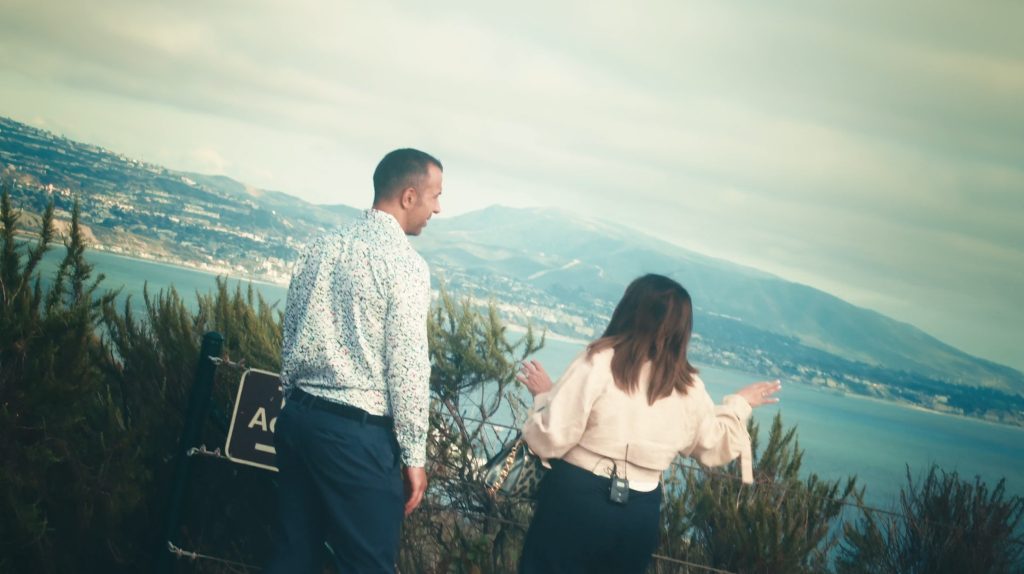
Talking-head interviews are intercut with animation, archival news footage, newspaper clippings, present-day observational material and occasional glimpses of the filmmaking process itself. We see the crew preparing shots and Behzadi moving between different environments. This varied approach gives the episode considerable energy without undermining the seriousness of its subject.

The animation is particularly important because it allows the filmmakers to visualise memories from Behzadi’s childhood without attempting awkward dramatic reconstructions. These sequences move between warmth and darkness depending on the period being discussed. Images of the family home and childhood memories give way to streets covered in political imagery, destruction and more disturbing representations of violence and repression.
Music is also used effectively throughout the episode. One particularly striking sequence combines animation, water imagery and darker images of violence as Behzadi discusses the treatment of women. The soundtrack gives the sequence emotional weight, while the visual design prevents it from becoming another conventional collection of archive clips.
What also makes Unbreakable Soul interesting is the way it connects Behzadi’s past with her present. At the speaking event, others discuss her ability to take an idea or small business and help it grow. The documentary has already begun showing the audience where some of that resilience may have originated.
Behzadi’s later professional achievements are substantial, but this first episode wisely does not rush through every stage of her career. Her wider story includes leaving Iran as a teenager, travelling through Turkey, reaching the United States, studying while working, building a career in finance and business, becoming a CEO and later surviving a serious brain tumour. With two further episodes available to explore those chapters, Resilience Amidst Chaos primarily establishes the foundations.
For viewers unfamiliar with Shirin Behzadi before watching, as we were here at Screen Critix, the episode provides a compelling introduction to a remarkable life. However, one of its strengths is that it does not restrict itself to being a simple success story about an immigrant who arrived in America and became wealthy. There is far more substance here than that familiar narrative.
The first episode is also a personal perspective on a period of Iranian history that transformed the lives of millions. Through Behzadi’s memories, the documentary examines what it was like for a young girl to watch familiar freedoms disappear and to find herself growing up in a society where speaking out could have serious consequences.

That makes Unbreakable Soul broader than a portrait of business success. It is about identity, family, political upheaval, gender, ambition and the ways childhood experiences continue to shape us decades later. Behzadi’s story will undoubtedly be particularly inspiring to women, immigrants and aspiring entrepreneurs, but its themes are far from exclusive to any one group. The idea of continuing to pursue a future when circumstances appear determined to prevent it is universal.
Alexander Kwanje has created an exceptionally polished opening episode. The mixture of intimate testimony, archival material and stylish animation gives the documentary a strong visual identity, while the editing maintains momentum across its hour-long running time. Most importantly, the filmmaking never loses sight of the person at the centre of the story.
Unbreakable Soul: Episode 1 – Resilience Amidst Chaos is a powerful beginning to the three-part series and leaves plenty still to explore. Shirin Behzadi has lived through circumstances that could individually fill entire documentaries, yet this opening chapter takes the time to examine where her resilience began. Beautifully assembled, emotionally engaging and historically interesting, it is an inspiring portrait of a woman who refused to allow the world around her to decide what she was capable of becoming.
| Acting | |
| Direction | |
| Cinematography | |
| Writing | |
| Sound | |
| Screen Critix Rating |