
There is something admirable about an independent filmmaker choosing to work on a scale that immediately presents logistical challenges. Feel the Burn, a 76-minute espionage thriller written and directed by Freddy Long, attempts to create an international world of covert operatives, assassinations, double-crosses and complicated personal histories. It is an ambitious undertaking, and although the finished film struggles to make every element convincing, there are enough promising touches to suggest considerable potential within the team behind it.
The film establishes its aspirations immediately. Shots of trains, aircraft and busy airports lead into a stylish title sequence accompanied by electronic music before the story moves to Detroit. The imagery has been heavily graded, with prominent film grain giving the picture texture, although some scenes push the darkness far enough for detail to become difficult to distinguish. Nevertheless, there is an obvious attempt to give Feel the Burn a visual personality from its opening minutes.
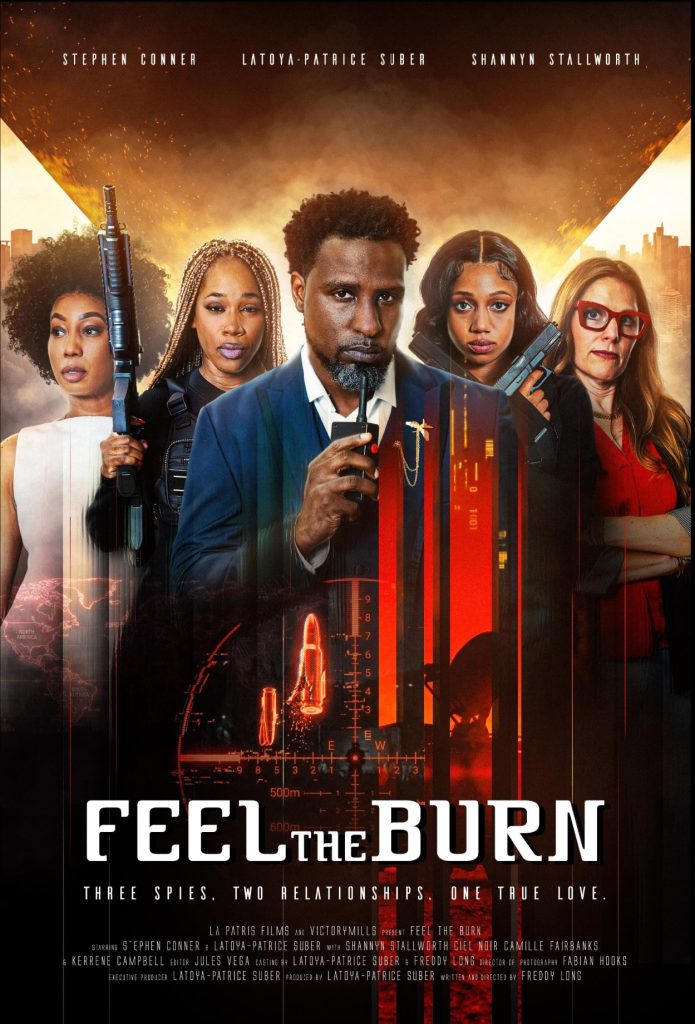
At the centre of the story are two operatives, Vivian Evergreen, codenamed Oshun (Shannyn Stallworth), and LaShay O’Neal, known as Poison Pen (LaToya-Patrice Suber). Both women are separately given an assignment involving a fellow operative with whom they share considerably more history than their employers initially acknowledge. Their target is Rudy (Stephen Conner), a man who has allegedly taken intelligence and intends to sell it, making his elimination a priority.
The complication is that Rudy has previously operated under different identities, including Felix, and both women have personal connections to him. Oshun’s history with Felix is established through a flashback to Bolivia, where the two work together during an armed mission before their professional relationship becomes intimate. Poison Pen has her own memories of working alongside him, including a mission in Japan in which she operates as a sniper while he assists her.
Those overlapping histories turn what might have been a straightforward assassination assignment into something more personal. When Jade (Camille Fairbanks) brings Oshun and Poison Pen together, their existing hostility immediately complicates the mission. They must temporarily put aside their differences and determine how to deal with a man whose alleged betrayal affects them professionally while their previous relationships with him continue to influence their judgement.
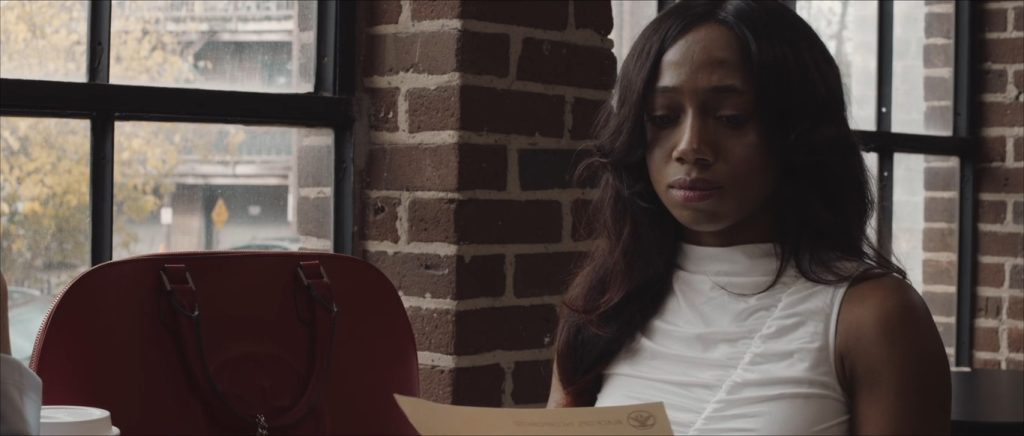
Long uses flashbacks extensively to reveal how these relationships developed. A sequence set on the Caribbean island of Saint Louis takes the story back to an earlier mission involving Oshun and Poison Pen, providing further context for the animosity between them. Elsewhere, the film gradually fills in Rudy’s individual relationships with both women, allowing the present-day assignment to become intertwined with events that occurred during their previous operations. Pasted markdown
This structure asks the audience to assemble parts of the characters’ shared history rather than receiving everything chronologically. It is a sensible approach for an espionage story, particularly one built around shifting identities and incomplete information. The problem is that the screenplay does not always make the emotional relationships as convincing as the underlying concept requires.
Dialogue is one of the principal weaknesses. Conversations sometimes lack the natural rhythm required to make these characters feel like experienced intelligence operatives, while occasional lines have an unintended comic quality that works against the more serious dramatic material. Feel the Burn is dealing with betrayal, loyalty, romantic attachment and the possibility of assassination, so maintaining the appropriate tone is important. The writing does not consistently achieve that balance.
The performances encounter a related problem. There are capable performers here, but we were not always convinced by the characters as professional spies and assassins. That is not necessarily a reflection of the actors’ fundamental abilities. Instead, the combination of dialogue, direction and staging sometimes leaves them without the environment or material necessary to create the authority these roles demand.
Some scenes would also benefit from stronger blocking. Characters are occasionally placed into relatively static arrangements, limiting what the camera and performers can contribute to a conversation. When a film is attempting to create the atmosphere of a sophisticated espionage thriller, seemingly minor elements such as movement through a room, physical distance between characters and the control of the frame can make an enormous difference.
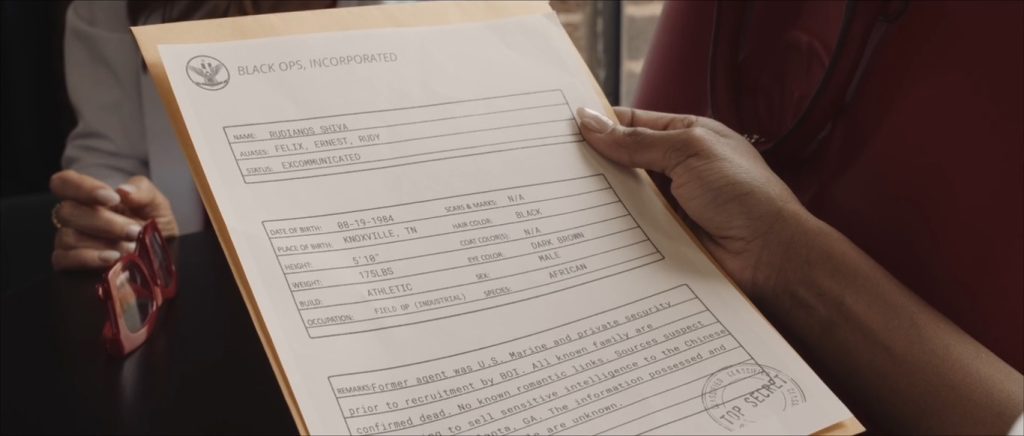
This is particularly noticeable because Feel the Burn can look considerably more accomplished elsewhere. Cinematographer Fabian Hooks captures some attractive imagery, especially during the establishing material accompanying changes in location. Aerial photography and wider environmental shots are used to suggest a story unfolding across different countries and cities, with location titles helping orientate the audience as the narrative moves around the world.
The film grain is another effective stylistic choice, lending some of the photography a pleasing texture. The grade generally contributes to the atmosphere as well, although the darker scenes sometimes appear overly crushed. There are also occasional technical inconsistencies, including moments when focus appears to drift despite relatively little movement within the shot. These imperfections stand out precisely because other parts of the film demonstrate a stronger visual eye.
That inconsistency becomes representative of Feel the Burn as a whole. At its best, there are tracking movements, stylish establishing shots and visual ideas that suggest Long and his collaborators understand the type of film they want to make. At other times, comparatively plain coverage and limited staging undermine the international spy-thriller atmosphere they are attempting to establish.
The scale of the concept is therefore simultaneously one of the film’s most interesting qualities and one of its greatest obstacles. Feel the Burn isn’t built around a conveniently contained premise. Long wants different countries, covert missions, assassins, snipers, international intelligence, romantic histories and competing loyalties. Delivering all of that convincingly requires substantial resources as well as considerable experience in staging action and maintaining a consistent cinematic world.
It would have been easy to attempt something much smaller, and there is genuine value in filmmakers testing the limits of what they can achieve. The difficulty here is that Feel the Burn sometimes stretches beyond what the production can comfortably support. The international scope promised by the story is not always matched by the execution, leaving certain sequences feeling less convincing than the ideas behind them.
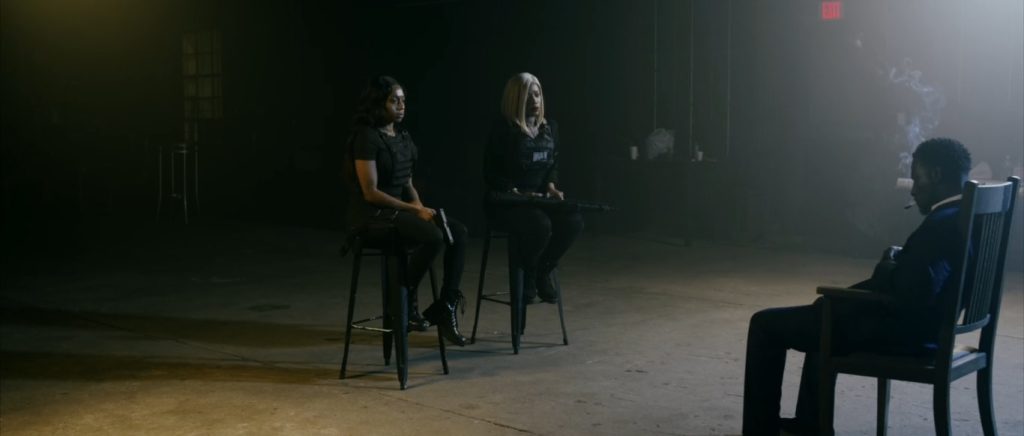
There is nevertheless enough ability on display to prevent the shortcomings from overwhelming the film entirely. Hooks produces some strong photography, Long demonstrates visual ambition, and the central premise of two rival operatives being ordered to eliminate a man with whom both share a complicated past provides a workable foundation for an espionage thriller. The production simply needed greater refinement in its screenplay, performances and staging to fully capitalise on those ingredients.
Feel the Burn ultimately feels like a project whose ambitions have arrived slightly ahead of the resources and experience available to realise them. That creates a noticeably uneven film, moving between genuinely attractive imagery and much rougher material, but it also makes us interested in seeing what Freddy Long and his collaborators might accomplish as their craft develops. A more focused project built around their existing strengths could produce something considerably more assured.
| Acting | |
| Direction | |
| Cinematography | |
| Writing | |
| Sound | |
| Screen Critix Rating |