
Some sports need little explanation. Others require a few moments of observation before the rules, culture and appeal begin to make sense. Steel & Glory falls firmly into the latter category, taking viewers inside the Buhurt World Championships in Visegrád, Hungary, where competitors wearing armour engage in full-contact medieval combat as part of an organised international sport.
Running for just under 17 minutes, director and producer Mathew Currie’s documentary wastes little time establishing the scale of the event. An opening aerial shot travels across the surrounding landscape before revealing colourful tents, an arena and competitors dressed for battle. It is an effective introduction because the location initially suggests historical re-enactment, only for the physical reality of the competition to quickly establish something considerably more intense.
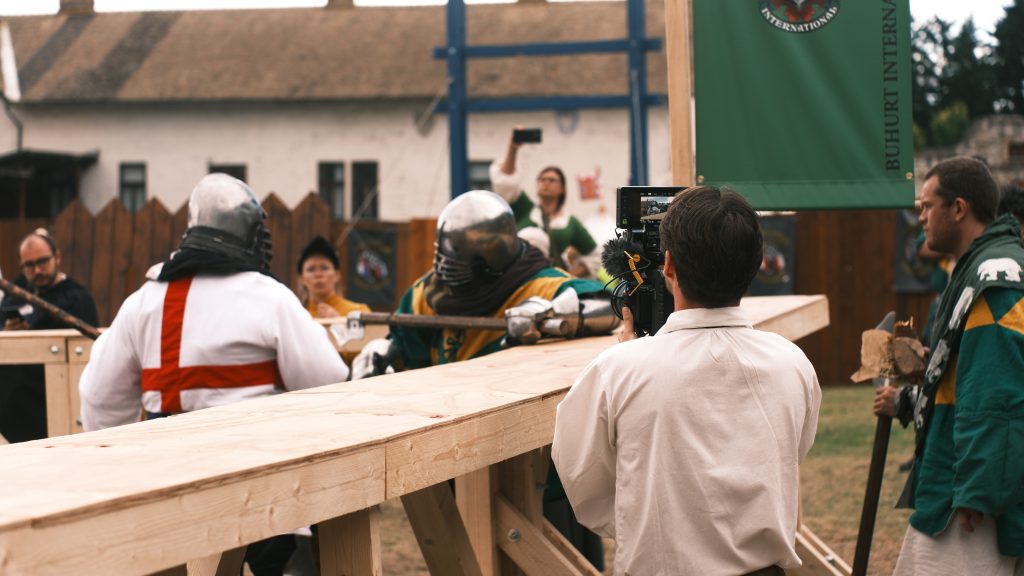
The participants themselves make that distinction particularly clear. Interviews are delivered directly to camera or towards somebody positioned just beside it, and there is considerable confidence in the way competitors discuss what lies ahead. They acknowledge the pain involved, talk openly about wanting to defeat their opponents and approach each contest with the mentality of athletes preparing for a demanding competitive event.
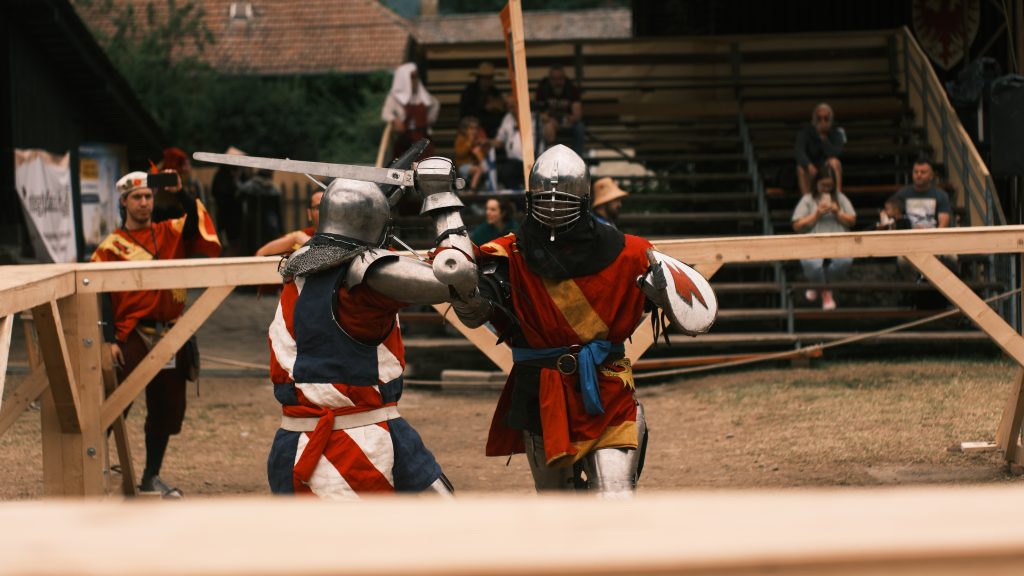
Once the fighting begins, any suggestion that this is simply elaborate roleplay disappears. Competitors strike one another while wearing armour, use weapons and employ techniques including trips to bring opponents to the ground. The physical consequences are also addressed directly, with participants discussing bruises, broken bones and more serious injuries, while the sight of an ambulance transporting somebody away reinforces that the potential for harm is very real.
Currie is particularly successful at explaining the sport without interrupting the momentum of the documentary. Steel & Glory allows the competition itself to demonstrate much of what viewers need to understand. These are team encounters rather than individual duels, and that changes the tactical possibilities considerably. When one competitor removes an opponent from the contest, they can immediately assist a teammate, potentially transforming an evenly matched encounter into a two-against-one or even greater numerical advantage.
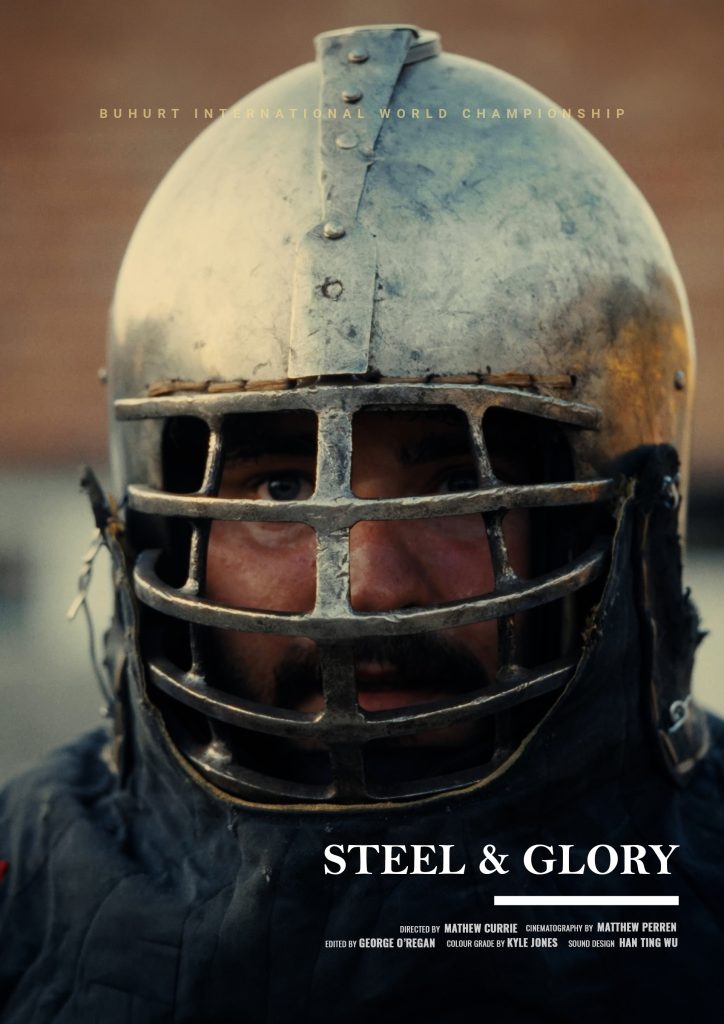
National identity also becomes important as teams from around the world compete against one another. The United States arrive as the leading side and are presented as a formidable presence, but the British team, The White Company, are identified as serious challengers. The documentary establishes both teams as major contenders and follows their progress sufficiently closely for their eventual meeting to carry genuine significance.
The American team defeat Georgia before facing Mexico, while the British competitors continue producing victories of their own. Currie and editor Alex Murawski use these results to create a clear competitive narrative within a very limited running time. Rather than attempting to document every encounter in detail, the film selects enough material to establish the standings and the growing possibility that the leading teams will eventually meet.
That approach pays off when the United Kingdom and United States finally face one another while both remain unbeaten. By this stage, Steel & Glory has provided enough context for the encounter to mean something even to an audience who may never previously have heard of Buhurt. The British victory changes the complexion of the competition, although another unexpected result follows when Poland subsequently defeat the UK after having previously lost to the Americans.
Because the championship operates as a league rather than a straightforward knockout tournament, the final outcome remains uncertain. The American competitors wait to discover whether the points calculation might still deliver overall victory, only for the announcement to confirm that the UK has won the competition. Currie handles this final stretch well, allowing the structure of the championship itself to provide the documentary with a natural dramatic conclusion.
There is more to Steel & Glory than simply determining which country finishes first. The competitors discuss the anxiety they experience before entering combat and the injuries accumulated through participation. One British fighter speaks about receiving a ban after breaking an opponent’s nose, while others describe the considerable physical punishment that can accompany the sport.
The documentary also touches upon the types of people attracted to Buhurt. Military veterans are said to make up a significant part of the community, while another participant offers a much simpler description of those involved as a collection of self-confessed nerds who enjoy fighting one another in armour. Those different backgrounds help explain an activity that combines sporting competition with an obvious enthusiasm for medieval combat.
International participation gives Currie opportunities to briefly acknowledge a wider context too. Russia and Ukraine are described as having been particularly successful during the earlier years of the competition before the United States became increasingly dominant. Ukrainian competitors remain present at the championship despite the war affecting their country, although the short running time means the documentary does not explore the geopolitical aspect in considerable depth.
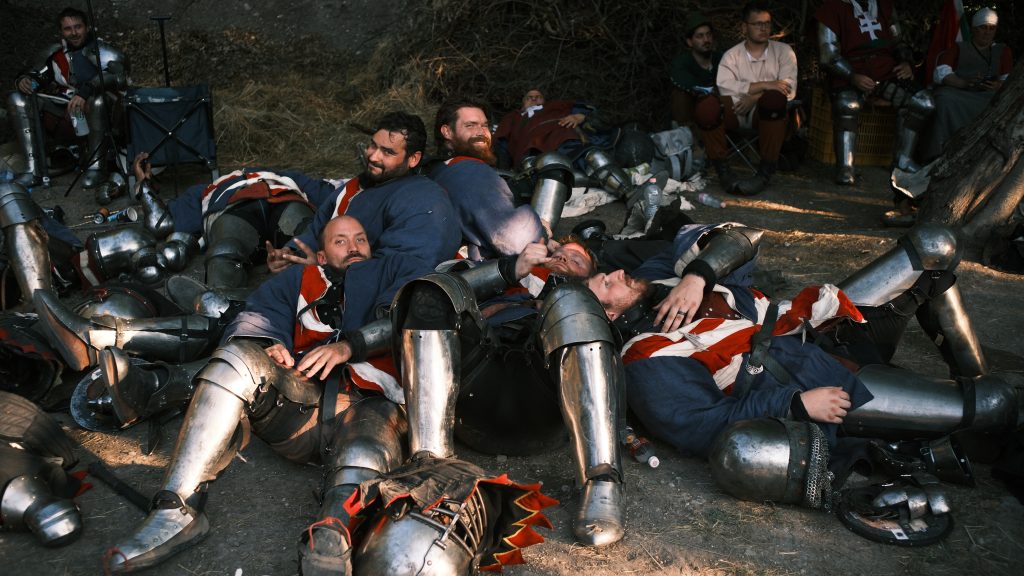
Women also compete in their own division, broadening the picture of a sport that might initially appear almost exclusively male. Elsewhere, participants repeatedly discuss the relationships formed within their teams. The language moves beyond ordinary sporting camaraderie, with some describing the connection as a brotherhood rather than simply membership of a competitive side.
What makes Steel & Glory especially successful is the quality and pace of its construction. The editing is excellent, moving fluidly between combat footage, interviews, voiceover, team discussions and observational material. At 16 minutes and 39 seconds, there is little opportunity for the documentary to lose momentum, but its speed never makes the subject difficult to follow.
Matthew Perren’s cinematography is similarly impressive. The abundance of well-composed footage gives the event scale while still bringing the camera close enough to the competitors for the physicality of the sport to register. The aerial material, arena coverage and quieter interview footage combine to give the short a polished and professional appearance.
Music also contributes considerably to the energy of the finished film. Combined with the rapid editing and extensive coverage of the championship, it gives the documentary a propulsive quality without preventing the personalities of the competitors from emerging. Currie understands that the fighting may initially attract viewers, but the people inside the armour are ultimately what make the competition worth following.
Steel & Glory achieves something particularly valuable for a short documentary by making an unfamiliar subject immediately accessible. We began with no knowledge of the Buhurt World Championships and finished genuinely interested in seeing the sport in person. The prospect of actually stepping into the arena is considerably less appealing, but as an introduction to this unusual, fiercely competitive and surprisingly international sporting community, Currie’s documentary is an extremely accomplished piece of work.
| Acting | |
| Direction | |
| Cinematography | |
| Writing | |
| Sound | |
| Screen Critix Rating |