
At a little over seven minutes long, with almost a minute of that running time consisting of a black screen at the end, writer and director Mike Lewis doesn’t have much time to establish the mystery at the centre of Dr. Carter. It’s a compact revenge thriller built around an aggrieved man, an unseen doctor and a young boy who unexpectedly finds himself caught between them. There are some intriguing ideas within the setup, although technical and filmmaking issues prevent the short from making as much of them as it potentially could.
The film begins with Chris Perez (Abe López) sitting on a sofa and talking about somebody who has ruined his life and apparently got away with it. He questions whether it’s any wonder that people sometimes decide to take the law into their own hands, immediately establishing both his anger and the possibility that whatever he’s planning won’t involve the legal system.
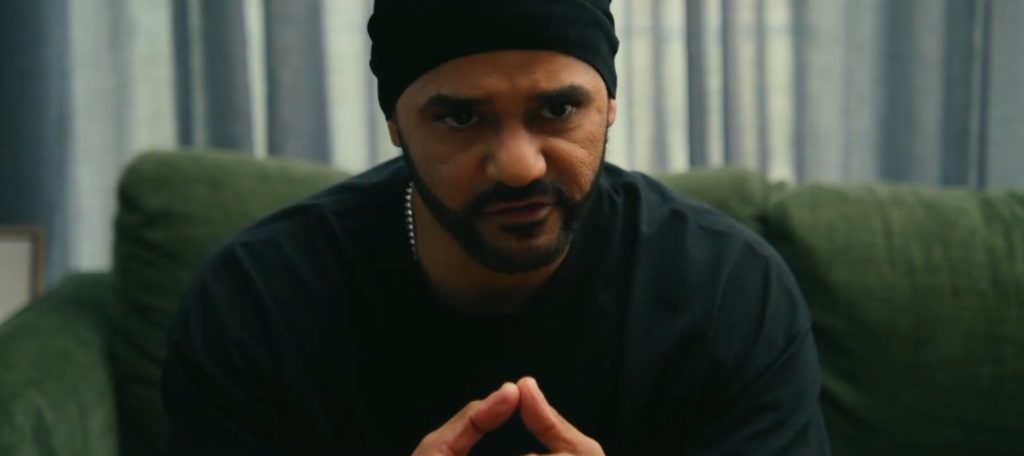
We then hear the answering machine greeting of Dr. Carter (Tyler Henize), followed by the beep and an increasingly threatening message from Chris. “You think you can destroy someone’s life and just walk away? You think you’re untouchable?” he demands. Precisely what Dr. Carter is supposed to have done isn’t revealed, leaving the audience with only Chris’s anger as evidence that something significant has occurred between the two men.
The situation has already escalated far enough for the police to become involved. Chris receives a telephone call informing him that Dr. Carter has made a complaint and that Chris has allegedly been standing outside his office and harassing patients. Rather than being intimidated by police involvement, Chris responds with an extraordinarily bleak message for the doctor. If Carter really wants him to stop, Chris says, he can come to the house, put a gun in Chris’s mouth and blow the back of his head off.
It’s a striking opening that establishes Chris as unpredictable and potentially dangerous, while also suggesting someone in considerable emotional distress. The short doesn’t provide enough information to determine whether his accusations against Carter are justified, exaggerated or entirely misplaced, and that uncertainty becomes an important part of the story.
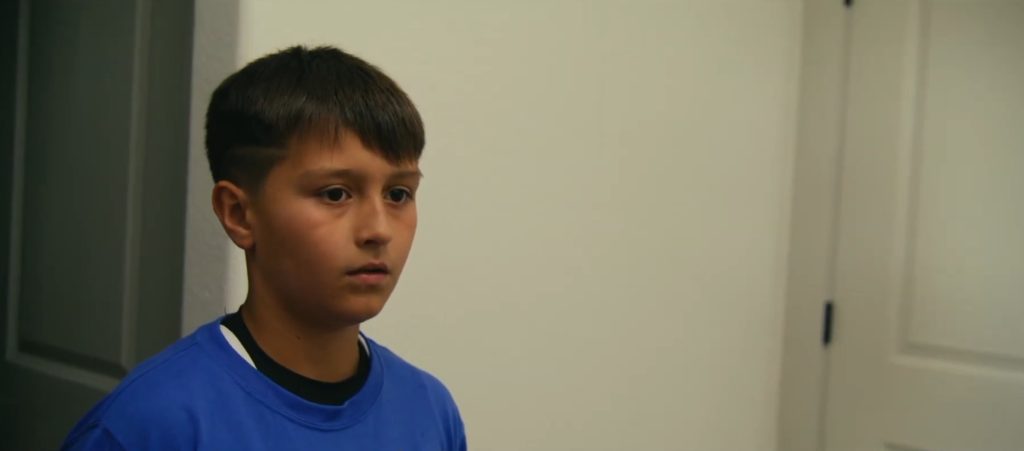
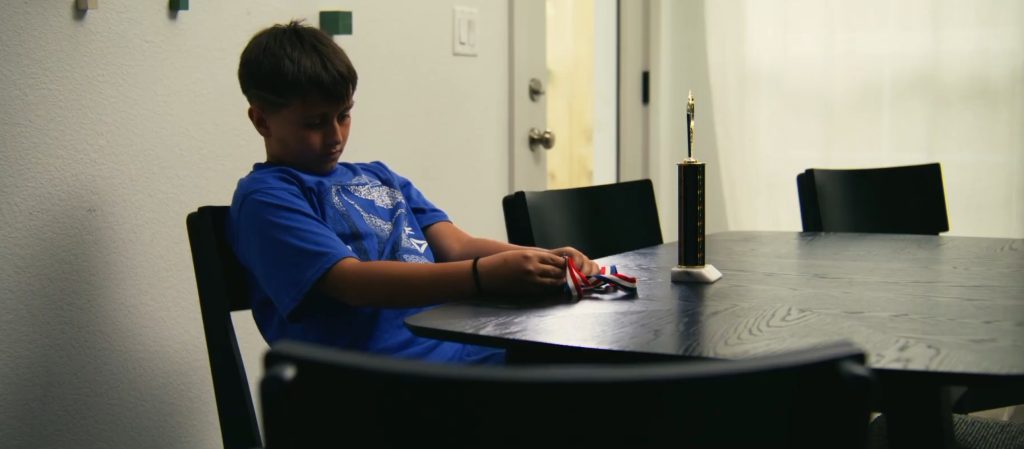
The focus then shifts to Jaydin Carter (Noah Velasco), a young boy returning home with a new trophy and medal. Instead of finding a parent waiting to congratulate him, Jaydin discovers a note attached to the refrigerator alongside $20, instructing him to order himself a pizza. During a telephone conversation, he reveals that his father didn’t even turn up to see him win whatever competition earned him the trophy.
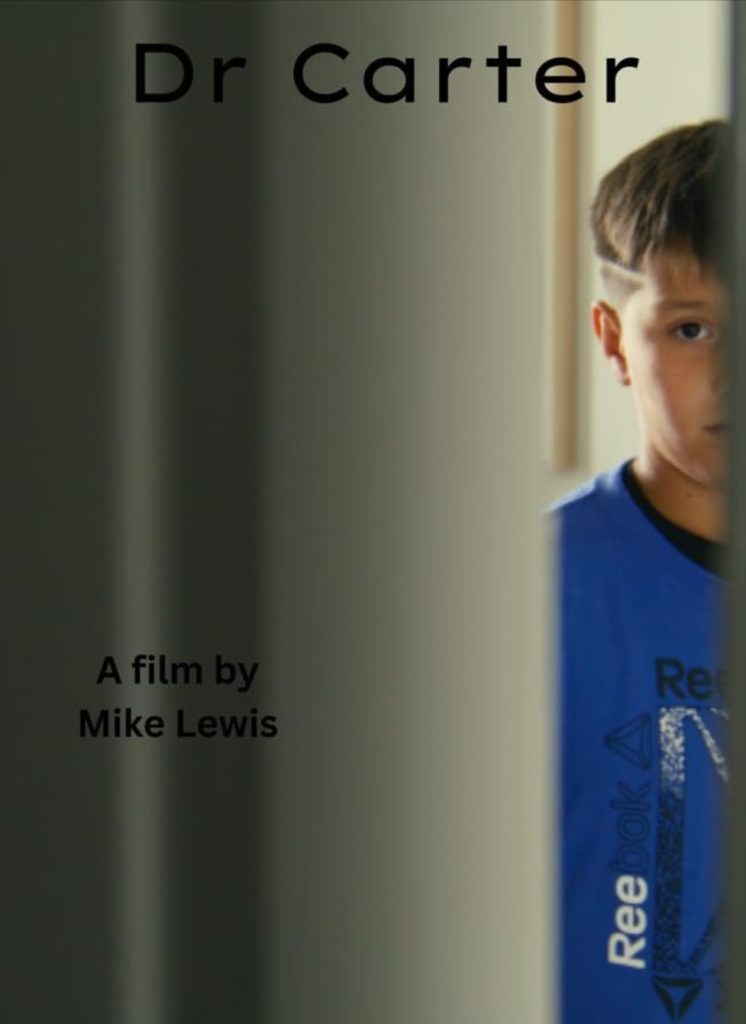
It’s an economical way of telling us something about the Carter household without needing additional exposition. Whatever else might eventually be revealed about Dr. Carter, we immediately understand that Jaydin is disappointed by his father’s absence and has been left alone after an achievement that clearly meant something to him.
Things become considerably more threatening when Jaydin notices a door standing ajar and decides to investigate. The camera begins moving through the house in what initially appears to be a point-of-view shot, creating the impression that we’re seeing the rooms from Jaydin’s perspective. The problem comes when the camera pans around and reveals Jaydin himself.
It’s a confusing visual decision because the language of the shot has already encouraged us to interpret the camera as the boy’s viewpoint. Once Jaydin appears within that same shot, the perspective becomes unclear. There’s no requirement that a moving camera has to represent a character’s literal point of view, of course, but the way the sequence is constructed makes the transition unnecessarily distracting at precisely the moment the film is attempting to build suspense.
The camera eventually returns to Jaydin, only this time he isn’t alone. Chris has appeared behind him, grabbing the boy and covering his mouth. During the exchange, Chris appears to say something that sounds like “Lex, I’m not going to hurt you,” despite the character being named Jaydin. It’s possible the intended word is actually “relax” and the beginning of the word is difficult to hear or has been lost in the audio. Without further production information, it would be unfair to claim this is a dialogue or continuity mistake, but the line isn’t sufficiently clear in the finished film.
Chris takes Jaydin into the living room and restrains him, tying his hands behind his back and binding his feet with rope before placing a black cloth over his mouth. The extent of the restraint feels particularly severe given that he’s dealing with a young boy, reinforcing how far Chris is prepared to go in order to reach Dr. Carter.
The connection is finally made explicit when Chris takes Jaydin’s phone and sends a message to his father while pretending to be the boy. He claims there has been a flood in the kitchen and asks him to come home. Dr. Carter, the unseen man Chris has been threatening, is Jaydin’s father, and the boy is being used as bait to bring him directly to the house.
Dr. Carter Has an Interesting Revenge Setup
There is potential in that premise because Lewis deliberately withholds the piece of information we most want. We know Chris believes Dr. Carter destroyed his life, and we know his behaviour has escalated from harassment and threatening messages to invading Carter’s home and restraining his son. What we don’t know is what started any of it.
Leaving that unanswered isn’t necessarily a flaw. Ambiguity can be effective, particularly in a short film where there isn’t time to provide a detailed history between two characters. It also leaves us unable to comfortably choose a side. Chris believes he has been wronged, but without knowing what Carter supposedly did, his increasingly extreme behaviour is all we can actually judge.
The difficulty is that Dr. Carter ends before the mystery develops much further. This could conceivably be intended as the beginning of a larger story, but there is nothing in the information available to confirm plans for a continuation, so we can’t assume that’s the case. As a standalone short, it feels more like the opening movement of a revenge story than a completely developed one. There is a hook, an escalation and a confrontation being prepared, but the answers and consequences remain outside the film.
Performance-wise, López has most of the dramatic responsibility because Chris is the only adult character physically present. He gives the character sufficient anger and menace to make the threat to Jaydin believable, while Velasco handles the frightened youngster adequately. Henize’s Dr. Carter is only heard rather than seen, meaning the title character remains deliberately distant from the audience throughout.
Where Dr. Carter struggles more noticeably is in its technical presentation. The sound mix is inconsistent, particularly in the way room tone appears to stop and start between dialogue and edits. Those abrupt changes are noticeable and can pull attention away from the performances. Consistent ambience underneath the dialogue would have helped individual cuts blend together and made the finished soundtrack feel considerably smoother.
The cinematography is similarly functional rather than distinctive. There are some appealing B-roll images during the opening telephone material, but once the story moves into the house, the lighting and framing become much more basic. The production doesn’t require elaborate equipment or expensive locations, but more deliberate lighting and stronger composition could have increased the sense of threat without adding significantly to the budget.
That’s particularly important for a film like this because almost everything depends upon atmosphere. A stranger is hiding inside a child’s home, waiting to lure his father back there. Shadows, negative space, carefully selected angles and controlled lighting could all have been used to make the house increasingly uncomfortable as Jaydin realises something is wrong. The ingredients for suspense are already contained within the screenplay, but the visual execution doesn’t always exploit them.
Johnny Ortega’s editing has the difficult job of fitting the setup into a very short period, while Eugene Hawkins is credited as camera operator, Nathan Menser as key grip and Ortega also as gaffer. Mike Lewis serves as director, writer and executive producer, with Mike Ariola credited as swing. It is clearly a small production working with limited resources, and that context is worth remembering when assessing what the filmmakers have attempted.
Limited resources don’t necessarily prevent a short from looking polished, however. In this case, improved sound mixing would make perhaps the biggest immediate difference. More considered framing, a stronger lighting design and greater clarity in the camera language during Jaydin’s exploration of the house would also raise the production value considerably without changing the story itself.
Dr. Carter Shows Potential Despite Its Rough Edges
The strongest element is ultimately the central idea. An angry man believes a doctor has destroyed his life, conventional avenues apparently haven’t resolved the situation, and his obsession has escalated until the doctor’s innocent son becomes part of his revenge. There is enough there to generate questions about Chris, Carter and whatever happened before the film began.
Lewis also deserves some credit for resisting the temptation to explain everything through dialogue. We don’t receive a lengthy speech detailing Chris’s history with Carter, and the doctor isn’t suddenly presented to tell us his side of the story. The ambiguity leaves room for the viewer to wonder what happened, although the short could have benefited from giving us slightly more information before ending.
Dr. Carter is therefore a film with decent ideas that doesn’t quite reach its potential. The performances are adequate, the revenge premise creates immediate intrigue and there are moments, particularly during the opening, where the presentation works well. Unfortunately, inconsistent audio, fairly basic photography and a few confusing filmmaking choices prevent the tension from becoming as strong as it could have been.
For a low-budget short, none of those problems are insurmountable, and the underlying concept shows that Lewis understands the value of giving an audience a question they want answered. With greater technical polish and a little more development of its central mystery, Dr. Carter could have been a considerably stronger thriller. As it stands, it’s not a bad seven minutes of filmmaking, but some avoidable rough edges hold it back from becoming the tense revenge story its premise suggests it might have been.
| Acting | |
| Direction | |
| Cinematography | |
| Writing | |
| Sound | |
| Screen Critix Rating |