
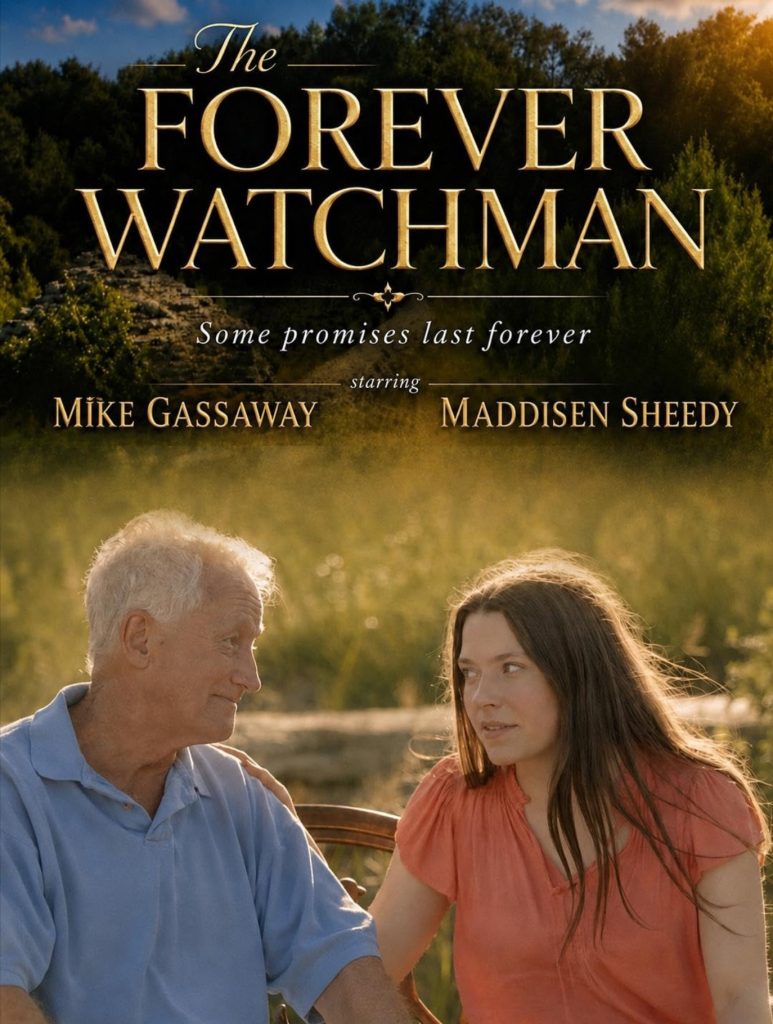
Making a feature film is difficult. Making one independently, where resources are inevitably more limited and filmmakers are often required to take on numerous responsibilities, is harder still. That is worth remembering when approaching The Forever Watchman, Ralph Cinque’s 75-minute continuation of the story he began as the writer of The Pro Bono Watchman, a film we reviewed four years ago. That earlier feature was directed by Ray Spivey, while Cinque has since moved into directing himself, including Dovey’s Promise, which we have also reviewed. Unfortunately, while The Forever Watchman has good intentions, it struggles with fundamental problems in its writing, pacing and technical execution.
The film wastes little time establishing its connection to its predecessor. A car pulls into a driveway as an on-screen title explains that this is a sequel to The Pro Bono Watchman. Bonnie Gentry (Maddisen Sheedy), now 16, steps from the vehicle and approaches the home of Hank Cassidy (Mike Gassaway), the man who played such an important role in her childhood.
Unfortunately, problems become apparent almost immediately. A simple piano accompaniment plays as Bonnie walks towards the house, only to stop abruptly when she reaches the door. For a brief moment, the soundtrack becomes unnaturally silent. There is no wind, birds or convincing exterior ambience before the sound suddenly returns with the next shot. When Hank opens the door and embraces Bonnie, noticeable contact noise from her lavalier microphone further breaks the illusion.
These might seem like minor technical issues in isolation, particularly on an independent production, but they establish a problem that repeatedly affects the film. Sound, music and editing should ideally disappear into the experience, allowing us to concentrate on the characters and story. Here, we’re frequently reminded that we’re watching a production being assembled.
Bonnie and Hank sit together and begin catching up after years apart. She apologises for not being there when Hank’s wife died, leading into a flashback in which Hank comforts his sick wife after a nightmare. He wants to take her somewhere for treatment, but she refuses, preferring to remain at home and accept what is coming.
The conversation returns to Bonnie’s own history and the events surrounding her father. Another flashback revisits his death, while Bonnie explains what has happened to her life since she and Hank last saw one another. Her mother has remarried a wealthy man named Phil, whom Bonnie describes as nice enough but controlling. With the couple embarking on an around-the-world trip, Bonnie has been sent to boarding school.
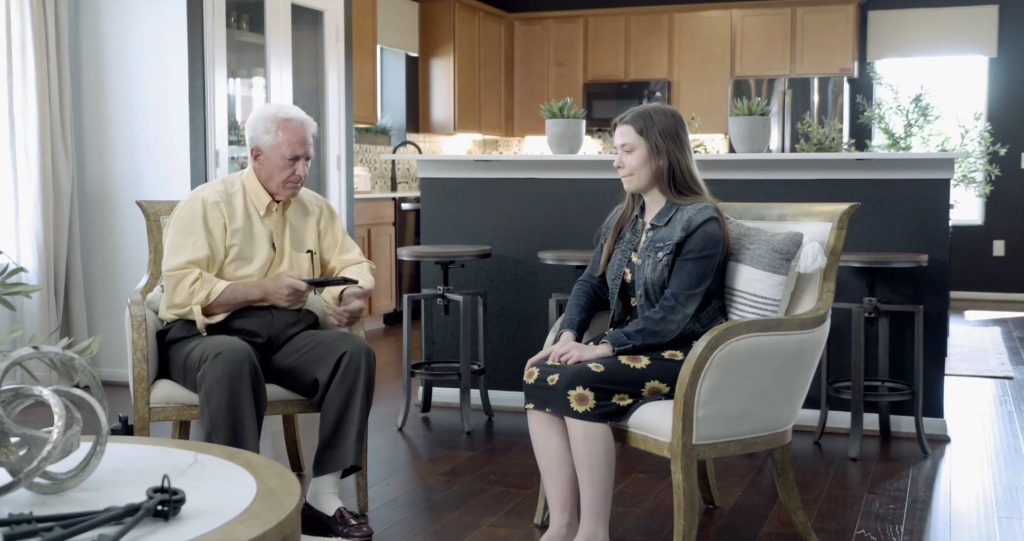
The problem isn’t necessarily the information itself, but how the film delivers it. Soon after Bonnie explains the boarding school situation to Hank, we see a flashback to her first day there, where much of what we’ve just learned is covered again. Rather than revealing something substantially new about Bonnie, the sequence reiterates information the audience already understands.
Eventually, Hank asks the question we’ve been waiting for: why has Bonnie really come to see him?
Her roommate, Francie Evans (Kinley Faith), has been kidnapped. Bonnie witnessed the abduction and contacted the police, but the investigation hasn’t produced the result she desperately needs. A recording she made of the incident shows Francie being carried towards a van in broad daylight, and Bonnie now wants Hank to help find her.
The recording itself raises questions. The kidnapper is captured remarkably clearly, even losing his hat while carrying Francie, and the amount of visual information available would appear to give investigators a substantial starting point. Instead, the police remain unable to solve the case, leaving Bonnie convinced that Hank is the person who can succeed where they haven’t.
Hank agrees to help.
The Forever Watchman Struggles to Build Suspense
There is certainly the foundation of a thriller here. A teenage girl has been abducted, her roommate witnessed the crime and an older man with whom she shares a complicated history agrees to investigate. The story also has a personal dimension because The Forever Watchman isn’t simply about solving a kidnapping. It continues the relationship between Hank and Bonnie that began in the previous film.
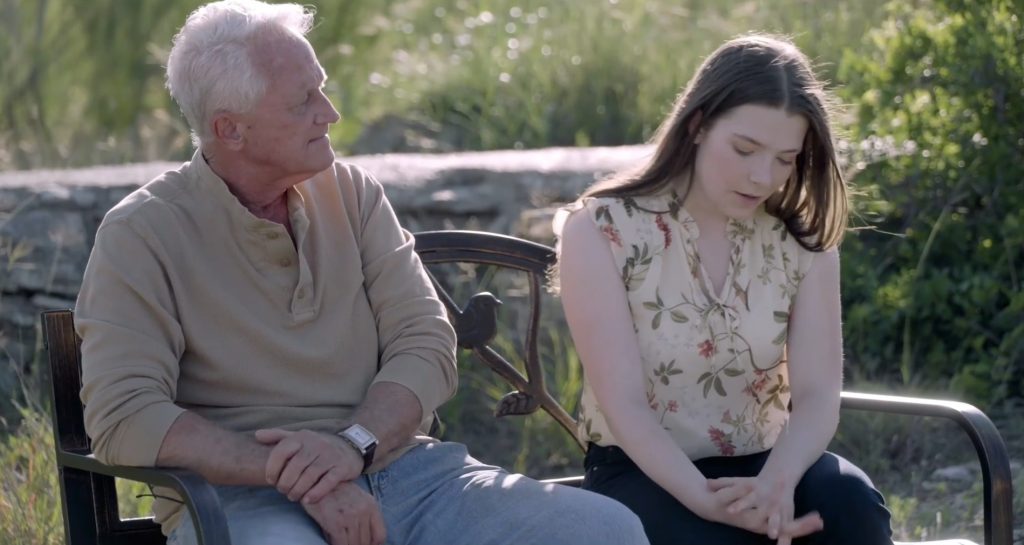
Mike Gassaway is one of the film’s more dependable elements. He brings an easygoing quality to Hank that makes the character likeable, and the relationship between him and Bonnie gives the story its emotional centre. Maddisen Sheedy also has some decent moments as Bonnie, particularly when she’s allowed to concentrate on her concern for Francie rather than delivering large quantities of exposition.
Unfortunately, the filmmaking around the performances rarely generates the urgency the premise requires. An early conversation between Hank and Bonnie illustrates the problem. They remain seated opposite one another as information is exchanged, with coverage provided from several angles but very little meaningful blocking or camera movement. Having multiple camera setups doesn’t automatically make a scene visually dynamic, particularly when the characters and camera remain largely static.
Troy Bakewell is credited as director of photography, while Jeff Stolhand handled the editing. There are functional images throughout the film, but much of the photography lacks a deliberate lighting design or visual identity. Too many scenes feel recorded rather than constructed for the camera, with straightforward compositions and limited use of movement, blocking, depth or light to communicate tension.
That becomes particularly damaging for a crime thriller. Suspense isn’t dependent upon expensive equipment, elaborate visual effects or enormous locations. Some extremely effective tension can be created with little more than careful framing, sound, editing and knowing where actors should be positioned within a space. The Forever Watchman rarely exploits those tools effectively enough.
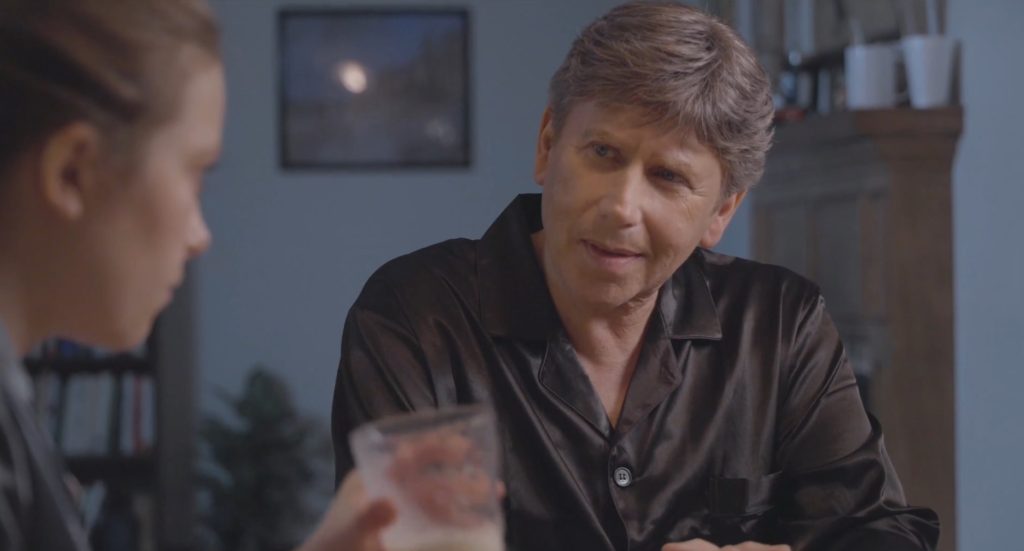
The music creates another recurring distraction. Cinque himself is credited as composer, and several sequences use cues that don’t always complement what is happening on screen. Some arrive or disappear abruptly, while the brass-heavy accompaniment during the boarding school flashback feels particularly mismatched with the scene. Instead of strengthening the intended emotion, these choices can unintentionally make serious moments feel lighter than they presumably should.
This is particularly unfortunate because there are ideas within the screenplay that could have supported something much more compelling. Once Bonnie takes Hank to the location of Francie’s abduction, he begins considering the motivation behind the crime. The situation soon develops when Detective Ortiz (Rodney Orta) informs Hank, Bonnie and Francie’s parents that a ransom demand has arrived for one million dollars in Bitcoin.
That should significantly increase the pressure. There is now a missing teenager, a financial demand and the possibility that time is running out. Yet the film’s pacing remains too relaxed for the circumstances. Scenes often take longer than necessary to communicate relatively simple information, which prevents the narrative from developing the momentum expected from a kidnapping thriller.
The flashbacks contribute to that unevenness. Some are necessary for viewers who haven’t seen The Pro Bono Watchman, especially because Hank and Bonnie’s shared history is fundamental to understanding why she would seek his help. Others repeat information or interrupt the present-day investigation at moments when the story would benefit from moving forward.
Cinque’s screenplay clearly places considerable importance on Hank and Bonnie’s relationship. Ten years have passed since the events that originally brought them together, and Bonnie is no longer the little girl Hank once protected. Their reunion gives Cinque an opportunity to explore how that bond has changed as Bonnie has grown older, while Hank’s instinct to protect her remains.
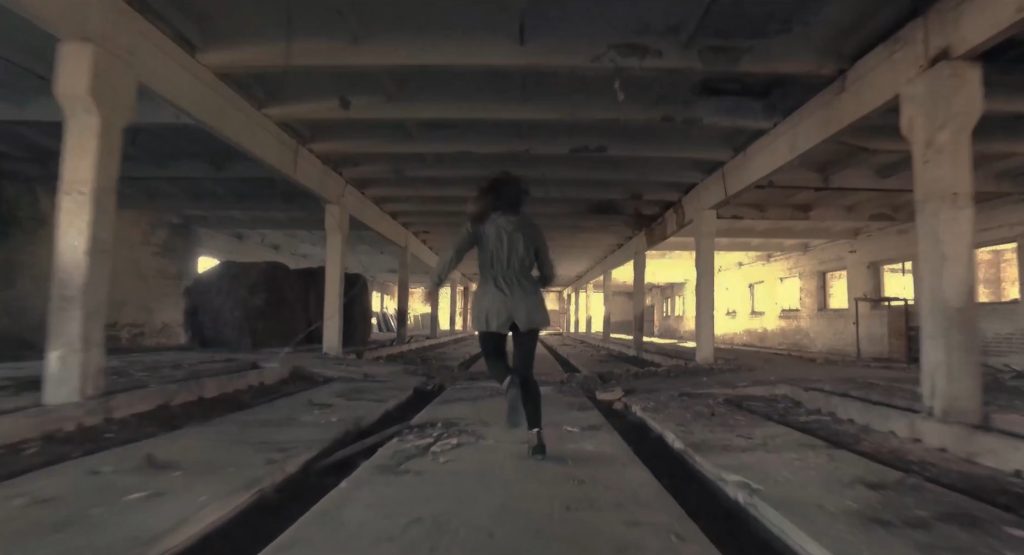
That relationship is arguably more successful than the mystery surrounding it because Gassaway and Sheedy at least give us two people whose reunion we can understand. When The Forever Watchman slows down to concentrate on them as characters rather than pushing exposition towards the audience, there are glimpses of the more intimate film Cinque appears interested in making.
It is important to recognise what The Forever Watchman is attempting while still being clear about what reaches the screen. Independent films shouldn’t be judged negatively simply because they don’t possess studio resources. There are countless ways ingenuity can compensate for money. At the same time, fundamentals such as clean audio, purposeful framing, appropriate music, effective blocking and disciplined editing aren’t luxuries. They are essential parts of visual storytelling.
This isn’t our first encounter with Ralph Cinque’s work. We previously reviewed The Pro Bono Watchman, which Cinque wrote but Ray Spivey directed, and we have also reviewed Dovey’s Promise, which Cinque both wrote and directed. Having now seen another of his directorial efforts, we had hoped to see more substantial development in some of the technical areas that previously caused problems.
That doesn’t mean Cinque should stop making films. Quite the opposite. He clearly has enthusiasm for filmmaking and enough determination to complete feature-length productions, something that is an achievement in itself. What we’d like to see before another feature is greater concentration on the craft surrounding those ideas. A smaller project could provide an opportunity to experiment with cinematography, blocking, lighting, sound and pacing without the enormous demands that accompany another 75-minute production.
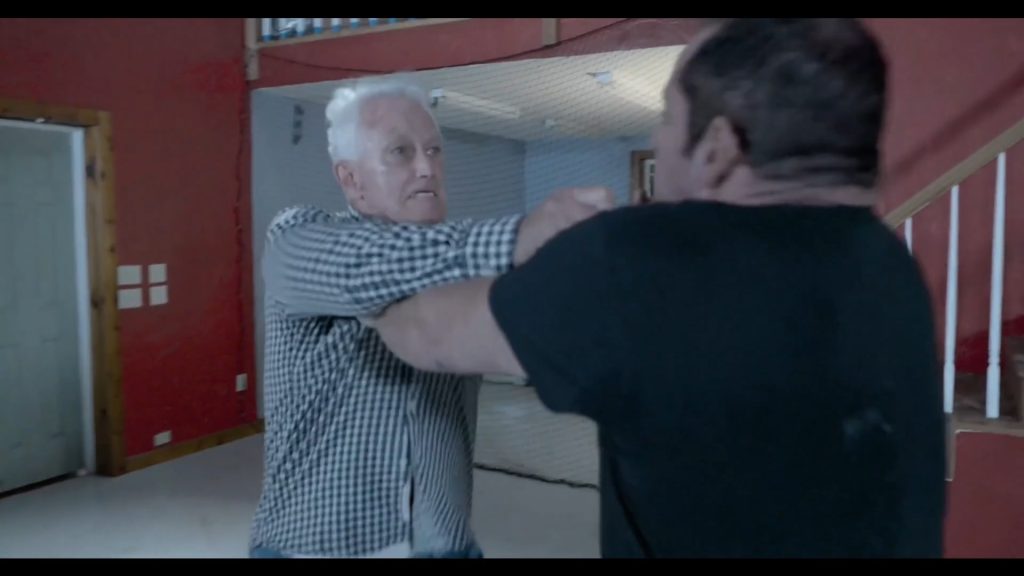
There are useful lessons inside The Forever Watchman. The quieter exchanges between Hank and Bonnie demonstrate where the film’s emotional interests really lie, and Gassaway provides it with an agreeable central presence. There are also moments when Sheedy shows that Bonnie could carry more dramatic weight if the material around her were tighter.
But as a thriller, The Forever Watchman simply doesn’t generate enough suspense. The kidnapping provides the narrative with stakes, yet the pacing rarely communicates urgency. Technical sound problems repeatedly intrude, the music can work against scenes rather than support them, and the largely functional cinematography doesn’t give the story the visual tension it needs.
Cinque deserves credit for continuing to create and for bringing another feature to completion, but encouragement doesn’t require pretending the finished film works better than it does. The Forever Watchman is a well-intentioned independent production with a sincere relationship at its centre, but it remains undermined by basic filmmaking issues that prevent the story from becoming the involving crime thriller it might have been.
Hopefully Cinque takes some time before his next production to examine what works here alongside what doesn’t. The ideas and enthusiasm are clearly present. Developing the technical craft needed to communicate those ideas more effectively should be the next step, and we’d genuinely like to see what he can produce if that improvement comes.
| Acting | |
| Direction | |
| Cinematography | |
| Writing | |
| Sound | |
| Screen Critix Rating |