
There are occasions when a short film establishes its identity almost immediately, and Darragh Hynes’ Unveiled certainly falls into that category. Running for just over eight minutes, this Irish horror short is primarily a piece of visual storytelling, using vivid colour, carefully constructed compositions and a deliberately fractured narrative to transform what should be a joyous wedding day into something considerably more sinister.
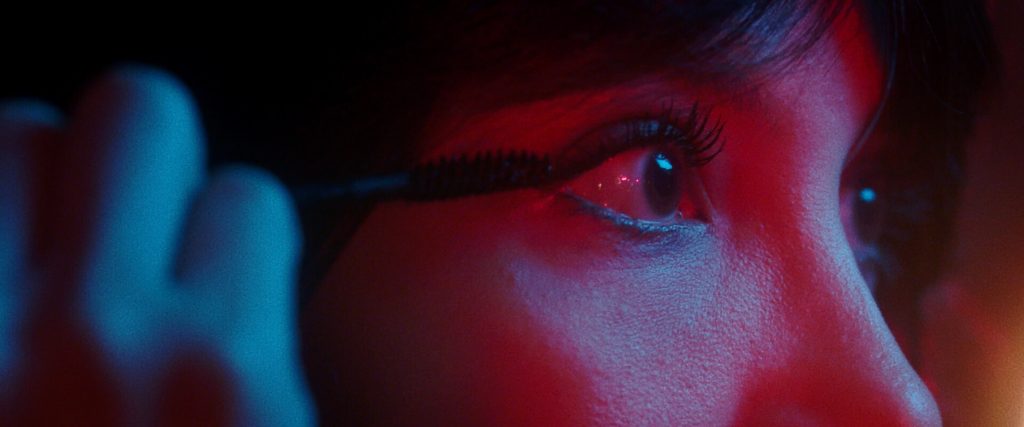
The opening is gorgeous. A woman prepares herself in front of a mirror, brushing her hair and applying makeup while intense reds and blues illuminate the room around her. The saturated colour immediately evokes the heightened visual language associated with Italian horror, particularly the work of Dario Argento. That influence isn’t something we need to speculate about either. Hynes has openly described his fascination with giallo and his desire to pay homage to filmmakers including Argento and Mario Bava, and Unveiled wears those inspirations proudly.
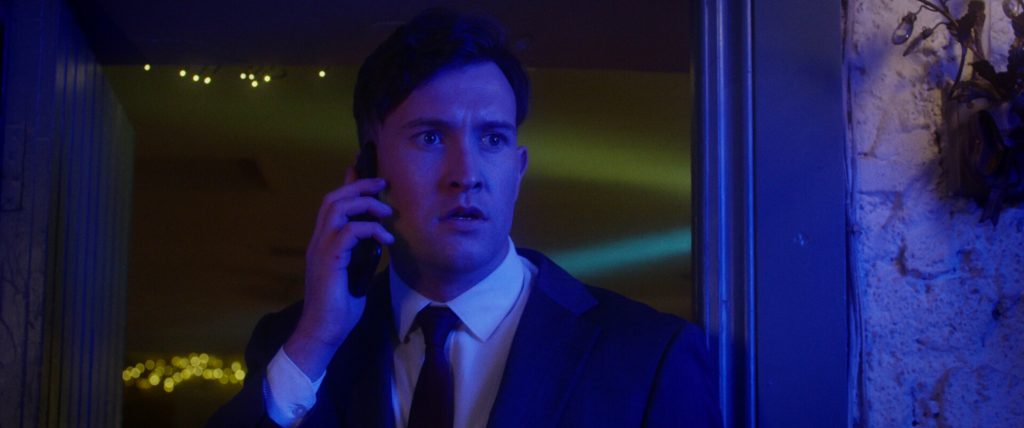
The film then introduces groom-to-be Fionn (John Kelly), who waits alongside his best man (Fabien Oman) for the arrival of Victoria (Bárbara Soares). When she appears, Fionn is understandably impressed, and the nervous excitement of the occasion quickly gives way to the ceremony itself. Vows are exchanged, guests congratulate the newlyweds and photographs commemorate what appears to have been a successful wedding.
Something isn’t quite right, however, and Hynes repeatedly cuts between the ceremony and those striking images of the woman preparing in front of the mirror, creating a subtle disconnection between the two strands. Unveiled then returns to an earlier point in the wedding, where Fionn is still waiting and Victoria has yet to arrive. What initially appeared to be the reality of their wedding now seems to have been something else entirely, and the short begins revealing the darker scenario concealed beneath its romantic surface.
Fionn eventually decides to look for his missing bride himself. Moving away from the ceremony, he discovers a photographer’s camera abandoned on the floor before heading outside, where a woman wearing Victoria’s wedding dress stands with her back towards him. His response is tenderness rather than suspicion. Fionn approaches her, embraces her and kisses her forehead, attempting to reassure the woman he believes to be his bride. He even suggests that perhaps they have rushed into marriage, and the apparent vulnerability of the moment makes what follows considerably more effective.
The sudden eruption of violence completely changes the character of the film when she stabs him. The smiling figure who resembles Victoria returns inside, where the candles extinguish and the wedding guests find themselves facing something far removed from the nervous bride they expected to see walking down the aisle. Armed with a large kitchen knife, she launches into an attack on those gathered for the ceremony.
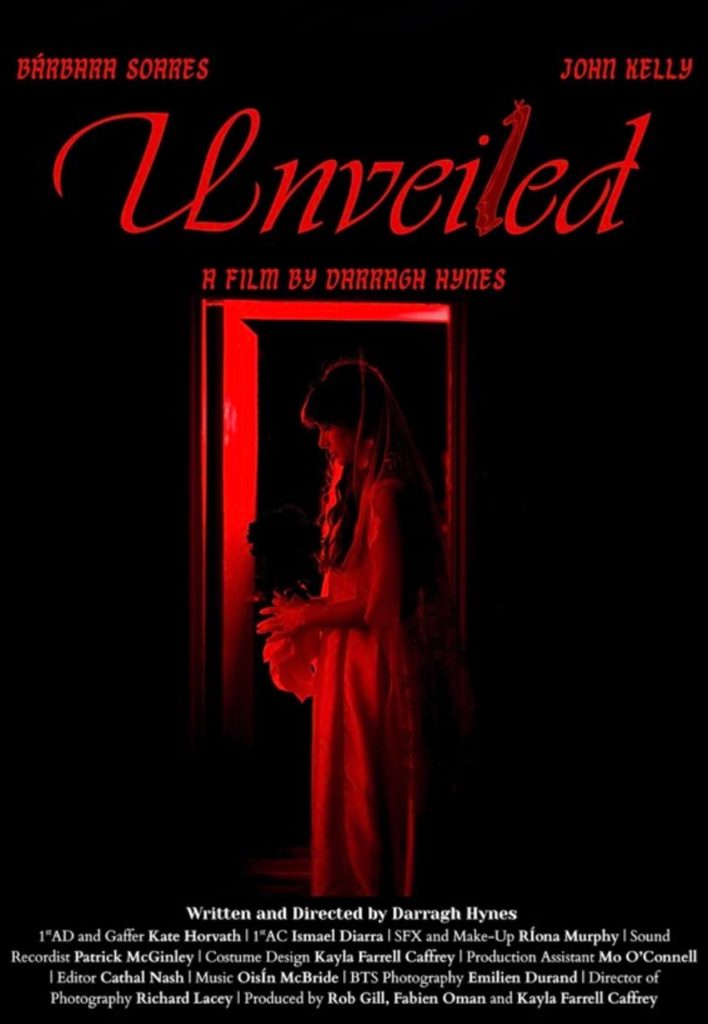
There is a wonderfully uncomplicated slasher quality to this section. Hynes doesn’t have the running time to transform Unveiled into an extended body-count film, nor does he attempt to. Instead, the violence acts as the bloody culmination of the atmosphere and visual mystery established during the opening minutes. It also provides an entertaining contrast with the elegance of the wedding imagery that preceded it, allowing the film’s carefully controlled beauty to suddenly give way to chaos.
The most important revelation comes afterwards. Another woman lies unconscious, and the murderous Victoria removes her wedding dress. When the real Victoria awakens, now dressed as the bride, she is surrounded by the aftermath of the massacre. Her horror is compounded when she makes her way outside and encounters the police, who understandably interpret the scene very differently. Victoria is arrested while the woman responsible has successfully disappeared.
A final image complicates matters further as the doppelgänger reads a news report concerning the murderous bride before burning a photograph of herself with Fionn. Exactly who or what she is remains unanswered, leaving the audience to consider several possibilities without confirming any of them. Is this woman Victoria’s twin? Is she some kind of supernatural entity capable of assuming Victoria’s appearance? What is her connection to Fionn, and what has motivated her elaborate act of murder and deception? Unveiled deliberately leaves those questions hanging.
That ambiguity is simultaneously one of the most intriguing and potentially frustrating aspects of Unveiled. For a short film lasting only 8 minutes and 24 seconds, leaving those questions unanswered isn’t necessarily a problem. Hynes is more interested in creating a mysterious nightmare than explaining its mythology, and the director’s own stated intention was to explore the anxiety that comes from never truly knowing another person. The doppelgänger therefore works effectively as both a horror device and an embodiment of that idea, even if viewers looking for concrete answers may be left wanting considerably more information.
There is enough material here that Unveiled could easily serve as the foundation for something larger. The identity of the impostor, her relationship with Fionn and the mechanics behind Victoria’s framing could support a much longer story. As presented, however, the lack of explanation gives the short an appropriately strange quality. We witness the consequences without being handed a convenient explanation for everything that has happened.
Where the film leaves little room for uncertainty is in its visual achievement. Cinematographer Richard Lacey does excellent work throughout, with precise framing, confident camera movement and lighting that provides Unveiled with an identity considerably more distinctive than its modest running time might suggest. The vivid red and blue sequences are particularly impressive, giving the imagery an almost dreamlike intensity while establishing from the opening seconds that realism isn’t the film’s primary visual objective.
The influence of Argento’s Suspiria is particularly apparent in the aggressive use of colour, while the broader combination of beauty, fashion and murder also recalls the highly stylised world associated with Mario Bava’s Blood and Black Lace. These comparisons feel appropriate because Hynes specifically cites both Argento and Bava as influences. More importantly, Unveiled doesn’t merely namecheck those filmmakers. There is genuine thought behind how colour, shadow and composition are being used.
That distinction matters because homage can easily become imitation, particularly when filmmakers draw from directors with visual styles as recognisable as Argento and Bava. Hynes and Lacey instead take inspiration from that tradition and apply it to a contemporary short built around its own central mystery. The result feels affectionate towards the cinema that inspired it without simply trying to reproduce somebody else’s film.
Cathal Nash’s editing is also important to the deception. The repeated movement between the apparent wedding and the woman preparing herself allows the audience to make assumptions before the chronology is disrupted. With barely eight minutes available, the film needs to communicate quickly, and the editing helps establish relationships, create uncertainty and deliver the eventual reversal without excessive exposition.
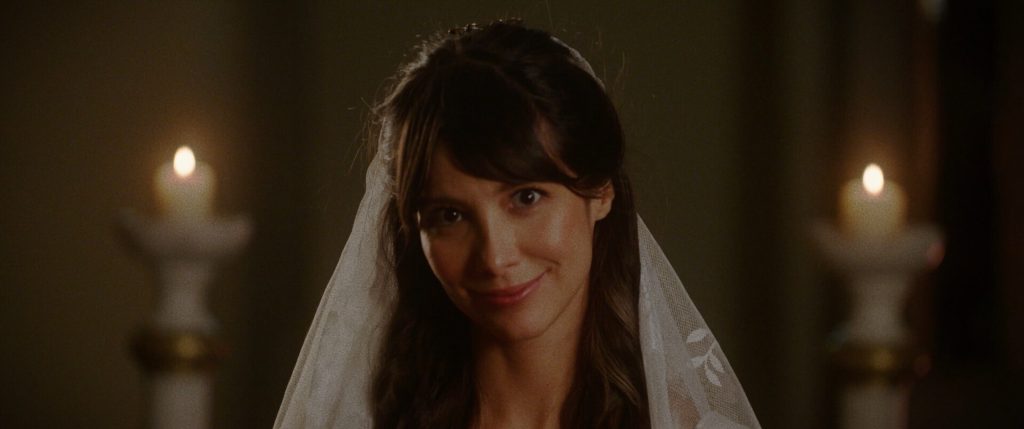
The cast also understands the heightened nature of the material. Kelly gives Fionn enough warmth during his brief interactions with Victoria for his fate to register, while Soares has the more unusual challenge of moving between bridal vulnerability and something altogether more sinister. Her manic expression during the murderous turn fits the film’s deliberately stylised horror language, and the performers appear fully committed to the increasingly outrageous direction the story takes.
Composer Oisín McBride’s music contributes further to the atmosphere, while the overall technical presentation is polished enough that Unveiled feels considerably more substantial than its running time might suggest. It is a short built around imagery and mood rather than dialogue-heavy character development, and the production sensibly concentrates its resources on those strengths.
Unveiled leaves plenty unexplained, perhaps deliberately so. Its doppelgänger raises questions that the film has no intention of answering, and there is certainly a larger mythology that could be explored should Hynes ever decide to return to this story. Yet demanding a detailed explanation would arguably work against the strange, nightmarish quality that makes the short enjoyable in the first place.
What remains is a stylish, entertaining and impressively photographed piece of horror filmmaking that knows exactly what aesthetic it wants to pursue. Hynes’ affection for Italian genre cinema is visible throughout, but Unveiled has enough confidence to be more than an exercise in imitation. Richard Lacey’s cinematography, the striking lighting and colour, Nash’s carefully structured editing and a game cast combine to make these eight minutes visually memorable.
Above all, Unveiled is fun, taking the familiar imagery of a wedding, corrupting it with a mysterious impostor and then letting the knives come out, all while looking terrific in the process. If Hynes’ intention was to pay tribute to the vivid beauty and macabre theatricality of the Italian horror filmmakers who inspired him, then Unveiled is a job very well done.
| Acting | |
| Direction | |
| Cinematography | |
| Writing | |
| Sound | |
| Screen Critix Rating |