
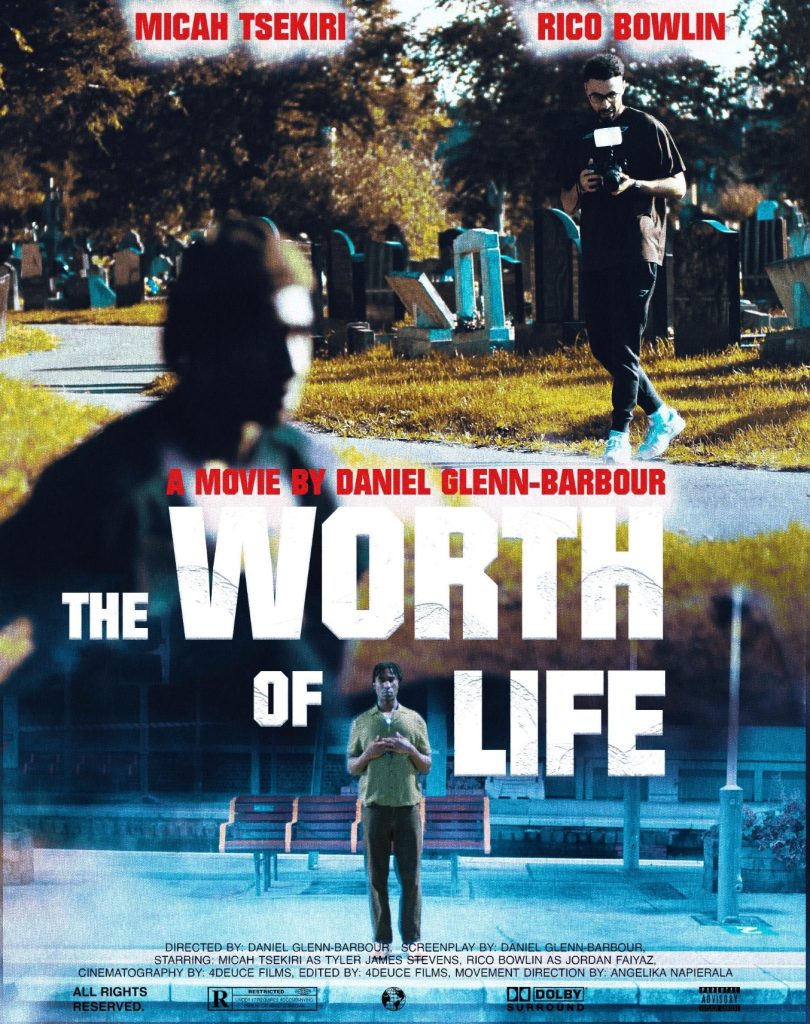
The Worth of Life announces its intentions before its story has properly begun. An opening card explains that the documentary we are about to watch was completed at Tyler’s request, followed by another urging anyone struggling with suicidal thoughts, depression or their mental health to speak to somebody rather than suffering in silence. It immediately establishes both the seriousness of Daniel Glenn-Barbour’s film and the unusual dramatic device through which it intends to explore its subject.
The film initially takes us into happier times. Tyler James Stevens (Micah Tsekiri) records his parents dancing and laughing in their living room as Sanchez’s “Live It Up” plays, with conversation turning to Jamaica and the possibility of eventually leaving England. The warmth of the moment is suddenly interrupted when Tyler’s mother begins coughing badly, prompting him to abandon the camera and rush to her aid. It is a simple introduction, but an important one, establishing the relationship at the centre of much of Tyler’s subsequent grief.
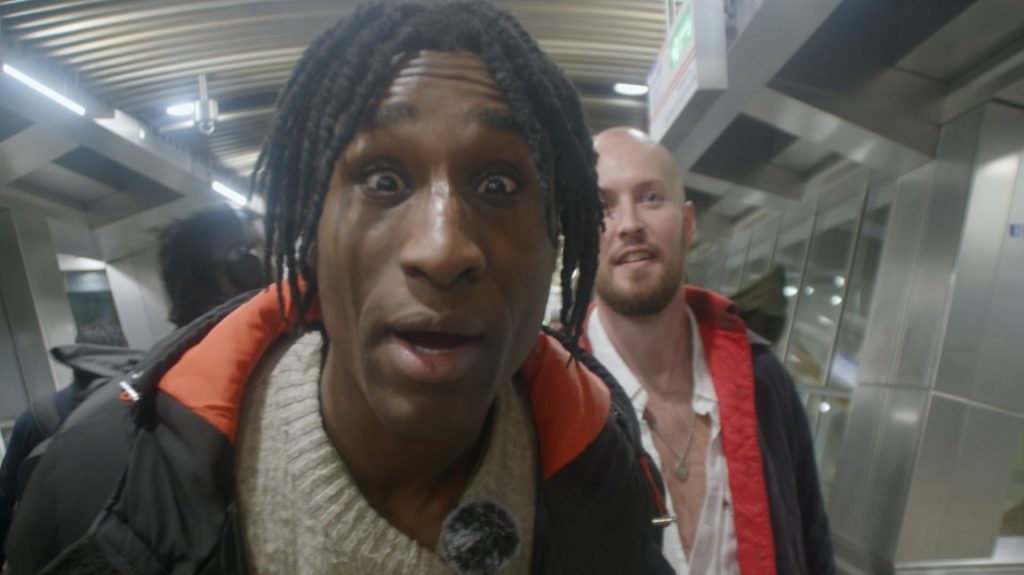
One year later, Tyler’s mother has died. We are introduced to videographer Jordan Faiyaz (Rico Bowlin), whose own life isn’t going particularly well after being thrown out by his girlfriend. Tyler hires him to shoot a documentary about men and suicide, paying him to film and promising additional money for the edit. The clever structural conceit is that the footage Jordan is supposedly recording becomes The Worth of Life itself, placing us inside Tyler’s documentary rather than simply watching a conventional drama about its production.
Grief Through the Camera
It doesn’t take long to discover how fractured Tyler’s life has become. His brother Ty-Rell (Ryan Thompson) angrily accuses him of failing to contribute financially at home and withdrawing from the family following their mother’s death. Tyler, meanwhile, talks confidently about his documentary eventually reaching millions of viewers and appearing on Netflix, while Jordan provides a more grounded counterweight to his ambitions.
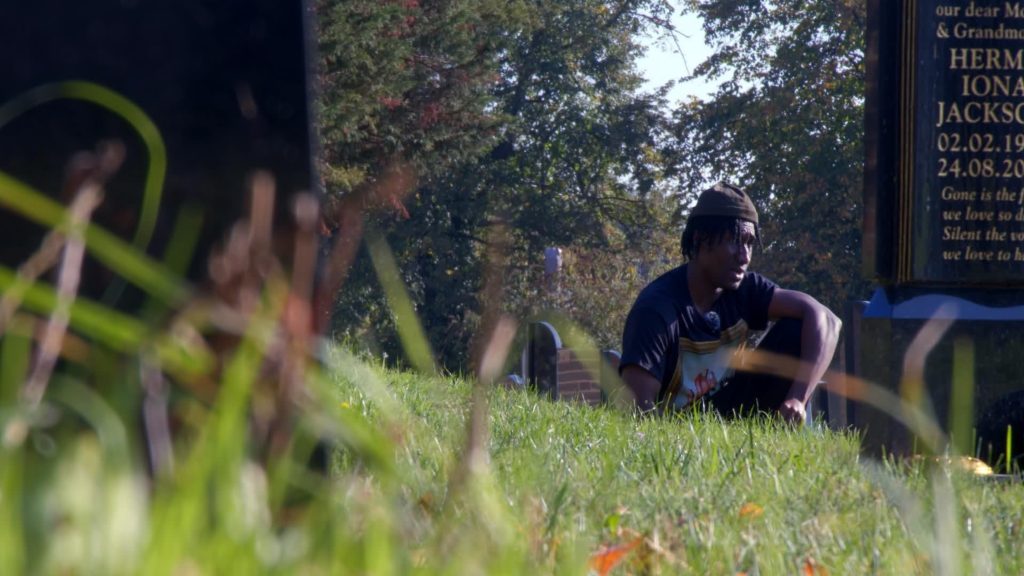
Tyler insists his project isn’t directly motivated by his mother’s death, instead pointing towards the collapse of his seven-year relationship with Kim (Millie Rushworth), who kissed one of his friends after his mother died. Yet grief permeates almost everything that follows. During a visit to his mother’s grave, Tyler asks for privacy but leaves his microphone recording as he speaks to her. Whether deliberately or otherwise, it creates an uncomfortable overlap between genuine mourning and Tyler’s desire to document himself.
That tension becomes one of the more interesting aspects of The Worth of Life. Tyler wants to make something meaningful about men’s mental health, but the camera also becomes somewhere to put emotions that he has struggled to process elsewhere. Older footage of Tyler with his mother adds context to this isolation. During a conversation at a train station, she worries about the deteriorating relationship between her sons and tells Tyler that she and his father will not always be around. Her fear that he could eventually find himself alone becomes particularly significant given the direction his life subsequently takes.
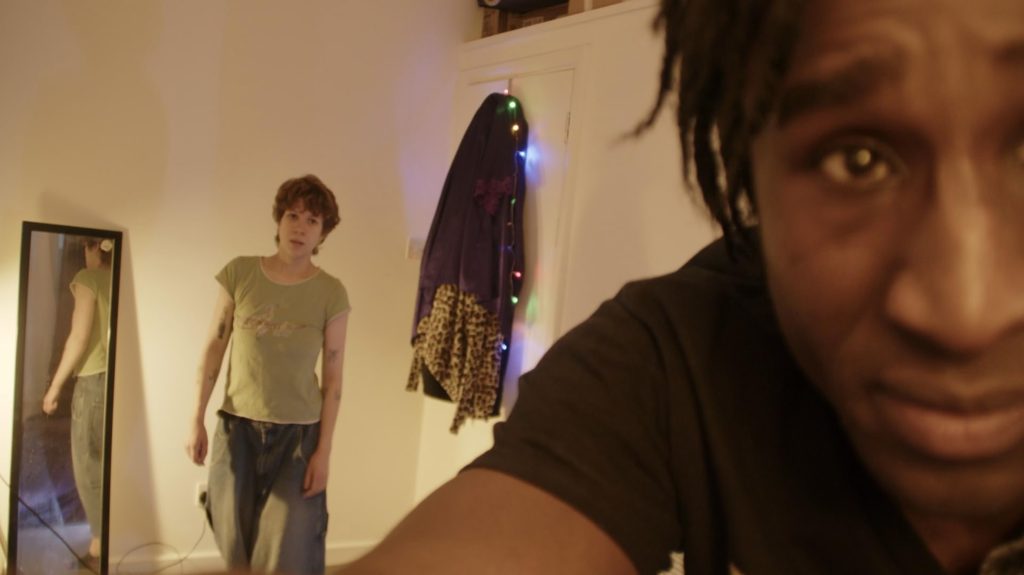
The film broadens its examination of Tyler through the people around him. His relationship with Kim is especially complicated, and their first encounter during the documentary is deeply uncomfortable. Tyler visits the theatre where she is preparing for a performance and quickly brings their failed relationship into the conversation. Jordan eventually encourages them to sit together in front of the camera, where Kim describes the support she provided after Tyler’s mother’s death and contrasts Tyler’s response to grief with that of his father and brother.
Later, Kim reveals that she is pregnant and that Tyler is the father, providing an unexpected possibility of a future just as the film has been quietly reminding us that Tyler may not believe he has one. His happiness is genuine, but the reaction when he tells his family is considerably less celebratory. They question how somebody struggling to manage his own life can possibly take responsibility for a child. The film therefore refuses to treat the pregnancy as an easy solution to Tyler’s mental health problems, and his suicidal thoughts remain an underlying presence despite the possibility of reconciliation and fatherhood.
The Worth of Life – When the Documentary Illusion Breaks
The mock-documentary format is both one of The Worth of Life’s most interesting qualities and its most significant weakness. Glenn-Barbour wants the audience to feel that these are people being captured during an intensely personal period rather than characters performing within a conventional feature film. The handheld photography, direct interviews and inclusion of apparently older family footage all contribute towards that intention.
For this approach to work completely, however, the performances need to become almost invisible. Unfortunately, there are numerous occasions when we remain conscious that we are watching actors performing scripted material. That would be far less problematic in a conventionally presented drama, but here it damages the central illusion. Found-footage and mock-documentary filmmaking depend heavily upon making us forget the filmmaking process, and once a performance feels noticeably performed, some of that immediacy disappears.
This shouldn’t diminish the considerable amount of work involved, particularly for Micah Tsekiri, who carries an enormous proportion of the film. Tyler can be grieving, angry, irrational, optimistic and confrontational, sometimes within a relatively short period, and Tsekiri commits fully to those shifts. Rico Bowlin also has an important role because Jordan increasingly functions as both cameraman and participant, giving the audience somebody through whom Tyler’s behaviour can be observed and questioned.
Not everything Tyler does makes him easy to support. At one point he becomes involved in his cousin’s relationship problems and confronts her former partner Rob (Tom Ray Williams), resulting in a physical fight that Jordan never expected to become part of. Jordan’s frustration is understandable. He agreed to film a documentary about men’s mental health, not become embedded in an increasingly volatile tour through every unresolved conflict in Tyler’s life.
At 95 minutes, The Worth of Life is an ambitious undertaking, particularly because so much of its dramatic weight rests on conversation rather than conventional plot mechanics. Some sections could have been tightened, and a shorter running time might have strengthened the urgency surrounding Tyler’s state of mind. Nevertheless, Glenn-Barbour deserves credit for attempting a feature built around a difficult subject without reducing suicidal ideation to a convenient dramatic twist.
The film has also received festival recognition, including Best Feature Film at the Athens International Art Film Festival and five wins at the Latitude Film Awards, where Tsekiri and Bowlin were recognised for their performances. Tsekiri has additionally received Best Actor awards from the Sweden Film Awards and Stockholm City Film Festival.
The Worth of Life is ultimately a film about far more than the documentary Tyler believes he is making. It examines bereavement, damaged relationships, masculinity, family responsibility and the dangerous isolation that can develop when somebody becomes overwhelmed by several forms of loss simultaneously. Its execution doesn’t always achieve the documentary realism it is aiming for, but the purpose behind the film is never difficult to understand.
Most importantly, its central message deserves to be heard. Mental health struggles and suicidal thoughts should not be faced alone, and seeking help or simply telling somebody what is happening can be an essential first step. The Worth of Life may be technically imperfect, but there is considerable sincerity and hard work behind its attempt to encourage that conversation, and that gives this independent British feature genuine value.
| Acting | |
| Direction | |
| Cinematography | |
| Writing | |
| Sound | |
| Screen Critix Rating |