
It is easy to think of data as something abstract, a collection of numbers and information existing somewhere beyond our immediate lives. Marco Milone’s 19-minute essay documentary The Power of Data argues otherwise, examining how almost every interaction with modern technology leaves behind a record of who we are, what interests us and how we behave. The unsettling part is not simply that this information exists, but that most of us surrender it so routinely that we barely think about doing so.
The film establishes that concern immediately. An opening statement recalls the 2013 revelations concerning global mass surveillance before the narration asks a deceptively simple question: how many times have you clicked “accept” today? It is something millions of us do automatically, usually because there is an article to read, a video to watch or something to buy, and an enormous box concerning cookies is standing inconveniently between us and whatever brought us to the website.
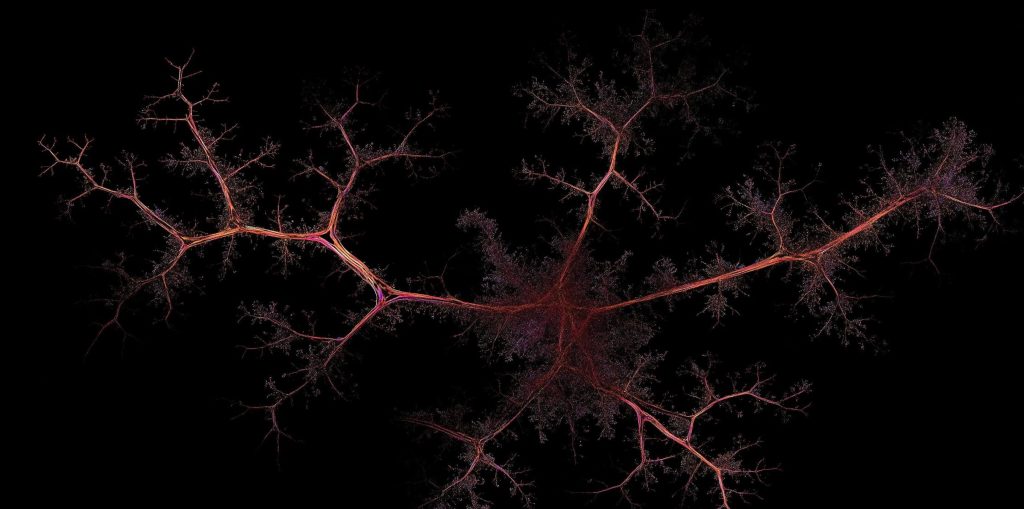
Milone uses that familiar action as an entry point into a much larger discussion. Every website visited, search performed, photograph shared and purchase made can contribute to the digital trail surrounding an individual. The Power of Data consequently asks questions that become increasingly difficult to ignore: who collects this information, who owns it and, perhaps most importantly, who ultimately decides how it will be used?
There are no conventional interviews or talking heads through which to explore those questions. Instead, Milone constructs the film from diagrams, typography, geometric imagery and animation accompanied by an AI-generated narration. Fingerprints, circuitry, machinery, networks and abstract visualisations create an appropriately technological landscape for a documentary concerned largely with infrastructure that cannot easily be photographed.
That decision gives The Power of Data a distinctive identity. A documentary about surveillance, networks and information could easily become 19 minutes of experts sitting in offices explaining technology while stock footage of server racks fills the gaps. Milone takes a more experimental approach, creating a visual environment that reflects the systems being discussed rather than attempting to represent them literally.
There is also an interesting contradiction built into the production itself. Milone has created a documentary questioning the implications of modern digital technology using some of the same AI tools that form part of that rapidly evolving technological landscape. Rather than undermining the argument, the approach feels appropriate. The Power of Data isn’t suggesting that technology itself should simply disappear. Its concern is how these tools operate, who controls them and how much people understand about the systems they increasingly depend upon.
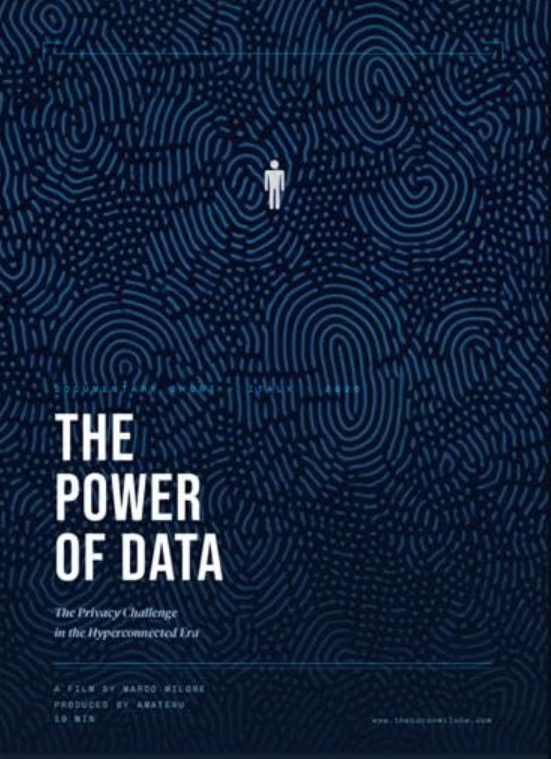
The film reaches back to the origins of computer networking, explaining how machines were initially connected so they could communicate with one another before the concept evolved towards linked information that could be accessed more widely. What once promised something resembling a universal library gradually became an infrastructure through which enormous portions of modern life now operate.
That transformation brought extraordinary convenience, but convenience is rarely free. Searching for something online or purchasing a product may feel like a straightforward exchange between consumer and service provider, yet information is also moving in the opposite direction. Our interests, habits and preferences have value, and The Power of Data repeatedly returns to the idea that participation in digital life means continually generating information about ourselves.
The documentary becomes even more effective when it moves away from computers and considers just how many connected devices now occupy our homes. Phones and computers are obvious, but televisions, security cameras, smartwatches, voice assistants and thermostats can all participate in the collection or transmission of information. Technology has become so integrated into everyday objects that the idea of being “online” no longer necessarily requires sitting in front of a computer.
Milone also considers how rapidly access to computing power has expanded. Capabilities that would once have required the resources of extremely wealthy organisations are now available far more widely, creating enormous opportunities while simultaneously expanding the potential for misuse. The same technological democratisation that allows small companies and individuals to accomplish extraordinary things also gives malicious actors increasingly sophisticated tools.
Cybersecurity therefore becomes another significant part of the documentary. The Power of Data discusses vulnerabilities in connected devices, malware, ransomware and the constant effort required to protect networks. The imagery and narration begin to make the digital world feel less like an invisible convenience and more like an enormous infrastructure under permanent pressure.
The documentary references the 2016 malware attack involving hundreds of thousands of connected devices, many of them surveillance cameras, as an illustration of what can happen when a common vulnerability exists across vast numbers of products. The idea that an everyday object can become part of a much larger cyberattack without its owner necessarily realising it is precisely the kind of detail that makes the subject so unnerving.
One of the more unexpected sections examines pornography’s relationship with technological development and image distribution. The film uses such examples to demonstrate that technological innovation doesn’t always progress according to the clean, respectable history that later summaries might suggest. Human desire, commerce, warfare and curiosity have repeatedly pushed communication technologies in unexpected directions.
Deepfakes are similarly placed within a broader history rather than treated as an entirely new phenomenon. Manipulating someone’s image predates artificial intelligence and even digital photography, with physical photographs capable of being altered using considerably more primitive tools. What has changed is the sophistication, accessibility and speed with which convincing manipulation can now be produced and distributed.
The Power of Data subsequently moves into cybercrime, compromised accounts, ransomware, the dark web and markets in stolen personal information. Details that people naturally consider private can become commodities with surprisingly low monetary values when traded in sufficient quantities. Individually, an email address or compromised credential may seem insignificant. Aggregated across millions of people, data becomes an extraordinarily valuable resource.
The film’s soundtrack plays an important role in preventing all this information from feeling like a presentation. Beneath the narration sits a strange, repetitive musical quality, at times resembling a sparse harpsichord figure. It is understated but eerie, complementing images of networks, clouds, machinery and digital structures without trying to manufacture artificial suspense.
That restraint benefits the film considerably. Milone doesn’t need to turn data collection into a conspiracy thriller because the documented reality is unsettling enough. The most effective moments simply encourage viewers to reconsider behaviours that have become completely normal. Clicking a button, carrying a phone, wearing a smartwatch or speaking to a connected device hardly feels dramatic, yet collectively those interactions can create an extraordinarily detailed portrait of a person’s life.
The AI-generated narration is clear and direct, although its deliberately synthetic quality creates a certain emotional distance. That arguably suits an essay documentary built around systems rather than individual human stories, but it also means The Power of Data can occasionally feel more like a visual argument than an emotionally involving documentary. There are no individual victims or protagonists through whom these issues are personalised.
That choice has both strengths and limitations. Removing interviews allows Milone to cover an impressive amount of territory in only 19 minutes without constantly interrupting the flow to introduce new contributors. Conversely, the sheer breadth of the subject means some enormous topics can only be touched upon before the documentary moves onwards. Surveillance, artificial intelligence, cybersecurity, deepfakes, ransomware, anonymity, the dark web and connected devices could each sustain a feature-length documentary of their own.
The Power of Data is therefore best understood as an introduction to a much larger conversation rather than an attempt to provide definitive answers. Its achievement is making connections between technologies and behaviours that can otherwise feel unrelated, encouraging the viewer to consider them as parts of the same evolving digital ecosystem.
There is an additional effectiveness to the film’s short running time. At 19 minutes, Milone doesn’t exhaust the audience with statistics or bury the central argument beneath excessive technical explanation. The documentary raises an idea, provides context and moves forward, leaving much of the deeper consideration to take place after the credits.
That is precisely what happened with us. The more you consider how many devices, accounts and services have become embedded in everyday life, the more uncomfortable the subject becomes. There is a temptation to imagine deleting every social media account, throwing the smartphone into a drawer and retreating to a simpler technological age. Perhaps the 1980s really were humanity’s peak and we simply didn’t appreciate it while we were rewinding VHS tapes and trying to make the television stop flickering.
That might be an extreme response, but the discomfort behind it is genuine. Modern technology has delivered extraordinary access to communication, entertainment, information and services, yet The Power of Data asks whether convenience has progressed faster than our understanding of what we exchange for it.
Marco Milone has created an intelligent and visually distinctive essay documentary that manages to cover an enormous subject without becoming inaccessible. Its constructed imagery, restrained but unsettling soundscape and concise narration make complicated systems understandable, while its refusal to reduce the issue to a single villain gives the film greater maturity than a simple warning about technology would have provided.
The Power of Data is only 19 minutes long, but its questions have a habit of remaining with you considerably longer. It is informative, occasionally eerie and increasingly relevant in a world where almost every aspect of life leaves some form of digital trace. You don’t always need a masked killer wielding a machete to make an audience uncomfortable. Sometimes all you need to do is show them what may already be happening quietly beneath their fingertips.
| Acting | |
| Direction | |
| Cinematography | |
| Writing | |
| Sound | |
| Screen Critix Rating |