
There is something enduringly appealing about stories in which a group of children discover that something they love is about to disappear and collectively decide that the adults clearly aren’t fixing the problem quickly enough. Saving Cedar embraces that familiar formula with considerable enthusiasm, delivering a bright, musical and unapologetically wholesome short about young performers attempting to save their beloved arts school.
Written and directed by C.G. Ryche, the 23-minute comedy centres on Cedar Performing Arts, where a group of young musicians and performers spend their time learning, rehearsing and generally enjoying being part of a creative community. Their comfortable existence is threatened when student Frankie overhears Mr. Smith discussing the school’s increasingly precarious financial position.

Competition from the newly opened Shark Artz Studio has placed Cedar under considerable pressure, leaving its future uncertain. Frankie shares what he has discovered with his fellow students, and before long the youngsters have decided that they aren’t going to simply watch their school disappear.
It is a deliberately straightforward premise and Saving Cedar doesn’t attempt to disguise where its sympathies lie. Cedar represents friendship, creativity and a place where these children feel they belong. The potential closure therefore matters to them for reasons extending beyond losing somewhere to practise an instrument or attend a lesson.
The young characters respond in the manner expected of an enthusiastic group of performers: they decide to put on a benefit concert. It is hardly a revolutionary solution, but the familiarity is part of the film’s charm. Saving Cedar isn’t particularly interested in subverting the children’s entertainment formula. It wants its audience to enjoy watching a group of youngsters throw themselves into a problem with considerably more optimism than experience.
Their initial plan to stage the concert in a park soon encounters the decidedly unexciting reality of fees and associated costs, forcing them to reconsider. The solution ultimately comes through technology, with the proposed physical event becoming an online livestream capable of reaching a much larger audience.
Conveniently, the two quiet sisters regarded as slightly unusual by the other children happen to possess an enormous social media following. It is a fairly sizeable coincidence, but one entirely in keeping with the exaggerated world Saving Cedar creates. The film operates with the broad logic of children’s television rather than grounded social realism, and accepting that tone is essential to enjoying what follows.
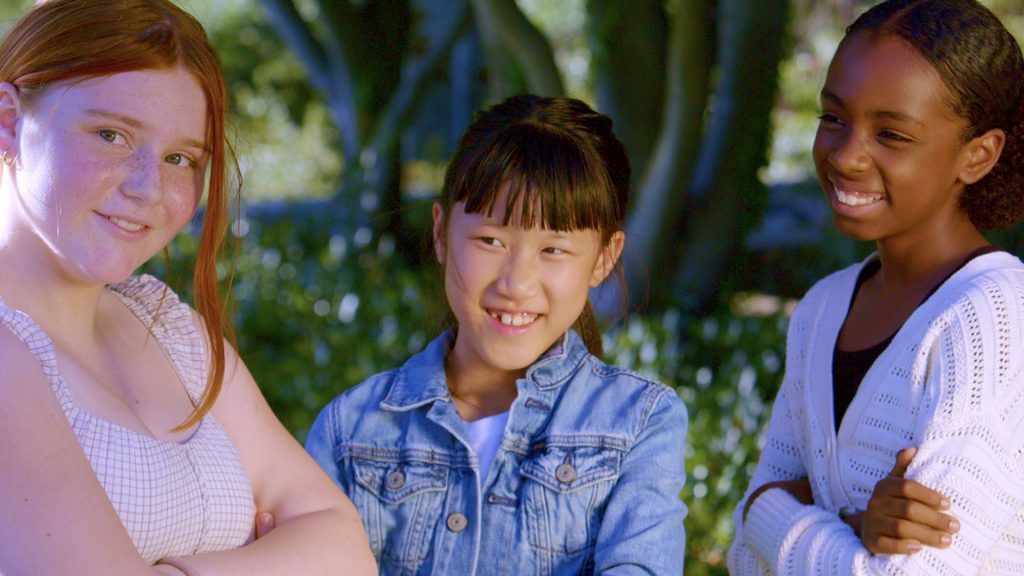
That extends to the performances. There is a great deal of energy among the young ensemble, although several of the children push their delivery considerably too far. Reactions are often enormous, dialogue can be emphatically performed and personalities are drawn in very broad strokes. The result can occasionally feel more like a children’s television production or youth theatre performance than a naturalistic film.
Yet that same lack of restraint also gives Saving Cedar much of its personality. There is never any question that the youngsters involved are throwing themselves into the production, and their enthusiasm is difficult to dislike even when individual performances become overly theatrical. For an audience around the same age as the characters, that heightened approach may prove considerably more appealing than it will to adults expecting understated performances.
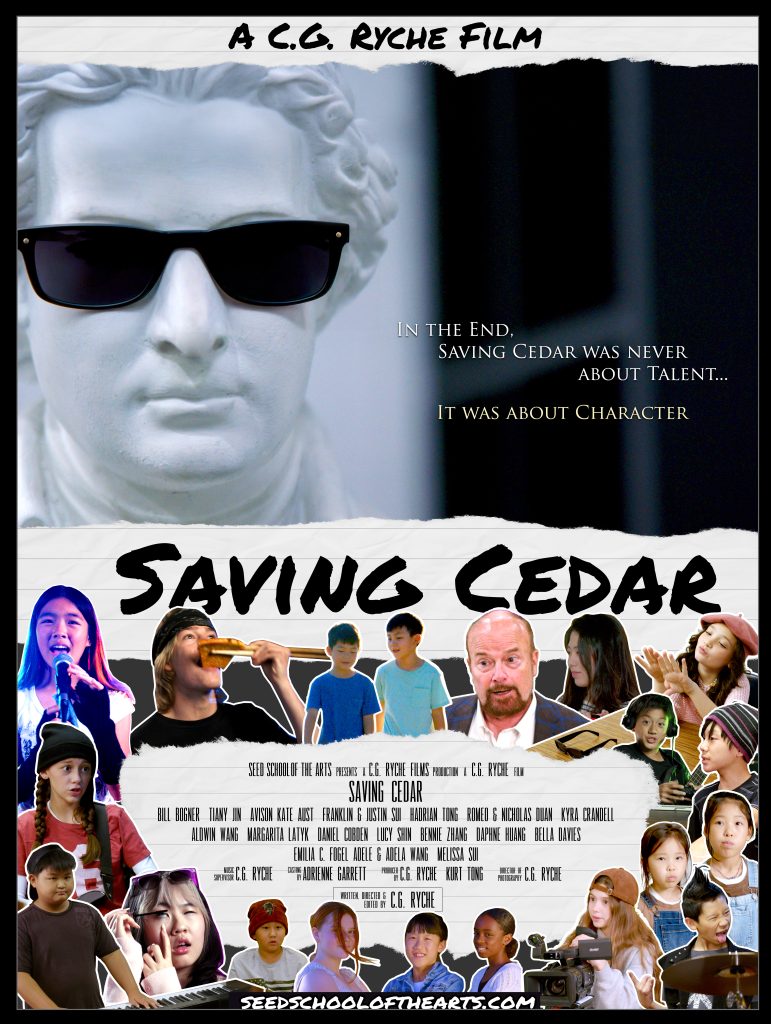
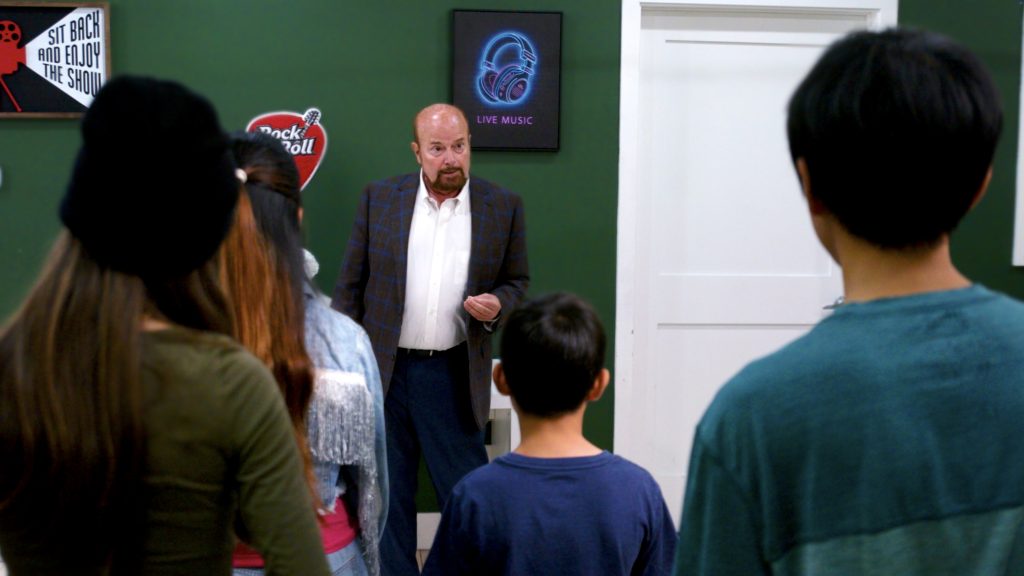
Franklin Sui plays Frankie Tong, with Tiany Jin as Ava Star, Avison Kate Aust as Dana Savage, Daniel Cobden as The Chaz Man, Kyra Crandell as Beth Stalling, Margarita Latyk as Patricia Scott, Lucy Shin as Tiffiny Pink and Hadrian Tong as Bam Bam. Adele and Adela Wang appear as Weasel and Dweezil, while Bill Bogner plays Mr. Smith.
The size of the ensemble means there isn’t much opportunity for substantial individual character development across 23 minutes. Saving Cedar instead treats the students collectively, building its story around the group and the different personalities bouncing against one another. Some make a stronger impression than others, but the film is primarily interested in what they can accomplish together.
One running joke involves Bam Bam inexplicably speaking in what the other characters identify as an English accent. The accent itself isn’t especially convincing, but the film at least recognises the oddity and incorporates the reactions of the other students into the joke. It is representative of Saving Cedar’s broader comedic approach: silly, exaggerated and aimed unapologetically towards younger viewers.
The competing Shark Artz Studio provides another source of comedy. Cedar’s students watch online videos produced by youngsters from the rival school, including one discussion pondering whether the logic of Toy Story might also apply to food when nobody is watching. The Cedar students are distinctly unimpressed, strengthening their determination to preserve the place they already consider home.
Musically, the film has more success. The electronic score immediately gives Saving Cedar an energetic personality, while the eventual benefit performance provides the short with the lively climax it has been building towards. Before the concert can properly begin, malfunctioning equipment and other technical problems create the obligatory final obstacles for the children to overcome.
Once everything is working, the performance of “Shining Star” is genuinely catchy. The polished vocals don’t always feel entirely matched to the children apparently performing them on screen, but as a piece of music it is one of the short’s strongest assets and gives the climactic sequence the upbeat quality it needs.
Ryche also served as cinematographer, composer and editor in addition to writing, directing and producing the film, making Saving Cedar a particularly personal production behind the camera. Visually, it has the colourful and accessible appearance appropriate to its intended tone, while the musical emphasis keeps the film moving through its relatively brief running time.
There is an obvious affection for these characters and the performing arts environment they inhabit. Saving Cedar doesn’t treat music merely as decoration for its story. The school represents a community built around young people being given the opportunity to create something together, which makes their determination to preserve it understandable even when the narrative surrounding that effort becomes extremely cheesy.
And Saving Cedar certainly isn’t afraid of cheese. The screenplay embraces inspirational speeches, teamwork, convenient solutions and an eventual message about believing in something strongly enough to fight for it. For younger audiences, much of that earnestness will probably be part of the appeal. Adults may find themselves considerably more aware of the machinery pushing everything towards its uplifting conclusion.
The religious element towards the end is less successful. Faith is clearly intended as one of the values underpinning the film, but the decision to introduce prayer into the children’s efforts risks diminishing what is more satisfying about the story. These youngsters have already identified the problem, devised solutions, adapted when their first idea failed and worked together to stage the livestream.
Their achievement is therefore more compelling when understood as the result of determination and teamwork rather than something requiring intervention from a higher power. The film had already established a perfectly effective message about young people refusing to give up on something important to them, making the additional spiritual emphasis feel unnecessary.
Saving Cedar is at its most appealing when it simply allows the children to be enthusiastic, slightly chaotic and completely committed to their improbable rescue mission. There is an innocence to the premise that recalls the kind of Saturday morning children’s entertainment where problems are substantial enough to matter but never so overwhelming that friendship, music and an ambitious plan cannot potentially solve them.
In fact, Cedar Performing Arts feels as though it could comfortably support more stories. The collection of eccentric students, their teachers and the musical environment has the basic ingredients for an episodic children’s series, where each instalment could revolve around another performance, rivalry or crisis within the school.
Whether that potential is ever explored is another matter, but it illustrates what works about the short. The world is uncomplicated, colourful and populated by characters whose enthusiasm gives the production its identity. Saving Cedar understands the audience it is primarily speaking to.
For older viewers, the exaggerated performances, predictable narrative and frequent sentimentality may prove harder to overlook. The film rarely surprises, and some of its emotional beats are delivered with considerably more force than necessary. There is a stronger version of the material that could retain the youthful exuberance while encouraging greater naturalism from the cast and trusting its central message to emerge without being repeatedly reinforced.

Even with those weaknesses, it is difficult to dismiss the obvious effort that has gone into the production. Ryche gives the young ensemble a film in which they are genuinely central rather than merely supporting adults, while the performers themselves appear completely committed to the colourful world around them.
Saving Cedar is ultimately a sweet, energetic and extremely earnest short that knows exactly what kind of film it wants to be. It is cheesy, some of the performances are wildly overplayed and its late religious emphasis isn’t necessary, but there is warmth underneath all of it, accompanied by some genuinely enjoyable music.
Younger viewers may prove considerably more forgiving of its rougher edges than adults, and it isn’t difficult to imagine Saving Cedar finding a comfortable home alongside children’s weekend programming. Cedar Performing Arts is worth saving because of what it means to the youngsters who gather there, but the film works best when it remembers that the kids themselves are responsible for giving the place its value in the first place.
| Acting | |
| Direction | |
| Cinematography | |
| Writing | |
| Sound | |
| Screen Critix Rating |