
Few films have achieved cinematic immortality quite like Tommy Wiseau’s The Room. Released in 2003, the independently produced drama has become a cultural phenomenon, celebrated not for its artistic brilliance but for an extraordinary collection of questionable performances, baffling dialogue, peculiar storytelling decisions and technical shortcomings. What began as an obscure production has developed into one of cinema’s most enduring cult attractions, with audiences continuing to attend screenings specifically to enjoy its many unintended comedic qualities. Yet, despite the numerous books, interviews and films devoted to its creation, there are apparently still stories waiting to be told about what happened behind the camera.
That is precisely where Room Tone: The Sound of “The Room” comes in. Directed by Josh Folan, Ted Garvey and Jonathan Mann, this entertaining 27-minute documentary examines the chaotic production through the experiences of two men responsible for recording its dialogue: production sound mixer Zsolt Magyar and boom operator Tim D. Lloyd. Their recollections provide a fascinating glimpse into the practical difficulties of working on a film where the director’s unconventional methods frequently created more problems than they solved.

For those unfamiliar with Wiseau’s infamous feature, The Room tells the story of Johnny, a seemingly generous and devoted man whose relationship with his fiancée, Lisa, begins to unravel when she becomes involved with his best friend. On paper, it is a relatively straightforward romantic melodrama. On screen, however, almost every aspect of the production appears to operate according to its own mysterious logic, resulting in a film that has attracted a remarkably devoted following.
Its reputation eventually inspired Greg Sestero and Tom Bissell’s book The Disaster Artist, which was subsequently adapted into the acclaimed 2017 film directed by and starring James Franco as Wiseau, alongside Dave Franco as Sestero and Seth Rogen in a supporting role. These accounts helped introduce the extraordinary circumstances surrounding The Room to an even wider audience, establishing Wiseau as one of independent cinema’s most recognisable and unconventional personalities.
With so much already documented about the production, another behind-the-scenes examination might initially seem unnecessary. However, Folan, Garvey and Mann have identified a particularly interesting perspective by concentrating upon the sound department, whose responsibilities were complicated by everything from inadequate equipment to questionable decisions about how the film would ultimately be assembled.
The documentary begins by introducing Magyar and Lloyd, who sit together and discuss how they became involved in the production during 2002. Neither possessed extensive professional experience at the time, and for Lloyd, the opportunity represented his first paid job in the film industry. What should have been an exciting introduction to professional filmmaking quickly became an education in just how unpredictable a film set could become.
Their accounts of Wiseau’s working methods are frequently astonishing. According to the two men, the filmmaker would regularly arrive several hours late, leaving cast and crew waiting around without clear instructions about how to proceed. With Wiseau serving as both director and leading actor, his absence created an obvious problem: nobody appeared to know what they were supposed to be filming.
The situation apparently became even more absurd when Wiseau eventually arrived and expressed his frustration that filming had not already commenced. One can only imagine the confusion among crew members who had spent the morning waiting for the very person now demanding to know why they had accomplished so little.
It is the sort of anecdote that might sound exaggerated if it concerned almost any other filmmaker. However, given the extraordinary history surrounding The Room, it seems entirely consistent with the production’s reputation.
One particularly memorable moment involves a black-and-white photograph of Magyar sitting beside his sound equipment with his head in his hands. It is an image that communicates considerable frustration without requiring any explanation, although the accompanying stories provide more than enough context.
Another unusual requirement involved recording dialogue not only through the conventional sound equipment but also onto cassette tapes. Wiseau apparently wanted copies that he could play in his car, meaning the department had to accommodate an additional recording process alongside its normal responsibilities.
There is something wonderfully peculiar about the idea of a filmmaker overseeing a production of this scale while insisting upon a separate cassette recording of the performances. It is hardly surprising that the sound department encountered difficulties when even relatively straightforward tasks were being complicated by such requests.
Perhaps the most revealing technical anecdote concerns Wiseau’s decision to shoot the film using both film and digital video cameras. The two formats operated with different recording and playback requirements, creating significant complications for maintaining synchronisation between picture and sound.
Magyar explains that he attempted to establish which format would be used for the finished film, since this information was essential for planning the sound workflow. Wiseau reportedly assured him that the film footage would be selected, only for the final production to rely upon the digital video material instead.
The resulting problems demonstrate how decisions made during principal photography can create considerable difficulties further down the production process. For anyone with experience in filmmaking, particularly in sound recording or post-production, this section will be both fascinating and faintly horrifying.
The documentary also explores the limitations of the equipment available to the sound team. With only two wireless lavalier microphones and a boom microphone at their disposal, recording scenes involving several speaking characters became an extremely difficult undertaking.
One sequence involving seven performers presented a particular challenge, prompting Magyar to approach cinematographer Raphael Smadja about the lighting arrangements. His intention was to establish whether the scene could be illuminated in a way that allowed the boom microphone to be positioned effectively without appearing in the shot.
It was a perfectly reasonable request from a technical perspective, since successful filmmaking depends upon different departments working together to achieve a satisfactory result. Unfortunately, the conversation apparently developed into a confrontation, with Smadja emphasising his considerably greater experience in the industry.
When Magyar subsequently informed Wiseau about the incident, the director became involved in an argument with the cinematographer. According to the documentary, Smadja was no longer working on the production the following day.
This episode illustrates another recurring theme throughout the interviews: the remarkable instability of the crew. While other departments experienced departures and dismissals, Magyar and Lloyd managed to remain involved, giving them a particularly valuable perspective on the production’s increasingly chaotic atmosphere.

Their accounts also reveal something important about the experiences of inexperienced crew members entering the industry. When working on an unfamiliar production, particularly under a director with an unpredictable temperament, it can be difficult to know whether unusual demands are simply part of the professional environment or evidence that something has gone seriously wrong.
Magyar and Lloyd were attempting to perform their duties to the best of their abilities, often without the resources or cooperation required to achieve the results they wanted. Their stories are entertaining today, but one suspects that the circumstances were considerably less amusing while they were actually happening.
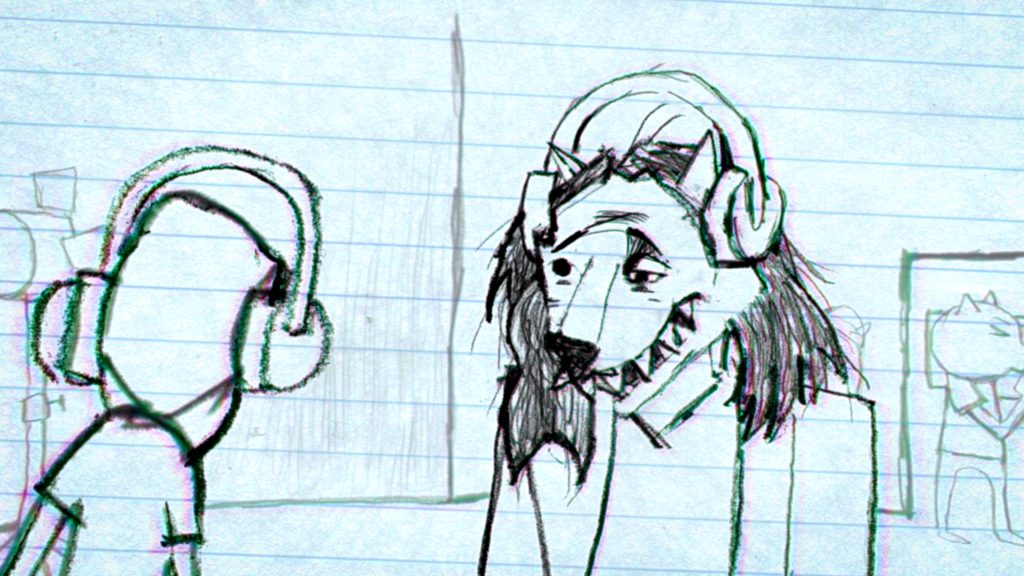
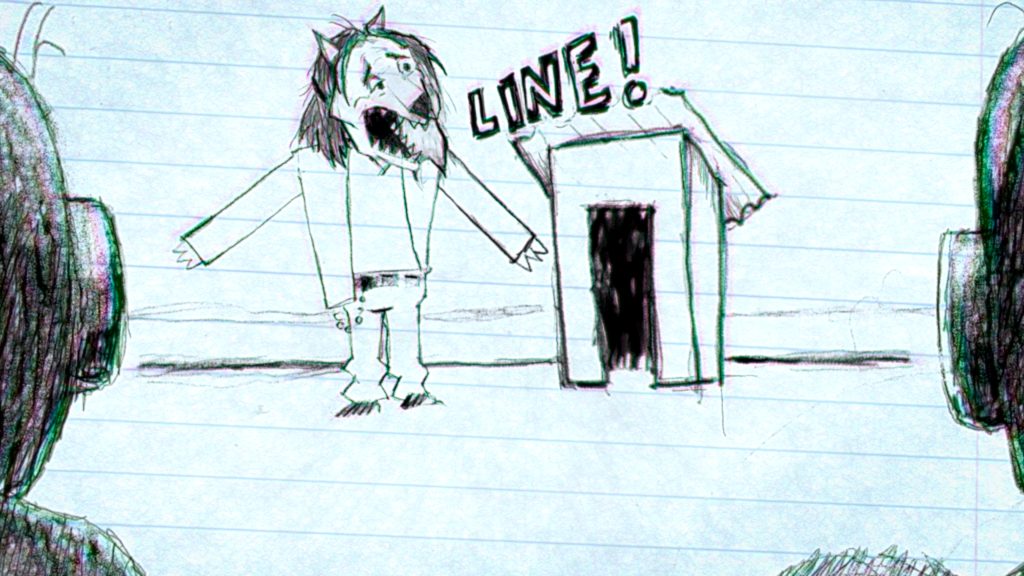
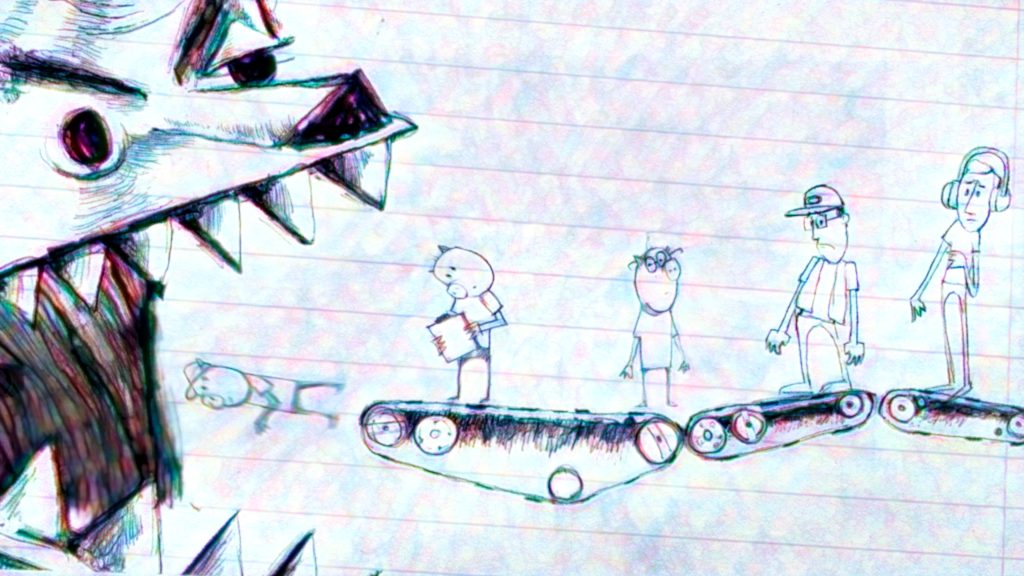
Fortunately, the documentary never becomes a dry technical examination of sound recording. Although the central interviews provide most of the information, the filmmakers introduce a particularly effective visual element through a series of deliberately crude animated reconstructions.
These sequences recreate moments from the production with a wonderfully anarchic sense of humour, portraying Wiseau as a long-haired figure with the head of a wolf. The character storms around the animated sets, shouting at crew members and contributing to the general disorder.
The illustrations are intentionally rough, but their exaggerated style suits the material perfectly. Rather than attempting to recreate events with polished dramatic reconstructions, the filmmakers embrace the absurdity of the recollections, allowing the animation to reflect the chaotic nature of the production itself.
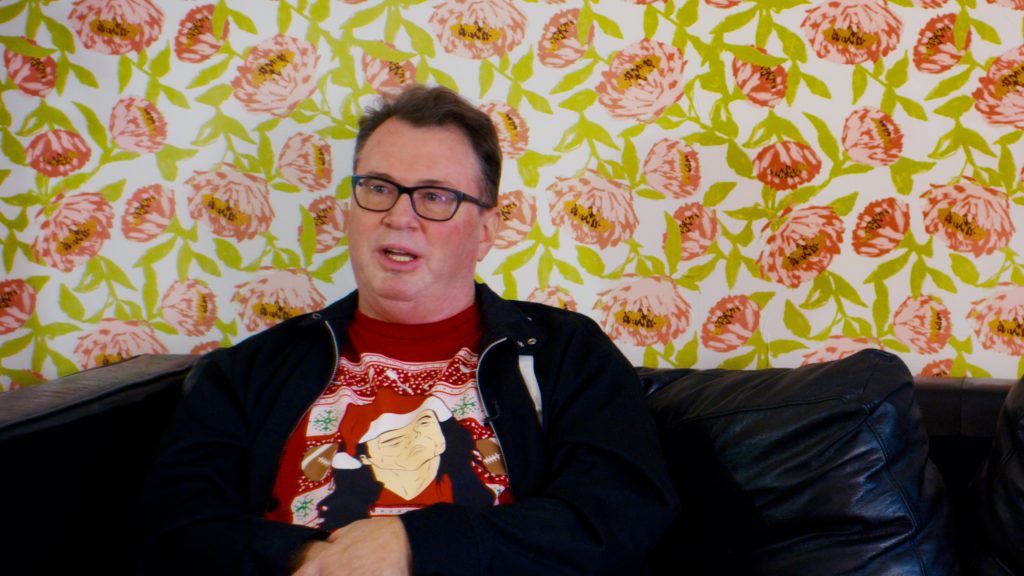
The decision is especially effective because the documentary otherwise relies upon a relatively simple interview arrangement. Magyar and Lloyd are generally filmed together on a sofa, with the camera alternating between a two-shot and individual compositions as they recount their experiences.
There is nothing particularly elaborate about this approach, but the two contributors are sufficiently engaging to sustain the audience’s attention. Their familiarity with one another and their shared memories create a relaxed conversational atmosphere, while the animated sequences provide welcome visual variety.
The filmmakers clearly understand that the appeal of the documentary lies in the stories themselves. Rather than distracting from the interviews with unnecessary stylistic flourishes, they allow Magyar and Lloyd to speak openly, using the animation to illustrate the more extraordinary incidents.
The editing maintains an enjoyable rhythm, moving between anecdotes without allowing the material to become repetitive. At approximately 27 minutes, the film is long enough to explore several memorable incidents while remaining concise enough to avoid overstaying its welcome.
What makes the documentary particularly interesting is that it examines a department often overlooked in popular discussions about filmmaking. Audiences frequently concentrate upon directors, actors, cinematographers and editors, but the importance of production sound cannot be overstated.
Poorly recorded dialogue can undermine an otherwise accomplished scene, while synchronisation problems and inadequate microphone coverage can create expensive complications during post-production. Sound crews must therefore anticipate potential difficulties and collaborate closely with other departments, often while working within demanding practical limitations.
In the case of The Room, those challenges were compounded by a director whose approach to filmmaking appears to have been anything but conventional. The documentary offers an entertaining reminder that even a production remembered primarily for its disastrous creative decisions required numerous technicians attempting to carry out their responsibilities under difficult circumstances.
It is also refreshing to hear from individuals who were present throughout much of the filming without necessarily occupying the centre of Wiseau’s personal circle. Their perspective differs from the more familiar accounts associated with the leading performers, concentrating instead upon the everyday realities of working on the set.
There is an interesting contrast between the affection with which The Room is now regarded and the frustration apparently experienced by those responsible for making it. What audiences celebrate as wonderfully incompetent entertainment was, for the crew, a professional assignment involving long hours, technical problems and unpredictable working conditions.
More than two decades later, however, those experiences have become part of an extraordinary filmmaking legacy. The Room continues to attract audiences at special screenings, where its unusual dialogue and memorable scenes are greeted with laughter and enthusiastic participation.
Very few independently produced films enjoy such an enduring theatrical existence, and even fewer achieve it for reasons their creators almost certainly never intended. Wiseau’s feature has become a curious example of how audiences can establish an entirely different relationship with a film from the one originally envisioned by its director.
Room Tone contributes another worthwhile chapter to that history. Although its subject has already been examined extensively, the documentary succeeds in presenting genuinely interesting material by concentrating upon a specific technical department and allowing those involved to explain what happened from their own perspective.
There is also a welcome sense that the filmmakers are interested in more than simply ridiculing Wiseau. While many of the anecdotes are undeniably hilarious, the documentary’s broader portrait acknowledges the complexities of working with such an unconventional individual. Its concluding material introduces a more unexpected aspect of his personality, providing an interesting counterpoint to the stories of confrontation and confusion that dominate the earlier sections.
That additional perspective prevents the film from becoming merely another collection of jokes at Wiseau’s expense. Instead, it recognises that the people responsible for even the most notoriously troubled productions can be more complicated than their public reputations suggest.
Room Tone: Another Fascinating Chapter in The Room’s History
For admirers of The Room, this documentary is an easy recommendation. It provides fresh insight into a production that has already generated an extraordinary amount of discussion, while the engaging contributors and amusing animated sequences make the experience consistently entertaining.
It should also appeal to filmmakers interested in the practical realities of production, particularly those working within sound departments. Some of the situations described will undoubtedly provoke disbelief, although others may inspire uncomfortable recognition among anyone who has experienced a difficult independent film shoot.
Indeed, Room Tone would make an excellent addition to the supplementary material of a future collector’s edition of The Room. Its compact running time, technical focus and entertaining presentation make it precisely the sort of behind-the-scenes documentary that boutique physical media labels should be seeking when assembling comprehensive releases.
Ultimately, Room Tone: The Sound of “The Room” is an amusing, informative and thoroughly enjoyable documentary that demonstrates there are still worthwhile stories to uncover about one of cinema’s most infamous productions. Folan, Garvey and Mann make excellent use of their two central contributors, combining engaging interviews with inventive animation and confident editing to create a film that is both entertaining and surprisingly revealing.
For a feature that has been discussed, dissected and celebrated for more than twenty years, discovering another perspective is no small achievement. Room Tone manages precisely that, reminding us that behind every legendary cinematic disaster are people who somehow had to make the thing work.
And judging by these accounts, recording the dialogue was quite an achievement in itself.
| Acting | |
| Direction | |
| Cinematography | |
| Writing | |
| Sound | |
| Screen Critix Rating |