
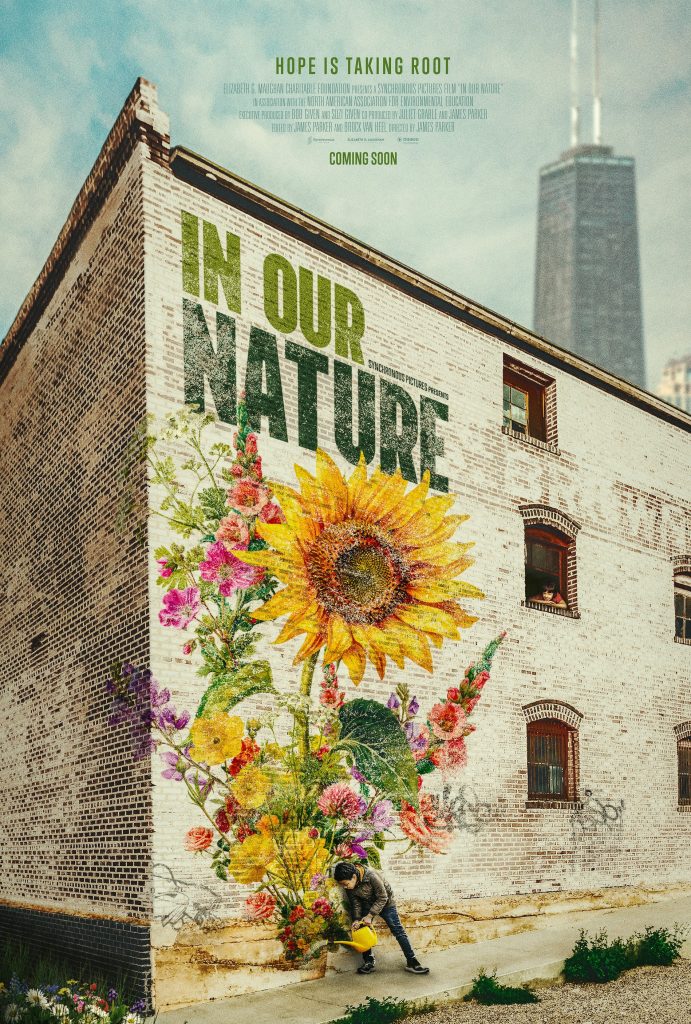
There was a time when children were encouraged to spend as much of their free time outdoors as possible. Whether it involved climbing trees, exploring woodland, playing in parks or simply disappearing with friends until teatime, the natural world provided an enormous playground without requiring batteries, subscriptions or an internet connection. Today, with smartphones, video games and an endless supply of entertainment available from the comfort of our homes, that relationship has changed considerably. James Parker’s documentary In Our Nature examines the growing separation between people and their natural surroundings, while introducing individuals and organisations determined to reverse the trend.
Running for approximately sixty minutes, the documentary explores the importance of environmental education and the positive influence that spending time outdoors can have upon individuals and communities. Rather than concentrating exclusively on climate change or the destruction of natural habitats, Parker adopts a more personal approach, examining how reconnecting with nature can improve lives, encourage learning and bring people together.
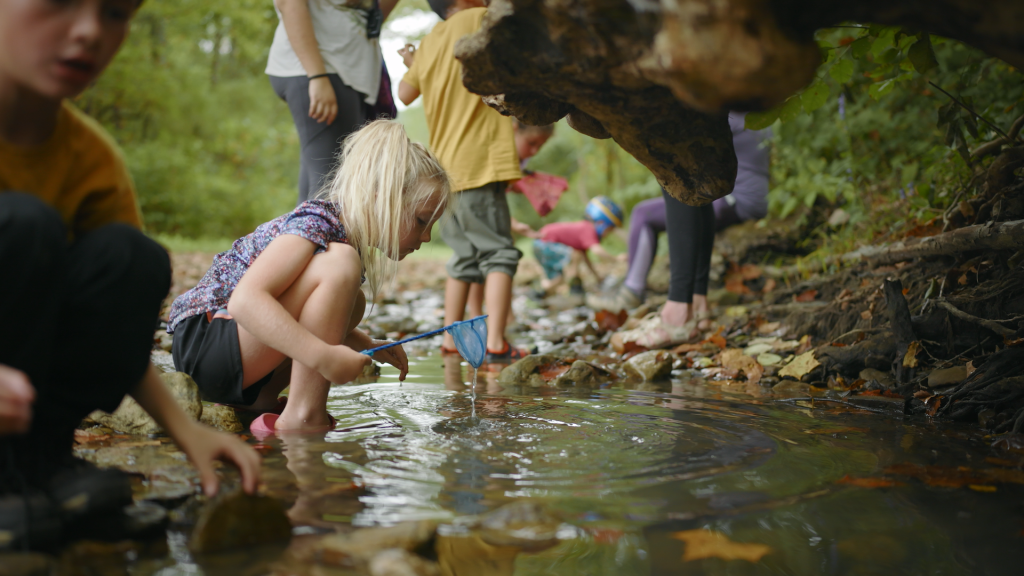
The film opens with a quotation attributed to Freeman Owie: “If you take a child out into nature and they fall in love with it, they will protect what they love.” It is a straightforward observation, but one that effectively establishes the documentary’s central argument. People are more likely to care about the environment when they have developed a personal connection with it, particularly if that relationship begins during childhood.
Among the contributors is Richard Louv, the American author and journalist whose influential book Last Child in the Woods examined the growing distance between children and the natural world. Louv recalls recognising changes in the relationship between young people and outdoor environments during the 1990s, when opportunities for independent exploration appeared to be diminishing.
His observations provide an interesting starting point for a broader discussion about modern lifestyles. As technology has become increasingly integrated into everyday life, opportunities to experience the outdoors have sometimes been replaced by activities requiring little more than a comfortable chair and a screen.
Of course, technology itself is not necessarily the enemy. Computers, mobile phones and other modern conveniences have transformed how we communicate, learn and entertain ourselves, often in enormously beneficial ways. The concern raised by the documentary is that these developments can also encourage habits that leave considerably less time for physical activity, social interaction and engagement with the environment.
For younger generations in particular, this raises questions about the experiences they might be missing. Exploring a woodland, discovering wildlife or simply spending time in an unfamiliar outdoor setting can encourage curiosity and independence in ways that differ from activities taking place indoors.
The documentary also considers the relationship between access to nature and personal well-being. Contributors discuss the potential benefits of outdoor activity, including physical exercise, improved emotional health and opportunities for social connection. Although the film presents these subjects in an accessible manner, its underlying message is not that nature provides a miraculous cure for every problem, but that regular contact with the outdoors can make a meaningful contribution to healthier lives.
What makes In Our Nature particularly engaging is its decision to move beyond these general observations and introduce people who are actively putting such ideas into practice.
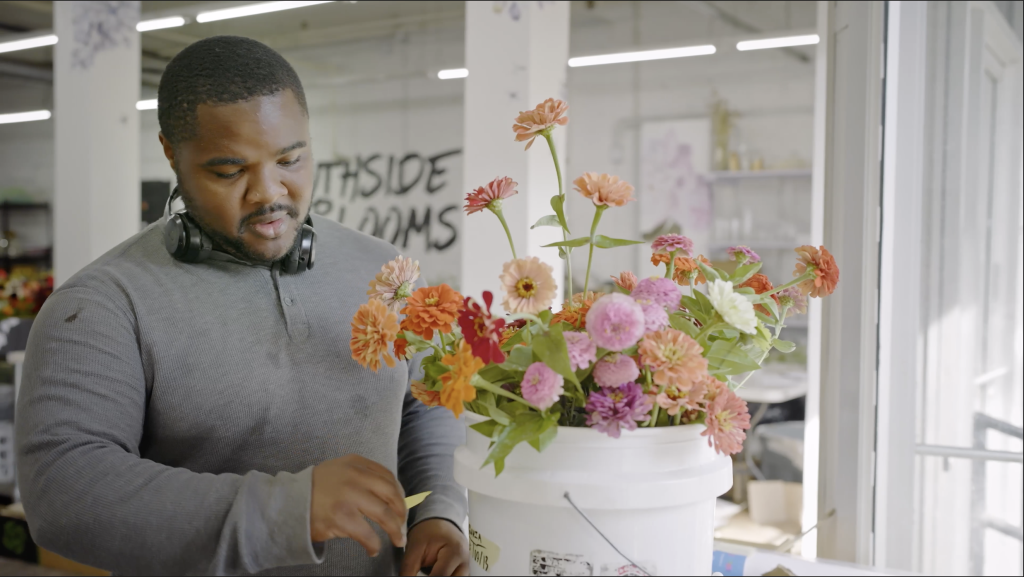
One of the documentary’s most memorable examples comes from Chicago, where the organisation Southside Blooms has transformed neglected urban land into productive flower-growing spaces. Operating in the city’s Englewood neighbourhood, an area that has experienced significant economic difficulties and problems associated with crime, the project demonstrates how environmental initiatives can deliver benefits extending well beyond the appearance of the surrounding streets.
Led by Quilen Blackwell and Hannah Bonham Blackwell, Southside Blooms forms part of a wider effort to create opportunities through sustainable urban agriculture. Vacant plots that might otherwise remain abandoned or become dumping grounds are instead cultivated into colourful flower farms, producing blooms that can be sold to customers and used for special occasions.
The visual transformation is remarkable. Areas previously associated with neglect are filled with flowers of different colours, creating attractive green spaces within an urban environment where such opportunities have not always been readily available.
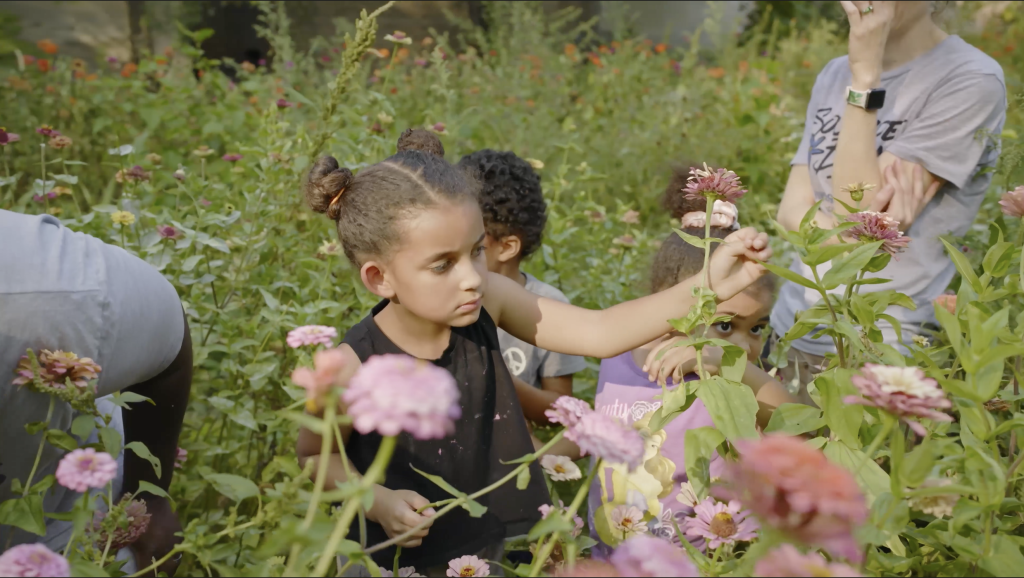
However, the importance of the project extends considerably further than making the neighbourhood look more appealing. Southside Blooms also provides employment, training and practical experience, giving participants the opportunity to develop skills while contributing something positive to their community.
For younger people in particular, the initiative offers an alternative environment in which to spend their time, learn about cultivation and develop a greater appreciation of the natural world. It also demonstrates that environmental education does not necessarily require a traditional classroom, expensive equipment or access to vast areas of countryside.
Sometimes, it can begin with a previously neglected piece of land and a group of people determined to make something worthwhile from it.
This section is arguably the documentary’s most effective illustration of its central message because the results are so immediately apparent. Rather than simply listening to contributors explain why environmental initiatives are important, we can see how an organisation has transformed its surroundings and created opportunities for the people living there.
There is something genuinely encouraging about watching individuals devote their time and energy to improving a community that might otherwise be overlooked. The work undertaken by Southside Blooms provides a reminder that meaningful environmental change does not always begin with enormous international campaigns. It can emerge from relatively small local projects whose influence gradually extends into other areas of people’s lives.
Parker also takes the audience to Kentucky, where the Red Oaks Forest School provides children with opportunities to learn through direct engagement with the outdoors. Its approach reflects the belief that education can benefit from experiences that encourage exploration, observation and practical understanding rather than relying entirely upon conventional classroom instruction.
The programme illustrates how natural environments can become valuable places of learning, allowing children to develop confidence and curiosity while becoming more familiar with the plants, animals and landscapes around them.
There is an appealing simplicity to this approach. Children are naturally inquisitive, and providing them with opportunities to investigate their surroundings can encourage an appreciation of the environment that might be difficult to establish through textbooks alone.
Another section examines the work of the Tragedy Assistance Program for Survivors, known as TAPS, in Texas. Here, outdoor experiences are presented within a different context, providing opportunities for people affected by grief to find support, companionship and moments of reflection.
This broadens the documentary’s subject considerably, demonstrating that environmental education and engagement with nature are not exclusively concerned with conservation or childhood development. They can also provide opportunities for people to connect with others during difficult periods of their lives.
By examining these different organisations, Parker establishes that the benefits of spending time outdoors can take many forms. Whether the objective is improving a neighbourhood, educating children or supporting people experiencing bereavement, the common element is the ability of natural environments to encourage meaningful human experiences.
The documentary also addresses the challenges facing organisations attempting to expand access to environmental education. Funding, resources and public awareness can all influence the opportunities available, particularly within communities where green spaces and educational programmes may already be limited.
There is also the question of how environmental issues are presented within public debate. Conservation and climate-related subjects frequently become entangled in political disagreements, yet the fundamental benefits of clean air, accessible green spaces and opportunities for children to explore their surroundings should be matters of widespread concern.
In Our Nature makes a persuasive case for approaching environmental education as something that can unite communities rather than divide them. Its contributors come from different backgrounds and work towards different objectives, but their shared enthusiasm for improving people’s relationship with the natural world gives the documentary a consistent sense of purpose.
From a filmmaking perspective, Parker handles the material with considerable confidence. The documentary features numerous interviews with educators, authors, community organisers and other contributors, but avoids becoming an uninterrupted succession of people speaking directly to the camera.
Instead, the interviews are accompanied by an extensive selection of footage illustrating the subjects being discussed. We see outdoor environments, community projects, educational activities and the individuals whose lives are connected to these initiatives, allowing the audience to appreciate the practical realities behind the conversations.
This variety is particularly important in a documentary of this nature. A film devoted to environmental education could easily become overly instructional, relying upon lengthy explanations rather than visual storytelling. Parker avoids that problem by ensuring the audience is regularly given something relevant and interesting to observe.
The cinematography is consistently attractive, making effective use of the natural locations and the colourful surroundings created by the organisations featured. The contrast between urban environments and flourishing green spaces is especially appealing, reinforcing the idea that nature can become part of everyday life even in places where it might initially appear absent.
The editing also deserves praise. With several organisations and numerous contributors to introduce within a relatively modest running time, maintaining a coherent structure is essential. The film moves comfortably between its subjects, providing sufficient information to establish the importance of each initiative without allowing any individual section to become unnecessarily prolonged.
At approximately an hour in length, In Our Nature feels well judged. There is a considerable amount of information to absorb, but the pacing remains engaging throughout, and the frequent changes of location and subject prevent the material from becoming repetitive.
The technical presentation is equally accomplished. The dialogue is clear and consistently audible, an essential consideration when so much of the documentary depends upon interviews. The musical score complements the imagery effectively, adding warmth and atmosphere without distracting from the contributors or overwhelming the film’s more reflective moments.
Perhaps the documentary’s greatest strength, however, lies in the people it introduces. There is something refreshing about spending an hour in the company of individuals whose principal motivation is to improve the lives of others and protect the environments around them.
At a time when so much media attention is devoted to conflict, division and the worst aspects of human behaviour, In Our Nature offers a welcome opportunity to encounter people working towards constructive solutions. Their enthusiasm is infectious, and the documentary succeeds in making their achievements feel both important and accessible.
It is also encouraging that Parker does not present environmental engagement as an activity reserved for experts or those fortunate enough to live near spectacular natural landscapes. The work of Southside Blooms, in particular, demonstrates that meaningful connections with nature can be established in densely populated urban neighbourhoods, often through relatively straightforward ideas supported by commitment and community involvement.
This accessibility gives the film considerable value beyond its immediate entertainment qualities. It is easy to imagine In Our Nature being used within schools, community organisations and educational settings, where its examples could encourage discussions about the importance of green spaces and the opportunities available to improve local environments.
Nevertheless, it remains an enjoyable documentary in its own right. The combination of engaging contributors, attractive photography and well-structured storytelling ensures that the subject matter never feels like an extended lecture. Parker allows the achievements of the people featured to communicate much of the message, rather than relying upon constant reminders of why the audience should care.
In Our Nature: A Powerful Reminder of Why the Natural World Matters
Ultimately, In Our Nature is an informative, uplifting and professionally produced documentary that explores an increasingly important subject through the experiences of people making a genuine difference. Its thoughtful direction, strong cinematography, effective editing and excellent sound presentation combine to create an engaging film that maintains interest throughout its sixty-minute running time.
More importantly, it encourages viewers to reconsider their own relationship with the world beyond their front doors. We do not necessarily need to travel to remote forests or spectacular national parks to appreciate nature. Sometimes, the opportunity to reconnect with our surroundings can be found in a nearby garden, a local park or an overlooked patch of land waiting to be transformed.
James Parker has created a documentary that celebrates the people helping others discover those opportunities, while reminding us that an appreciation of nature is something worth encouraging and preserving. In Our Nature is highly recommended, not simply because its message is important, but because it communicates that message through genuinely interesting people and accomplished filmmaking.
And if it encourages a few viewers to switch off their screens and spend a little more time outdoors, that would be a worthwhile achievement in itself.
| Acting | |
| Direction | |
| Cinematography | |
| Writing | |
| Sound | |
| Screen Critix Rating |