
Most people would welcome a sudden change in fortune, particularly if it involved an unexpected financial windfall, a promotion at work and a noticeable improvement in their relationship. For others, however, such developments might seem a little too convenient, especially when everything appears to be going right at precisely the same time. That unusual suspicion forms the basis of Pronoia, a darkly comic psychological horror short from writer and director Benjamin Feldman, who takes an intriguing concept and turns it into four and a half minutes of escalating anxiety.
The title refers to pronoia, a concept sometimes described as the opposite of paranoia. Whereas paranoia involves the suspicion that other people or outside forces are acting against us, pronoia describes the belief that the world is secretly conspiring in our favour. Rather than interpreting coincidences as evidence of hostility or persecution, someone experiencing pronoia might see them as signs that events are being deliberately arranged for their benefit. It is an interesting psychological idea, and one that Feldman approaches from an amusingly unsettling perspective. After all, what happens when somebody becomes so accustomed to disappointment that even good news begins to feel threatening?

The film opens with a view of palm trees before cutting to a rather peculiar sight: a collection of twenty-dollar bills burning on a tree stump. It is an arresting image, although the reasoning behind this apparent act of financial madness only becomes clear as the story progresses.
We are subsequently introduced to two men in the middle of an increasingly heated discussion inside their home. One is convinced that something is terribly wrong, while his boyfriend struggles to understand why a succession of positive developments should be considered anything other than good fortune.
The situation becomes even more absurd when a text message arrives confirming that the increasingly distressed man has received a promotion at work. Rather than celebrating, he treats the news as further evidence that something suspicious is happening. His boyfriend attempts to reassure him, but every reasonable explanation seems only to strengthen his conviction that events are being manipulated by some unseen influence.
As the argument develops, he begins listing the unusual occurrences of the previous twenty-four hours. His boyfriend has been unexpectedly affectionate, his therapist has apparently disappeared, and he has discovered three thousand dollars outside their home. Instead of keeping the money or attempting to establish its rightful owner, he has decided to burn it, explaining the opening sequence’s rather extravagant disposal of perfectly usable currency.
There is also the peculiar matter of people repeatedly using the word “suddenly”, something he interprets as another indication that the world around him is behaving unnaturally. His mounting agitation eventually leads him to place his mobile phone inside a microwave, apparently determined to provoke some form of negative consequence. Even this attempt at inviting disaster fails to produce the catastrophe he seems to be expecting.
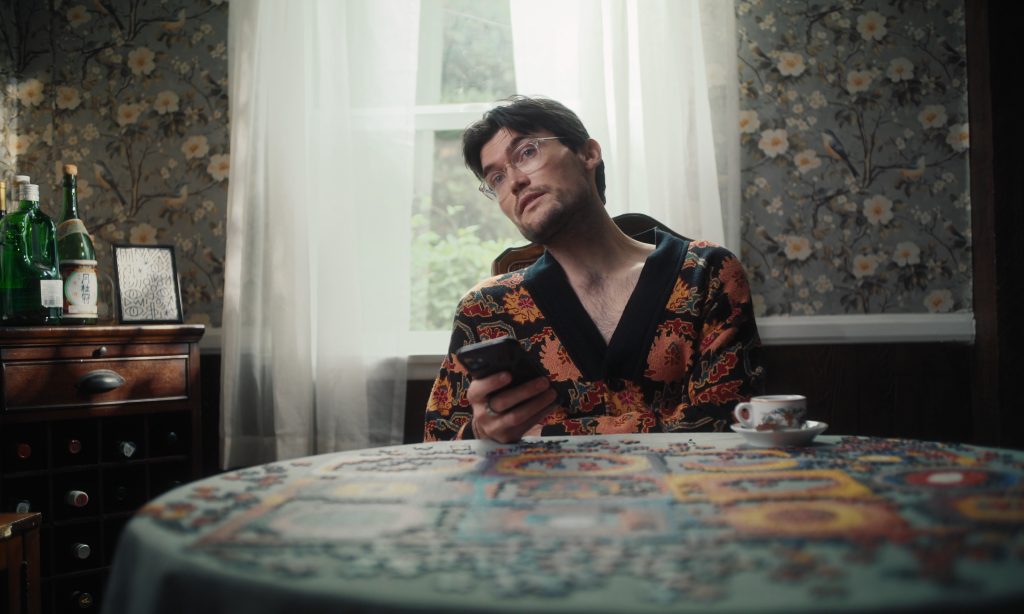
Meanwhile, an increasing number of flies begin appearing around the property, gathering on surfaces and outside the windows. Their presence introduces a more overtly sinister element to proceedings, suggesting that the protagonist’s fears might not be entirely without foundation.
It is an entertaining premise, and one that immediately distinguishes Pronoia from more conventional stories about paranoia and psychological instability. Rather than presenting a character who believes the world is determined to destroy him, Feldman introduces somebody who is equally terrified by the possibility that it might be trying to make him happy.
There is a wonderfully contradictory quality to this behaviour. The protagonist is so desperate to uncover evidence of a conspiracy that he actively attempts to sabotage his own good fortune, seemingly preferring familiar disappointment to the uncertainty of unexpected happiness. The humour emerges naturally from this contradiction, with his increasingly irrational responses providing an amusing counterpoint to his boyfriend’s attempts to remain sensible.
The central performances are convincing, particularly in the way the two actors establish the contrasting attitudes driving their argument. Ryan Rathbun and Eric Palmer handle the material with confidence, maintaining a believable relationship despite the increasingly bizarre subject of their disagreement. Their exchanges have an appropriately frantic quality, while the more measured responses provide the necessary balance to prevent the sequence from becoming completely overwhelming.
Feldman’s direction is equally assured, making effective use of a relatively confined setting. With most of the action taking place around the dining room and kitchen, the film depends heavily upon performance, timing and visual composition to maintain momentum. Fortunately, the camera work is polished, the sound recording is clear and the editing keeps the conversation moving at an energetic pace.
The production design also deserves considerable praise. Rather than placing the characters inside a bland contemporary interior, Feldman gives their home a distinctive personality, combining elements reminiscent of 1960s decoration with more modern furnishings. The patterned wallpaper, unusual decorative choices and carefully arranged surroundings create an attractive visual environment that feels suitably eccentric for the material.
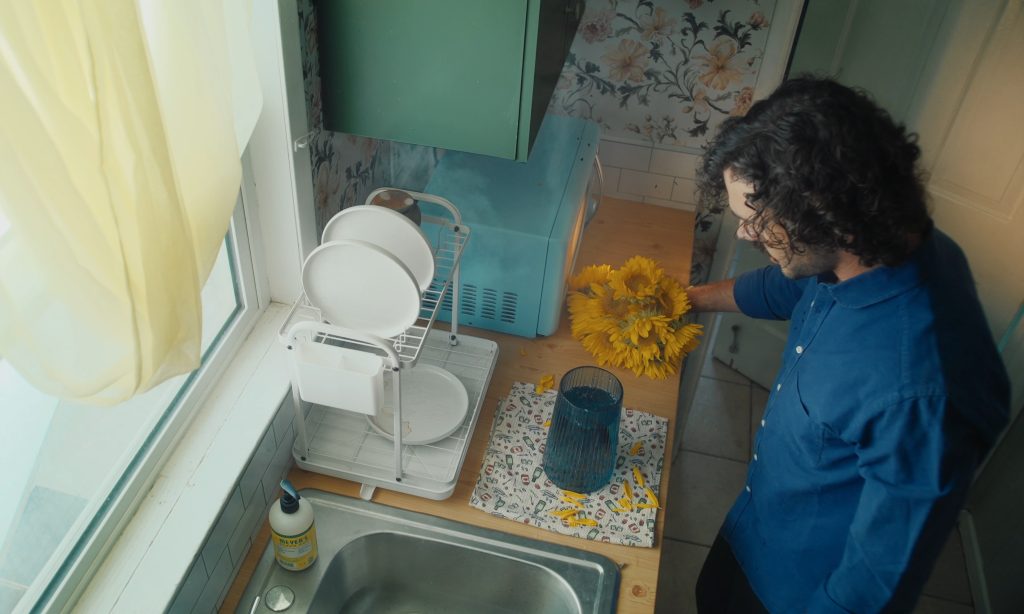
This attention to detail is particularly important in a film with so few locations. The house provides more than a convenient backdrop, establishing a slightly offbeat atmosphere before the story introduces its stranger developments. Even when the characters are simply arguing across a room, there is enough visual interest to prevent the setting from becoming monotonous.
The musical score by Rin Perry is another highlight, complementing the increasingly irrational behaviour with an assortment of unusual sounds and unsettling textures. Percussive clacks, owl-like calls and woodwind elements contribute to an atmosphere that is simultaneously playful and disturbing, while shifts in pitch add to the growing sense that something about the protagonist’s circumstances is fundamentally wrong.
Rather than relying upon conventional horror music to signal danger, the soundtrack embraces the peculiar nature of the premise. Its unpredictable character reflects the protagonist’s escalating anxiety, creating an effective relationship between what we hear and the increasingly frantic behaviour unfolding on screen.
Towards the conclusion, the film also incorporates the 1929 recording of “Painting the Clouds with Sunshine” by Johnny Marvin. The cheerful sentiment of the song provides an interesting contrast to the unsettling atmosphere, giving the sequence an unexpectedly eerie quality. It is an effective musical choice, demonstrating how familiar optimism can become strangely uncomfortable when placed within the right context.
For all its technical accomplishments, however, Pronoia does leave the impression that its central concept could have supported a more substantial exploration. At approximately four and a half minutes, the film has barely established its unusual premise before it begins approaching its conclusion.
The principal limitation is that most of the protagonist’s extraordinary good fortune is communicated through dialogue rather than shown to the audience. We hear about the money, the unexpected affection and the other peculiar developments, but rarely witness the events that have caused him so much concern.
This is understandable given the limited running time and the practical considerations involved in producing an independent short. Nevertheless, a handful of additional scenes illustrating these incidents might have strengthened the central mystery considerably. Watching increasingly improbable acts of good fortune unfold would have allowed viewers to share the protagonist’s suspicions more directly, rather than simply listening to his increasingly desperate explanations.
There is also considerable potential in the idea of somebody deliberately attempting to manufacture misfortune, only to discover that even their most reckless decisions somehow produce positive results. The microwave incident briefly explores this possibility, and it would have been interesting to see Feldman develop that aspect of the story further.
Of course, extending the narrative would also introduce the risk of diminishing its immediacy. Part of the film’s appeal comes from its rapid escalation, with the audience given little opportunity to settle before another peculiar revelation arrives. The challenge would be finding the right balance between preserving that energy and allowing the concept sufficient room to develop.
The ending introduces a further unsettling development, although its precise implications remain somewhat ambiguous. Without revealing what happens, it is fair to say that the final moments leave several questions unanswered. Whether this uncertainty is intended to encourage interpretation or simply reflects the compressed storytelling is difficult to determine, but the sequence certainly maintains the film’s peculiar atmosphere.
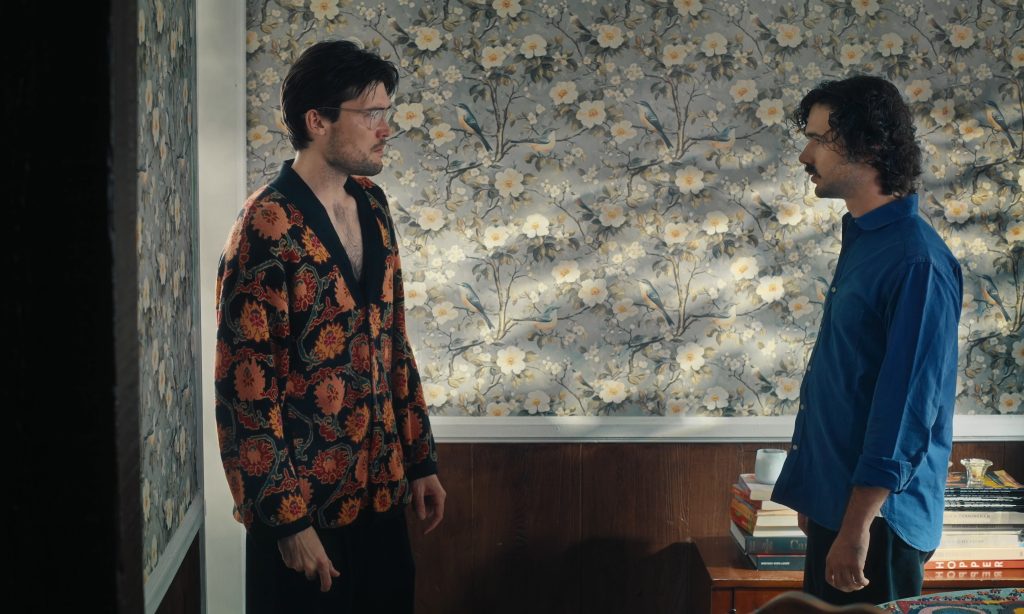
Despite these reservations, Pronoia is a highly enjoyable and technically accomplished short. Feldman demonstrates a confident understanding of tone, successfully combining domestic comedy with psychological unease while maintaining an attractive and distinctive visual presentation. The performances are engaging, the editing is suitably brisk, and the inventive soundtrack contributes considerably to the overall experience.
Most importantly, the film possesses an original and thought-provoking central idea. We are accustomed to stories about people who believe the world is against them, but the suggestion that somebody might become equally distressed by a world apparently determined to help them offers plenty of dramatic and comedic possibilities.
Pronoia may be slightly too brief to explore those possibilities as fully as we would have liked, but it remains an impressive example of economical genre filmmaking. Its unusual premise, confident execution and increasingly absurd humour make it an entertaining experience, while its lingering uncertainty ensures that the story continues to occupy the imagination after the credits have rolled.
Sometimes, apparently, even getting everything you want can be a cause for concern.
| Acting | |
| Direction | |
| Cinematography | |
| Writing | |
| Sound | |
| Screen Critix Rating |