
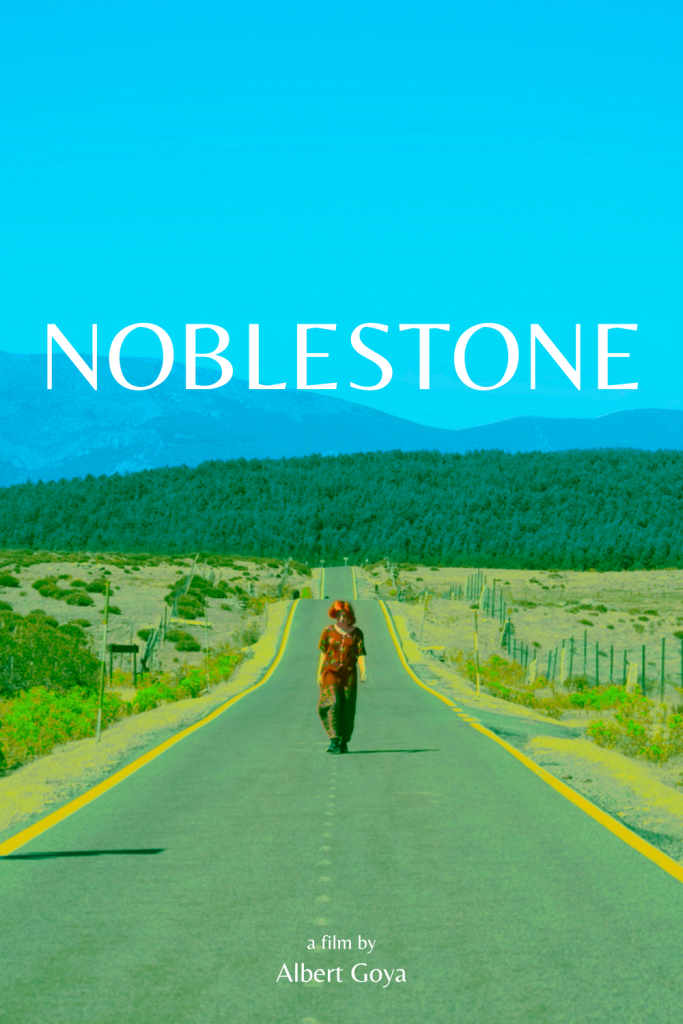
Independent filmmaking is often about making the absolute most of very little, and Noblestone certainly falls into that category. Written, directed, photographed, edited and scored by Albert Goya, the 94-minute feature was completed over two years with no budget, featuring just one performer, Goya’s sister Lucia Goya-Betts, playing both principal characters. It’s an ambitious project for such a young filmmaker, even if the finished film remains very much a work in progress.
The film opens with an atmospheric sequence accompanied by haunting strings and choral music. A woman stands looking out through glass patio doors as a voiceover recounts a strange encounter beside a railway line. She recalls hearing what sounded like an animal screaming before discovering a distressed woman searching for a friend whose face she can no longer remember. Although the camera barely moves during this opening, the narration creates enough intrigue to pull you in before the story shifts to rural Spain.
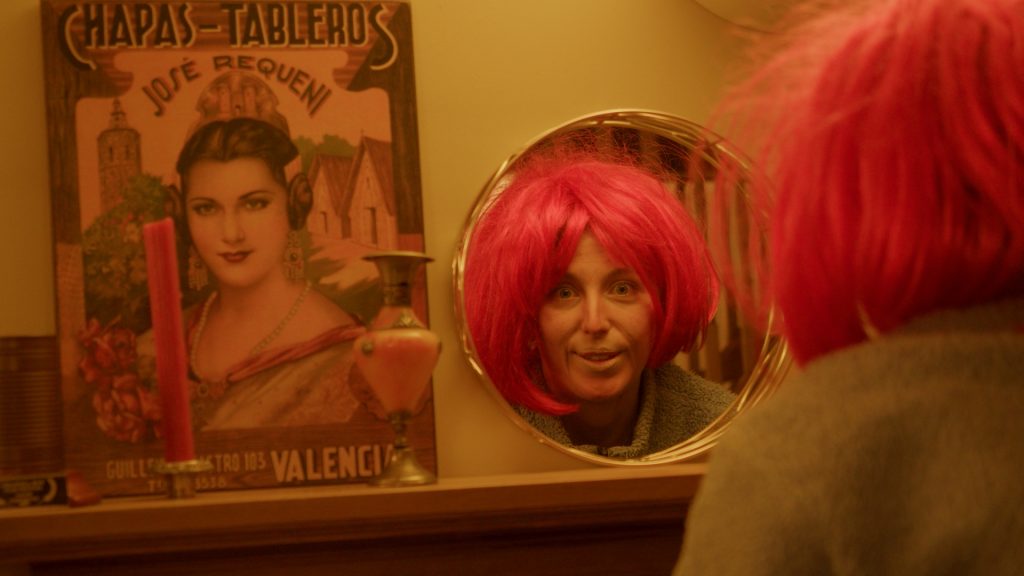
There we meet Karen, an eccentric woman sporting a bright red wig who arrives at a secluded house to interview for a housekeeping position with a reclusive artist. Both women are portrayed by Lucia Goya-Betts, and although the film’s technical limitations are obvious, the editing does a respectable job of selling the illusion that two separate characters occupy the same world.
Karen is certainly memorable. Loud, socially awkward and frequently behaving in ways that make both the audience and her employer uncomfortable, she immediately brings an unpredictable energy to the film. Whether she’s quietly cleaning the house or staring at the artist while she tries to read, there’s something unsettling about her presence, even if her exaggerated mannerisms occasionally push the performance close to parody.
About seven minutes into Noblestone, it became obvious we’d seen something remarkably similar before. Back in 2023, we reviewed Lady Governess, directed by Tito Wiley. A little research soon revealed that Tito Wiley was actually Albert Goya working under a pseudonym, and Noblestone revisits many of the same ideas. Karen returns as the central character, Lucia Goya-Betts once again plays both lead roles, and the story again revolves around an increasingly uncomfortable relationship between a housemaid and the woman employing her. Rather than hiding those similarities, the film almost plays like a companion piece to its predecessor.
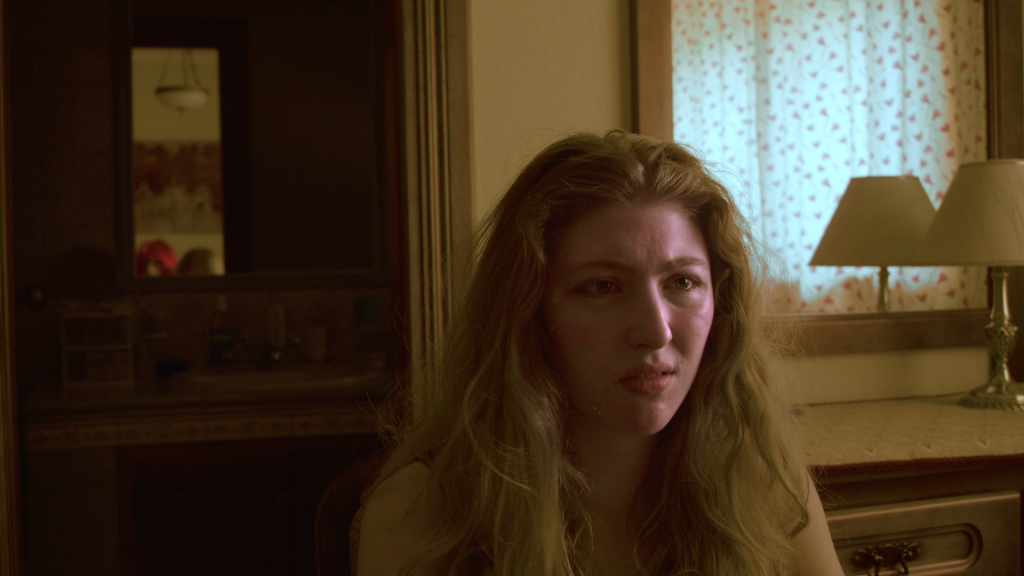
As the relationship develops, conversations drift towards art, morality, justice and human nature. The artist struggles with her confidence, while Karen’s increasingly unusual behaviour creates an atmosphere that becomes steadily more uncomfortable. There are interesting ideas throughout, and Goya clearly wants the audience to think about more than simply what is happening on screen. Sometimes those discussions work well, but at other times they become too long and too self-conscious, slowing the film’s momentum considerably.
One sequence that genuinely stands out sees Karen perform a piece on the piano while the camera stays focused on the artist’s emotional reaction. It’s an unexpectedly effective moment that demonstrates Goya’s willingness to tell parts of his story visually rather than through dialogue. There are several moments like this where the film briefly rises above its obvious limitations and hints at what the director may achieve with greater experience and larger resources.
The Ambition Behind Noblestone
Technically, however, Noblestone remains a very rough production. The framing is often fairly basic and occasionally awkward, while the limited lighting means several scenes feel flat rather than cinematic. The Spanish locations certainly help, providing some attractive landscapes and adding visual variety, but they can’t disguise the fact that much of the film was made with little more than a camera, one performer and a handful of locations. That’s perfectly understandable given the circumstances, but it does prevent the film from ever looking particularly polished.
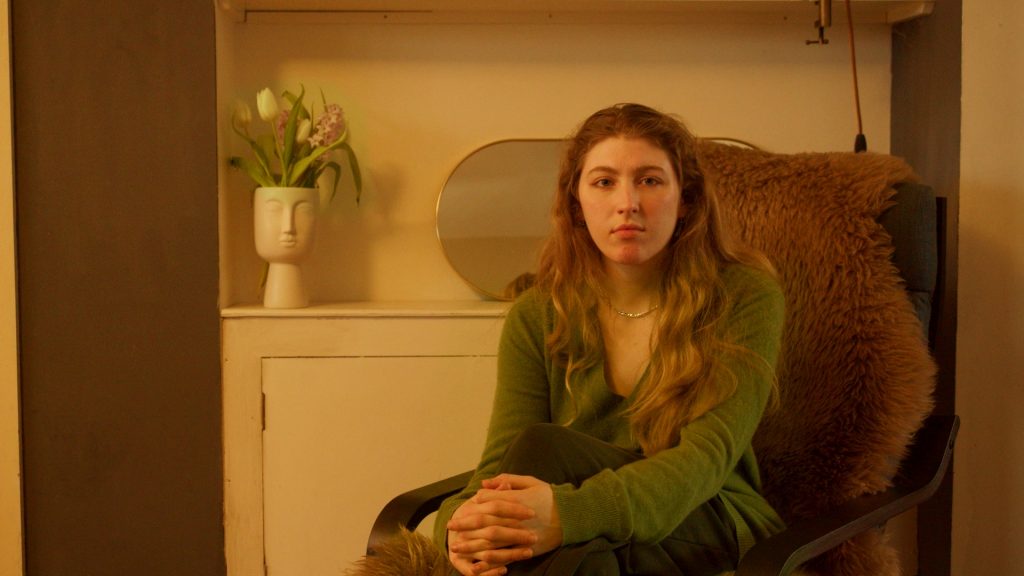
Lucia Goya-Betts deserves a great deal of credit for carrying almost the entire film herself. Playing two distinct personalities is no easy task, particularly on such a small production, and she throws herself fully into both performances. Karen’s eccentricity won’t work for everyone, but there is never any question about Lucia’s commitment to the role or her willingness to embrace Goya’s unusual vision.
The score is another positive. Goya’s music gives the film a surprisingly grand atmosphere at times, particularly during the opening and several of the quieter, more reflective scenes. Combined with the rural Spanish landscapes and occasional striking visual compositions, it helps create a mood that is often stronger than the narrative itself.
Unfortunately, the pacing becomes one of the film’s biggest obstacles. At 94 minutes, several scenes linger well beyond the point they’ve made their argument, while some philosophical conversations begin repeating ideas already established earlier. The film also struggles to maintain dramatic tension for long stretches, making it feel considerably longer than its running time.
Even so, it’s difficult not to admire the sheer determination behind the production. Completing a feature-length film with no budget is a considerable achievement regardless of quality, and Goya’s passion for filmmaking comes across in every frame. Rather than playing safe, he attempts something unusual, philosophical and deeply personal, even if the execution doesn’t always match the ambition.
Noblestone is undeniably rough around the edges. The performances are uneven, the pacing needs tightening, and the technical presentation often reflects its lack of resources. However, there are interesting ideas throughout, occasional flashes of genuine visual creativity and enough ambition to suggest Albert Goya is developing into a filmmaker worth keeping an eye on. It isn’t a fully successful feature, but it doesn’t feel like the work of someone making films simply for the sake of it either. With greater experience, stronger technical refinement and perhaps a larger cast to work with, Goya has every chance of building on the promise shown here. As it stands, Noblestone is an imperfect but sincere independent feature whose greatest strength lies in the passion that brought it into existence.
| Acting | |
| Direction | |
| Cinematography | |
| Writing | |
| Sound | |
| Screen Critix Rating |