
The story of Florence Maybrick has fascinated historians for well over a century. Convicted in 1889 of murdering her husband, Liverpool cotton merchant James Maybrick, her trial became one of Victorian Britain’s most controversial legal cases. To this day, debate continues over whether justice was truly served. Rather than attempting to tell Florence’s entire life story, Maybrick focuses on the days surrounding the accusation, creating an engrossing period drama that combines courtroom intrigue with an intimate character study.
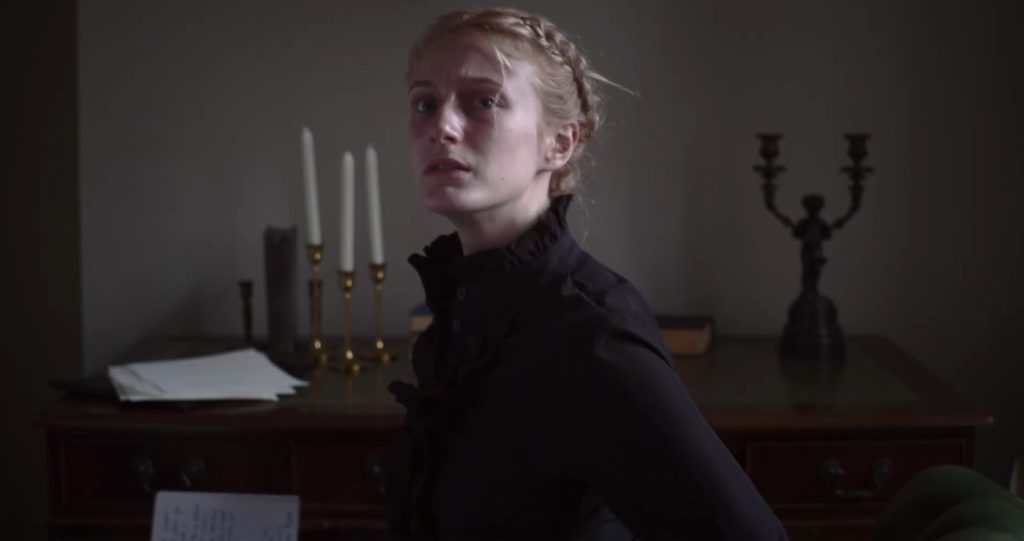
The short opens with Florence (Nanci Bennett) writing a letter by candlelight to her lover, Alfred Brierley. The peaceful moment is interrupted by the ominous creak of a floorboard behind her, forcing her to extinguish the candle before the opening titles appear alongside a dedication to “Florence – the most beautiful woman in Liverpool.” It is an understated but effective opening that immediately establishes a feeling of secrecy and unease.
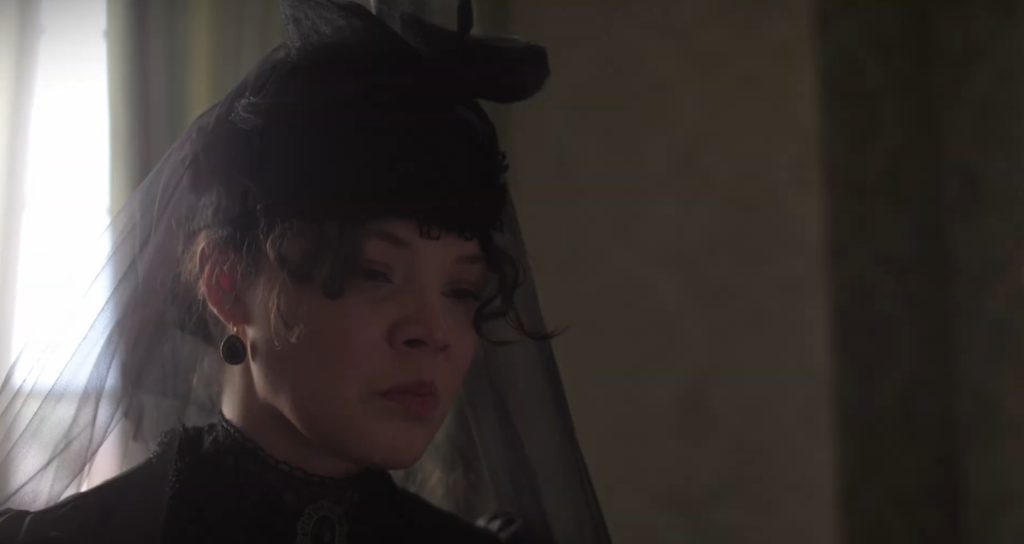
James Maybrick has died, and suspicion quickly falls upon his young American wife. Florence is dragged to her bedroom while her brother-in-law, Michael Maybrick (Adan Osborne), wastes little time insisting that she poisoned his brother. A police officer remains unconvinced, however, pointing out that accusations alone are not evidence. Matters become more complicated when maid Alice Yapp (Maisie Blake) admits she intercepted a private letter between Florence and Brierley before handing it directly to Michael instead of posting it. Her explanation immediately raises questions about her own motives, and the investigation begins to reveal that not everyone in the household can be taken at face value.
As Florence is imprisoned and vilified by sensational newspaper headlines, she desperately tries to prove her innocence from behind bars. With the help of her mother, the Baroness (Lisa Howard), she begins piecing together clues that suggest there may be far more to her husband’s death than the authorities initially believe. The result is a compelling Victorian mystery that wisely centres on Florence herself rather than simply retelling the historical facts.
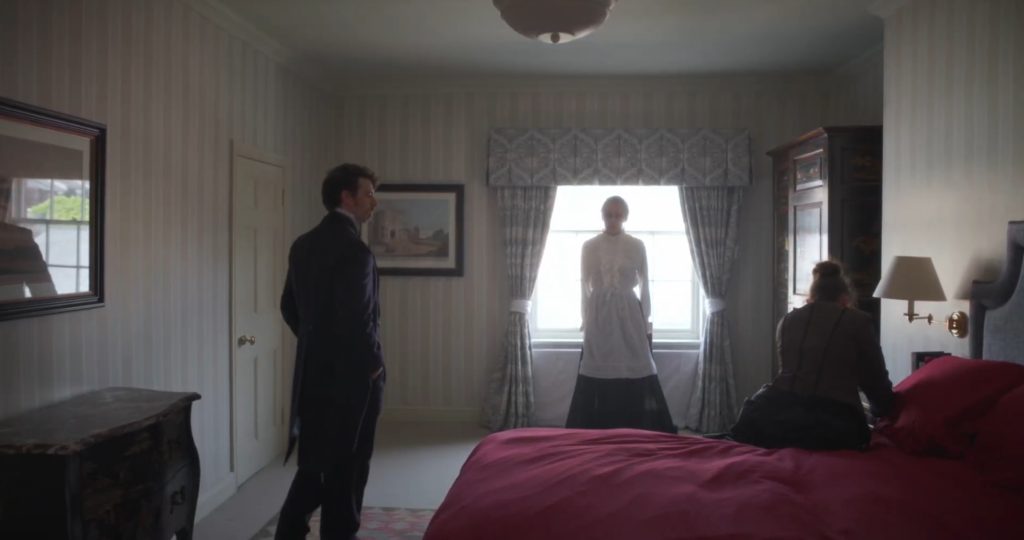
One of the film’s greatest achievements is its production value. Period dramas are notoriously difficult to produce on an independent budget, yet Maybrick consistently feels authentic. The Victorian interiors are richly dressed with carefully chosen furniture and props, while grandfather clocks quietly ticking away in the background add subtle atmosphere. Costume design is equally impressive, with the elegant dresses, tailored suits and hairstyles helping transport viewers back to late nineteenth-century Liverpool. There is never a moment where the production feels like actors wearing fancy dress; instead, the world feels genuinely lived in.
The cinematography deserves similar praise. Candlelit interiors are beautifully photographed, bathing many scenes in warm natural light that enhances both the period setting and the emotional weight of the story. The restrained camera work allows the performances to remain front and centre without drawing unnecessary attention to itself.
Nanci Bennett delivers an excellent performance as Florence. She portrays a woman whose life is collapsing around her with remarkable restraint, conveying fear, heartbreak and determination without ever becoming melodramatic. Whether writing letters, enduring interrogation or confronting the possibility of spending the rest of her life imprisoned, Bennett makes Florence an immensely sympathetic figure.
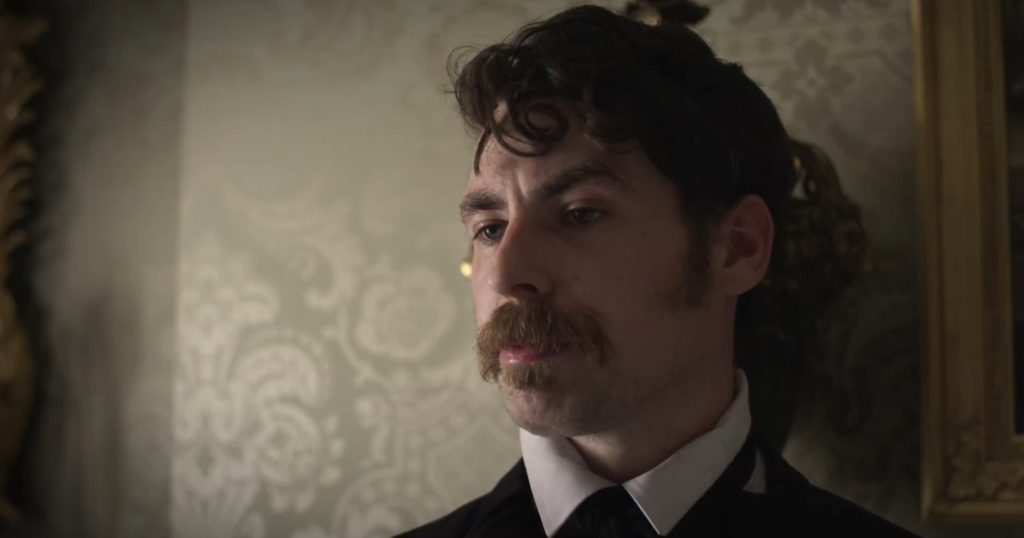
Adan Osborne is equally convincing as Michael Maybrick. Cold, calculating and quietly intimidating, he brings an air of menace to every scene he occupies, making it difficult not to question his intentions. Maisie Blake also impresses as Alice Yapp, whose divided loyalties add another intriguing layer to the unfolding drama. Together with Lisa Howard and Chris Clarkson, the cast forms a consistently strong ensemble that never allows the film’s modest running time to limit the emotional investment.
The screenplay also deserves considerable credit. Rather than relying on exposition to explain the complicated historical background, it gradually reveals information through conversations and investigation, allowing viewers to discover events alongside Florence herself. Even those unfamiliar with the real Maybrick case should have little difficulty following the narrative.
While the short is rooted firmly in documented history, it also acknowledges the lingering uncertainty surrounding Florence’s conviction. Historians continue to debate whether she truly poisoned James Maybrick, whose regular consumption of arsenic-containing medicines complicated the medical evidence presented at trial. The film doesn’t attempt to provide definitive answers where history itself remains divided. Instead, it explores the emotional toll placed upon a woman condemned in the court of public opinion before many questions had truly been answered.
That historical authenticity gives Maybrick much of its power. Rather than sensationalising one of Britain’s most famous murder trials, Lorna Lennon-Dalziel and Charlotte Rose Ainsworth present it as a deeply human tragedy, reminding audiences that behind the newspaper headlines was a woman whose life changed forever.
Independent filmmakers often avoid ambitious period pieces because of the obvious financial challenges involved, but Maybrick demonstrates exactly what can be achieved through careful planning, talented performers and meticulous production design. It looks and feels far more expensive than many short films of a similar scale.
Thoughtfully written, beautifully produced and anchored by an excellent lead performance, Maybrick is an impressive historical drama that brings one of Victorian Britain’s most enduring mysteries vividly back to life. Whether you’re already familiar with Florence Maybrick’s story or discovering it for the first time, this is a short film well worth seeking out.
| Acting | |
| Direction | |
| Cinematography | |
| Writing | |
| Sound | |
| Screen Critix Rating |