
Independent horror has always been a breeding ground for ambitious ideas, and Chandler Balli’s Method is proof that a clever concept can often outweigh a tiny budget. Mixing slasher horror, black comedy and a healthy dose of meta filmmaking, Method tells the story of a director so obsessed with realism that he decides the only way to make the perfect horror movie is to film real murders.
It’s a wonderfully twisted premise, and thankfully Balli knows exactly how ridiculous it is. Rather than playing things completely straight, Method embraces its own madness, resulting in a film that feels like a love letter to independent horror while also poking fun at obsessive filmmakers willing to sacrifice everything in the pursuit of artistic perfection.
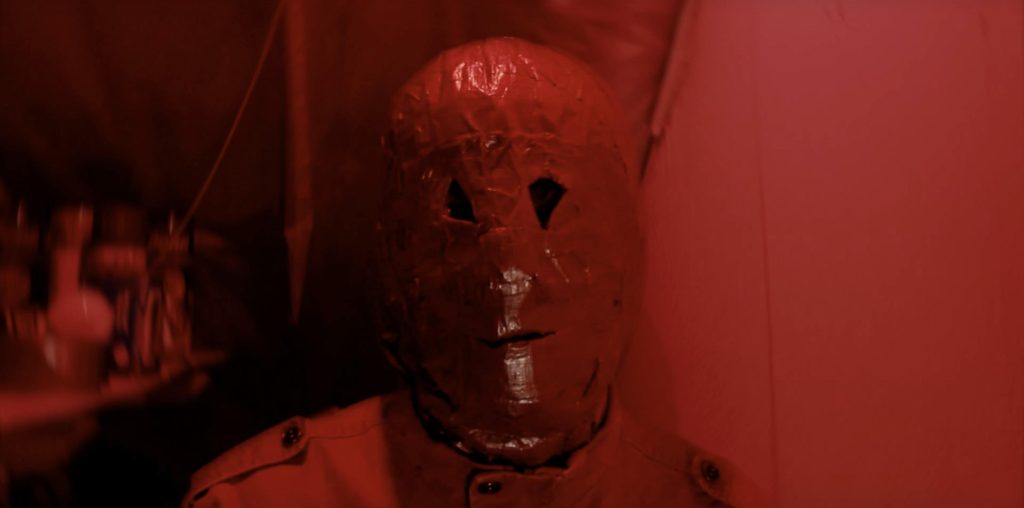
The film opens with an effective and brutal prologue. Grainy, low-resolution footage shows a hooded man kneeling before a television while another man, his face wrapped entirely in duct tape, bludgeons him with a hammer before dragging the body away and decapitating it. It’s a nasty opening that immediately establishes Tapeface as an old-school slasher villain who isn’t interested in subtlety.
From there we meet Derek Ryan, played by writer, director and producer Chandler Balli himself. Derek is preparing to shoot the third instalment of his Tapeface trilogy, gathering his small cast and crew together in a car park before transporting everyone to an isolated campsite where production will take place.
Almost immediately, it becomes apparent that Derek is not the easiest filmmaker to work with.
Questions from the cast about the script quickly lead to arguments. One actor asks whether a sex scene is really necessary. Another wonders why, if this is the final Tapeface film, the killer shouldn’t finally meet his end. That simple question sparks an angry outburst from Trevor, better known on set as Eric, the actor portraying Tapeface. His behaviour unnerves everyone, and several cast members demand Derek replaces him. Derek refuses without hesitation.
That refusal proves to be the first warning sign that something is seriously wrong.
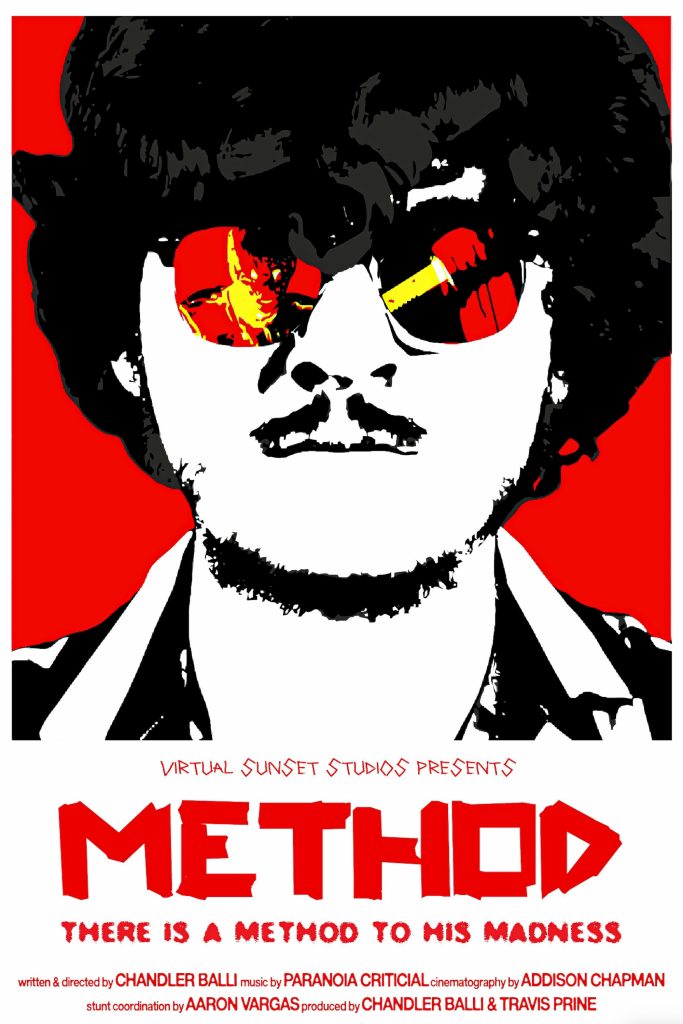
Method wastes very little time revealing its central twist. As filming begins, actors disappear after completing their scenes, and audiences quickly realise that Derek isn’t creating movie magic through clever effects. He’s filming genuine murders, using Eric as his willing executioner while recording everything for authenticity.
It’s a clever concept that immediately recalls films about filmmaking itself. There are shades of Bowfinger, albeit through an extremely dark and violent lens, while the obsession with recording genuine horror inevitably brings 8MM to mind. Balli also throws in references to Cannibal Holocaust, with characters discussing the infamous controversy surrounding Ruggero Deodato’s classic and how its cast had to appear in court to prove they hadn’t actually been killed.
It’s an enjoyable piece of horror history that fits naturally into the conversation rather than feeling forced.
The script has fun exploring the ridiculous lengths Derek goes to in order to convince people his actors are simply staying “in character.” News reports reveal that family members from the previous Tapeface films are asking where their loved ones have disappeared to. Derek calmly explains that everyone signed extensive contracts and immersion agreements, insisting the actors are simply continuing their performances long after production has wrapped.
It’s absurd, but that’s exactly the point.

Balli gives perhaps the film’s biggest performance as Derek. Playing a fictional version of an obsessive independent filmmaker, he spends much of the runtime bouncing between inspirational speeches, artistic pretension and explosive meltdowns whenever anything threatens his masterpiece.
There are moments where his performance even recalls Quentin Tarantino’s occasional on-screen appearances. Derek talks endlessly about cinema, treats filmmaking as sacred art and completely loses control whenever people question his vision. He’s an entertaining central character because he genuinely believes every outrageous decision he makes is justified.
Travis Lee Prine also deserves plenty of credit as Trevor, the actor behind Tapeface. While Derek provides the manic energy, Trevor remains unsettlingly calm for much of the film, becoming genuinely intimidating once the killings begin. The chemistry between Balli and Prine gives Method much of its personality.
The supporting cast also do solid work across the board, particularly Madison Oakley as Liz, who gradually becomes one of the more grounded and resourceful characters once events spiral completely out of control.
One of Method’s greatest strengths is its obvious affection for classic slasher cinema. The campfire scenes feel lifted straight from 1980s summer camp horrors, complete with characters sharing stories while Super 8 footage captures the nostalgic atmosphere. Those sequences are among the film’s highlights, with the grainy film stock adding genuine texture and reminding viewers of the era that inspired Tapeface.
Visually, the Super 8 inserts look fantastic.
The cinematography elsewhere is more uneven. Addison Chapman’s photography includes some lovely slow zooms and several attractive compositions, but there are also numerous static shots where framing feels fairly basic. Rule-of-thirds composition is often abandoned, and some camera placement lacks the polish found elsewhere in the production. Likewise, there are occasional sound issues that briefly distract from proceedings.
Fortunately, none of these problems derail the experience.
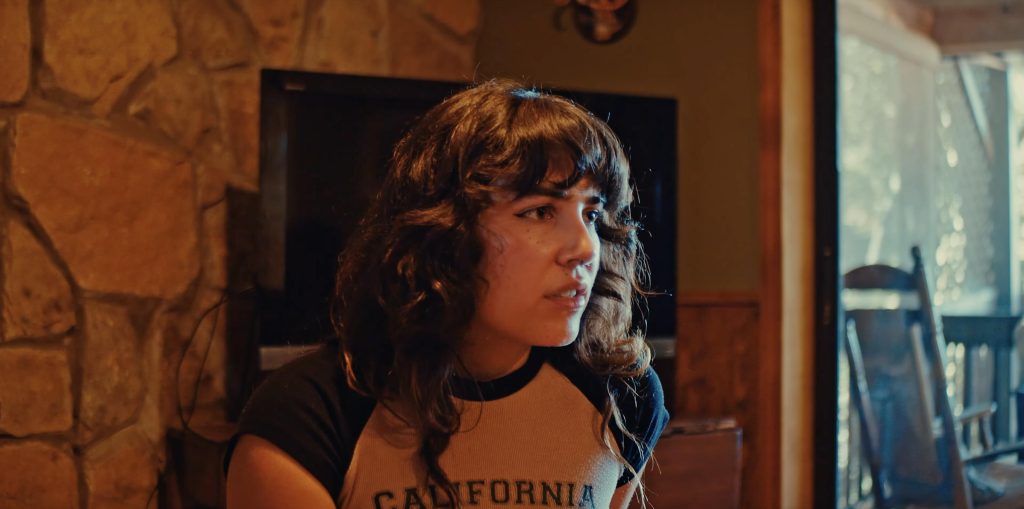
Considering the reported budget of around $3,500, Method is an impressive achievement. Balli clearly understands how to maximise limited resources by focusing on atmosphere, character interaction and an inventive central premise rather than attempting spectacle beyond the production’s means.
The soundtrack also deserves praise. The music adds real energy throughout, helping maintain tension while occasionally leaning into the film’s self-aware sense of humour.
There are plenty of entertaining little touches scattered throughout the runtime. One particularly amusing moment sees Derek appearing alongside footage of Joe Rogan’s podcast. Whether achieved through creative editing or archival material, it becomes another joke aimed at Derek’s inflated ego and desire to be recognised as a serious artist.
The film isn’t without flaws. Some scenes feel a little disjointed, certain technical aspects remain rough around the edges, and the pacing occasionally drifts. However, these shortcomings are easier to forgive because Method possesses something many larger productions lack: personality.
It feels like a film made by horror fans for horror fans.
Chandler Balli has crafted an entertaining blend of slasher, satire and filmmaking commentary that celebrates independent cinema while also laughing at the obsessive personalities who inhabit it. The concept is smart, the performances are committed, and the affection for horror history shines through every frame.
If you’re looking for polished studio filmmaking, Method probably won’t win you over. However, if you enjoy inventive independent horror with a wicked sense of humour, memorable performances and a genuinely clever premise, then this is well worth seeking out. It’s rough around the edges, certainly, but it’s also funny, bloody and packed with enough ambition to suggest Chandler Balli could produce something truly special if given a larger canvas to work with.
| Acting | |
| Direction | |
| Cinematography | |
| Writing | |
| Sound | |
| Screen Critix Rating |