
Irish filmmaker Zoe Kavanagh returns to the supernatural world of her 2017 feature Demon Hunter with Demon Hunter: Time 2 Kill, a sequel that takes the sword-wielding Taryn Barker out of Ireland and throws her into an even bigger mixture of vampires, demons, sinister corporations, time travel and 1980s summer camp horror.
That is a lot for any film to juggle, never mind a low-budget independent production, and Demon Hunter: Time 2 Kill frequently shows the strain of its ambition. There are technical problems that are impossible to ignore, from inconsistent focus and flat lighting to some strangely jerky movement, but there is also imagination here. Kavanagh and her team have clearly attempted to make something much larger than the resources available to them, and while the execution is decidedly uneven, the enthusiasm behind the film is evident throughout.
The film opens in 1986 at a summer camp that has suffered a massacre. A terrified woman runs through the grounds while the bodies of campers lie in their bunk beds. Her escape is short-lived, and she is killed by a partially concealed attacker, dropping one half of a mysterious broken medallion in the process.
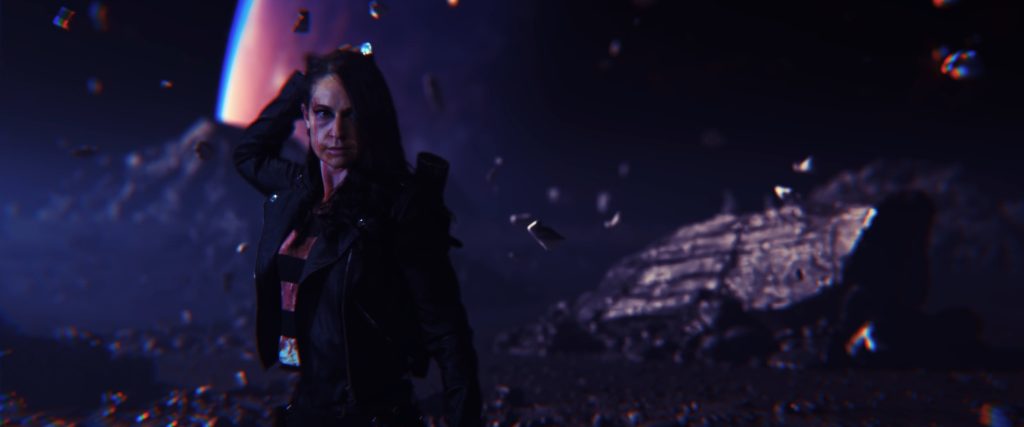
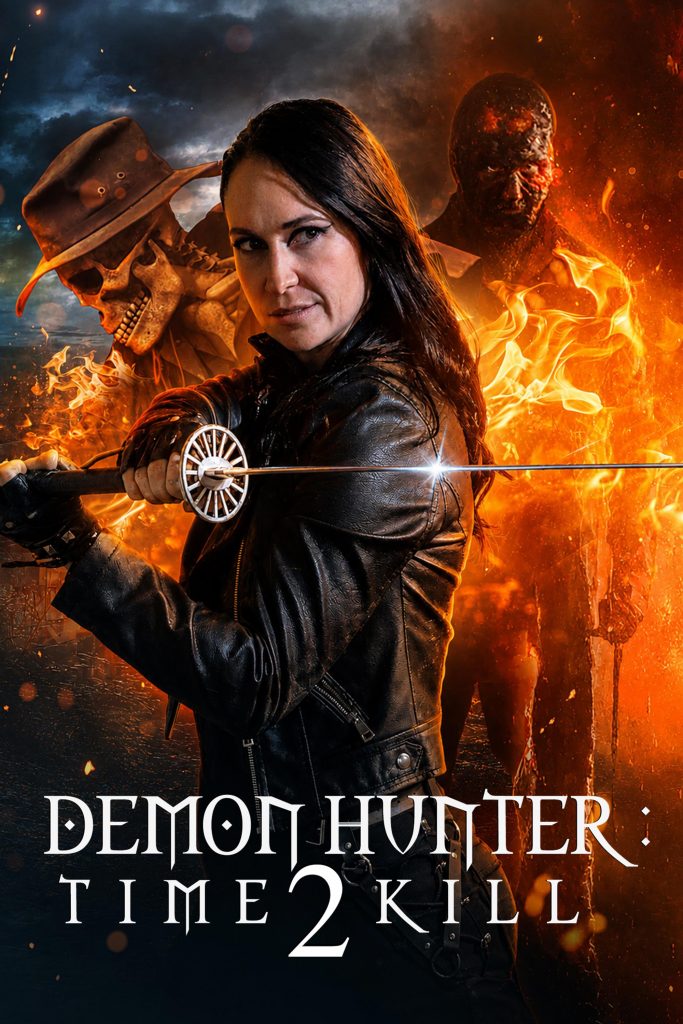
After an opening credits sequence accompanied by electric guitar, the story moves into the present day and reintroduces Taryn Barker, once again played by Niamh Hogan. Those familiar with the original Demon Hunter will immediately recognise the character’s particular style. Dressed in leather, riding a motorcycle and armed with a sword and crossbow, Barker is a supernatural warrior who feels as though she has wandered out of a collision between Blade, Underworld and Buffy the Vampire Slayer.
Kavanagh and Hogan understand the kind of film they are making, and Barker is given a steady supply of deliberately cheesy one-liners. During an early encounter, a vampire announces that everyone will face death, only for Barker to emerge from a room and reply, “Not if I play ball,” before throwing a ball apparently filled with holy water into the creature’s face.
That should give potential viewers a reasonable idea of the tone. Demon Hunter: Time 2 Kill is not approaching its world of vampires and demons with deadly seriousness. It is pulpy, silly and knowingly excessive, although its humour will undoubtedly be an acquired taste. Some of the jokes land better than others, but Hogan commits to Barker completely and appears to be having fun with every sword swing, chase and terrible pun.
Demon Hunter: Time 2 Kill Thinks Bigger Than Its Budget
The story soon reveals that the supernatural creatures are connected to Illumini Industries, a powerful corporation operating from an imposing skyscraper and led by Elysia Cronika. The character is played by Lisa Wilcox, who will immediately be familiar to horror fans as Alice Johnson from A Nightmare on Elm Street 4: The Dream Master and A Nightmare on Elm Street 5: The Dream Child.
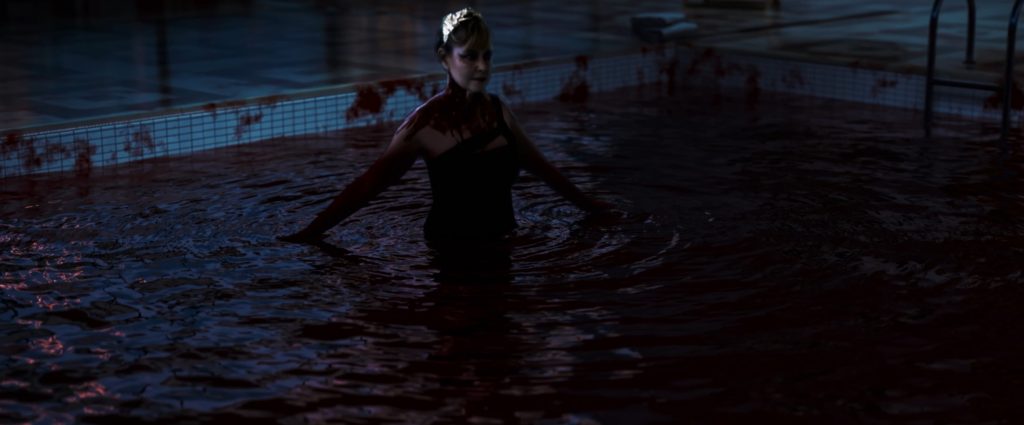
Wilcox brings welcome presence to the production. In the Nightmare on Elm Street films, Alice was the heroine fighting against Freddy Krueger. Here, Wilcox gets to move to the other side and embrace the role of the villain, and she clearly has fun with Cronika’s theatrical malevolence. Whether bathing in a pool of blood, performing supernatural rituals or angrily demanding Barker’s death, Wilcox provides the film with a charismatic central antagonist.
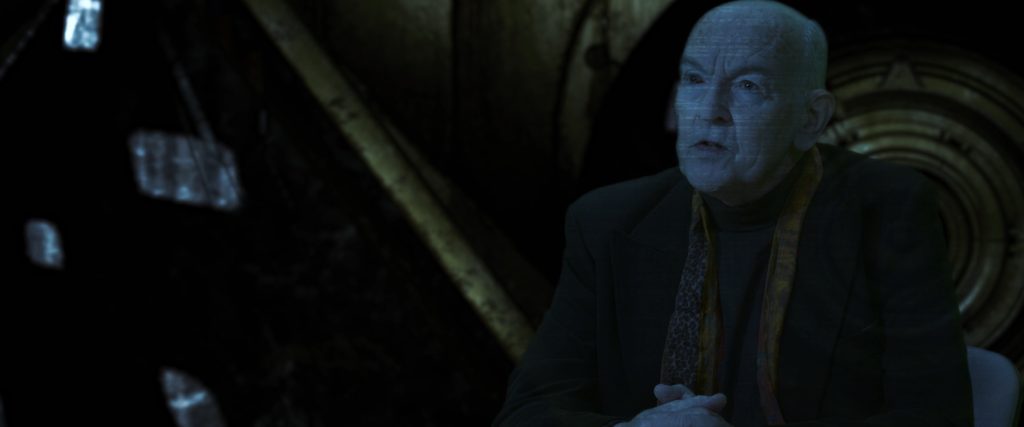
Cronika is searching for the two halves of a medallion known as the Necrux, the same object glimpsed during the 1986 massacre. However, she also answers to someone above her, communicating with her superior through a virtual reality headset. He is less than pleased with her failure to recover the Necrux or eliminate Barker, leading Cronika to unleash the Chimera.
Elsewhere, journalist Deborah becomes involved after following a demon into Barker’s hideout. She witnesses Barker accidentally kill the camouflaged creature while playing darts, an amusing moment made even funnier by the demon’s questionable decision to hide directly in front of a dartboard. Deborah takes photographs and becomes determined to interview the Demon Hunter.
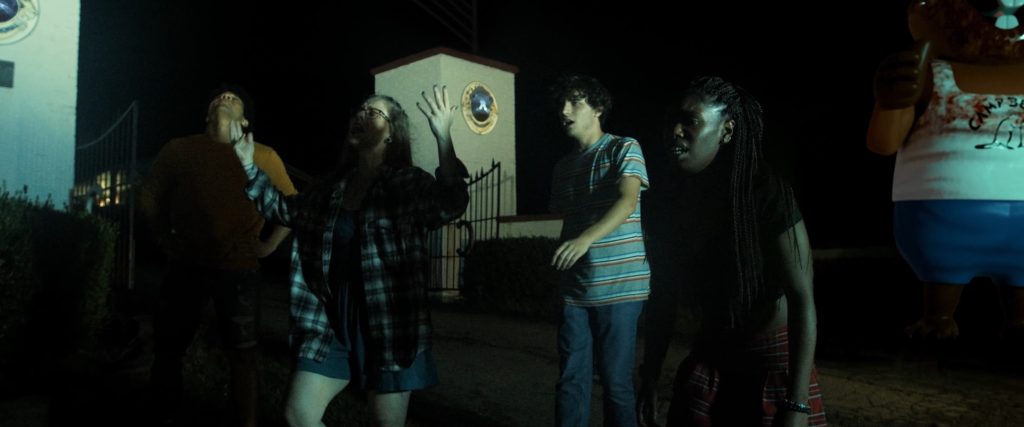
Eventually, several characters converge on Camp Beaver, the site of the 1986 massacre. After Barker dispatches another creature, Cronika uses a ritual to send her and the others through a time vortex and back to 1987, one year after the original killings. The abandoned summer camp then allows Demon Hunter: Time 2 Kill to change genres once again.
The supernatural action of the earlier scenes begins to mix with the atmosphere of the classic summer camp slasher. Friday the 13th, Sleepaway Camp and The Burning are obvious points of comparison, although Kavanagh continues to throw demons, fantasy elements and time travel into the mixture rather than simply making a conventional stalk-and-slash film.
This willingness to keep adding new ideas is both a strength and a weakness. At 97 minutes, the film has a great deal going on, and not every element is given the space or technical polish it needs. However, it is difficult to accuse Demon Hunter: Time 2 Kill of lacking imagination. The production includes supernatural transformations, creature effects, digital environments, bloody deaths, action sequences and elaborate fantasy concepts that reach well beyond what many independent productions would attempt.
The visual effects are frequently impressive considering the scale of the production. The extensive credits for both practical and digital effects reflect the amount of work that has gone into creating creatures, environments and supernatural moments. The film reportedly took several years to complete, and the sheer quantity of effects work visible on screen makes it easy to understand why.
Unfortunately, the basic photography does not always support those effects. The cinematography and lighting can feel surprisingly flat for a story this fantastical. There are shots with basic framing, moments where the focus noticeably drifts and sequences where movement appears overly jerky. These problems become particularly noticeable during darker scenes at Camp Beaver, where characters can sometimes become difficult to make out.
This is frustrating because a more controlled visual approach could have helped considerably. The production design, costumes, make-up and effects are all trying to create an exaggerated comic-book world, but the lighting does not always give those elements the atmosphere they deserve. The film looks considerably better when it embraces stronger visual ideas, such as Cronika’s blood bath and some of the more elaborate supernatural imagery.
The horror itself has a suitably playful nastiness. One sex scene, involving two campers getting intimate, comes to a sudden and extremely bloody conclusion when a sword erupts through one of them. It is exactly the kind of outrageous interruption expected from an affectionate tribute to 1980s camp horror.
Hogan remains the film’s strongest asset. Taryn Barker is confident, funny and adventurous, and Hogan has the screen presence required to carry such an exaggerated character. Her dramatic eye make-up even recalls the striking appearance of some of the great actresses of 1970s Italian genre cinema, particularly giallo icon Edwige Fenech. It is an unusual but effective look that helps Barker stand out from the increasingly crowded cast of characters.
Demon Hunter: Time 2 Kill is not a polished film. Its technical inconsistencies are too frequent to ignore, the visuals can vary considerably in quality and the film’s enormous collection of ideas occasionally threatens to overwhelm it. A little more restraint and greater attention to lighting, camera movement and focus would have made a significant difference. As the film moves on and we have a showdown between Barker and Cronika, the standard raises its game completely. A massive fight with incredible effects, its pretty remarkable indeed.
However, independent genre cinema is often at its most enjoyable when filmmakers attempt something ambitious rather than simply reproducing an inexpensive version of a conventional story. Kavanagh has made a film involving a motorcycle-riding demon hunter, vampires, a sinister corporation, an evil CEO, magical artefacts, time travel, a summer camp massacre and enough supernatural chaos to fill several different films.
Demon Hunter: Time 2 Kill may be rough around the edges, but it has personality. Niamh Hogan clearly enjoys returning to the role of Taryn Barker, Lisa Wilcox adds horror pedigree and gravitas to the villainous side of the story, and the effects team deserves considerable credit for helping Kavanagh realise a world far bigger than the film’s independent scale might suggest.
For viewers accustomed exclusively to polished studio productions, its technical shortcomings may prove difficult to overlook. For fans of independent horror who can forgive some roughness in exchange for imagination, practical gore, supernatural action and unapologetically cheesy fun, there is considerably more to enjoy. Demon Hunter: Time 2 Kill is an imperfect but spirited sequel that aims high, occasionally stumbles, and then gets back on its motorcycle to continue the fight.
| Acting | |
| Direction | |
| Cinematography | |
| Writing | |
| Sound | |
| Screen Critix Rating |