
Blue Zone (2026) Film Review
War films have long explored the horrors of conflict, but combining military action with science fiction offers filmmakers an opportunity to examine familiar themes from an entirely different perspective. Blue Zone (2026), a Hungarian independent feature directed by Balázs Bratkó and Márk G. Lakatos, takes precisely this approach, delivering an ambitious military thriller that gradually develops into something considerably more unusual and thought-provoking.
Written by Bratkó and Tamás Tarcsi, the 79-minute film takes place in December 2028, during a fictional war between the Artzak Republic and Kasobia. The conflict has continued for a decade, with Artzak forces gaining territory thanks to support from the United Union. As the fighting intensifies, a small military unit known as Charlie Squad is dispatched to investigate an unexplained shortwave radio-frequency anomaly originating from a village where enemy activity has not been reported for several months.
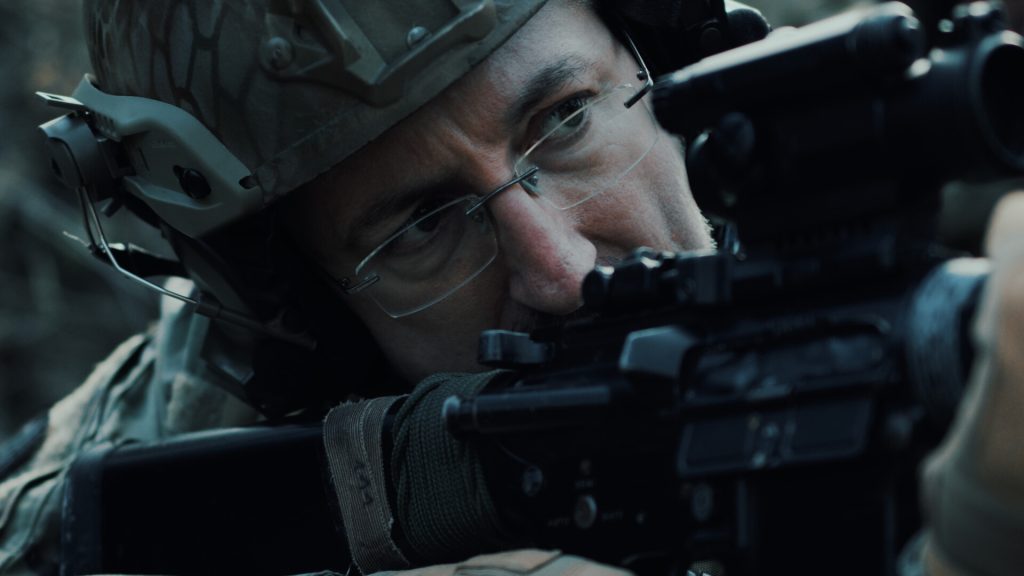
Led by Sergeant Major Antal Tomaczky (Norbert Nyutali), the soldiers are instructed to locate the source of the interference and determine whether the suspected equipment should be destroyed. Despite assurances that the surrounding area should be relatively safe, the squad is warned to remain vigilant throughout the operation.
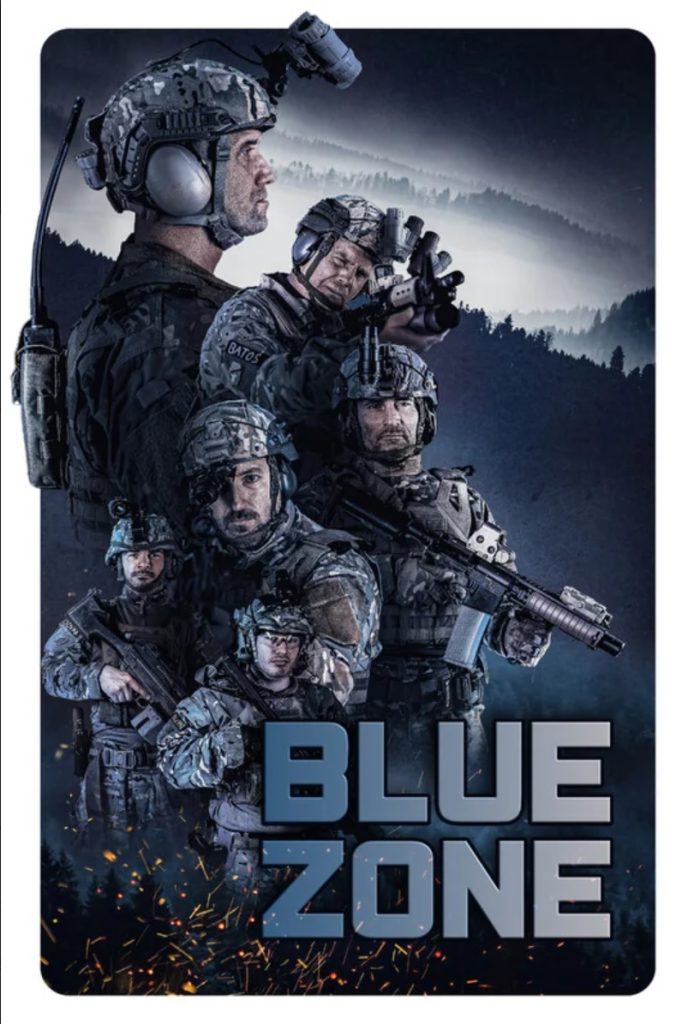
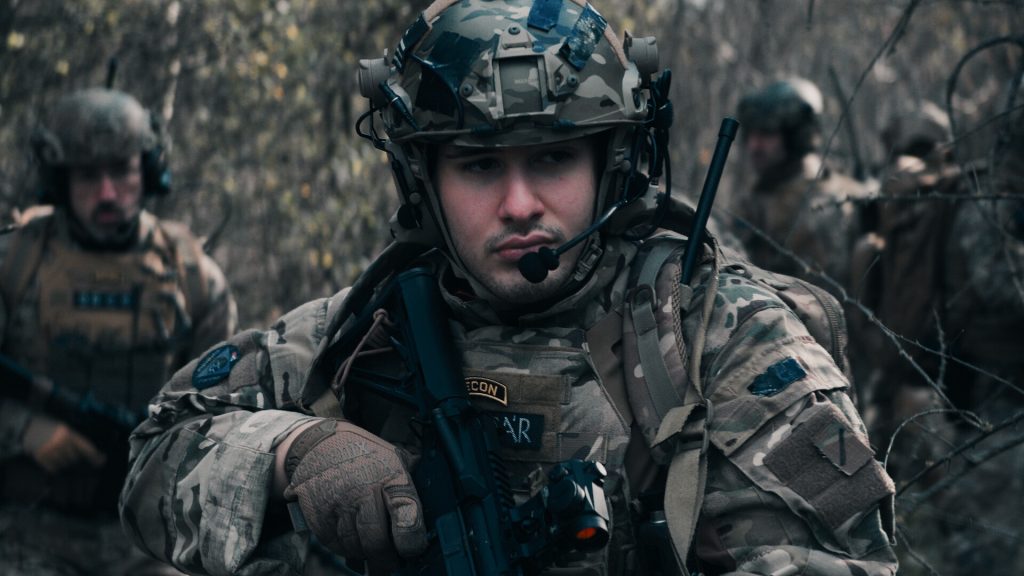
From its opening military briefing, Blue Zone establishes an impressive sense of authenticity. The uniforms, camouflage, body armour and weaponry are convincing, while the attention given to military procedures helps create the impression of a genuine operational unit. Bratkó’s background as a military member provides an interesting connection to this aspect of the production, and the filmmakers clearly understand the importance of making their fictional conflict feel credible.
Following their deployment, the soldiers make their way through woodland towards their destination, exchanging occasional jokes and conversation along the way. These interactions establish a believable camaraderie between the men, suggesting an experienced squad accustomed to working together under difficult circumstances. There is also an underlying sense of exhaustion, with several characters expressing a desire to complete their duties and return to their families.
As the unit approaches the village, their radio communications begin to deteriorate. Messages become increasingly difficult to transmit, raising concerns about the mysterious interference they have been sent to investigate. However, their immediate priorities change when gunfire erupts from a nearby grey building, forcing the soldiers into a dangerous confrontation with enemy forces.
The ensuing firefight is one of the film’s strongest sequences. Lakatos, who also serves as cinematographer and editor, captures the action with considerable energy, combining handheld camerawork, rapid editing and changes in frame rate to create an intense and frequently claustrophobic experience. Bullets strike the surrounding concrete, soldiers scramble for cover and the fighting continues through corridors and confined interiors.
Importantly, the camera is frequently pulled back during the squad’s movements and combat sequences, allowing the audience to appreciate the positioning of the soldiers and the geography of their surroundings. This wider approach works particularly well during the mission itself, making the action easier to follow while maintaining an appropriate sense of urgency.
One minor criticism concerns the dialogue scenes, which rely rather heavily upon close-ups and conventional shot-reverse-shot compositions. Although these are competently executed, greater variation in framing and more opportunities to observe the characters interacting within wider compositions would have added visual interest. It is a relatively small complaint, particularly given how effectively the filmmakers handle the action elsewhere.
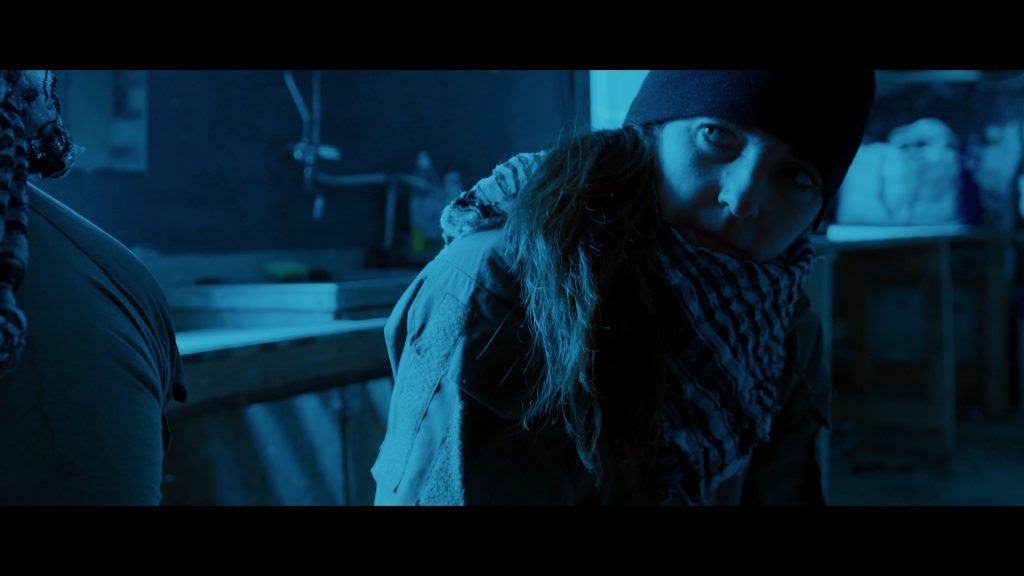
Another excellent creative decision is the gradual introduction of a blue colour grade as the soldiers approach the mysterious building. The change gives the environment an increasingly unnatural appearance, subtly suggesting that something beyond ordinary military activity is taking place.
The electronic score is equally impressive, featuring deep bass, unsettling textures and an ominous atmosphere that occasionally recalls the work of Trent Reznor and Atticus Ross. It complements the military action beautifully while reinforcing the growing sense of uncertainty surrounding the soldiers’ mission.
Blue Zone: When the Rules of War Change
Although Blue Zone initially appears to be a relatively straightforward military action thriller, the screenplay introduces an intriguing science-fiction mystery when the soldiers begin experiencing phenomena that cannot be explained through conventional reasoning.
Injuries that should require significant medical attention appear to heal with extraordinary speed, raising questions about the true nature of the anomaly. As the characters investigate, it becomes increasingly apparent that the mysterious environment may be affecting far more than their communications equipment.
The screenplay uses this discovery to develop a more thoughtful examination of warfare. When opposing soldiers find themselves confronting circumstances neither side understands, established assumptions about loyalty, hostility and survival begin to lose their certainty.
Rather than presenting the conflict simply as a battle between heroes and villains, the film explores how ordinary people become trapped within wars shaped by political decisions and military objectives. The soldiers may wear different uniforms, but their concerns about family, survival and the possibility of returning home are remarkably similar.
The character of Amira Corpo (Bernadett Bettina Ács) becomes particularly important to these themes, demonstrating how personal tragedy can transform grief into resentment and make reconciliation extraordinarily difficult. Her experiences provide an emotional counterpoint to the film’s speculative premise, reminding us that the consequences of war extend far beyond the battlefield.
The directors have stated that Blue Zone is not intended as commentary on any particular historical or contemporary conflict. Instead, the fictional setting allows them to examine the human cost of warfare from both sides, using the central science-fiction concept to challenge the divisions separating the characters.
Blue Zone: An Impressive Independent Achievement
Perhaps the most remarkable aspect of Blue Zone is its reported production budget of just $3,000. Considering the convincing military equipment, accomplished cinematography, energetic firefights and atmospheric soundscape, the filmmakers have achieved an impressive level of production value with extremely limited resources.
The film’s greatest strength, however, lies in its willingness to move beyond conventional military action. What begins as a dangerous reconnaissance mission gradually becomes a story about humanity, prejudice and the consequences of prolonged conflict. The unusual science-fiction premise provides an engaging framework for exploring these ideas without sacrificing the tension established during the opening sequences.
While the dialogue scenes would occasionally benefit from more varied camera compositions, this is a relatively minor reservation in an otherwise accomplished production. Bratkó and Lakatos demonstrate considerable technical ability, particularly in their handling of combat, while the screenplay introduces enough mystery and moral complexity to distinguish the film from more conventional independent action thrillers.
Ultimately, Blue Zone is an engaging and surprisingly thoughtful Hungarian science-fiction thriller that successfully combines convincing military action with an intriguing central mystery. Ambitious in its storytelling and impressive in its execution, it demonstrates what independent filmmakers can accomplish when creativity, technical skill and a compelling concept take precedence over financial limitations.
| Acting | |
| Direction | |
| Cinematography | |
| Writing | |
| Sound | |
| Screen Critix Rating |