
A woman is drawn into a strange and haunting world as she searches for something deeply personal in Deb Ethier’s experimental short Baggage. Here’s our review.
Every now and then, a film lands that feels completely different from anything else that has come before it. Baggage is one of those rare pieces. At just over six minutes in length, this Canadian short does not follow conventional storytelling rules, instead offering a surreal and quietly absorbing experience that leans heavily into atmosphere and visual experimentation.
The film opens with Super 8 style footage of a suitcase filled with peculiar items. A hand reaches in, pulling out photographs and small objects, immediately setting a tone that feels both nostalgic and slightly unsettling. It is an effective introduction that hints at something personal, perhaps even emotional, without ever spelling it out.
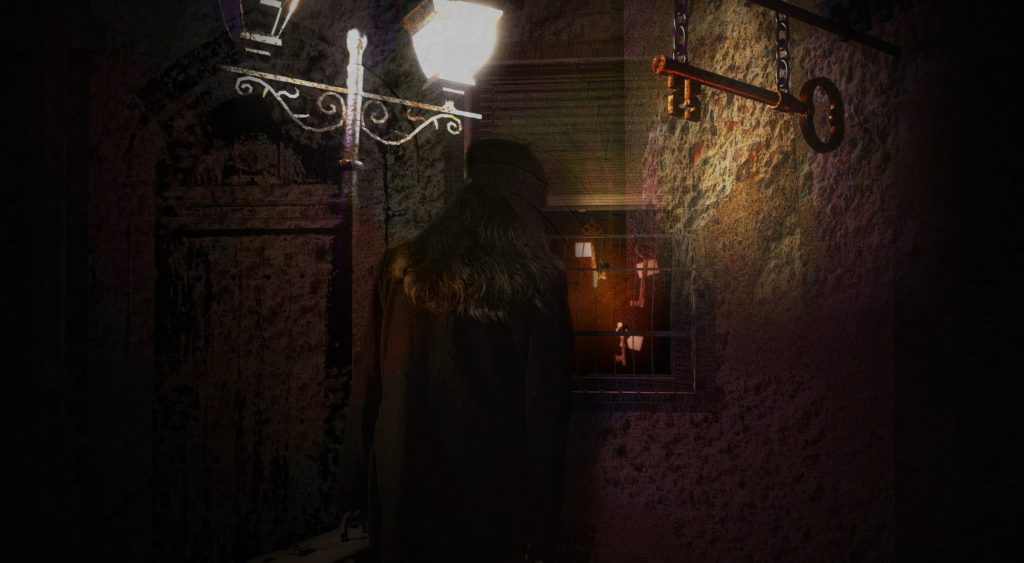
From there, Baggage transitions into a stylised animated world, where a lone woman moves through city streets that feel both familiar and completely alien. The environments are constructed using a blend of 3D animation and live action elements, giving the film a distinctive visual identity. As the woman walks from place to place, the world around her shifts in unusual ways. Buildings feel empty, streets are lined with abandoned cars, and interiors seem to bend and change form, including a staircase that leads to a door which transforms before her eyes.
There is very little in the way of traditional narrative. Instead, the film unfolds as a visual journey. The woman enters a hotel, wanders through quiet and eerie spaces, and eventually finds herself drawn back outside, continuing her search. One of the more striking moments sees her standing in front of a shop window, watching multiple television screens flicker with imagery, as if searching for meaning in the noise.
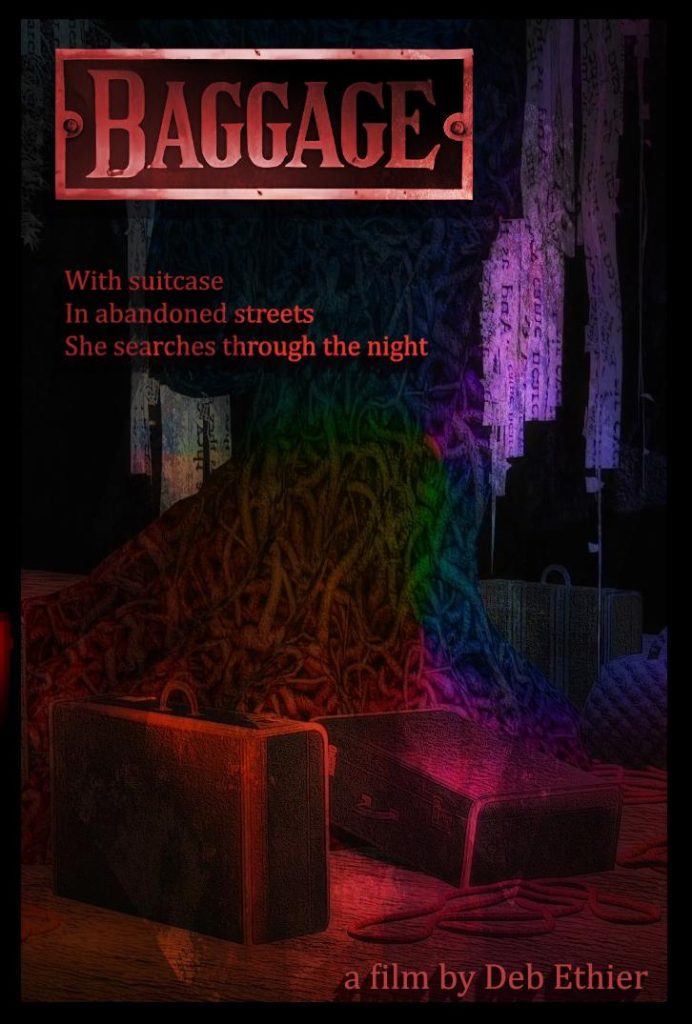
The final section of the film brings her to a locked area, which she forces her way into. Inside, she discovers her suitcase suspended from a structure, reclaiming it before the film comes to an abrupt close. It is a simple conclusion, but one that feels in keeping with the film’s abstract nature.
What makes Baggage particularly interesting is its visual style. The animation is far from cutting edge by modern standards, with a somewhat rudimentary quality that may initially catch viewers off guard. However, this simplicity quickly becomes part of the film’s charm. The environments have a distinctive look that feels almost reminiscent of early 1990s children’s television, where everything appears sharply in focus and slightly exaggerated, giving the impression that the world is pushing out towards the viewer rather than receding into depth.
This approach creates a unique sense of space, one that feels artificial yet strangely immersive. It adds to the dreamlike quality of the film, making it feel as though the viewer has stepped into someone else’s subconscious.
There is no dialogue throughout, which only enhances the film’s atmosphere. Instead, the soundscape is driven by music, carefully shaped to match the shifting tone of the visuals. The score carries the emotional weight of the piece, guiding the audience through moments that feel reflective, uneasy, and occasionally quite moving.
Baggage is also notable as a one woman production. Deb Ethier takes on multiple roles, serving as writer, director, performer, producer and editor. While films created in this way can sometimes feel limited, there is a clear sense of purpose here. Ethier has crafted something personal and distinctive, even if it is not without its imperfections.
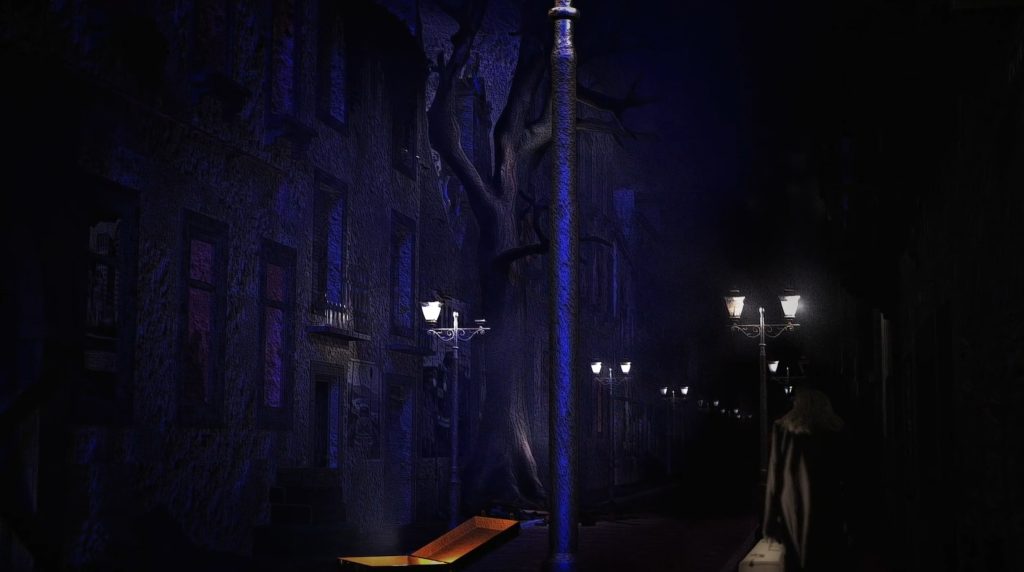
Baggage – An unusual short film that mixes animation and Super 8 footage.
It would be fair to say that this is not a film that will appeal to everyone. Its abstract nature and unconventional storytelling may leave some viewers unsure of what they have just watched. Yet there is something undeniably engaging about it. Despite its quirks, or perhaps because of them, Baggage holds attention in a way that more traditional shorts often struggle to do.
By the time it ends, viewers may find themselves reflecting on what it all means, even if they cannot quite put it into words. It is the kind of film that lingers, not because of a clear message, but because of the feeling it leaves behind.
Baggage may not be perfect, but it is creative, unusual, and quietly captivating. It is exactly the kind of experimental filmmaking that deserves to be seen, if only to experience something a little different.
| Acting | |
| Direction | |
| Cinematography | |
| Writing | |
| Sound | |
| Screen Critix Rating |